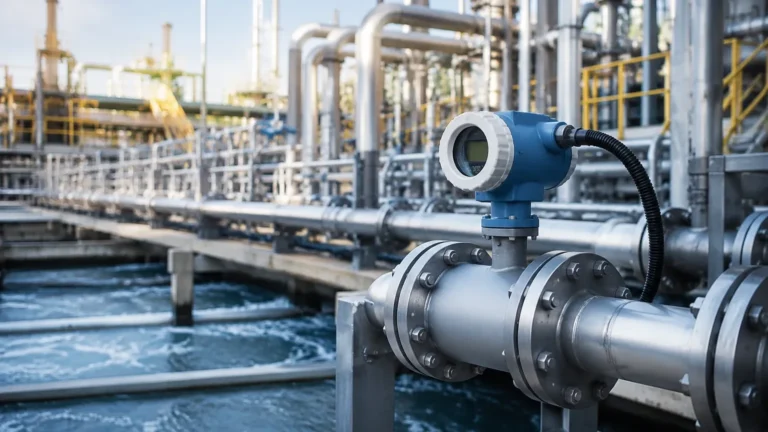
Toc Sensor
Toc Sensor
In industrial water treatment and process automation, monitoring the purity of water is as critical as monitoring its volume. While level measurement instruments ensure that tanks and vessels are operating within safe and efficient capacity limits, a toc sensor (Total Organic Carbon sensor) provides the necessary data regarding the chemical purity of the medium. Total Organic Carbon is a measure of the amount of carbon found in organic compounds within a water sample. It serves as a vital indicator of water quality across various sectors, including pharmaceuticals, power generation, semiconductor manufacturing, and municipal wastewater treatment.
Understanding the technical nuances of TOC detection is essential for engineers who manage complex fluid systems. This article explores the measurement principles, selection criteria, and installation requirements for TOC sensors, while highlighting how these analytical tools integrate with broader process control systems, such as the level measurement solutions found on our Main Page.
Measurement Principles of TOC Sensors
TOC measurement is not a direct measurement of a single molecule but rather a sum of all organic carbon present. To measure this, the organic molecules must be oxidized to carbon dioxide (CO2), which is then detected and quantified. The three primary methods used in modern industrial TOC sensors are UV oxidation with conductivity, UV oxidation with Non-Dispersive Infrared (NDIR) detection, and high-temperature combustion.
UV Oxidation and Conductivity
This is the most common method for high-purity water applications, such as those found in the pharmaceutical and semiconductor industries. The sensor exposes the water sample to high-intensity ultraviolet (UV) light, typically at a wavelength of 185 nm. This UV radiation breaks down the organic compounds into CO2.
The resulting CO2 dissolves in the water to form carbonic acid, which increases the conductivity of the sample. By measuring the conductivity before and after oxidation (differential conductivity), the sensor can calculate the TOC concentration. This method is highly sensitive and capable of detecting TOC levels in the parts-per-billion (ppb) range.
UV Oxidation and NDIR Detection
In applications with higher organic loads or more complex water chemistry, the CO2 generated by UV oxidation is stripped from the liquid phase into a gas phase. A carrier gas moves the CO2 through a Non-Dispersive Infrared (NDIR) detector. The NDIR sensor measures the amount of infrared light absorbed by the CO2 gas, which is directly proportional to the organic carbon concentration in the original sample. This method is less susceptible to interference from other ions in the water compared to the conductivity method.
High-Temperature Combustion
For wastewater and process water with very high TOC concentrations (in the parts-per-million or ppm range), combustion is often used. The sample is injected into a furnace heated to 680°C to 1,200°C in the presence of a catalyst. All carbon is converted to CO2, which is then measured by an NDIR detector. While robust, this method requires more maintenance due to the high temperatures and potential for salt buildup on the catalyst.
Evaluating TOC Sensor Performance
When selecting a toc sensor for an industrial application, several performance metrics must be evaluated to ensure the instrument meets the process requirements. Engineers must balance sensitivity, range, and response time against the total cost of ownership.
1. Detection Limit and Range: For ultrapure water (UPW), a sensor must have a detection limit as low as 0.05 µg/L (ppb). Conversely, for wastewater influent, a range extending up to 10,000 mg/L (ppm) may be necessary.
2. Response Time (T90): This refers to the time it takes for the sensor to reach 90% of the final reading after a change in TOC concentration. In critical loops, a response time of less than 60 seconds is often required for effective process control.
3. Total Inorganic Carbon (TIC) Removal: Many water sources contain inorganic carbon (carbonates and bicarbonates). A high-quality TOC sensor must either remove TIC before analysis or measure it separately to subtract it from the Total Carbon (TC) reading (TOC = TC – TIC).
4. Regulatory Compliance: In the pharmaceutical industry, TOC sensors must comply with standards such as USP <643> and EP 2.2.44. This involves specific system suitability tests and calibration protocols.
Selection Guide for TOC Sensing Technologies
The following table provides a comparison of the primary TOC measurement technologies to assist in the selection process based on the application environment.
| Technology | Typical Range | Best Use Case | Advantages | Limitations |
| :— | :— | :— | :— | :— |
| UV / Conductivity | 0.05 – 1,000 ppb | Ultrapure Water (UPW), Pharmaceutical | High sensitivity, low maintenance, compact. | Sensitive to ionic interference; limited to low TOC. |
| UV / NDIR | 0.01 – 50 ppm | Potable water, Boiler feed water | Handles higher TOC loads; no ionic interference. | Requires carrier gas; more complex than conductivity. |
| Combustion / NDIR | 1 – 50,000 ppm | Wastewater, Chemical process water | Handles suspended solids and high salt content. | High maintenance; requires catalyst replacement. |
| Ozone / Hydroxyl Oxidation | 0.1 – 100 ppm | Industrial process water | Strong oxidation for complex organics. | Requires chemical reagents; higher operating cost. |
Installation Considerations for TOC Sensors
A toc sensor is a precision analytical instrument, and its performance is heavily dependent on proper installation. Unlike level meters that can often be installed at the top of a tank, TOC sensors usually require a continuous flow of sample water.
Sample Delivery and Piping
The sample line should be as short as possible to minimize lag time. Use high-quality materials like 316L stainless steel or PVDF to prevent leaching of organic contaminants from the piping itself. The flow rate must be regulated according to the manufacturer’s specifications, typically between 10 and 100 mL/min.
Filtration
If the process water contains suspended solids, a pre-filter (usually 40 to 100 microns) is necessary to prevent clogging of the sensor’s internal capillaries. However, the filter material must be chosen carefully to ensure it does not adsorb organic compounds from the sample.
Temperature and Pressure Control
Most TOC sensors are designed to operate within specific temperature ranges (e.g., 5°C to 60°C). If the process water is steam condensate or high-temperature process fluid, a sample cooler must be installed upstream. Similarly, pressure regulators may be required to protect the sensor from pressure spikes in the main process line.
Operational Risks and Maintenance
Maintaining the accuracy of a toc sensor requires a proactive approach to maintenance and an understanding of potential failure modes.
* UV Lamp Decay: The UV lamp used for oxidation has a finite lifespan, typically between 6 and 12 months. As the lamp dims, oxidation efficiency drops, leading to falsely low TOC readings. Most modern sensors include a lamp life monitor.
* Fouling and Scaling: In water with high mineral content, the UV quartz sleeve can become coated with scale, blocking the UV light. Periodic acid cleaning or the use of an automated cleaning cycle is necessary.
* Calibration Drift: Regular calibration using certified reference materials (such as Sucrose or Isopropyl Alcohol) is essential. For regulated industries, this calibration must be traceable to national standards.
* Interference: High levels of nitrates or chlorides can interfere with certain oxidation methods. Understanding the background chemistry of the water is vital during the commissioning phase.
Synergy with Level Measurement Systems
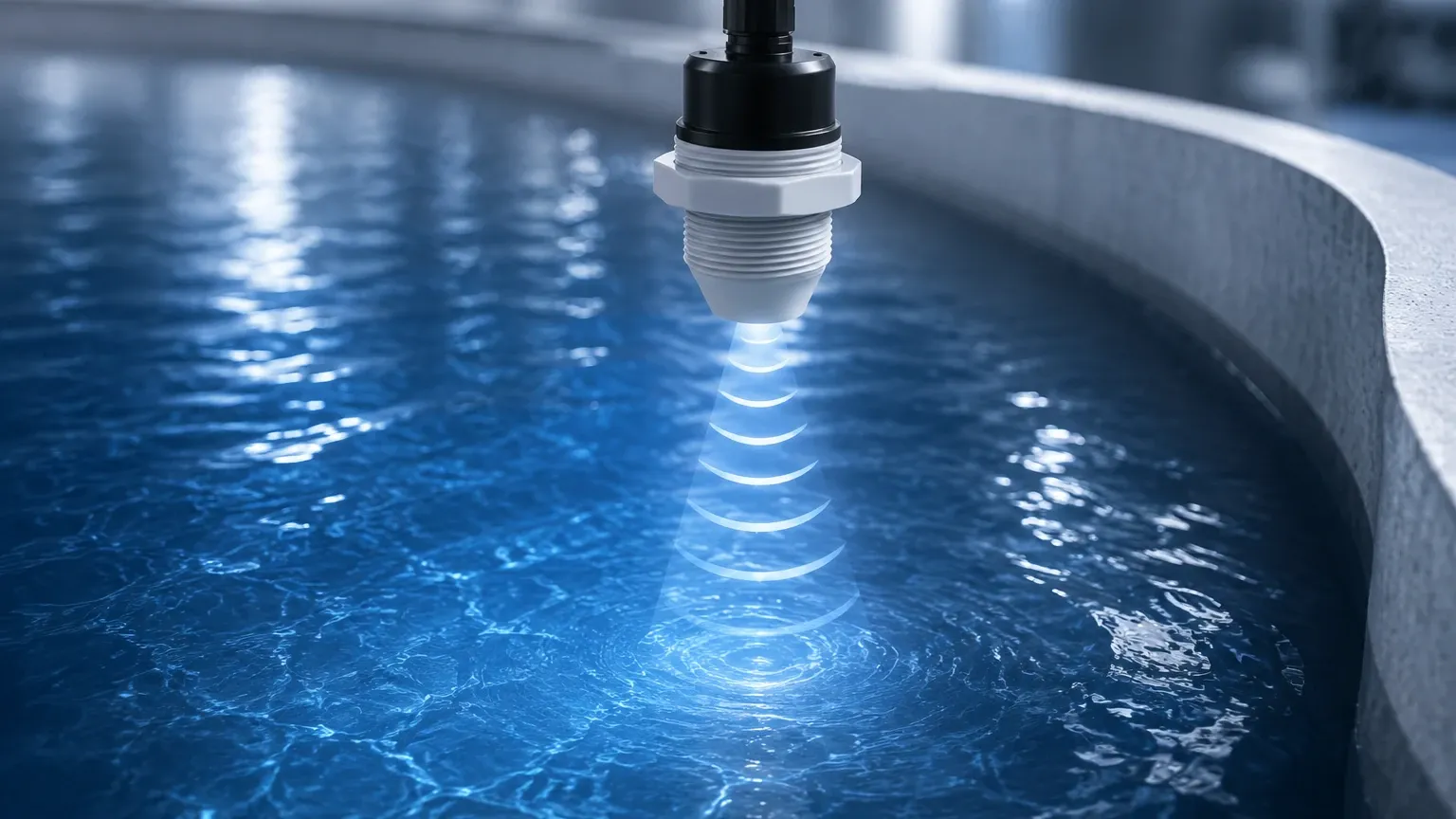
In a holistic industrial automation strategy, the data from a toc sensor is often used in conjunction with data from level measurement instruments. For example, in a deionized water storage tank, a Welk ultrasonic level sensor or radar level meter monitors the volume of water available for production, while the TOC sensor monitors the quality of that water.
If the TOC level exceeds a predefined threshold, the control system may trigger a valve to divert the water to a reclaim tank or back through the purification loop, regardless of the tank level. Conversely, if the level meter indicates a low-level condition, the system might increase the throughput of the purification plant, requiring the TOC sensor to provide rapid feedback to ensure quality is maintained at higher flow rates.
For engineers looking to integrate these technologies, exploring the various types of level transmitters and switches available on our Main Page provides a foundation for comprehensive liquid management. Whether using hydrostatic transmitters for deep wells or non-contact radar for corrosive chemicals, the combination of quantity and quality data is the hallmark of modern process efficiency.
Frequently Asked Questions (FAQ)
Q: What is the difference between TOC and COD?
A: TOC measures the carbon atom count in organic compounds, while COD (Chemical Oxygen Demand) measures the amount of oxygen required to chemically oxidize those compounds. TOC is generally more accurate and faster to measure online, whereas COD is often used in wastewater regulations.
Q: Can a toc sensor detect inorganic carbon?
A: Most TOC sensors are designed to either remove inorganic carbon (TIC) via acidification and sparging or to measure it separately. If TIC is not accounted for, the sensor would report Total Carbon (TC), which can be misleading in water with high alkalinity.
Q: How often should a TOC sensor be calibrated?
A: In high-purity applications, calibration is typically performed every 6 to 12 months, with monthly or quarterly "system suitability tests" to verify performance. In wastewater applications, more frequent calibration may be needed due to sensor fouling.
Q: Does temperature affect TOC readings?
A: Yes, especially in sensors using the conductivity method. Modern sensors include integrated temperature compensation to adjust the conductivity readings to a reference temperature (usually 25°C).
Q: Can TOC sensors be used in hazardous areas?
A: Yes, there are explosion-proof versions of TOC analyzers available, often housed in pressurized or flameproof enclosures, suitable for use in oil and gas or chemical processing environments.
By integrating a reliable toc sensor into your process, you ensure that water quality remains within strict specifications, protecting downstream equipment and ensuring product consistency. When paired with robust level measurement solutions, industrial operators gain full visibility into their liquid assets.