Waste Water Sampler
Waste Water Sampler
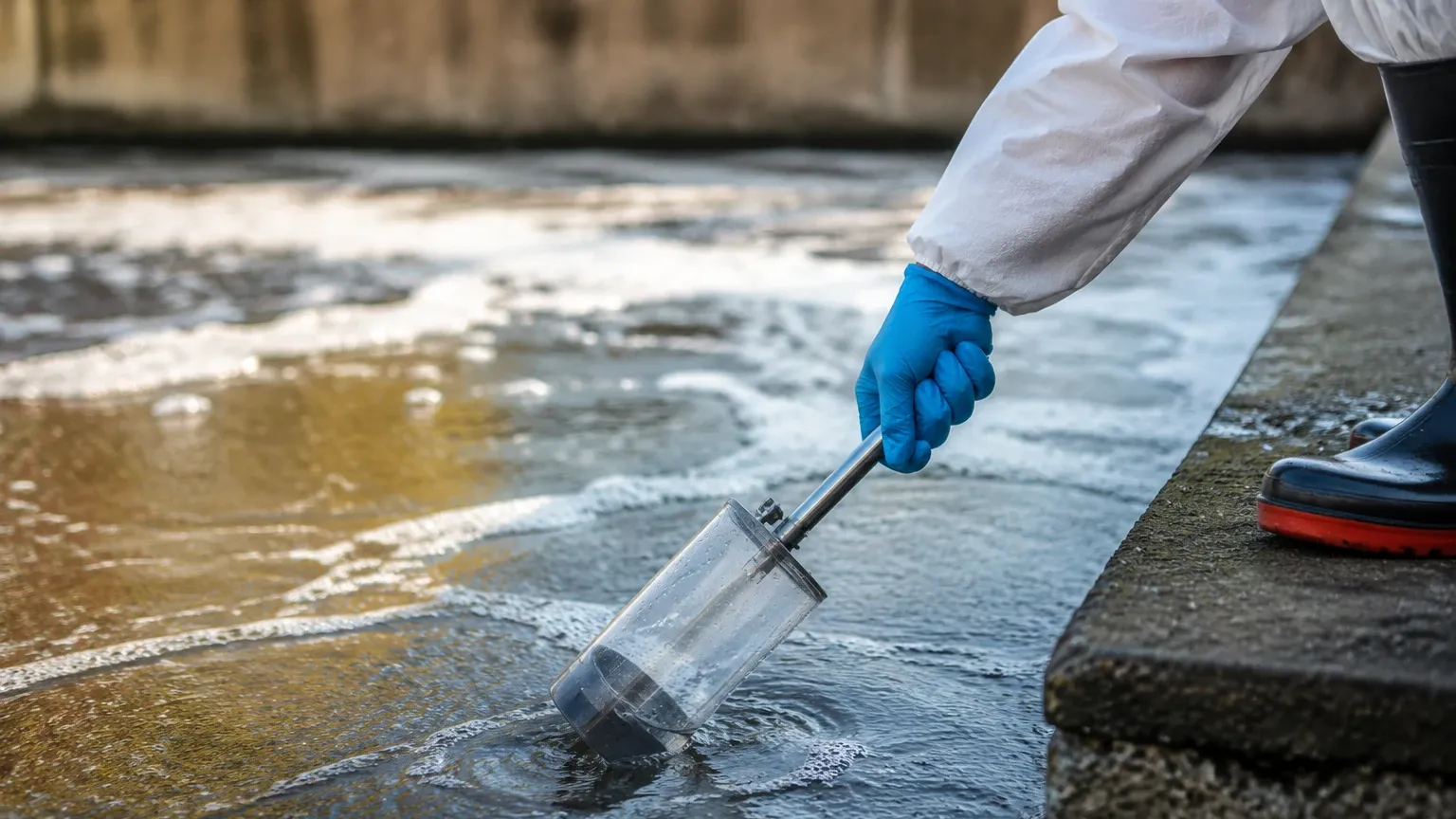
In industrial process water management and municipal treatment, the waste water sampler is an indispensable tool for regulatory compliance, process control, and environmental monitoring. These automated systems are designed to collect representative liquid samples from sewers, flumes, tanks, or open channels at specific intervals or in response to specific triggers. To ensure the integrity of the data collected, engineers must understand the underlying physics of sampling, the integration with level and flow measurement technologies, and the mechanical limitations of different sampling methods.
Accurate sampling is rarely a standalone process. It requires precise coordination with level measurement instruments to determine when and how much to sample, particularly in flow-proportional applications. As a professional manufacturer of industrial level measurement instruments, Welk provides the foundational sensing technology—such as ultrasonic and radar level meters—that often acts as the "brain" for a waste water sampler system.
Understanding Waste Water Sampler Principles
The primary objective of a waste water sampler is to obtain a sample that accurately reflects the chemical and physical characteristics of the source liquid at a given point in time. There are three primary physical methods used to transport the liquid from the source into the sample container: peristaltic suction, vacuum-pressure, and mechanical dipping.
Peristaltic Sampling
Peristaltic samplers utilize a rotating pump head with rollers that compress a flexible tube. This creates a vacuum that draws the liquid up the suction line.
* Advantages: The liquid never touches the mechanical parts of the pump, reducing the risk of cross-contamination. It is also capable of handling small suspended solids.
* Limitations: The maximum vertical lift is typically limited to approximately 8 meters (26 feet) due to atmospheric pressure constraints. High-head applications may require alternative methods.
Vacuum-Pressure Sampling
This method uses a vacuum pump to evacuate air from a metering chamber, drawing the liquid up. Once the chamber is full, the vacuum is released, and the sample is gravity-fed or pressure-pushed into the sample bottle.
* Advantages: This method often provides higher transport velocities, which is critical for keeping heavy solids in suspension. It is generally more accurate in terms of volume repeatability over long periods.
* Limitations: The system is more complex, involving more valves and seals that require maintenance.
Sampling Modes
1. Time-Proportional: Samples are taken at fixed time intervals (e.g., every 60 minutes). This is used when the flow rate is relatively constant.
2. Flow-Proportional: Samples are taken based on the volume of water passing through a point (e.g., every 1,000 cubic meters). This requires integration with a flow meter or level sensor.
3. Event-Based: Sampling is triggered by a specific event, such as a pH spike or a sudden rise in liquid level detected by a level switch.
The Role of Level and Flow Measurement in Sampling
For a waste water sampler to operate in a flow-proportional mode, it must receive a signal from a flow meter. In most open-channel wastewater applications, flow is calculated by measuring the liquid level behind a primary device like a flume or weir.
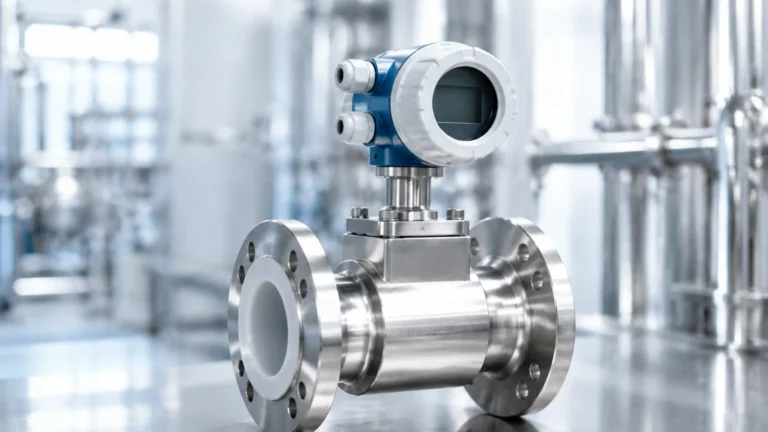
Welk’s range of Main Page products, specifically ultrasonic and radar level meters, are frequently used to provide this data. An ultrasonic sensor mounted above a Parshall flume measures the head (level). The sensor's internal software converts this level into a flow rate using standard hydraulic equations. The flow rate is then outputted via a 4-20mA signal or a pulse output to the waste water sampler.
Without accurate level measurement, flow-proportional sampling is impossible. If the level sensor is inaccurate, the sampler may trigger too frequently during high-flow events (leading to bottle overflow) or too rarely during low-flow periods (leading to non-representative samples). Therefore, selecting a high-precision level transmitter is as critical as the sampler itself.
Types of Waste Water Samplers
Samplers are categorized based on their mobility and their ability to preserve samples. Selecting the right type depends on the site infrastructure and the specific parameters being tested (e.g., BOD, COD, heavy metals).
Portable Samplers
Portable units are battery-powered and designed for short-term monitoring or remote sites where permanent power is unavailable. They are often used for industrial discharge audits or sewer flow studies. They must be lightweight enough for a single technician to carry but rugged enough to withstand corrosive sewer environments.
Stationary Samplers
Stationary units are permanently installed and typically powered by AC mains. They are used at the influent or effluent points of treatment plants. These units often include a larger footprint to accommodate more bottles or larger composite containers.
Refrigerated Samplers
For biological testing (like BOD) or volatile organic compounds (VOCs), samples must be kept at a constant temperature, typically between 0°C and 4°C, to prevent bacterial growth or chemical degradation. Refrigerated samplers include an internal cooling system to maintain sample integrity from the moment of collection until the technician retrieves them.
Key Selection Criteria for Engineering Projects
When specifying a waste water sampler, engineers should evaluate the following technical parameters:
| Criteria | Specification Detail | Engineering Consideration |
| :— | :— | :— |
| Vertical Lift | 0 to 8 meters | Ensure the pump can handle the depth of the manhole or tank. |
| Transport Velocity | > 0.5 m/s | Necessary to prevent the settling of solids in the suction line. |
| Bottle Configuration | Single (Composite) or Multiple (Discrete) | Discrete sampling allows for analysis of changes over time. |
| Housing Material | GRP, Stainless Steel, or PE | Must resist H2S gas and industrial chemicals. |
| Cooling Method | Passive (Ice) or Active (Compressor) | Active refrigeration is required for long-term compliance monitoring. |
| Trigger Input | 4-20mA, Pulse, or RS485 | Compatibility with the site's level/flow meter is essential. |
| Suction Line Diameter | 10mm to 19mm | Larger diameters are better for high-solids wastewater. |
Installation Guidelines and Best Practices
Correct installation is the difference between a successful monitoring program and a series of failed samples. Engineers should adhere to the following checklists during the design and installation phase.
Suction Line Placement
The suction line should be placed in a representative part of the flow stream. Avoid placing the intake too close to the bottom where grit and heavy solids accumulate, or too close to the surface where fats, oils, and grease (FOG) float. A position at approximately 60% of the depth from the surface is often recommended.
Avoiding Air Locks
The suction line must have a continuous downward slope from the sampler to the source. Any "loops" or "humps" in the line will trap air or liquid, leading to cross-contamination between samples or complete pump failure. If a horizontal run is necessary, it should be kept as short as possible.
Power and Connectivity
For stationary samplers, ensure a dedicated power circuit is available. If the sampler is integrated with a Welk ultrasonic level meter, the signal cable should be shielded to prevent electromagnetic interference (EMI) from nearby pumps or VFDs. The 4-20mA loop should be tested to ensure the sampler's "flow-proportional" logic matches the flow meter's scaling.
Operational Limitations and Common Risks
Despite advancements in automation, waste water samplers face several operational challenges:
1. Suction Line Clogging: In raw sewage, rags and fibrous materials can block the intake strainer. Regular inspection and the use of "back-flush" cycles (where the pump reverses to blow air through the line before sampling) can mitigate this.
2. Peristaltic Tube Wear: The flexible tubing in a peristaltic pump is a consumable. Over time, the tube loses its elasticity, leading to a drop in vacuum pressure and inaccurate sample volumes. A preventative maintenance schedule should include tube replacement every 6-12 months.
3. Cross-Contamination: If the system does not perform a proper "pre-rinse" with the source liquid, traces of the previous sample may remain in the line. Most modern samplers allow for 1-3 rinse cycles before the actual sample is retained.
4. Freezing: In cold climates, liquid remaining in the suction line can freeze, bursting the tube or blocking the system. Heated enclosures or automatic line-purging are necessary in these environments.
Frequently Asked Questions (FAQ)
Q: How often should a waste water sampler be calibrated?
A: The volume accuracy should be checked monthly. This involves triggering a manual sample and measuring the volume in a graduated cylinder. If the volume deviates by more than 5%, the pump settings or tubing should be adjusted.
Q: Can a waste water sampler handle hazardous environments?
A: Yes, but you must specify an ATEX or Class I, Div 1 rated unit if the sampler is installed in a location where explosive gases (like methane) may be present, such as a sewer manhole.
Q: What is the difference between a composite and a discrete sample?
A: A composite sample combines all individual samples into a single large container, providing an average of the water quality over a period. A discrete sample places each individual sample into its own bottle, allowing the lab to see how the water quality fluctuated at specific times.
Q: How does the sampler know when to stop?
A: Most samplers use a liquid sensor (conductive or ultrasonic) at the intake or in the metering chamber to detect when the liquid has arrived. If no liquid is detected within a certain timeframe, the unit will log a "sample missed" error.
Conclusion
A waste water sampler is a critical component of modern industrial infrastructure, providing the physical evidence needed for environmental stewardship and legal compliance. However, its effectiveness is entirely dependent on the accuracy of the triggering data—usually provided by level and flow sensors—and the rigor of the installation. By pairing a robust sampling unit with high-quality instrumentation from providers like Welk, facilities can ensure they receive reliable, representative data from their wastewater streams. For more information on the level measurement technologies that drive these systems, you may review product options and application support on our Main Page.