Nuclear Density Meters
Nuclear Density Meters
In the landscape of industrial process control, the ability to measure the density of liquids and slurries accurately without interrupting the flow or compromising the integrity of the piping is a critical requirement. Nuclear density meters, often referred to as radiometric density meters, provide a robust solution for these challenging environments. Unlike intrusive technologies, these instruments operate on the principle of gamma radiation attenuation, allowing for high-precision measurement in applications involving abrasive, corrosive, or high-pressure media.
For engineers and plant managers seeking reliable instrumentation, understanding the technical nuances of nuclear density meters is essential. While Welk specializes in a broad range of level measurement technologies—including radar, ultrasonic, and hydrostatic sensors—nuclear density measurement serves as a specialized complement in the industrial automation toolkit, particularly when traditional contact-based methods fail. You can explore a comprehensive range of industrial measurement solutions on our Main Page.
Understanding the Operating Principle of Nuclear Density Meters
The operation of nuclear density meters is based on the fundamental physics of gamma-ray absorption. The system typically consists of two primary components: a radioactive source and a highly sensitive detector. These components are mounted on opposite sides of a process pipe or vessel.
The Physics of Attenuation
The radioactive source, usually Cesium-137 (Cs-137) or Cobalt-60 (Co-60), emits a constant beam of gamma radiation. As these gamma rays pass through the pipe walls and the process medium, they interact with the electrons of the material. This interaction causes a portion of the radiation to be absorbed or scattered—a process known as attenuation.
The intensity of the radiation reaching the detector is inversely proportional to the density of the material inside the pipe. This relationship is mathematically described by the Beer-Lambert Law:
**I = I₀ * e^(-μρd)**
Where:
* I is the detected radiation intensity.
* I₀ is the initial radiation intensity (with an empty pipe).
* μ is the mass absorption coefficient (constant for a specific material).
* ρ (rho) is the density of the medium.
* d is the path length (the internal diameter of the pipe).
Because the pipe diameter and the absorption coefficient of the pipe walls remain constant, any change in the detected radiation intensity can be directly attributed to changes in the density of the process fluid. Modern electronics then convert this signal into a standard industrial output, such as a 4-20mA signal or a digital fieldbus protocol.
Key Applications in Industrial Process Control
Nuclear density meters are the preferred choice when the process environment is too harsh for standard instrumentation. Their non-contact nature eliminates the risk of sensor wear, clogging, or chemical attack.
Mining and Mineral Processing
In mining operations, measuring the density of ore slurries is vital for optimizing thickener performance and controlling the efficiency of flotation cells. The abrasive nature of slurry would quickly erode intrusive sensors, making nuclear density meters the standard for these high-wear environments.
Dredging and Civil Engineering
During dredging operations, operators must monitor the concentration of solids in the water being pumped. Nuclear density meters provide real-time data on the "percent solids," allowing for the calculation of total mass flow when combined with a flow meter. This ensures the dredging process is efficient and prevents the transport of excess water.
Chemical and Petrochemical Industries
In chemical processing, density measurement is often used for interface detection or to monitor the concentration of acids and alkalis. Since nuclear meters do not require a penetration in the vessel or pipe, they are ideal for measuring highly toxic or flammable fluids where leak prevention is a top safety priority.
Water and Wastewater Treatment
For sludge management, nuclear density meters help in determining the optimal time for sludge pumping from primary clarifiers. This reduces the energy costs associated with processing excess water and improves the efficiency of dewatering equipment.
Selection Criteria for Nuclear Density Measurement Systems
Choosing the right nuclear density meter requires a thorough evaluation of the process conditions and the physical constraints of the installation site. The following table outlines the primary factors to consider:
| Criteria | Considerations | Impact on Selection |
| :— | :— | :— |
| Pipe Diameter | Typically 50 mm to 1,000 mm (2" to 40") | Determines the required source strength and detector sensitivity. |
| Density Range | e.g., 0.5 g/cm³ to 3.0 g/cm³ | Influences the calibration curve and precision requirements. |
| Process Medium | Slurry, liquid, or gas-entrained liquid | Affects the choice of the mass absorption coefficient (μ). |
| Source Type | Cesium-137 (standard) or Cobalt-60 (high penetration) | Cs-137 is used for most pipes; Co-60 is reserved for extremely thick walls. |
| Detector Type | Scintillation (high sensitivity) or Ion Chamber | Scintillation detectors allow for lower source activities, improving safety. |
| Ambient Temperature | -40°C to +60°C (standard) | Detectors may require cooling jackets in high-heat environments. |
Installation Best Practices and Safety Requirements
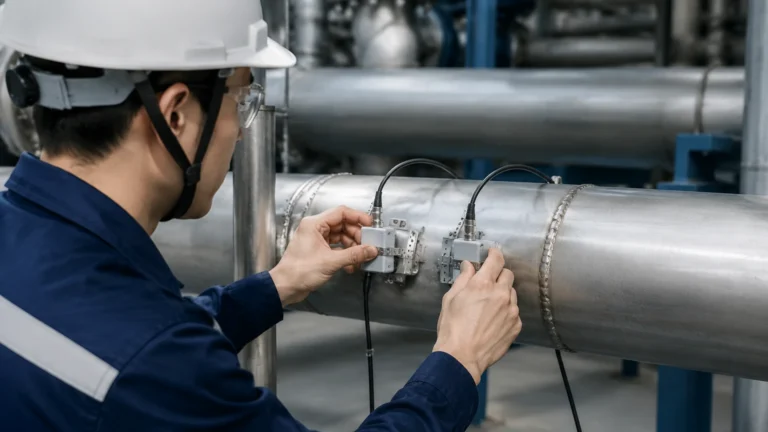
Because nuclear density meters utilize radioactive sources, installation is governed by strict regulatory frameworks. However, the mechanical installation is relatively straightforward due to the clamp-on design.
Mounting Considerations
1. Full Pipe Requirement: The meter must be installed on a section of pipe that is always full. Vertical pipes with an upward flow are ideal, as they prevent air pockets from forming, which would result in inaccurate (low) density readings.
2. Vibration Isolation: While the electronics are robust, excessive pipe vibration can affect the alignment of the source and detector. Heavy-duty mounting brackets are recommended.
3. Upstream/Downstream Clearance: To ensure a stable density profile, it is best to install the meter away from pumps, valves, or elbows. A general rule is five pipe diameters of straight run upstream.
Radiation Safety (ALARA)
Safety is managed through the ALARA principle: As Low As Reasonably Achievable.
* Shielding: The radioactive source is housed in a lead-lined steel container with a mechanical shutter. This shutter is only opened during operation.
* Distance: Radiation intensity decreases with the square of the distance. Personnel should maintain a safe distance from the source holder during routine maintenance.
* Licensing: Users must typically obtain a license from their national or regional nuclear regulatory commission (e.g., the NRC in the US). This involves appointing a Radiation Safety Officer (RSO) and performing periodic leak tests (wipe tests).

Comparing Nuclear Density Meters with Alternative Technologies
While nuclear density meters offer unique advantages, they are one of several technologies available for density measurement. Understanding the trade-offs is essential for proper selection.
Nuclear vs. Coriolis Flow Meters
Coriolis meters provide highly accurate density and mass flow measurements. However, they are intrusive and can be very expensive for large pipe diameters (above 200 mm). Nuclear meters are often more cost-effective for large pipes and are unaffected by the abrasive nature of the fluid.
Nuclear vs. Ultrasonic Density Meters
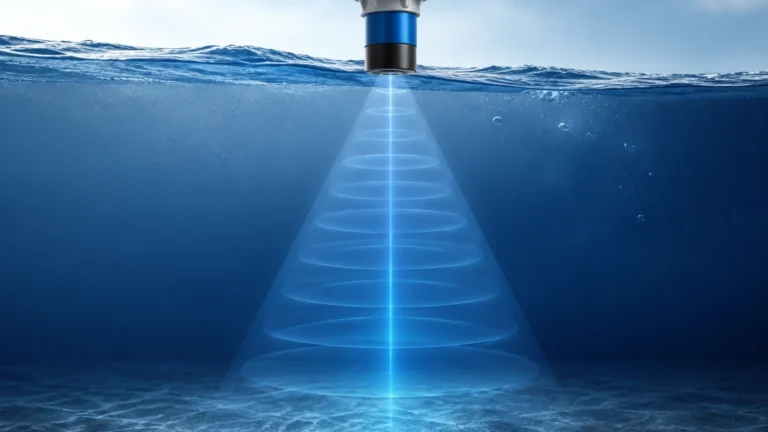
Ultrasonic meters are non-intrusive and do not require radioactive licensing. However, they struggle with high concentrations of entrained air or very thick slurries where the ultrasonic signal is attenuated too heavily. Nuclear meters are generally more reliable in high-solids applications.
Nuclear vs. Differential Pressure (DP)
DP density measurement involves measuring the pressure difference between two points at different heights in a tank. While simple, this method is prone to errors if the fluid is turbulent or if the pressure taps become clogged. Nuclear meters avoid these maintenance issues entirely.
Limitations and Challenges
Despite their versatility, nuclear density meters have specific limitations:
1. Regulatory Burden: The administrative overhead of managing radioactive sources, including licensing, specialized shipping, and disposal, can be significant.
2. Source Decay: The radioactive source decays over time (Cs-137 has a half-life of approximately 30 years). The electronics must compensate for this decay, and eventually, the source must be replaced.
3. Chemical Composition Sensitivity: If the chemical composition of the carrier liquid changes significantly (e.g., a change in salt concentration), the absorption coefficient may change, necessitating a recalibration.
Frequently Asked Questions (FAQ)
Q: Is the process material become radioactive after passing through the meter?
A: No. The gamma radiation passes through the material but does not linger or induce radioactivity in the fluid. The material remains completely safe for downstream processing or consumption.
Q: How often does a nuclear density meter need calibration?
A: Initial calibration is performed during commissioning using samples of known density. After that, the system automatically compensates for source decay. Recalibration is typically only necessary if the pipe liner is replaced or if the fluid composition changes fundamentally.
Q: Can nuclear density meters measure the density of gases?
A: While theoretically possible, the density of gas is usually too low to provide sufficient attenuation for a standard nuclear meter. They are primarily designed for liquids and slurries.
Q: What happens if the power fails?
A: The source remains in its housing. Most modern source holders include a spring-loaded shutter that automatically closes in the event of a fire or mechanical failure, though the primary safety mechanism is the physical shielding of the container.
Conclusion
Nuclear density meters represent a pinnacle of non-contact measurement technology, providing indispensable data in the most demanding industrial environments. By leveraging the principles of radiometric attenuation, these instruments allow for continuous, maintenance-free monitoring of slurries and corrosive liquids across the mining, chemical, and water treatment sectors.
When selecting a density measurement solution, it is vital to partner with a manufacturer that understands the complexities of your specific application. While nuclear meters solve specific high-end challenges, many process requirements can be met with advanced radar or ultrasonic level sensors. For a detailed look at the full spectrum of level and density measurement instrumentation, visit the Welk Main Page to review product options and application support.