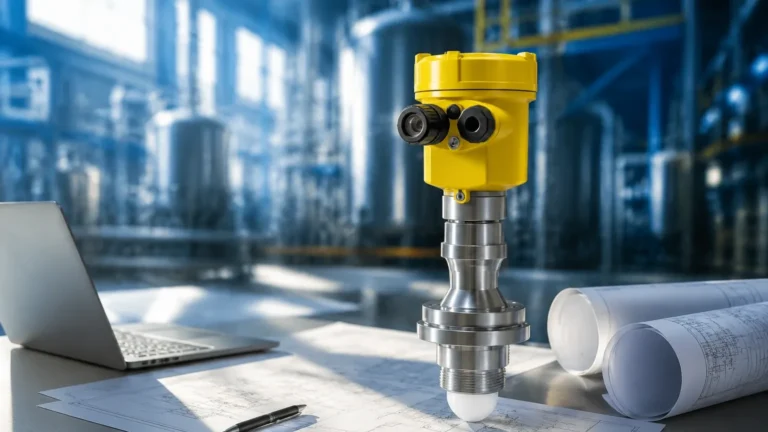
API 2350 5th Edition Overfill Prevention Process Opp Changes
API 2350 5th Edition Overfill Prevention Process Opp Changes
The American Petroleum Institute (API) Standard 2350 is the definitive guide for overfill protection in atmospheric storage tanks. With the release of the 5th edition, the industry has seen a significant shift toward a more holistic management system known as the Overfill Prevention Process (OPP). This update moves beyond simple hardware requirements, emphasizing the integration of personnel, procedures, and technology to mitigate the risks associated with tank overfills.
For engineers and facility managers, understanding the api 2350 5th edition overfill prevention process opp changes is critical for maintaining compliance and ensuring operational safety. This guide explores the technical requirements of the 5th edition, the principles of level measurement required for compliance, and how to select the appropriate instrumentation for various tank categories.
Understanding the Overfill Prevention Process (OPP)
The core of the 5th edition is the formalization of the Overfill Prevention Process (OPP). Unlike previous versions that focused heavily on the Overfill Prevention System (OPS) hardware, the OPP encompasses the entire lifecycle of overfill prevention. This includes risk assessment, operational procedures, equipment maintenance, and emergency response.
One of the primary api 2350 5th edition overfill prevention process opp changes is the requirement for a written OPP for every facility. This document must detail how the facility manages its levels, how it responds to alarms, and how it maintains its instrumentation. The standard recognizes that even the most advanced radar level meter cannot prevent an accident if the human response or the automated shutdown logic fails.
Key Components of the OPP
1. Risk Assessment: Determining the level of risk associated with each tank based on the fluid properties, flow rates, and proximity to sensitive areas.
2. Safety Parameters: Defining the levels for High (H), High-High (HH), and Maximum Working Level (MWL).
3. The Overfill Prevention System (OPS): The physical sensors, logic solvers, and final control elements (valves/pumps) used to detect and prevent overfills.
4. Human Factors: Ensuring operators are trained to recognize and act upon alarms within the specified response time.
Level Measurement Principles for Overfill Prevention
To meet the requirements of API 2350, facilities must utilize reliable level measurement technologies. Before selecting an instrument, it is essential to understand the physical principles governing their operation. To explore a full range of industrial sensors, you may visit the Main Page for detailed technical specifications.
Radar Level Measurement (FMCW and Pulse)
Radar level meters are the gold standard for API 2350 compliance due to their high accuracy and non-contact nature. They operate by emitting electromagnetic waves toward the liquid surface.
* Pulse Radar: Measures the time-of-flight of a microwave pulse. It is robust but can be less accurate in turbulent conditions.
* FMCW (Frequency Modulated Continuous Wave) Radar: Emits a continuous signal with a changing frequency. The difference in frequency between the emitted and received signal is proportional to the distance. FMCW radar, particularly at 80GHz, offers superior resolution and is ideal for narrow tanks or tanks with internal obstructions.
Ultrasonic Level Sensors
Ultrasonic sensors emit high-frequency sound waves. The sensor measures the time it takes for the sound to bounce off the liquid surface and return. While cost-effective, these are sensitive to air temperature changes, heavy foam, and vacuum conditions, which can alter the speed of sound and lead to measurement errors.
Hydrostatic Level Transmitters
These sensors measure the pressure exerted by the liquid column. Based on the formula $P = \rho gh$ (where $P$ is pressure, $\rho$ is density, $g$ is gravity, and $h$ is height), the level can be calculated if the liquid density is constant. These are contact-based and are often used as secondary verification in API 2350 systems.
Point Level Switches (Tuning Fork and Float)
Switches are used as the "High-High" alarm trigger in many Overfill Prevention Systems. Tuning fork switches vibrate at a specific frequency; when immersed in liquid, the frequency shifts, triggering an alarm. These are highly reliable for redundant safety layers.
API 2350 Tank Categories and Instrumentation Selection
The api 2350 5th edition overfill prevention process opp changes maintain the three-category classification for tanks, but with stricter requirements for how data is handled and how alarms are communicated.
| Tank Category | Description | Required Instrumentation | Recommended Technology |
| :— | :— | :— | :— |
| Category 1 | Fully Manual | Local level indicator and manual gauging. | Hydrostatic or Magnetic Level Gauge |
| Category 2 | Semi-Automated | Level transmitter with remote transmission and local/remote alarms. | 26GHz Radar or Ultrasonic |
| Category 3 | Fully Automated | Independent Automatic Overfill Prevention System (AOPS). | 80GHz FMCW Radar + Tuning Fork Switch |
Selection Criteria
When selecting instrumentation to align with the 5th edition changes, consider the following:
* Redundancy: Category 3 tanks require an independent sensor for the AOPS that is separate from the Basic Process Control System (BPCS).
* Accuracy: The instrument must be accurate enough to allow for the "Response Time" defined in the OPP. If a tank fills at 1 meter per minute and the operator needs 10 minutes to react, the sensor must be reliable enough to trigger at least 10 meters below the critical overfill point.
* Fluid Properties: Corrosive or viscous fluids may require non-contact radar to reduce maintenance needs.
Installation Considerations and Practical Engineering
Proper installation is as important as the technology itself when complying with API 2350. The 5th edition emphasizes that the "Critical High" level must be calculated based on the physical dimensions of the tank and the response time of the valves.
1. Nozzle Positioning: For radar and ultrasonic sensors, the nozzle should be located away from the tank wall and inlet pipes to avoid false reflections (parasitic signals).
2. Stilling Wells: In tanks with high turbulence or internal structures, a stilling well (a vertical pipe) can be used to provide a calm surface for the radar signal, ensuring a stable reading for the OPP.
3. Environmental Shielding: For hydrostatic transmitters, ensure the vent capillary is protected from moisture to prevent drift in the pressure reading.
4. Metric vs. Imperial Units: While API 2350 is an American standard, international installations often use metric units. It is vital that the OPP documentation and the instrument calibration use consistent units (e.g., millimeters or inches) to avoid human error during emergency responses.

Limitations of Overfill Prevention Technologies
No single technology is a universal solution. Engineers must be aware of the limitations inherent in each method to satisfy the api 2350 5th edition overfill prevention process opp changes regarding risk mitigation.
* Radar: While highly accurate, radar can be affected by very low dielectric constant liquids (like certain liquefied gases), which may require a guided wave radar (GWR) approach rather than non-contact.
* Ultrasonic: Not suitable for pressurized tanks or tanks where the vapor space contains chemicals that change the speed of sound.
* Float Switches: Susceptible to mechanical failure due to coating, corrosion, or debris. The 5th edition encourages moving toward electronic point level sensors (like tuning forks) to increase reliability.
Frequently Asked Questions (FAQ)
Q: Does API 2350 5th Edition require me to replace all my mechanical gauges?
A: Not necessarily. However, it requires that your Overfill Prevention Process (OPP) be based on a risk assessment. If mechanical gauges are found to be unreliable for the risk level of the tank (especially Category 2 and 3), they should be upgraded to modern transmitters like radar.
Q: What is the difference between an OPS and an AOPS?
A: An Overfill Prevention System (OPS) includes the sensors and alarms that alert an operator. An Automatic Overfill Prevention System (AOPS) is a subset of the OPS that can automatically shut down the flow without human intervention. The 5th edition provides specific guidance on when an AOPS is mandatory.
Q: How often should level sensors be calibrated under the 5th edition?
A: The standard does not set a rigid calendar date but requires that the facility defines a testing and maintenance schedule within their written OPP. This is typically based on the manufacturer's recommendations and the safety integrity level (SIL) of the loop.
Conclusion
The api 2350 5th edition overfill prevention process opp changes represent a move toward a more sophisticated, safety-centric approach to tank farm management. By focusing on the entire Overfill Prevention Process—rather than just the sensors—facilities can significantly reduce the likelihood of environmental disasters and equipment damage. Selecting the right measurement technology, such as 80GHz radar or redundant tuning fork switches, is a foundational step in building a compliant and reliable system. For further assistance in selecting instruments that meet these rigorous standards, you can Review product options and application support to ensure your facility remains safe and compliant.
Download API 2350 5th Edition Overfill Prevention Process Opp Changes as a PDF