Wastewater Monitoring Equipment
Wastewater Monitoring Equipment
Effective wastewater management is a cornerstone of modern industrial and municipal infrastructure. The selection and implementation of wastewater monitoring equipment are critical for ensuring regulatory compliance, protecting environmental health, and optimizing process efficiency. In wastewater treatment plants (WWTPs) and industrial discharge facilities, monitoring equipment must withstand harsh environments characterized by corrosive chemicals, varying temperatures, and high levels of suspended solids.
Selecting the right instrumentation requires a deep understanding of the physical and chemical properties of the influent and effluent, as well as the specific requirements of each stage of the treatment process. This guide provides a technical overview of the measurement principles, selection criteria, and installation best practices for level and flow monitoring in wastewater applications.
Core Measurement Principles in Wastewater Monitoring
Before selecting specific wastewater monitoring equipment, it is essential to understand the physics behind the most common measurement technologies. Each principle has distinct advantages and limitations depending on the media and environment.
Radar Level Measurement (Non-Contact)
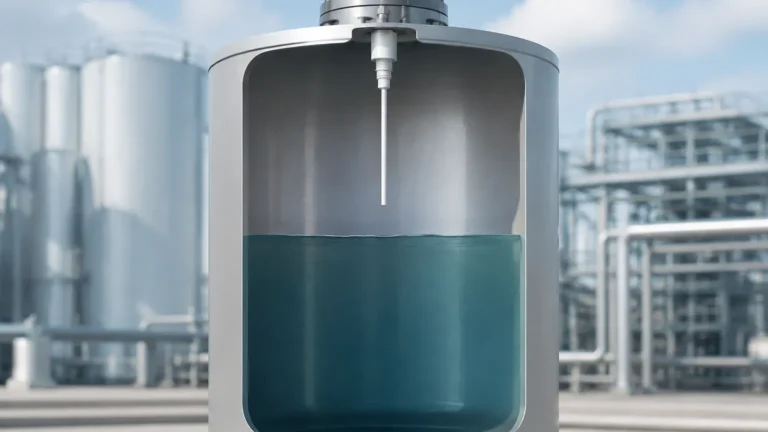
Radar level meters operate on the Time-of-Flight (ToF) principle. The device emits high-frequency microwave pulses (typically in the 26GHz or 80GHz range) toward the liquid surface. These pulses are reflected back to the sensor. The distance is calculated based on the time interval between emission and reception.
Because radar waves do not require a physical medium for travel, they are unaffected by air temperature, pressure, or the presence of steam and dust. This makes radar an excellent choice for volatile wastewater tanks or outdoor basins where environmental conditions fluctuate. High-frequency 80GHz radar is particularly effective due to its narrow beam angle, which avoids interference from internal tank structures like ladders or agitators.
Ultrasonic Level Measurement (Non-Contact)
Ultrasonic sensors also use the ToF principle but utilize sound waves instead of electromagnetic waves. The transducer emits an ultrasonic pulse that reflects off the surface of the wastewater. The time taken for the echo to return is proportional to the distance.
Ultrasonic technology is a cost-effective solution for open-channel flow measurement and sump monitoring. However, sound velocity is affected by air temperature. Most modern wastewater monitoring equipment using ultrasonic technology includes integrated temperature compensation. It is important to note that heavy foam or significant steam can absorb or scatter sound waves, leading to signal loss.
Hydrostatic Pressure Measurement (Contact)
Hydrostatic level transmitters measure the pressure exerted by the liquid column above the sensor. According to Pascal's law, the pressure at a certain depth is directly proportional to the height of the liquid and its density.
In wastewater applications, submersible hydrostatic transducers are frequently used in deep wells, lift stations, and reservoirs. These sensors are robust but require careful selection of diaphragm materials (such as ceramic or stainless steel) to resist abrasion and corrosion from grit and chemicals.
Magnetic Level Gauges
For chemical storage tanks used in wastewater treatment (such as those holding flocculants or acids), magnetic level gauges provide a clear visual indication. A float containing a magnet moves with the liquid level inside a bypass chamber, flipping magnetic flaps on an external scale. These are often paired with reed switches or transmitters for remote monitoring.
Selecting Wastewater Monitoring Equipment: Key Evaluation Criteria
When evaluating wastewater monitoring equipment, engineers must look beyond basic specifications. The following criteria are essential for long-term reliability:
1. Media Composition: Wastewater is rarely pure water. It contains fats, oils, grease (FOG), suspended solids, and corrosive agents. Sensors must be constructed from chemically resistant materials like PVDF, PTFE, or high-grade stainless steel.
2. Turbulence and Foam: In aeration tanks or rapid-mix zones, turbulence and foam are common. Radar is generally superior in these conditions, as ultrasonic signals may be lost in the foam layer.
3. Measurement Range: From shallow flumes requiring millimeter precision to deep sludge digesters reaching 20 meters or more, the equipment must be calibrated for the specific range of the application.
4. Integration Requirements: Most industrial setups require 4-20mA HART, Modbus, or Profibus outputs to communicate with a central PLC or SCADA system. To explore a wide range of compatible instruments, engineers can Review product options and application support to find the best fit for their specific communication protocols.
Practical Selection Table for Wastewater Applications
| Technology | Best For | Advantages | Limitations |
| :— | :— | :— | :— |
| 80GHz Radar | Chemical tanks, turbulent basins | High precision, narrow beam, ignores foam | Higher initial cost |
| Ultrasonic | Open channels, flumes, sumps | Cost-effective, non-contact | Affected by steam, foam, and wind |
| Hydrostatic | Deep wells, lift stations | Simple installation, handles deep ranges | Subject to clogging if sludge is thick |
| Level Switches | Overfill protection, pump control | High reliability, simple logic | Point level only (no continuous data) |
Installation Considerations and Best Practices
Correct installation is as important as selecting the right technology. Even the most advanced wastewater monitoring equipment will fail if improperly positioned.
Avoiding Dead Zones
All non-contact sensors (radar and ultrasonic) have a "dead zone" or "blocking distance" directly beneath the sensor face where measurements cannot be taken. Ensure the sensor is mounted high enough so that the maximum liquid level never enters this zone.
Positioning and Mounting
* Inflow Interference: Never mount a sensor directly above an inlet pipe. The turbulence and falling liquid will cause erratic readings.
* Wall Reflection: Sensors should be mounted at a distance from the tank wall (typically 1/6th of the tank diameter) to prevent signal interference from wall seams or build-up.
* Stilling Wells: In extremely turbulent applications, installing the sensor inside a stilling well (a vertical pipe) can provide a calm surface for more accurate measurement.
Environmental Protection
Outdoor installations should include sunshades to prevent extreme temperature fluctuations from affecting the electronics or the accuracy of ultrasonic sound speed calculations. Furthermore, ensure that the IP (Ingress Protection) rating is sufficient—IP68 is recommended for any equipment that may be submerged or exposed to heavy wash-downs.
Common Risks and Limitations
While modern wastewater monitoring equipment is highly advanced, certain risks remain:
* Material Build-up: In primary treatment, sewage can be "sticky." Build-up on an ultrasonic transducer face or a hydrostatic diaphragm can cause "signal freezing" or drift. Non-contact radar is less susceptible but still requires periodic inspection.
* Corrosive Vapors: Hydrogen sulfide (H2S) is common in wastewater. It is highly corrosive to copper and certain plastics. Ensure all cable entries and housings are properly sealed.
* Lightning and Surges: Since many wastewater monitoring points are outdoors and elevated, they are prone to lightning strikes. Integrated surge protection is a vital consideration for the longevity of the instrument.
Information to Confirm Before Procurement
Before finalizing a project specification, the following data points should be confirmed with the equipment manufacturer or technical lead:
1. Exact Chemical Profile: Are there solvents or acids present that require specialized O-rings or diaphragm coatings?
2. Tank Internal Geometry: Are there baffles, agitators, or heating coils that could interfere with a radar or ultrasonic beam?
3. Power Availability: Is the site loop-powered (2-wire) or does it require a separate 4-wire power supply?
4. Hazardous Area Rating: Does the installation site require ATEX, IECEx, or North American Class/Division explosion-proof certification?
Frequently Asked Questions (FAQ)
Q: Can I use ultrasonic sensors for measuring sludge level?
A: Yes, but with caution. If the sludge is highly aerated or has a very thick foam layer, the signal may be absorbed. Radar or specialized hydrostatic sensors are often more reliable for thick sludge.
Q: How often does wastewater monitoring equipment need calibration?
A: This depends on the technology. Radar sensors are extremely stable and may only need verification once a year. Hydrostatic sensors may require more frequent checks to ensure the diaphragm hasn't been compromised by debris.
Q: What is the benefit of 80GHz radar over 26GHz radar in wastewater?
A: The 80GHz frequency allows for a much smaller antenna and a narrower beam (often as small as 3 degrees). This makes it much easier to install in crowded tanks or through narrow nozzles without hitting the sides or internal obstacles.
Q: Is non-contact measurement always better than contact measurement?
A: Not necessarily. While non-contact (radar/ultrasonic) reduces maintenance by avoiding the media, hydrostatic sensors are often better for very deep underground sumps where mounting a sensor at the top is impractical or where the headspace is too cramped for a radar beam.
Conclusion
Selecting the appropriate wastewater monitoring equipment is a balance of technical requirements, environmental constraints, and budget. By understanding the underlying principles of radar, ultrasonic, and hydrostatic measurement, engineers can design systems that provide accurate data for years with minimal maintenance. As a professional manufacturer, Welk provides a comprehensive range of industrial level measurement instruments tailored to the rigors of the wastewater industry. Proper planning, from verifying chemical compatibility to ensuring correct mounting geometry, will ensure that your monitoring system remains a reliable asset in your facility's operation.