Endress Hauser Logo
Endress Hauser Logo
In the landscape of industrial process automation, the Endress Hauser logo serves as a significant marker of quality and engineering heritage. For procurement managers, instrumentation engineers, and plant operators, this visual identity is synonymous with a specific standard of level, flow, pressure, and temperature measurement. Understanding the context behind such industry-leading brands is essential when evaluating instrumentation for complex industrial environments. This guide explores the significance of the Endress+Hauser identity, the measurement principles that define the sector, and how to select the right level measurement solutions for specific applications.
The Significance of the Endress+Hauser Brand Identity
The Endress Hauser logo is more than a corporate graphic; it represents a multi-decade evolution in the field of "People for Process Automation." In the B2B sector, a logo acts as a shorthand for technical reliability, compliance with international standards (such as SIL, ATEX, and FM), and a commitment to research and development.
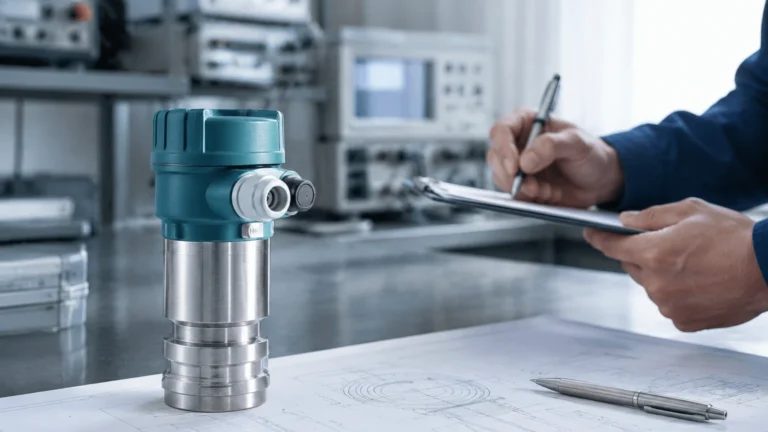
When professionals encounter this logo on a radar level transmitter or an ultrasonic sensor, there is an immediate expectation of performance. However, in a competitive global market, it is equally important to understand the underlying technologies that these instruments employ. Whether you are sourcing from established giants or exploring agile manufacturers like Welk, the fundamental physics of level measurement remain the constant factor in process success. For a comprehensive overview of available technologies, engineers often consult the Main Page of specialized manufacturers to compare specifications and performance metrics.
Core Principles of Level Measurement
Before selecting an instrument based on brand reputation or the presence of a specific logo, it is vital to understand the measurement principles involved. Level measurement is generally divided into continuous measurement and point level detection.
1. Radar Level Measurement (ToF)
Radar level meters operate on the Time-of-Flight (ToF) principle. The device emits high-frequency electromagnetic pulses (typically in the 6 GHz to 80 GHz range). These pulses reflect off the surface of the medium and return to the sensor. The distance is calculated based on the time it takes for the pulse to travel to the surface and back.
* Guided Wave Radar (GWR): Uses a probe to guide the signal, making it ideal for low dielectric constants or turbulent surfaces.
* Non-Contact Radar: Emits signals through the air, suitable for corrosive or hygienic applications where the sensor should not touch the medium.
2. Ultrasonic Level Measurement
Ultrasonic sensors function similarly to radar but use sound waves instead of electromagnetic waves. The transducer emits an ultrasonic pulse that bounces off the material surface. This technology is cost-effective for water treatment and simple storage applications but can be affected by air temperature, heavy foam, or vacuum conditions.
3. Hydrostatic Level Measurement
This method measures the pressure exerted by a liquid column. The pressure at the bottom of a tank is directly proportional to the height of the liquid, provided the density is constant. It is a robust solution for deep wells and vented tanks.
4. Capacitance Level Measurement
This principle relies on the change in electrical capacitance between two electrodes (or an electrode and the tank wall) as the level of the medium changes. It is highly effective for both liquids and solids but requires calibration based on the dielectric properties of the material.
Technical Selection Criteria for Level Instruments
Choosing between different brands and models requires a systematic evaluation of the process environment. The following table provides a comparison of common technologies used by industry leaders and specialized manufacturers.
| Technology | Typical Accuracy | Max Range | Media Type | Main Advantages |
| :— | :— | :— | :— | :— |
| 80 GHz Radar | ±1 mm | 120 m | Liquids/Solids | High precision, small beam angle |
| Guided Wave Radar | ±2 mm | 45 m | Liquids/Slurries | Unaffected by foam or dust |
| Ultrasonic | ±0.2% of range | 15 m | Water/Chemicals | Non-contact, cost-effective |
| Hydrostatic | ±0.1% of span | 200 m | Liquids | Simple installation, reliable |
| Magnetic Gauge | ±5 mm | 6 m | Clean Liquids | Visual indication, no power needed |
| Level Switch | N/A (Point) | N/A | Various | Overfill protection, dry run prevention |
Evaluating the Endress Hauser Logo and Market Alternatives
In the global market, the Endress Hauser logo represents a premium tier of instrumentation. However, the modern industrial landscape has seen the emergence of manufacturers who provide equivalent technical specifications with greater flexibility in customization.
When evaluating a provider, consider the following:
* Total Cost of Ownership (TCO): Beyond the initial purchase price, consider the cost of spare parts, specialized software for calibration, and technical support fees.
* Interoperability: Does the instrument support standard protocols like HART, PROFIBUS, or Modbus? Compatibility with existing PLC and SCADA systems is critical.
* Lead Times: Large multinational corporations often have longer lead times for customized solutions. Smaller, specialized manufacturers may offer faster turnaround for OEM/ODM requirements.
For those looking to balance high-end performance with cost-efficiency, reviewing product options and application support on the Main Page of specialized providers can yield significant advantages in project timelines and budget management.

Installation and Engineering Considerations
Regardless of the brand or the logo on the housing, the accuracy of a level meter is heavily dependent on correct installation. Engineers must adhere to several critical guidelines:
1. Blocking Distance (Dead Zone): Every non-contact sensor has a minimum distance near the transducer where it cannot measure. Ensure the maximum fill level does not enter this zone.
2. Beam Angle and Obstructions: For radar and ultrasonic sensors, the signal spreads in a cone. Internal tank structures like ladders, agitators, or heating coils can cause false reflections. Selecting a sensor with a narrow beam angle (e.g., 80 GHz radar) minimizes these issues.
3. Nozzle Dimensions: The height and diameter of the mounting nozzle can interfere with the signal. Follow the manufacturer's ratio guidelines to prevent "ringing" or signal attenuation at the nozzle neck.
4. Environmental Protection: In outdoor installations, sunshields are recommended to prevent temperature fluctuations from affecting the electronics or the speed of sound (in ultrasonic units).
Limitations and Common Risks
Even the most recognized instruments have limitations that must be acknowledged during the design phase:
* Vapor and Condensation: While radar is generally resistant to vapor, heavy condensation on the antenna can attenuate the signal. Integrated air purging or PTFE-coated antennas are often necessary.
* Media Density Changes: Hydrostatic sensors are sensitive to changes in liquid density. If the process involves mixing different chemicals or significant temperature swings, the density must be compensated for in the control system.
* Surface Turbulence: High-speed agitators create waves that can scatter radar or ultrasonic signals. In these cases, a stilling well or a guided wave radar probe is the preferred solution.
Frequently Asked Questions (FAQ)
Q: Does the Endress Hauser logo guarantee compatibility with all PLC systems?
A: While E+H instruments support standard industrial protocols, compatibility depends on the specific communication module selected (e.g., 4-20mA HART, Foundation Fieldbus). Always verify the GSD or EDD files are available for your control system.
Q: How does Welk compare to major brands like Endress+Hauser?
A: Welk focuses on providing high-accuracy, industrial-grade level measurement instruments with a focus on cost-effectiveness and customization. While E+H offers a broader range of analytical instruments, Welk specializes in radar, ultrasonic, and hydrostatic level solutions tailored for industrial automation and water treatment.
Q: Can I replace an E+H sensor with a different brand without changing my piping?
A: Yes, provided the process connection (flange size, thread type) and the communication protocol match. Most industrial level meters follow standard ISO or ANSI flange dimensions.
Q: Is 80 GHz radar always better than 26 GHz?
A: Not necessarily. While 80 GHz offers a narrower beam and better precision, 26 GHz may be more robust in extremely dusty environments or where heavy steam is present, depending on the specific antenna design.
Conclusion
The Endress Hauser logo remains a benchmark for excellence in the process industry. However, successful engineering requires looking beyond the brand to the core physics of the application. By understanding measurement principles, evaluating technical specifications, and considering agile manufacturers who offer reliable and cost-effective alternatives, engineers can ensure long-term operational success. For those currently in the selection phase, it is highly recommended to Review product options and application support to find the most appropriate technology for your specific industrial needs.