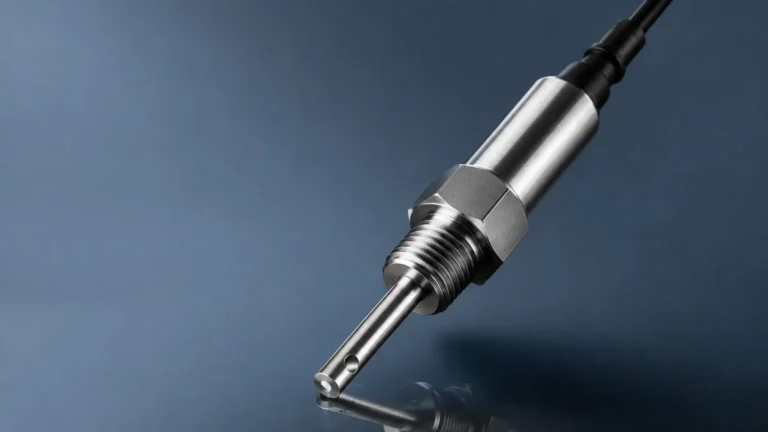
Ss 2000
Ss 2000
In the landscape of industrial automation, the term ss 2000 is frequently associated with high-performance level measurement solutions designed for demanding process environments. Whether referring to specific stainless steel (SS) integrated ultrasonic transmitters or specialized radar level meters, these instruments represent a bridge between cost-effective monitoring and high-durability engineering. For process engineers and facility managers, understanding the technical nuances of the SS 2000 series is essential for ensuring operational efficiency in water treatment, chemical processing, and oil and gas storage.
Welk, as a professional manufacturer of industrial level measurement instruments, provides a comprehensive range of solutions that align with the rigorous standards expected of the SS 2000 category. By focusing on material integrity and signal precision, these instruments address the core challenges of modern level sensing. For more information on the full range of available technologies, users can visit the Main Page to review product options and application support.
Principles of Level Measurement in SS 2000 Series
Before selecting an instrument within the ss 2000 framework, it is vital to understand the underlying physical principles that govern its operation. Most devices in this category utilize non-contact technologies, primarily ultrasonic or radar-based systems.
Ultrasonic Measurement Principle
Ultrasonic level meters operate on the Time-of-Flight (ToF) principle. The sensor emits an ultrasonic pulse, which travels through the air or gas space above the medium, reflects off the surface, and returns to the transducer. The distance ($D$) is calculated using the formula:
$D = (c \times t) / 2$
Where:
* c is the speed of sound in the medium (typically air).
* t is the measured transit time.
The SS 2000 series often incorporates temperature compensation sensors because the speed of sound varies with air temperature (approximately 0.6 m/s per degree Celsius). By measuring the internal temperature, the device can adjust the calculation to maintain accuracy within ±0.25% of the range.
Radar (Microwave) Measurement Principle
For applications involving high temperatures, pressures, or heavy vapors where sound waves might be attenuated, the SS 2000 series may include radar variants. These use electromagnetic pulses (often in the 26 GHz or 80 GHz frequency range). Unlike sound, electromagnetic waves travel at the speed of light and are largely unaffected by air temperature or vacuum conditions. The dielectric constant ($ε_r$) of the material is the primary factor influencing the strength of the reflected signal.
Technical Specifications and Selection Criteria
Choosing the correct ss 2000 configuration requires a detailed analysis of the process media and the physical environment of the tank or silo. The following table provides a comparison of typical specifications for standard SS 2000 series instruments.
| Feature | Ultrasonic SS 2000 | Radar SS 2000 (Pulse) | Guided Wave Radar |
| :— | :— | :— | :— |
| Measurement Range | 0.4m – 15m | 0.3m – 30m | 0.3m – 20m |
| Accuracy | ±0.25% FS | ±3mm | ±2mm |
| Process Temperature | -40°C to 70°C | -40°C to 150°C | -40°C to 250°C |
| Process Pressure | Atmospheric | Up to 4.0 MPa | Up to 10.0 MPa |
| Output Signal | 4-20mA / HART | 4-20mA / HART / RS485 | 4-20mA / HART |
| Housing Material | SS304 / SS316L / Plastic | SS316L / Aluminum | SS316L |
| Protection Class | IP66 / IP67 | IP67 / IP68 | IP67 |
Evaluating Material Compatibility
The "SS" in ss 2000 typically signifies the use of Stainless Steel for the wetted parts or the housing. In chemical applications involving hydrochloric acid or high-salinity brine, standard SS304 may be insufficient. In such cases, upgrading to SS316L or utilizing a PTFE (Teflon) coating on the transducer face is necessary to prevent corrosion and premature sensor failure.
Installation Considerations for SS 2000 Instruments
Correct installation is the most critical factor in ensuring the reliability of an ss 2000 level meter. Even the most advanced sensor will fail to provide accurate data if it is mounted in a position that generates false echoes or signal interference.
1. The Dead Zone (Blocking Distance)
Every ultrasonic or radar sensor has a "dead zone" immediately below the transducer face where measurements cannot be taken. For a standard SS 2000 ultrasonic meter with a 10-meter range, the dead zone is typically between 0.3m and 0.5m. The instrument must be mounted high enough so that the maximum liquid level never enters this zone. If the level enters the dead zone, the device may report a full tank or a random error value.
2. Beam Angle and Obstructions
The signal emitted by the sensor spreads in a cone shape. For an ss 2000 device with a 10-degree beam angle, the diameter of the signal footprint increases as it travels deeper into the tank.
* Formula for spread: $R = D \times \tan(\theta/2)$
* Avoidance: Ensure that ladders, heating coils, or agitators do not intersect the beam path. If obstructions are unavoidable, many SS 2000 units feature "false echo suppression" software that allows the user to map out and ignore static reflections.
3. Mounting Position
* Nozzle Height: If the sensor is mounted on a pipe nozzle, the nozzle must be wide enough and short enough to prevent the signal from bouncing off the nozzle walls.
* Centering: Avoid mounting the sensor in the exact center of a domed-roof tank, as this can focus reflected signals and cause interference. Conversely, do not mount it too close to the tank wall (maintain a minimum distance of 200mm to 500mm depending on height).
Application Limitations and Common Risks
While the ss 2000 series is versatile, it is not a universal solution for every industrial scenario. Engineers must be aware of the following limitations:
* Heavy Foam: Ultrasonic waves are often absorbed by thick, dense foam. If the process involves significant foaming, a radar-based ss 2000 or a contact-based hydrostatic pressure transmitter may be more reliable.
* Vacuum Conditions: Ultrasonic sensors require a medium (air or gas) to transmit sound. In a total vacuum, they cannot function. Radar is the preferred alternative here.
* Dust and Turbulence: In solid silos, heavy dust during filling can attenuate ultrasonic signals. High-frequency radar (80 GHz) is typically used in these environments due to its ability to penetrate dust clouds.
* Vapor and Condensation: While some SS 2000 models handle condensation well, heavy steam can change the speed of sound, leading to errors in ultrasonic readings. Radar is generally immune to these effects.

Maintenance and Troubleshooting
To maintain the longevity of an ss 2000 installation, a routine maintenance schedule should be implemented.
1. Transducer Cleaning: In applications with high humidity or splashing, buildup can occur on the sensor face. This should be cleaned periodically with a soft cloth and mild detergent. Avoid abrasive tools that could scratch the SS316L or PTFE surface.
2. Signal Strength Monitoring: Most modern SS 2000 units provide a signal-to-noise ratio (SNR) or echo strength value via the HART protocol. A steady decline in signal strength often indicates either a dirty sensor or an impending failure of the transducer electronics.
3. Cable Integrity: Ensure that cable glands are tightened to maintain the IP67 rating. Moisture ingress into the terminal chamber is a leading cause of intermittent signal loss in outdoor installations.
Frequently Asked Questions (FAQ)
Q: Can the ss 2000 be used for both liquids and solids?
A: Yes, but the configuration differs. For solids, a higher power output and a narrower beam angle are usually required to account for the uneven surface and lower reflectivity of the material.
Q: What is the maximum distance an ss 2000 can measure?
A: Standard ultrasonic models typically reach up to 15 or 20 meters. For distances exceeding 30 meters, radar technology within the SS 2000 category is recommended.
Q: Is the ss 2000 compatible with existing PLC systems?
A: Most units provide a standard 4-20mA analog output, making them compatible with virtually all Programmable Logic Controllers (PLCs) and Distributed Control Systems (DCS). Many also support digital communication via HART or Modbus RS485.
Q: How do I handle a tank with an agitator?
A: Use the "False Echo Storage" function. By running the agitator while the tank is empty, the ss 2000 can record the reflections from the blades and subtract them from the active measurement during normal operation.
Conclusion
The ss 2000 represents a robust standard for industrial level measurement, combining the durability of stainless steel construction with advanced signal processing. Whether applied in water management or complex chemical processing, its success depends on careful selection based on the physical properties of the media and adherence to strict installation guidelines. By understanding the trade-offs between ultrasonic and radar technologies, and by leveraging the expertise of manufacturers like Welk, industrial operators can achieve precise, long-term level monitoring. For further technical documentation and product specifications, visiting the Main Page is the recommended next step for engineering teams.