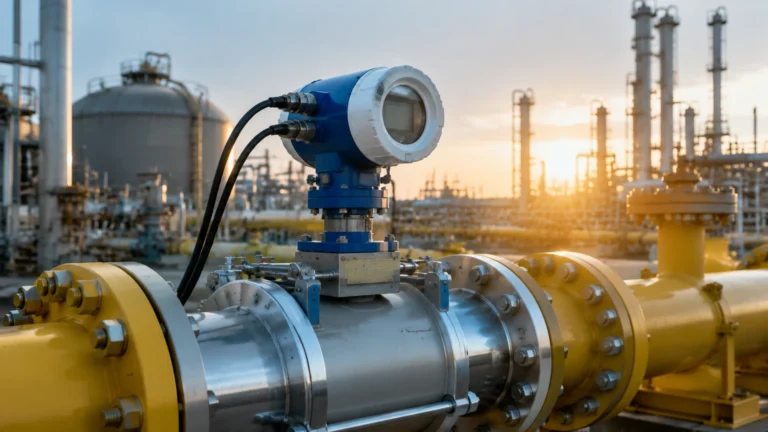
Hygienic Flow Transmitter
Hygienic Flow Transmitter
In the modern industrial landscape, particularly within the food, beverage, pharmaceutical, and biotechnology sectors, the precision of fluid measurement must be balanced with uncompromising sanitary standards. A hygienic flow transmitter is a specialized instrument designed to measure the volume or mass flow rate of liquids while adhering to strict cleanliness protocols. Unlike standard industrial flow meters, these devices are engineered to prevent bacterial growth, withstand aggressive cleaning cycles, and ensure that the process medium remains uncontaminated.
For process engineers and plant managers, selecting the right hygienic flow transmitter involves understanding both the physics of fluid dynamics and the regulatory requirements of sanitary engineering. This guide explores the fundamental principles, selection criteria, and installation best practices for these critical instruments.
Understanding the Role of a Hygienic Flow Transmitter
A hygienic flow transmitter serves as the "eyes" of a sanitary production line. In applications such as milk pasteurization, beer brewing, or vaccine manufacturing, even a minor deviation in flow rate can result in a compromised batch or a failure to meet safety regulations.
The primary distinction of a hygienic transmitter lies in its construction. Every surface in contact with the fluid (wetted parts) must be smooth, non-porous, and free of "dead legs"—areas where fluid can stagnate and harbor microorganisms. These instruments are typically integrated into automated systems where they provide real-time data to PLCs (Programmable Logic Controllers) to maintain consistent production quality.
Core Measurement Principles for Sanitary Applications
Before selecting a specific model, it is essential to understand the measurement principles commonly employed in hygienic environments. Each technology has specific advantages depending on the fluid's properties, such as conductivity, viscosity, and transparency.
Electromagnetic Flow Measurement
Electromagnetic flow meters, often called "mag meters," operate based on Faraday’s Law of Electromagnetic Induction. When a conductive liquid flows through a magnetic field generated by the meter, it creates a voltage proportional to its velocity.
* Suitability: Excellent for conductive liquids like milk, fruit juices, and cleaning solutions (CIP chemicals).
* Advantages: No moving parts in the flow stream, meaning zero pressure drop and minimal maintenance. The smooth bore design is inherently hygienic.
Ultrasonic Flow Measurement
Ultrasonic transmitters use sound waves to determine flow velocity. The most common hygienic type is the "transit-time" method, where sensors send ultrasonic pulses back and forth across the pipe. The difference in time taken for the pulse to travel with the flow versus against the flow is used to calculate velocity.
* Suitability: Ideal for non-conductive fluids like purified water (WFI) or oils.
* Advantages: Can be non-intrusive (clamp-on designs), though inline hygienic versions are more common for high-precision pharmaceutical applications.
Coriolis Mass Flow Measurement
Coriolis meters measure mass flow rather than volume. They utilize the Coriolis effect by vibrating a tube through which the fluid passes. The resulting twist in the tube is directly proportional to the mass flow rate.
* Suitability: High-viscosity fluids like syrups, creams, or chocolate, and applications requiring extreme precision.
* Advantages: Measures mass, density, and temperature simultaneously. It is unaffected by changes in fluid pressure or viscosity.
Material Science and Sanitary Design Standards
The construction of a hygienic flow transmitter is governed by international standards to ensure consumer safety. When evaluating equipment, engineers must look for specific certifications and material grades.
Materials of Construction
* Stainless Steel 316L: The industry standard for housings and wetted parts due to its excellent corrosion resistance and ability to withstand high temperatures.
* Liners and Seals: For electromagnetic meters, liners are often made of PFA (Perfluoroalkoxy) or PTFE (Polytetrafluoroethylene). These materials are chemically inert and can withstand Steam-in-Place (SIP) temperatures up to 150°C.
* Surface Finish: The internal surface roughness (Ra) is a critical metric. For most hygienic applications, an Ra ≤ 0.8 µm is required, often achieved through electropolishing to ensure a mirror-like finish that prevents protein or bacterial adhesion.
Regulatory Compliance
* 3-A Sanitary Standards: A US-based certification focusing on the design of equipment for the dairy and food industry.
* EHEDG (European Hygienic Engineering & Design Group): Provides guidelines for hygienic design to prevent contamination.
* FDA (Food and Drug Administration): Ensures that all materials used in the transmitter are safe for food and drug contact.
Selection Criteria for Industrial Process Control
Choosing the correct hygienic flow transmitter requires a detailed analysis of the process conditions. Engineers should use the following criteria to narrow down their options:
1. Fluid Conductivity: If the fluid is non-conductive (e.g., demineralized water), electromagnetic meters cannot be used. Ultrasonic or Coriolis technologies are required.
2. Flow Range and Accuracy: Determine the minimum and maximum flow rates. Coriolis meters offer the highest accuracy (often ±0.1%), while electromagnetic meters typically offer ±0.5%.
3. Process Temperature and Pressure: Ensure the transmitter can withstand the peak temperatures reached during SIP (Steam-in-Place) cycles, which often involve pressurized steam at 121°C to 140°C.
4. Connection Type: Sanitary connections like Tri-Clamp, SMS, or DIN 11851 are standard. These allow for easy removal for inspection or manual cleaning without leaving crevices for bacteria.
For organizations looking to integrate these flow measurements with comprehensive tank inventory and monitoring systems, the Main Page offers a range of complementary level measurement solutions that adhere to similar industrial standards.
Installation Considerations and Best Practices
Even the most accurate hygienic flow transmitter will perform poorly if installed incorrectly. Proper installation is also vital for maintaining the sanitary integrity of the system.
Orientation and Drainage
To ensure the system remains hygienic, the transmitter must be installed in a way that allows for complete drainage. In horizontal pipes, the electrodes of a mag meter should be in a horizontal plane to prevent air bubbles (at the top) or sediment (at the bottom) from interfering with the measurement. For CIP processes, vertical installation with upward flow is often preferred to ensure the pipe is always full and easily drained.
Straight Pipe Runs
Most flow technologies require a certain length of straight pipe before and after the transmitter to stabilize the flow profile. A common rule of thumb is 5 diameters (5D) of straight pipe upstream and 2 diameters (2D) downstream. However, some modern "zero-run" mag meters have been developed to eliminate this requirement in tight spaces.
Grounding and Shielding
Electromagnetic flow transmitters are sensitive to electrical noise. Proper grounding to the process liquid is essential for a stable signal. In sanitary systems using plastic piping or lined stainless steel, grounding rings or specialized grounding electrodes are necessary.

Limitations and Potential Operational Risks
While highly advanced, hygienic flow transmitters are not without limitations. Recognizing these risks early can prevent costly downtime.
* Entrained Air: Air bubbles in the liquid can cause significant measurement errors in both electromagnetic and ultrasonic meters. In food processing (like milk reception), air eliminators are often installed upstream of the flow meter.
* Scaling and Coating: In applications like chocolate or yogurt production, the fluid may coat the internal walls of the meter. While hygienic designs minimize this, heavy coating can eventually insulate electrodes or change the internal diameter, leading to drift.
* Vibration: Coriolis meters are particularly sensitive to external pipe vibrations. They must be securely mounted to prevent mechanical noise from being interpreted as flow data.
* Thermal Shock: Rapid changes in temperature (e.g., switching from a 5°C product to 85°C cleaning solution) can stress the liners of electromagnetic meters. Selecting high-quality PFA liners with mechanical reinforcement is crucial for longevity.
Comparison of Hygienic Flow Measurement Technologies
| Feature | Electromagnetic (Mag) | Coriolis Mass Flow | Ultrasonic (Transit-Time) |
| :— | :— | :— | :— |
| Primary Measurement | Volume Flow | Mass Flow | Volume Flow |
| Accuracy (Typical) | ±0.5% | ±0.1% | ±1.0% |
| Fluid Conductivity | Required (>5 μS/cm) | Not Required | Not Required |
| Pressure Drop | Zero | Low to Medium | Zero |
| Relative Cost | Moderate | High | Moderate to High |
| Maintenance | Very Low | Low | Low |
Frequently Asked Questions (FAQ)
Q: How often should a hygienic flow transmitter be calibrated?
A: Calibration frequency depends on the criticality of the process and local regulations. In pharmaceutical applications, annual calibration is standard. Many modern transmitters offer "self-verification" features that check the health of the electronics and sensors between formal calibrations.
Q: Can these meters handle abrasive fluids?
A: Yes, but material choice is key. For abrasive hygienic fluids (like fruit pulps with seeds), an electromagnetic meter with a durable PFA liner is usually the best choice, as there are no moving parts to wear out.
Q: Is a Tri-Clamp connection enough to ensure hygiene?
A: While Tri-Clamp is a sanitary connection, the gasket material must also be compliant (e.g., EPDM, Viton, or PTFE) and must be inspected regularly for degradation, as a failing gasket can create a niche for bacteria.
Q: What is the difference between CIP and SIP?
A: CIP (Clean-in-Place) involves circulating chemical detergents and water at high velocities to clean the interior surfaces. SIP (Steam-in-Place) involves using high-temperature steam to sterilize the equipment. A hygienic flow transmitter must be rated for the temperatures and pressures of both processes.
Q: How do I handle flow measurement in very small pipes (e.g., 6mm)?
A: For very low flow rates in small tubes, specialized Coriolis meters or micro-flow electromagnetic meters are available. These often use different housing designs but maintain the same sanitary surface finish requirements.
Summary for Project Planning
When planning a project involving a hygienic flow transmitter, it is vital to confirm the chemical compatibility of the wetted materials with both the product and the cleaning agents. Furthermore, engineers should verify that the selected transmitter’s digital communication protocol (such as HART, Modbus, or Profinet) is compatible with the existing plant control system.
By prioritizing sanitary design and selecting the measurement principle that best matches the fluid characteristics, manufacturers can ensure long-term accuracy and safety. For more information on integrating these sensors into broader industrial automation frameworks, including level and pressure monitoring, consult the technical resources available on the Main Page.