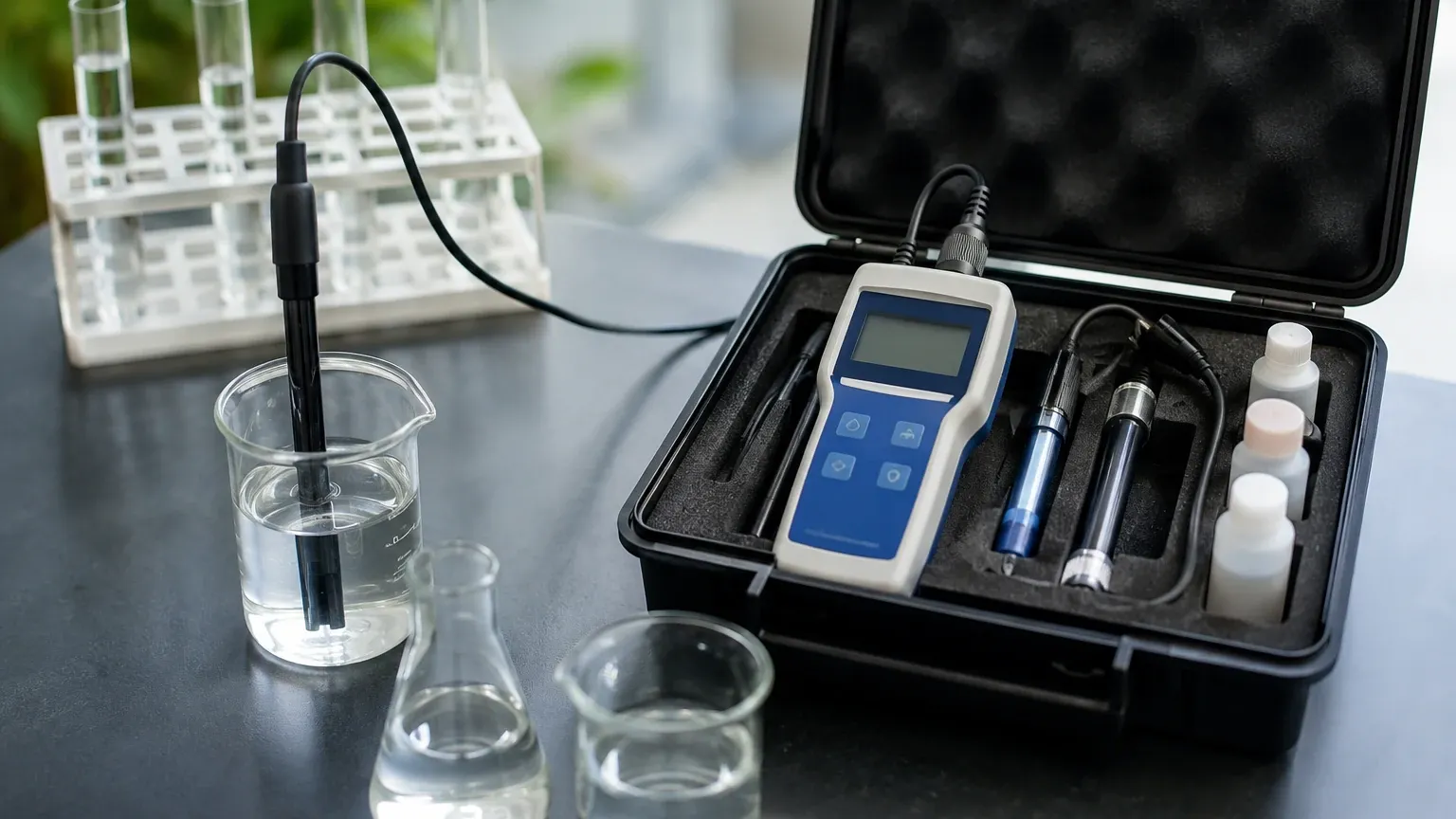
Portable Ph and Conductivity Meter
Portable Ph and Conductivity Meter
In industrial process control and environmental monitoring, the ability to perform rapid, on-site analysis of liquid properties is essential for maintaining operational efficiency and regulatory compliance. Among the most critical parameters measured are pH and electrical conductivity. A portable pH and conductivity meter provides engineers and technicians with a versatile tool to assess water quality, chemical concentrations, and process stability without the delays associated with laboratory testing.
While fixed-site instrumentation provides continuous monitoring, portable units are indispensable for spot-checking, calibrating online sensors, and troubleshooting remote locations. Understanding the underlying measurement principles, selection criteria, and maintenance requirements is vital for ensuring the accuracy of these field instruments.
Measurement Principles of pH and Conductivity
Before selecting or deploying a portable pH and conductivity meter, it is necessary to understand how these two distinct parameters are measured and why they are often combined into a single handheld device.
pH Measurement: The Potentiometric Principle
pH is a measure of the hydrogen ion activity in a solution, indicating its acidity or alkalinity. The measurement is based on the Nernst equation, which relates the electrical potential of an electrochemical cell to the concentration of ions. A standard pH sensor consists of two main components: a glass sensing electrode and a reference electrode.
When the glass electrode is immersed in a liquid, a thin hydrated layer forms on the glass bulb. An ion exchange occurs between the hydrogen ions in the solution and the ions on the glass surface, creating a millivolt (mV) potential. The reference electrode provides a stable, known potential against which the sensing electrode is compared. The meter converts this voltage difference into a pH value ranging from 0 to 14. Because the potential generated is temperature-dependent, modern portable meters include Automatic Temperature Compensation (ATC) to adjust the reading to a standard reference, usually 25°C.
Conductivity Measurement: The Electrolytic Principle
Conductivity measures a solution's ability to conduct an electrical current, which is directly proportional to the concentration of dissolved ions (salts, acids, or bases). In a portable meter, this is typically achieved using a contact-style sensor featuring two or four electrodes made of graphite, stainless steel, or platinum.
An alternating current is applied to the electrodes, and the resulting voltage drop or current flow is measured. The ratio of the current to the voltage, adjusted for the "cell constant" (the physical geometry of the electrodes), gives the conductivity in Siemens per meter (S/m), though industrial applications commonly use microsiemens per centimeter (µS/cm) or millisiemens per centimeter (mS/cm).
Like pH, conductivity is highly sensitive to temperature. As temperature increases, ion mobility increases, leading to higher conductivity readings even if the concentration remains constant. Portable meters apply a temperature coefficient (typically 2% per degree Celsius) to normalize the data.
Key Evaluation Criteria for Industrial Selection
When evaluating a portable pH and conductivity meter for B2B or industrial use, the focus must shift from basic functionality to durability, precision, and data integrity. The following table summarizes the primary technical specifications to consider during the procurement process.
| Feature | Industrial Requirement | Rationale |
| :— | :— | :— |
| Measurement Range | pH: 0–14; Cond: 0–200 mS/cm | Ensures versatility across different chemical processes and wastewater types. |
| Accuracy/Resolution | ±0.01 pH; ±0.5% Conductivity | Necessary for process validation and meeting environmental discharge permits. |
| IP Rating | IP67 or higher | Protects the electronics against dust and temporary immersion in harsh field environments. |
| Data Logging | Internal memory with USB/Bluetooth export | Facilitates traceability and reporting for ISO quality audits. |
| Probe Durability | Reinforced cables and protective shrouds | Prevents mechanical damage during field sampling in tanks or open channels. |
| Calibration Points | Up to 5 points for pH; Multi-point for Cond | Increases linearity and accuracy across a wider range of concentrations. |
| Power Source | Rechargeable Li-ion or standard AA | Ensures the device is ready for extended shifts in the field. |
Practical Applications in Process Industries
Portable pH and conductivity meters are used across various sectors to supplement fixed instrumentation, such as the level measurement systems provided by Welk.
Water and Wastewater Treatment
In municipal and industrial wastewater plants, technicians use portable meters to verify the performance of biological treatment stages. pH monitoring is critical for protecting microbial populations, while conductivity measurements help detect illegal industrial discharges or saltwater intrusion in coastal areas.
Cooling Tower and Boiler Management
In power generation and HVAC systems, conductivity is used as a proxy for Total Dissolved Solids (TDS). High conductivity indicates a buildup of minerals that can lead to scaling and reduced heat transfer efficiency. Portable meters allow for quick checks of blowdown water to ensure that chemical dosing systems are functioning correctly.
Chemical and Pharmaceutical Manufacturing
In batch processing, portable meters are used to verify the identity and concentration of raw materials. Because many pharmaceutical processes are highly sensitive to pH shifts, handheld units provide a secondary layer of validation for fixed inline sensors that may be prone to drifting between calibration cycles.
Installation and Operational Considerations
While "installation" for a portable device refers to the setup of the probes and the initial configuration, several operational steps are required to maintain data validity.
1. Electrode Conditioning: New pH electrodes or those stored dry must be hydrated in a storage solution (usually 3M or 4M KCl) for several hours before use. Never store pH probes in deionized water, as this leaches ions from the glass membrane.
2. Calibration Protocol: Calibration should be performed at the start of every shift or whenever a significant change in sample type occurs. For pH, use buffers that bracket the expected range (e.g., pH 4.01 and 7.00 for acidic samples). For conductivity, choose a standard solution close to the expected sample value.
3. Sample Handling: Ensure the sample is representative of the bulk liquid. When measuring in tanks, avoid sampling near the surface where oils may accumulate or at the very bottom where sediment resides. If the portable meter is used alongside level transmitters, ensure the probe is submerged to a consistent depth to avoid localized concentration variations.
Limitations and Common Risks
Despite their utility, portable pH and conductivity meters have inherent limitations that users must manage:
* Electrode Aging: pH electrodes have a finite lifespan, typically 6 to 18 months depending on the harshness of the chemicals. As they age, the response time slows, and the "slope" (efficiency) of the calibration decreases.
* Contamination: Cross-contamination between samples can lead to significant errors. Probes must be rinsed with deionized water between every measurement.
* Environmental Interference: High electromagnetic interference (EMI) from large pumps or motors can occasionally affect the low-voltage signals in the probe cables, leading to erratic readings.
* Pressure and Flow: Portable probes are generally designed for atmospheric pressure. Using them in pressurized lines without specialized flow cells can damage the reference junction or cause inaccurate readings due to pressure-induced potential shifts.
Maintenance and Troubleshooting
To maximize the ROI of a portable pH and conductivity meter, a rigorous maintenance schedule is required.
* Cleaning: If readings become sluggish, the pH bulb may be coated with oils or proteins. A soak in a mild detergent or a specialized 0.1M HCl cleaning solution may be necessary. Conductivity sensors should be checked for physical blockages or film buildup on the electrode surfaces.
* Storage: Always keep the pH electrode moist in the manufacturer-recommended storage solution. Conductivity sensors can typically be stored dry, but they should be rinsed thoroughly before storage.
* Troubleshooting "Drift": If a meter fails to hold its calibration, check the reference junction for clogging. In many industrial environments, suspended solids can plug the porous ceramic junction of the pH probe, preventing a stable electrical circuit.
Integrating Water Quality with Level Measurement
In many industrial storage and processing tanks, monitoring the chemical state of the liquid is only half of the requirement. Efficient operations also require precise knowledge of the volume and level of the media. For instance, in a chemical dosing tank, a portable pH meter confirms the concentration, while a radar or ultrasonic level meter from the Main Page ensures that the tank does not run dry or overflow.
Combining high-quality portable analytical tools with robust fixed level instrumentation allows for a comprehensive view of process health. Engineers should ensure that their portable data is regularly logged and compared against fixed sensor trends to identify potential process deviations early.
Frequently Asked Questions (FAQ)
Q: Can I use a portable pH meter to measure the pH of pure water?
A: Measuring pH in low-ionic strength water (like DI or RO water) is difficult because there are few ions to carry the current. Specialized low-ionic strength electrodes are required for accurate results in these applications.
Q: How often should I calibrate my conductivity meter?
A: Unlike pH electrodes, conductivity sensors are relatively stable. Weekly calibration is often sufficient for general industrial use, provided the electrodes are kept clean and free of physical damage.
Q: What is the difference between TDS and Conductivity?
A: Conductivity measures the electrical current flow, while Total Dissolved Solids (TDS) represents the mass of dissolved solids. Most portable meters calculate TDS by multiplying the conductivity by a factor (usually between 0.5 and 0.7), depending on the expected salt profile of the water.
Q: Why does my pH reading change when the temperature changes, even with ATC?
A: ATC compensates for the change in the electrode's sensitivity (the Nernstian slope). However, the actual pH of the chemical solution may change with temperature due to shifts in chemical equilibrium. ATC does not "correct" the chemistry of the sample, only the measurement electronics.
By selecting a high-quality portable pH and conductivity meter and adhering to strict calibration and maintenance protocols, industrial operators can ensure reliable data for process control, safety, and environmental stewardship.