Optical Ph Sensor
Optical Ph Sensor
In the realm of industrial process control, the measurement of pH is a fundamental requirement for ensuring product quality, environmental compliance, and equipment longevity. While traditional glass electrodes have dominated the market for decades, the emergence of the optical ph sensor has introduced a robust alternative for challenging environments. Unlike potentiometric sensors that rely on a voltage potential across a glass membrane, optical sensors utilize the interaction between light and pH-sensitive chemical indicators. This technology offers distinct advantages in stability, maintenance requirements, and resistance to electromagnetic interference.
For engineers and plant managers overseeing complex liquid processing systems, understanding the underlying physics of an optical ph sensor is essential for correct selection and integration. Whether used in water treatment, chemical processing, or bioprocessing, these sensors complement other critical process instruments, such as the level measurement solutions found on the Main Page of industrial instrumentation catalogs.
The Principles of Optical pH Sensing
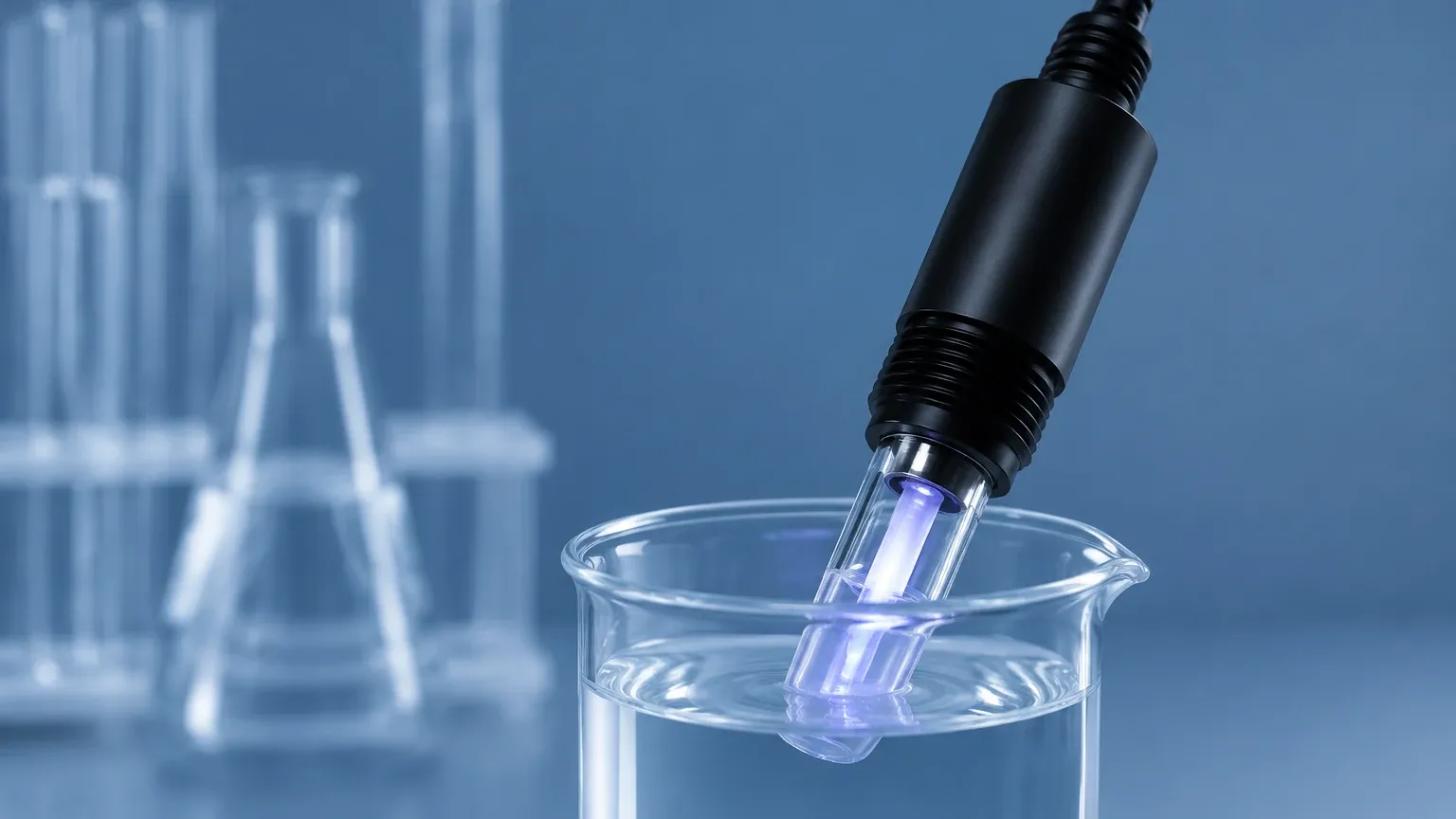
Optical pH measurement is based on the principle of the "optode" or "optrode." This technology involves a pH-sensitive indicator—typically a fluorescent dye or a colorimetric indicator—embedded within a polymer matrix or membrane. The sensor hardware consists of an optical fiber or a direct light path, a light source (usually an LED), and a photodetector.
Fluorescence and Absorbance
Most modern industrial optical pH sensors operate using fluorescence. The sensing membrane contains a fluorophore that reacts to the concentration of hydrogen ions (H+) in the medium. When the light source emits a specific excitation wavelength, the fluorophore absorbs the energy and subsequently re-emits light at a longer wavelength.
The intensity or the decay time (lifetime) of this emitted light changes in direct proportion to the pH level of the liquid. In colorimetric optical sensors, the indicator dye changes color (absorbance) based on pH, and the sensor measures the ratio of light absorbed at specific wavelengths.
Dual Lifetime Referencing (DLR)
A common challenge with optical sensors is the potential for signal drift caused by the aging of the LED or the bleaching of the indicator dye. To counteract this, advanced sensors utilize Dual Lifetime Referencing (DLR). This method incorporates a second, pH-insensitive reference luminophore with a different decay time. By comparing the phase shift between the pH-sensitive signal and the reference signal, the sensor can provide a highly stable and accurate reading that is independent of light intensity fluctuations or turbidity in the sample.
Comparison: Optical vs. Potentiometric Sensors
Understanding the differences between an optical ph sensor and a traditional potentiometric (glass) electrode is vital for determining the best fit for an application. Traditional electrodes are susceptible to several failure modes that optical sensors naturally avoid.
| Feature | Potentiometric (Glass) Electrode | Optical pH Sensor |
| :— | :— | :— |
| Measurement Principle | Electrochemical potential | Fluorescence/Absorbance |
| Reference Junction | Required (subject to clogging) | Not required |
| Electrolyte Leakage | Possible | None |
| Calibration Frequency | High (often daily/weekly) | Low (pre-calibrated or monthly) |
| Electromagnetic Interference | Sensitive | Immune |
| Dry Storage | No (must stay hydrated) | Yes (membrane dependent) |
| Pressure Resistance | Limited by junction/electrolyte | High (solid-state sensing) |
Traditional electrodes often suffer from "poisoning" where ions from the process fluid contaminate the internal reference electrolyte. Because an optical ph sensor has no liquid junction and no electrolyte, it is immune to this specific type of failure, making it ideal for applications with high levels of oils, proteins, or sulfides that typically clog glass membranes.
Selection Criteria for Industrial Applications
When selecting an optical ph sensor for industrial use, several technical parameters must be evaluated to ensure the device meets the demands of the process environment.
1. pH Range and Sensitivity
Unlike glass electrodes that can often cover the full 0–14 pH range, many optical indicators have a narrower "dynamic range" where they are most accurate. Engineers must confirm that the sensor’s sensitive range (e.g., pH 5.0 to 9.0 for environmental water) aligns with the process setpoints.
2. Temperature Compensation
Chemical reactions and optical properties are temperature-dependent. A high-quality industrial sensor must include an integrated temperature probe (such as a Pt100 or Pt1000) to perform real-time compensation. Most industrial units are rated for temperatures between 0°C and 50°C, though specialized versions can handle higher ranges.
3. Physical Form Factor
Optical pH sensors are available in various formats:
* Insertion Probes: Designed for tanks and pipelines, often using standard 12 mm diameters or NPT threads.
* Flow-through Cells: Ideal for bypass lines where a small sample of the process fluid is diverted for analysis.
* Non-invasive Spots: Used in bioprocessing, where a sensing spot is adhered to the inside of a clear vessel, allowing measurement through the wall without breaking sterility.
4. Response Time
The response time ($t_{90}$) of an optical ph sensor is influenced by the thickness of the polymer membrane. For fast-moving processes, a thinner membrane is preferred, though it may be more susceptible to mechanical wear.
Engineering and Installation Guidelines
Proper installation is critical to the performance of any analytical instrument. For optical pH sensors, the primary concerns are light interference and fluid dynamics.
Mounting Position
The sensor should be installed at a point in the process where the liquid is well-mixed and representative of the bulk volume. In large tanks, this is often near the discharge or in a recirculation loop. If the sensor is installed alongside level measurement devices, such as those detailed on the Main Page, ensure that the pH probe does not interfere with the signal path of ultrasonic or radar level meters.
Ambient Light Protection
Since the sensor relies on detecting low-level light signals, extreme ambient light can occasionally cause interference if the sensing spot is not properly shielded. Most industrial probes use an opaque coating or an optical isolation layer to prevent external light from reaching the detector.
Flow Considerations
In pipelines, the sensor should be mounted at an angle (typically 45 degrees) against the flow to ensure constant contact with the liquid and to prevent the accumulation of air bubbles on the sensing surface. Air bubbles trapped against the membrane will result in erratic readings.
Maintenance and Operational Life
One of the most significant B2B advantages of the optical ph sensor is the reduction in maintenance labor. However, they are not maintenance-free.
* Cleaning: The sensing membrane must be kept clean. In applications with high scaling or biofouling, regular cleaning with mild detergents or specialized chemical solutions is required. Mechanical scrubbing should be avoided as it can damage the indicator coating.
* Cap Replacement: The pH-sensitive membrane is a consumable part. Depending on the chemical environment and temperature, the sensing cap typically needs replacement every 6 to 24 months.
* Calibration: While optical sensors are more stable than glass electrodes, they still require periodic verification. Most systems allow for a simple one-point or two-point calibration using standard buffer solutions.
Limitations and Application Risks
Despite their advantages, optical pH sensors have specific limitations that must be understood during the engineering phase.
Chemical Compatibility
The polymer matrix holding the indicator dye can be degraded by certain organic solvents, such as high concentrations of toluene, chloroform, or acetone. Always check the chemical resistance chart of the sensor membrane against the process fluid components.
Photobleaching
If the sensor is used with an excessively high sampling frequency or high-intensity excitation light, the indicator dye may undergo "photobleaching," where the chemical structure of the dye breaks down over time. Modern sensors mitigate this by using pulsed LEDs and low-power electronics, but it remains a factor in the total lifespan of the sensing element.
Range Constraints
As mentioned previously, a single optical ph sensor may not be able to measure from pH 0 to 14 with high precision. If a process fluctuates across the entire scale, multiple sensors with overlapping ranges or a traditional glass electrode might be necessary.
Frequently Asked Questions
Q: Can optical pH sensors be used in hazardous areas?
A: Yes, many optical sensors are designed for intrinsically safe or explosion-proof environments. Because the sensing head itself does not require high voltage, they are often easier to certify for ATEX or IECEx zones than some electronic alternatives.
Q: Do optical pH sensors require a specific flow rate?
A: They generally do not require a minimum flow rate to function (unlike some polarographic oxygen sensors), but a moderate flow is recommended to ensure the sample is representative and to prevent sediment build-up on the membrane.
Q: How does turbidity affect the measurement?
A: High turbidity or suspended solids can scatter light. However, sensors using Dual Lifetime Referencing (DLR) or ratio-metric measurement are largely immune to these effects, as they compensate for changes in light intensity.
Q: Can the sensor be stored dry?
A: Yes, most optical pH membranes can be stored dry without damage, which is a major advantage over glass electrodes that must be kept in a hydration solution to prevent the reference junction from failing.
Conclusion
The optical ph sensor represents a significant advancement in liquid analytical technology, providing a low-maintenance, stable, and robust solution for modern industrial processes. By eliminating the common failure points of traditional glass electrodes—such as electrolyte depletion and junction clogging—these sensors allow for longer intervals between service and higher reliability in automated systems. When integrated into a comprehensive process control strategy alongside reliable level and flow instrumentation, as seen on the Main Page, optical pH sensing ensures that plants can maintain peak efficiency and strict quality standards.