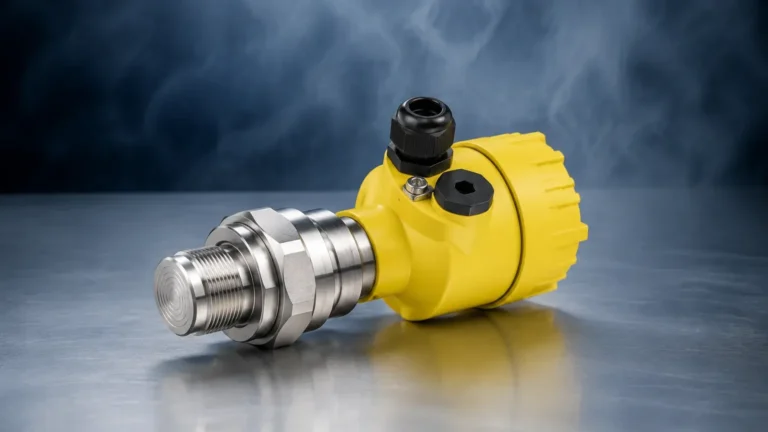
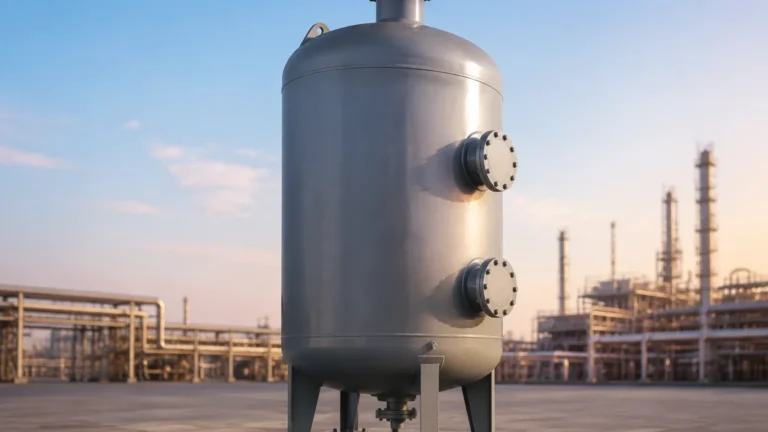
Vacuum Pressure Transducer
Vacuum Pressure Transducer
In industrial process control, the measurement of pressures below atmospheric levels is a critical requirement for safety, efficiency, and product quality. A vacuum pressure transducer is a precision instrument designed to sense these sub-atmospheric pressures and convert the physical force into a standardized electrical signal. Unlike simple mechanical gauges, transducers allow for real-time monitoring, data logging, and integration into automated control systems, such as PLCs (Programmable Logic Controllers) and SCADA systems.
Understanding the nuances of vacuum measurement is essential for engineers working in sectors ranging from chemical processing to water treatment. This guide provides a technical overview of how these devices function, how to select the correct technology for specific environments, and the best practices for installation and maintenance.
Measurement Principles of Vacuum Transducers
To effectively utilize a vacuum pressure transducer, one must first understand the reference points used in pressure measurement. Vacuum is not a single "state" but a spectrum of pressure lower than the surrounding atmosphere.
Pressure Reference Types
1. Absolute Pressure: Measured against a perfect vacuum (0 bar absolute). Absolute transducers are essential when atmospheric pressure fluctuations (weather changes or altitude) would negatively impact the process accuracy. They are commonly used in vacuum distillation and laboratory environments.
2. Gauge Pressure (Vacuum): Measured relative to the local atmospheric pressure. A gauge vacuum transducer will read zero at atmospheric pressure and increase in value as the pressure drops. These are common in industrial cleaning and lifting applications.
3. Compound Pressure: These transducers measure both vacuum and positive pressure. For example, a sensor might range from -1 bar to +10 bar (-14.5 psi to 145 psi). This is vital for processes that alternate between vacuum cycles and pressurized cycles, such as sterilization or tank filling.
Sensing Technologies
Industrial transducers typically employ one of three primary sensing methods to detect vacuum levels:
* Piezoresistive Sensors: These utilize a silicon or metal diaphragm with integrated strain gauges. When vacuum is applied, the diaphragm deflects, changing the electrical resistance of the gauges. This technology is highly sensitive and offers excellent repeatability for rough and medium vacuum ranges.
* Ceramic Capacitive Sensors: These feature a ceramic diaphragm that forms one plate of a capacitor. As vacuum pulls the diaphragm, the capacitance changes. Ceramic sensors are preferred for corrosive chemical applications because the ceramic material is naturally resistant to many aggressive media.
* Thermal Conductivity (Pirani) Sensors: Used primarily for high-vacuum applications. These measure the heat loss from a wire to the surrounding gas. As the vacuum increases (fewer gas molecules), the heat loss decreases. These are specialized tools for deep vacuum processes rather than general industrial level or flow control.
Key Applications in Process Industries
Vacuum pressure transducers are integral components in the systems managed by industrial manufacturers like Welk. Their utility spans several critical domains:
Water and Wastewater Treatment
In water treatment facilities, vacuum transducers are used to monitor suction lines in pumping stations. If a pump loses prime or a suction line becomes blocked, the resulting vacuum spike can damage the pump (cavitation). Transducers provide the feedback necessary for automated shut-off sequences. They are also used in vacuum-assisted filtration systems to monitor the efficiency of the filter media.
Chemical and Petrochemical Processing
Many chemical reactions and distillations must occur under vacuum to lower the boiling point of liquids or to prevent the oxidation of sensitive compounds. In these environments, the Main Page of a facility’s instrumentation strategy often revolves around ensuring that vacuum levels remain within a tight tolerance to prevent hazardous pressure build-ups or batch failures.
Industrial Automation and Packaging
Vacuum lifters and automated pick-and-place machines rely on transducers to confirm that a sufficient vacuum has been achieved to hold a part securely. In food packaging, vacuum transducers ensure that oxygen has been sufficiently evacuated from the packaging before sealing, which directly impacts the shelf life of the product.
Technical Selection Criteria
Selecting the right vacuum pressure transducer requires a detailed analysis of the process conditions. Using the wrong instrument can lead to premature failure or inaccurate data.
Selection Table: Transducer Comparison
| Feature | Piezoresistive (Stainless Steel) | Ceramic Capacitive | Thin Film Strain Gauge |
| :— | :— | :— | :— |
| Measurement Range | -1 to 0 bar (Rough Vacuum) | -1 to 0 bar | -1 to 100+ bar (Compound) |
| Chemical Resistance | Moderate (depends on alloy) | Excellent | High |
| Accuracy (FS) | 0.25% to 0.5% | 0.1% to 0.5% | 0.5% |
| Temperature Stability | Good | Excellent | Moderate |
| Best Use Case | General Industrial | Corrosive Gases/Liquids | High Vibration/Shock |
Output Signals and Communication
The most common output for industrial transducers is the 4-20 mA current loop. This is favored because it is resistant to electrical noise over long cable runs and can signal a fault (e.g., if the wire is cut, the current drops to 0 mA, which the controller recognizes as an error). Other options include 0-10V DC for shorter distances or digital protocols like Modbus RTU and IO-Link for smarter integration into Industry 4.0 environments.
Installation Considerations
Proper installation is as important as the selection of the sensor itself. Poor mounting can lead to signal drift or mechanical failure.
1. Orientation: For vacuum transducers, it is generally recommended to mount the device vertically with the pressure port facing downwards. This prevents condensate or particulates from accumulating on the diaphragm, which could cause measurement errors or corrosion.
2. Sealing: Ensure that the thread type (NPT, G/BSP, or Metric) matches the process connection exactly. Use appropriate sealants like PTFE tape or bonded seals, but ensure that no sealant material enters the pressure port, as it can block the sensing element.
3. Venting: Gauge vacuum transducers require a vent to the atmosphere to compare the process vacuum against the ambient pressure. This is often achieved through a small vent hole in the connector or a vented cable. Ensure this vent is not blocked by paint, dust, or moisture.
4. Electrical Isolation: In environments with heavy machinery, electrical noise (EMI/RFI) can interfere with the transducer signal. Use shielded cabling and ensure the transducer housing is properly grounded according to local engineering standards.
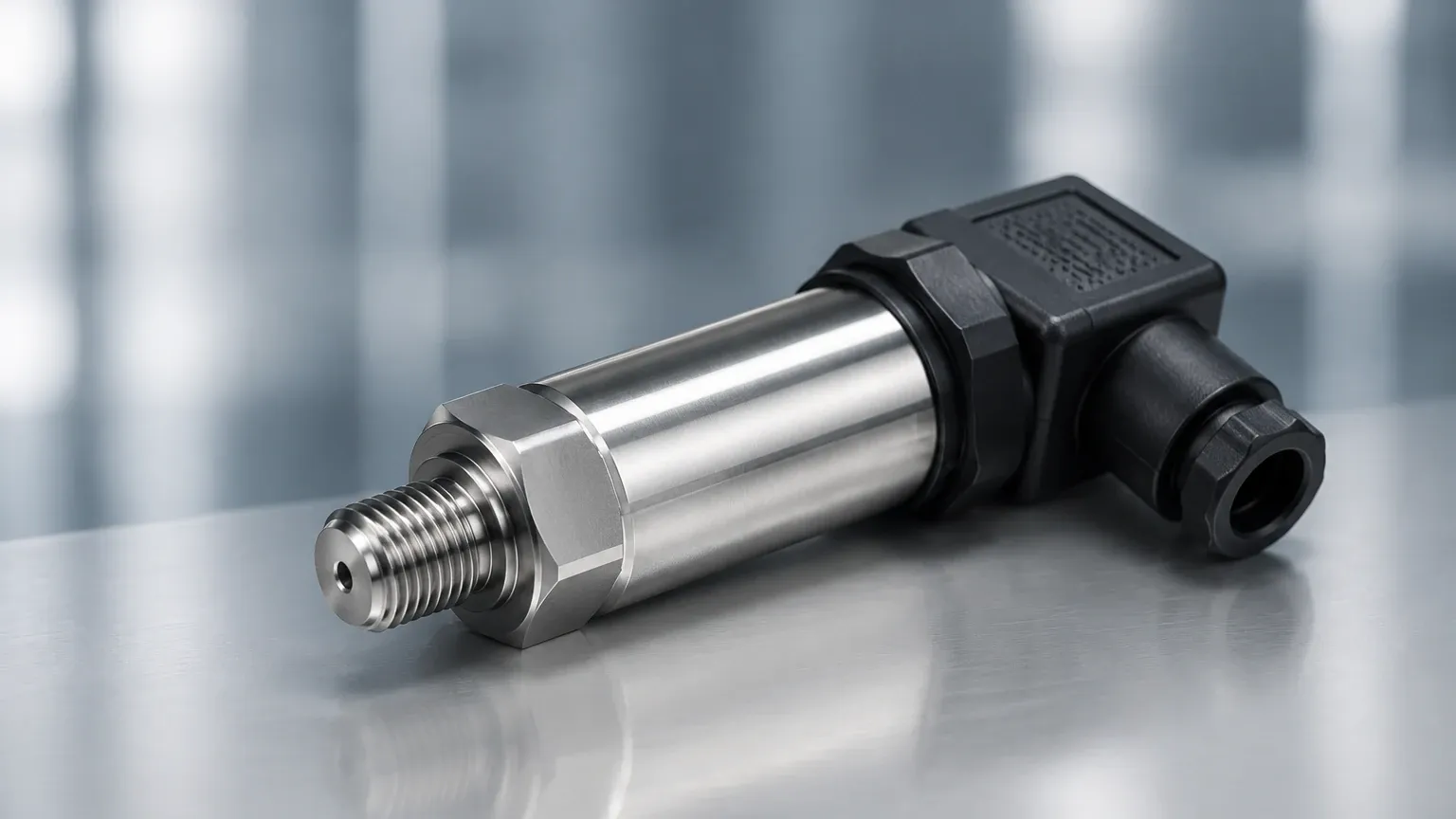
Limitations and Common Risks
While robust, vacuum pressure transducers have specific limitations that engineers must account for:
* Overpressure Events: Even if a transducer is designed for vacuum, it may occasionally be exposed to positive pressure (e.g., during system cleaning or a valve failure). Ensure the transducer has an overpressure rating at least 2x the maximum expected pressure to prevent diaphragm rupture.
* Condensation: In applications involving moist air, a drop in temperature can cause water to condense inside the vacuum line. If this moisture reaches the sensor and freezes, or if it sits on the diaphragm, it can cause significant zero-shift or permanent damage.
* Material Compatibility: The wetted parts (diaphragm and housing) must be compatible with the process media. While 316L stainless steel is standard, highly acidic or alkaline environments may require Hastelloy or ceramic components.
Frequently Asked Questions (FAQs)
Q: Can I use a standard pressure transducer to measure vacuum?
A: Only if it is rated for vacuum or compound ranges. A standard 0-10 bar gauge transducer will not provide accurate readings below atmospheric pressure and may even be damaged if the internal components are not designed to handle the "pull" of a vacuum.
Q: What is the difference between a vacuum transducer and a vacuum switch?
A: A transducer provides a continuous analog or digital signal proportional to the vacuum level (e.g., 4-20mA). A switch provides a simple On/Off (binary) signal when a specific vacuum setpoint is reached. Transducers are used for monitoring and control, while switches are typically used for safety interlocks.
Q: How often should a vacuum pressure transducer be calibrated?
A: For most industrial applications, annual calibration is recommended. However, in critical chemical processes or high-accuracy laboratory settings, semi-annual calibration may be necessary to account for sensor drift.
Q: Does altitude affect vacuum measurement?
A: Yes, if you are using a gauge vacuum transducer. Since gauge pressure is relative to the local atmosphere, and atmospheric pressure decreases with altitude, the "zero" point will change. Absolute pressure transducers are unaffected by altitude changes.
Conclusion
The vacuum pressure transducer is a foundational tool in modern industrial automation. By converting sub-atmospheric physical forces into precise electrical data, these instruments enable the complex control logic required for everything from water purification to advanced chemical synthesis. When selecting a transducer, engineers must prioritize the reference type (absolute vs. gauge), material compatibility, and the specific demands of the operating environment. For those seeking a comprehensive range of measurement instruments, including radar, ultrasonic, and hydrostatic solutions, reviewing the Main Page of a specialized manufacturer like Welk is a recommended step to ensure all technical requirements are met with reliable, cost-effective hardware.