Rust Automation & Controls Inc
Rust Automation & Controls Inc
In the complex landscape of industrial process control, the role of specialized distributors and solution providers is pivotal. Companies like Rust Automation & Controls Inc serve as essential intermediaries, bridging the gap between advanced instrumentation manufacturers and the end-users who operate critical infrastructure in sectors such as water treatment, chemical processing, and oil and gas. For engineers and procurement professionals, understanding the technical nuances of the equipment provided by such entities—specifically level measurement technology—is fundamental to ensuring operational efficiency and safety.
Level measurement is not a one-size-fits-all discipline. It requires a deep understanding of physics, fluid dynamics, and electronic signal processing. Whether a facility is managing aggressive chemicals or municipal water supplies, the choice of instrumentation dictates the reliability of the entire automation loop. This guide explores the core technologies utilized in modern level measurement, providing the technical context necessary for those evaluating solutions through providers like Rust Automation & Controls Inc.
Core Principles of Level Measurement Technology
Before selecting a specific instrument, it is necessary to understand the physical principles that govern different measurement methods. Most industrial applications rely on one of three primary categories: time-of-flight (radar and ultrasonic), hydrostatic pressure, or mechanical displacement.
1. Radar Level Measurement (FMCW and Pulse)
Radar level meters are the gold standard for high-accuracy, non-contact measurement. They operate by emitting electromagnetic waves toward the surface of the medium. The time it takes for these waves to reflect back to the sensor is used to calculate the distance.
* Non-Contact Radar: These devices typically operate at frequencies such as 26 GHz or 80 GHz. The higher the frequency, the narrower the beam angle, which allows the signal to avoid internal tank obstructions like agitators or heating coils. 80 GHz radar is particularly effective in small vessels or when measuring solids with low dielectric constants.
* Guided Wave Radar (GWR): This method utilizes a probe (cable or rod) to guide the microwave signal directly to the product surface. GWR is highly effective for liquids with low reflectivity or in applications where foam and heavy steam would dissipate a non-contact signal.
2. Ultrasonic Level Sensors
Ultrasonic sensors use sound waves rather than electromagnetic waves. The transducer emits a pulse of sound that travels through the air, reflects off the liquid surface, and returns.
* Temperature Sensitivity: Because the speed of sound varies with air temperature, high-quality ultrasonic sensors include integrated temperature compensation.
* Application Limits: These are ideal for water and wastewater applications but may struggle in vacuum conditions or in the presence of heavy vapors, as sound requires a medium (air) to travel through.
3. Hydrostatic Level Transmitters
Hydrostatic measurement is based on the principle that the pressure at the bottom of a tank is directly proportional to the height of the liquid column above it. The formula used is $P = \rho \times g \times h$, where $P$ is pressure, $\rho$ is the density of the liquid, $g$ is gravity, and $h$ is the height of the liquid.
* Submersible vs. Externally Mounted: Submersible probes are dropped into open tanks or wells, while externally mounted transmitters are attached to a flange at the base of a pressurized vessel.
The Role of Rust Automation & Controls Inc in System Integration
Providers like Rust Automation & Controls Inc do more than simply supply hardware. Their value lies in application engineering—ensuring that the chosen radar or ultrasonic sensor is compatible with the existing control architecture, such as PLC or SCADA systems. In the Western United States, where environmental conditions can range from extreme desert heat to sub-zero mountain winters, the ruggedness of the instrumentation becomes a primary concern.
When working with a solution provider, it is critical to confirm the compatibility of the instrument's output (e.g., 4-20mA HART, Modbus, or Foundation Fieldbus) with the local control environment. For those looking to explore a wide range of industrial-grade sensors, you can Review product options and application support on our Main Page to see how different technologies align with specific industrial requirements.
Technical Selection Criteria
Choosing the right technology requires a systematic evaluation of the process environment. The following table provides a comparison of the most common technologies found in the portfolios of major automation distributors.
Comparison Table: Level Measurement Technologies
| Technology | Accuracy | Media Type | Max Temp (Typical) | Pressure Limits | Best Use Case |
| :— | :— | :— | :— | :— | :— |
| 80GHz Radar | ±1 mm | Liquids/Solids | up to 250°C | High | Narrow tanks, agitators |
| Ultrasonic | ±0.25% FS | Water/Waste | up to 80°C | Atmospheric | Open channels, sumps |
| Hydrostatic | ±0.1% FS | Clean Liquids | up to 100°C | High | Deep wells, fuel tanks |
| Guided Wave | ±2 mm | Liquids/Slurries| up to 400°C | Very High | Interface measurement |
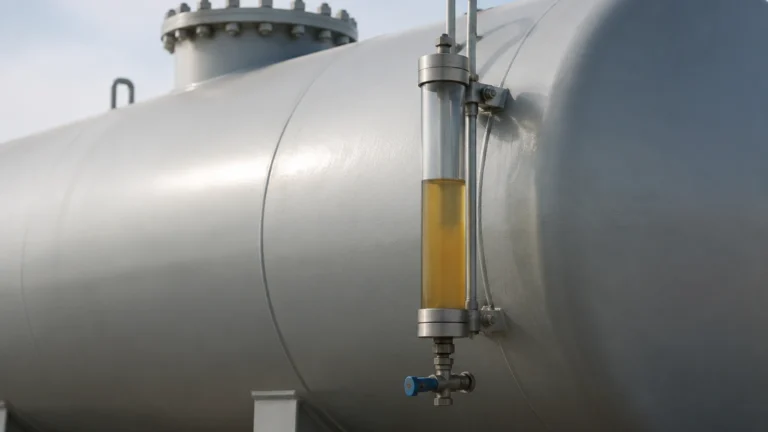
| Magnetic Gauge| Visual/±5mm| Hazardous Liq | up to 450°C | Very High | Boiler drums, toxic storage |
Installation Considerations and Best Practices
Even the most advanced sensor from a reputable provider like Rust Automation & Controls Inc will fail if installed incorrectly. Engineering teams must adhere to strict installation guidelines to maintain signal integrity.
1. Nozzle Geometry: For non-contact radar, the nozzle height should be minimized to prevent signal interference. If the nozzle is too long, the radar signal may reflect off the nozzle walls before reaching the tank interior.
2. The "Dead Zone": Every sensor has a minimum distance it cannot measure (the blocking distance). For ultrasonic sensors, this is often 0.25m to 0.5m. The sensor must be mounted high enough that the liquid never enters this zone.
3. Beam Path Clearance: Ensure that the path of the signal (the "cone") is clear of ladders, pipes, or inflow streams. Inflow turbulence can cause erratic readings if the sensor is positioned directly over the fill pipe.
4. Venting: For hydrostatic sensors in sealed tanks, a vented cable or a differential pressure setup is required to account for changes in atmospheric pressure or tank head pressure.

Limitations and Common Risks
While modern instrumentation is highly reliable, certain physical conditions present risks to accuracy:
* Dielectric Constant (εr): Radar depends on the dielectric constant of the material. Materials with a very low εr (like certain oils or dry powders) reflect very little energy, making them difficult to detect without specialized high-sensitivity radar units.
* Foam and Turbulence: Heavy, thick foam can absorb ultrasonic and radar signals, leading to a "lost signal" error. In these cases, a stilling well or guided wave radar is the preferred solution.
* Build-up and Scaling: In wastewater or chemical crystallization processes, material can build up on the sensor face. While many Welk sensors feature self-cleaning algorithms or non-stick PTFE coatings, periodic maintenance remains necessary.
Frequently Asked Questions (FAQ)
Q: How does Rust Automation & Controls Inc support lifecycle management?
A: Distributors typically offer calibration services, start-up commissioning, and local technical support to ensure that the instruments continue to perform within their specified accuracy over several years of operation.
Q: Can I use an ultrasonic sensor for acids?
A: Yes, provided the sensor body is made of a chemically resistant material like PVDF or PTFE. However, you must ensure that the acid does not produce heavy vapors that could change the speed of sound in the tank headspace.
Q: What is the benefit of an 80 GHz radar over a 26 GHz radar?
A: The 80 GHz radar has a much smaller wavelength, allowing for a smaller antenna and a tighter beam (often as narrow as 3 degrees). This makes it much easier to install in vessels with many internal obstructions.
Q: How do I handle level measurement in a pressurized tank?
A: For pressurized tanks, non-contact radar is often the best choice because it is unaffected by pressure changes. If using hydrostatic methods, a differential pressure (DP) transmitter is required to subtract the top-side gas pressure from the total bottom pressure.
Conclusion
Navigating the offerings of a major distributor like Rust Automation & Controls Inc requires a technical foundation in how level measurement hardware interacts with the process media. By understanding the principles of radar, ultrasonic, and hydrostatic measurement, engineers can make informed decisions that balance cost, accuracy, and longevity.
For those seeking reliable, cost-effective, and highly accurate level measurement solutions tailored to specific industrial automation needs, exploring the comprehensive range of products available on our Main Page is the recommended next step. Whether you require OEM/ODM services or standard industrial sensors, selecting the right technology is the first step toward a more efficient and safer process environment.