Oxygen Analyzer for Oxygen Concentrator
Oxygen Analyzer for Oxygen Concentrator
In industrial gas production and medical engineering, the reliability of an oxygen concentrator is inseparable from the precision of its monitoring instrumentation. An oxygen analyzer for oxygen concentrator systems serves as the primary safeguard, ensuring that the gas generated via Pressure Swing Adsorption (PSA) or Vacuum Pressure Swing Adsorption (VPSA) meets the stringent purity standards required for the application.
Whether the output is intended for healthcare, metal cutting, or water treatment, real-time analysis is essential to detect sieve bed degradation or mechanical failures. This guide examines the underlying measurement technologies, selection criteria, and installation best practices for integrating oxygen analyzers into concentrator circuits.
Measurement Principles of Oxygen Analyzers
Before selecting an instrument, it is critical to understand the physics governing the detection of oxygen molecules. In the context of oxygen concentrators, four primary technologies dominate the market.
1. Ultrasonic Sensing Technology
Ultrasonic oxygen analyzers operate on the principle of the speed of sound in a gas mixture. Because oxygen and nitrogen have different molecular weights, the velocity of an ultrasonic pulse changes depending on the concentration of oxygen in the gas stream.
* Mechanism: The sensor measures the "time of flight" of an ultrasonic signal between a transmitter and a receiver.
* Advantages: This is a non-depleting technology, meaning the sensor does not wear out through chemical reactions. It is highly cost-effective for 20% to 100% oxygen ranges.
* Limitations: It is sensitive to the presence of other gases (like CO2 or high humidity) which can alter the speed of sound and skew results.
2. Zirconia (Zirconium Oxide) Sensors
Zirconia analyzers are widely used in industrial PSA systems. They utilize a solid-state electrochemical cell made of zirconium oxide stabilized with yttrium.
* Mechanism: At high temperatures (typically above 600°C), oxygen ions can move through the zirconia lattice. When there is a difference in oxygen partial pressure between the reference side (ambient air) and the process side, a voltage is generated (Nernst Equation).
* Advantages: Extremely fast response time and high durability in dry gas applications.
* Limitations: The high-temperature heater requires significant power and a warm-up period. It cannot be used in environments with flammable gases due to the ignition risk of the heated element.
3. Paramagnetic Sensors
Oxygen is unique among common gases because it is paramagnetic—it is physically attracted into a magnetic field.
* Mechanism: A "dumb-bell" shaped glass sphere is suspended in a non-uniform magnetic field. As oxygen enters the chamber, it displaces the spheres, and the torque required to return the spheres to their original position is proportional to the oxygen concentration.
* Advantages: Highly accurate and linear across a 0-100% range. It is a physical measurement that does not consume the sensor.
* Limitations: Sensitive to vibration and orientation. These units are generally more expensive and suited for stationary industrial installations.
4. Electrochemical (Galvanic) Cells
These are perhaps the most common sensors found in portable or low-cost oxygen concentrators.
* Mechanism: Oxygen diffuses into a cell and reacts with an electrolyte to produce an electrical current.
* Advantages: Low initial cost, simple electronics, and intrinsically safe.
* Limitations: The sensor is a consumable; the electrolyte is used up over time (typically 12–24 months), and accuracy can drift with temperature and pressure changes.
Selection Criteria for Concentrator Integration
Choosing the right oxygen analyzer for oxygen concentrator applications requires balancing technical performance with operational costs. Engineers should evaluate candidates based on the following selection table:
| Feature | Ultrasonic | Zirconia | Paramagnetic | Electrochemical |
| :— | :— | :— | :— | :— |
| Measurement Range | 21% – 95.6% | 0.1 ppm – 100% | 0% – 100% | 0% – 100% |
| Accuracy | ±1.5% to 3% | ±1% of reading | ±0.1% | ±2% |
| Response Time (T90) | < 2 seconds | < 3 seconds | < 5 seconds | < 15 seconds |
| Operational Life | > 5 years | 3 to 5 years | > 10 years | 1 to 2 years |
| Maintenance | Low (Calibration) | Medium (Heater) | Low (Calibration) | High (Replacement) |
| Primary Use Case | Medical/Home Care | Industrial PSA | Lab/High Precision | Portable/Spot Check |
When managing larger industrial gas systems, instrumentation needs often extend beyond gas purity. For instance, monitoring the liquid levels in oxygen storage tanks or the condensate levels in air preparation stages requires specialized sensors. For comprehensive industrial measurement solutions, engineers often consult the Main Page of specialized manufacturers like Welk to find compatible level transmitters and switches.
Installation and Sampling Considerations
The accuracy of an oxygen analyzer is only as good as the sampling system delivering the gas to the sensor. In an oxygen concentrator, the gas is usually pressurized (often between 2 bar and 6 bar), which can damage certain sensors or cause pressure-induced errors.
Flow Control and Regulation
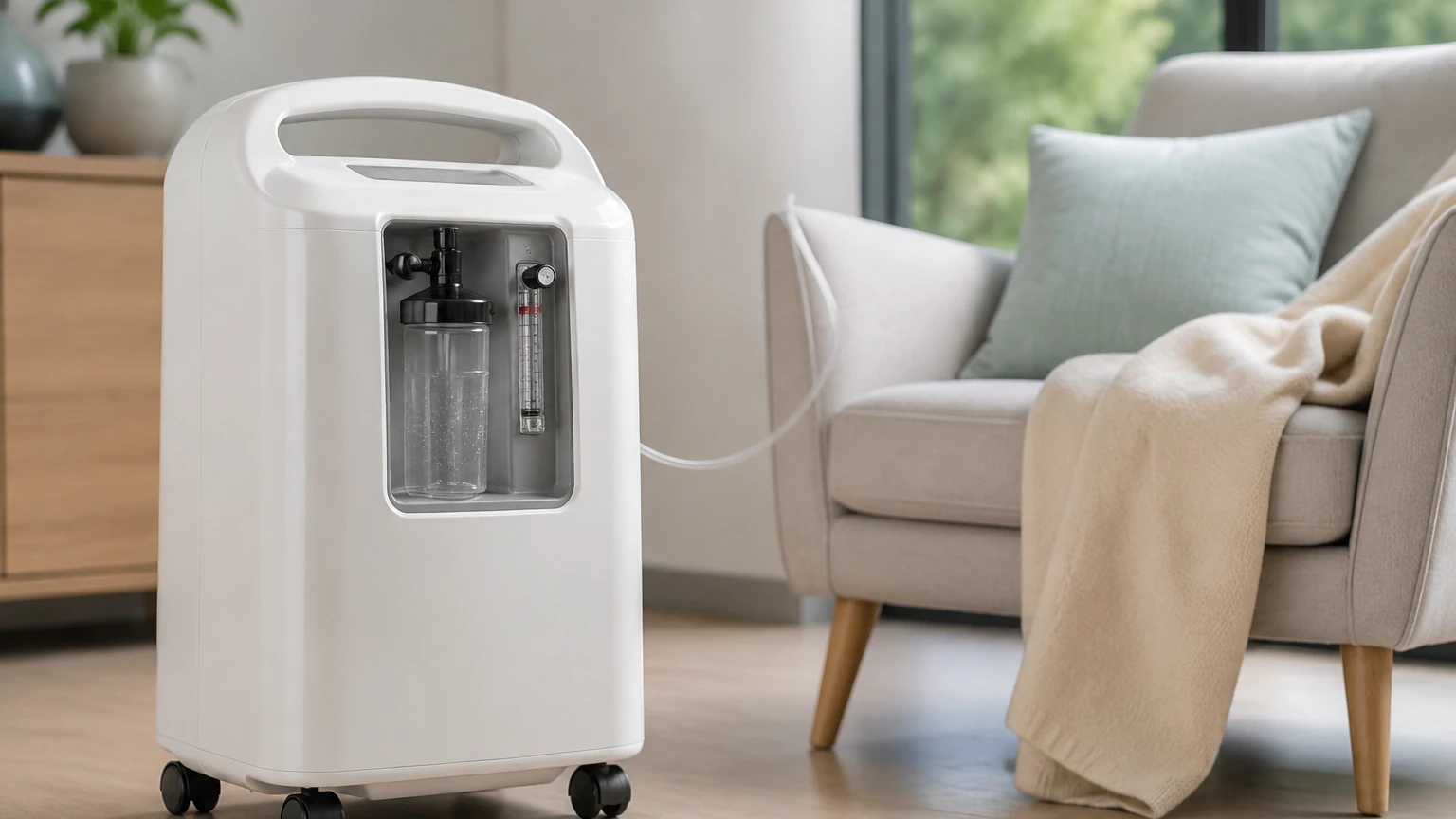
Most sensors require a stable flow rate, typically between 0.5 L/min and 2.0 L/min. A needle valve and a rotameter (flow meter) should be installed upstream of the sensor. If the concentrator output pressure fluctuates, a high-quality pressure regulator is mandatory to ensure the partial pressure of oxygen at the sensor remains constant.
Moisture and Contaminant Removal
PSA systems use zeolite molecular sieves, which can occasionally release fine dust (zeolite fines). Furthermore, compressed air systems often contain residual moisture.
* Filtration: A 0.01-micron coalescing filter should be placed before the analyzer to prevent oil and water droplets from reaching the sensing element.
* Dust Traps: A simple particulate filter prevents zeolite dust from coating the zirconia or ultrasonic transducers, which would otherwise lead to signal attenuation.
Temperature Stabilization
Oxygen sensors are temperature-sensitive. While many modern analyzers include internal thermistors for compensation, it is best practice to install the analyzer in a location where the ambient temperature is stable (typically 15°C to 30°C). Avoid mounting the unit directly on vibrating compressor housings or near heat-generating exhaust ports.
Limitations and Potential Risks
While an oxygen analyzer for oxygen concentrator use is a robust tool, there are inherent limitations that engineers must account for during the design phase.
1. The Argon Interference: Standard PSA oxygen concentrators do not remove Argon from the air. Consequently, the "Oxygen" produced is actually a mixture of roughly 95% Oxygen and 4.5% Argon. Ultrasonic and some electrochemical sensors may read this mixture differently than a pure oxygen sample. It is vital to confirm if the analyzer is calibrated for "PSA-Oxygen" or "Pure Oxygen."
2. Pressure Sensitivity: Most oxygen sensors measure partial pressure, not percentage. If the atmospheric pressure changes (e.g., due to altitude or weather), the reading will change unless the device has barometric compensation.
3. Cross-Sensitivity: In industrial settings, the presence of CO, CO2, or Helium can interfere with the readings of ultrasonic and paramagnetic sensors. Always verify the background gas composition.
Frequently Asked Questions (FAQ)
Q: How often should I calibrate my oxygen analyzer?
A: For industrial PSA systems, a monthly calibration check using a certified span gas (e.g., 99.9% O2) and a zero gas (e.g., 99.9% N2) is recommended. Medical units may require more frequent checks depending on local regulations.
Q: Can I use a level meter to monitor my oxygen storage?
A: Yes. While the oxygen analyzer monitors purity, hydrostatic or radar level transmitters are used to monitor the volume of liquid oxygen in cryogenic tanks or the pressure in high-pressure gas cylinders. You can find detailed specifications for these on the Main Page of industrial instrument providers.
Q: Why is my analyzer reading 95% when the tank is full?
A: This is normal for PSA concentrators. Because the zeolite sieve adsorbs nitrogen but allows argon to pass through with the oxygen, the maximum theoretical purity is approximately 95.7%. To reach 99.9%, a secondary purification stage or a different technology (like cryogenic distillation) is required.
Q: Does humidity affect the oxygen reading?
A: Yes. Water vapor acts as a diluent. If the gas is saturated with moisture, the oxygen percentage will appear lower than it actually is in a dry state. Most industrial analyzers require a dry sample (Dew point < -40°C).
Conclusion and Next Steps
Integrating a high-performance oxygen analyzer into an oxygen concentrator system is a prerequisite for operational safety and process efficiency. By understanding the differences between ultrasonic, zirconia, and paramagnetic technologies, engineers can select a solution that balances longevity with precision.
Beyond gas purity, a holistic approach to process monitoring—including pressure, flow, and level measurement—is necessary for a reliable facility. For those seeking to optimize their industrial automation and measurement frameworks, reviewing the technical resources and product options available on the Main Page of Welk's measurement portfolio provides a clear path forward for integrating reliable level and gas monitoring solutions.