Rheonik Rhm 20
Rheonik Rhm 20
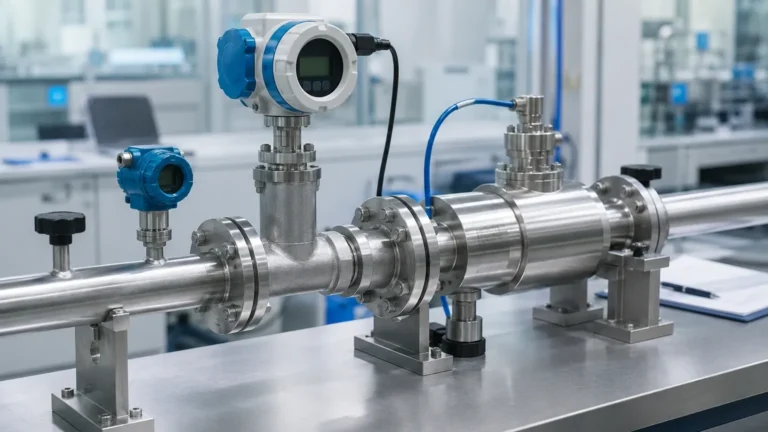
In the field of industrial process control, precision in fluid measurement is the cornerstone of operational efficiency and safety. While level measurement technologies—such as radar, ultrasonic, and hydrostatic sensors—provide critical data regarding the volume of material within a vessel, mass flow measurement offers a deeper layer of insight, particularly in applications where density fluctuates or custody transfer is required. The Rheonik RHM 20 represents a significant standard in Coriolis mass flow technology, offering a robust solution for medium-flow applications. This guide explores the technical foundations of the RHM 20, its integration into broader measurement systems, and how it complements the level measurement solutions found on our Main Page.
The Coriolis Measurement Principle
Before evaluating the specific capabilities of the Rheonik RHM 20, it is essential to understand the physics that drive its accuracy. Unlike volumetric flow meters that measure the space a fluid occupies, Coriolis meters measure the actual mass of the fluid passing through the system.
The Coriolis Effect
The measurement principle is based on the Coriolis effect, which describes the inertial force acting on an object in motion within a frame of reference that rotates or vibrates. In the RHM 20, the process fluid is directed through two parallel tubes that are vibrated at their resonant frequency by an electromagnetic drive coil.
When there is no flow, the tubes vibrate in phase with each other. However, as fluid enters the tubes, the mass of the moving fluid resists the vertical vibration. This creates a twisting motion in the tubes due to the Coriolis acceleration. Specifically, the inlet side of the tube resists the upward motion, while the outlet side is pushed upward by the fluid leaving the tube.
Phase Shift and Mass Flow
Sensors located at the inlet and outlet sections of the vibrating tubes detect this displacement. The resulting time delay, or "phase shift," between the two signals is directly proportional to the mass flow rate. Because mass is an intrinsic property that does not change with temperature or pressure, the RHM 20 provides an exceptionally stable measurement regardless of changes in fluid density or viscosity.
Density and Temperature Measurement
In addition to mass flow, the RHM 20 acts as a multi-variable transmitter. The frequency at which the tubes vibrate is a function of the total mass of the tubes and the fluid inside them. By monitoring this resonant frequency, the device can calculate the fluid's density in real-time. Furthermore, integrated PT100 temperature sensors monitor the tube temperature to compensate for changes in material elasticity, providing a third data point: process temperature.
Technical Specifications of the Rheonik RHM 20
The RHM 20 is designed for versatile industrial use, typically categorized as a 1-inch (DN25) or 1.5-inch (DN40) meter depending on the specific manifold configuration. It is engineered to handle flow rates ranging from approximately 5 kg/min to 150 kg/min (300 to 9,000 kg/hr), making it suitable for chemical injection, fuel loading, and high-precision batching.
Material and Pressure Ratings
Rheonik utilizes a signature "Omega" shape for its measurement tubes. This design allows for thicker tube walls, which translates to higher pressure ratings and better resistance to fatigue. The RHM 20 is available in several materials:
* Stainless Steel 316L: Standard for most industrial and water treatment applications.
* Hastelloy C22: Used for highly corrosive chemical processes.
* Super Duplex: Ideal for offshore and high-pressure oil and gas environments.
Pressure ratings can exceed 400 bar (approx. 5,800 psi) in specialized configurations, which is significantly higher than many competitive straight-tube Coriolis meters.
Selection Criteria and Comparison
Selecting the right instrument requires balancing the required accuracy against the physical constraints of the installation. In many systems, the RHM 20 is used in conjunction with level measurement instruments to provide a complete mass balance of a storage tank.
Selection Table: Coriolis vs. Level Measurement Technologies
| Feature | Rheonik RHM 20 (Coriolis) | Radar Level Meter | Ultrasonic Level Sensor |
| :— | :— | :— | :— |
| Primary Measurement | Mass Flow Rate | Distance / Volume | Distance / Volume |
| Secondary Data | Density & Temperature | Surface Profile | Ambient Temperature |
| Accuracy | Up to 0.05% of rate | ±1 mm to ±5 mm | ±0.25% of range |
| Pressure Limit | High (Up to 400+ bar) | Moderate (Up to 40 bar) | Low (Atmospheric) |
| Installation | In-line (Series) | Top-mount (Non-contact) | Top-mount (Non-contact) |
| Fluid Dependency | Independent of Viscosity | Independent of Density | Dependent on Air Temp |
When high-accuracy inventory control is required, engineers often use a radar level meter for volume and an RHM 20 for mass flow verification. This redundancy ensures that any leaks or density changes are immediately identified.
Installation Considerations
To maintain the high accuracy (often 0.1% or better) of the Rheonik RHM 20, specific installation guidelines must be followed. While Coriolis meters are generally less sensitive to flow profiles than magnetic or ultrasonic flow meters, they are sensitive to mechanical vibration.
1. Orientation and Entrained Air
* Liquid Service: The meter should ideally be installed with the tubes pointing downward (the "flag" position or downward U-shape). This prevents gas bubbles from becoming trapped in the tubes, which can cause measurement noise.
* Gas Service: The tubes should point upward to allow any condensed liquids to drain out of the sensor.
2. Support and Stress
The RHM 20 should be supported by the piping itself, but the piping must be rigid. It is critical to ensure that the meter is not subjected to pipe stress or torsion. Using flexible connectors can help isolate the meter from pump vibrations, though they must be installed carefully to avoid creating unstable flow conditions.
3. Zero Point Calibration
After installation and once the system is filled with the process fluid at operating temperature and pressure, a "zero-point" calibration must be performed. This involves stopping the flow completely (using shut-off valves on both sides) and allowing the transmitter to register the baseline vibration state. This step is vital for low-flow accuracy.

Integration with Level Measurement Systems
In a typical industrial automation setup, the RHM 20 serves as a critical component of a mass balance equation. For example, in a chemical blending tank, Welk radar level meters provide the continuous level of the bulk liquid. However, if the chemical's density changes due to temperature fluctuations, the volumetric level alone will not provide an accurate mass reading.
By integrating the density and mass flow data from the RHM 20, the control system can calculate the exact mass of the material added to the tank. This synergy between flow and level measurement is essential for industries like pharmaceutical manufacturing and oil refining, where precision is non-negotiable. For more information on how to pair these technologies, you can review our product options and application support on our Main Page.
Limitations and Constraints
Despite its advanced capabilities, the Rheonik RHM 20 is not a universal solution for every application. Engineers must be aware of the following limitations:
* Pressure Drop: The Omega-tube design, while robust, creates a longer flow path than a straight-tube meter. This can result in a higher pressure drop across the meter, which must be accounted for in pump sizing.
* Initial Cost: Coriolis meters are among the most expensive flow measurement technologies. For simple water applications where high precision is not required, an electromagnetic flow meter or a simple hydrostatic level transmitter may be more cost-effective.
* Size and Weight: Due to the thick-walled tubes and heavy-duty housing required for high-pressure ratings, the RHM 20 is heavier than many volumetric meters. Proper structural support is mandatory.
* Gas Content: While the RHM 20 can handle small amounts of entrained gas (slug flow), excessive gas in a liquid stream will cause the tubes to stop vibrating at their resonant frequency, leading to a "stalling" of the measurement.
Frequently Asked Questions (FAQ)
Q: Can the RHM 20 measure the flow of non-conductive liquids?
A: Yes. Unlike electromagnetic flow meters, Coriolis meters do not require the fluid to be conductive. They work equally well with hydrocarbons, deionized water, and liquid gases.
Q: How often does the RHM 20 need to be recalibrated?
A: In most stable industrial applications, the RHM 20 can operate for several years without a full factory recalibration. However, an annual zero-point check is recommended. Applications involving abrasive fluids or extreme thermal cycling may require more frequent verification.
Q: Is the RHM 20 suitable for hygienic applications?
A: While Rheonik produces hygienic versions of their meters, the standard RHM 20 must be specified with the correct surface finish and tri-clamp fittings to meet 3A or EHEDG standards.
Q: What is the maximum temperature the RHM 20 can handle?
A: Standard models typically handle up to 120°C (248°F), but high-temperature versions are available that can operate at up to 350°C (662°F) or even higher for specialized process needs.
Conclusion
The Rheonik RHM 20 is a powerful tool for engineers requiring high-precision mass flow and density data. Its unique design offers durability and high-pressure capabilities that exceed many other Coriolis options. When integrated into a comprehensive measurement strategy alongside the radar and ultrasonic level sensors offered by Welk, the RHM 20 ensures that process managers have a complete and accurate picture of their fluid assets. For detailed technical support on selecting the right combination of flow and level instruments, please refer to the resources available on our Main Page.