Dielectric Constant for Water
Dielectric Constant for Water
In the field of industrial level measurement, the dielectric constant (relative permittivity) is a fundamental physical property that dictates the performance and selection of various sensing technologies. For engineers and system integrators, understanding the dielectric constant for water is particularly critical because water serves as the primary medium or solvent in most industrial processes, from cooling towers and wastewater treatment to high-pressure steam generation.
This article examines the principles of the dielectric constant, specifically focusing on water, and provides a technical framework for selecting level measurement instruments based on these electrical properties.
Understanding the Dielectric Constant ($εr$)
The dielectric constant, denoted as εr, is a dimensionless ratio that compares the permittivity of a substance to the permittivity of a vacuum. In practical terms, it measures a material's ability to store electrical energy in an electric field. In the context of level measurement, it determines how much electromagnetic energy is reflected at the surface of a liquid.
Materials are generally categorized into two groups based on their dielectric values:
1. Conductive/High Dielectric Media: Substances with high εr values (typically >10) that reflect electromagnetic signals strongly.
2. Insulating/Low Dielectric Media: Substances with low εr values (typically <4, such as oils or hydrocarbons) that allow electromagnetic signals to pass through them, resulting in weaker reflections.
Water is unique because it possesses one of the highest dielectric constants among common industrial liquids, typically cited as approximately 80 at room temperature (20°C). This high value is due to the polar nature of the water molecule ($H_2O$), where the distribution of electrical charge is uneven, allowing the molecules to align easily with an external electric field.
The Dielectric Constant for Water: Variations and Influencing Factors
While the value of 80 is a standard reference, the dielectric constant for water is not a static number. It fluctuates based on physical conditions and chemical composition. For accurate level measurement, engineers must account for these variations.
Temperature Dependence
Temperature has a significant inverse relationship with the dielectric constant of water. As the temperature increases, the thermal agitation of the water molecules increases, making it harder for them to align with an electric field. This results in a decrease in the dielectric constant.
* At 0°C (Ice): The εr of ice is approximately 3.2, significantly lower than liquid water because the crystalline structure prevents molecular rotation.
* At 20°C: εr ≈ 80.
* At 100°C: εr ≈ 55.
* At 200°C: εr ≈ 35.
In high-pressure boiler applications, where water temperatures can exceed 250°C, the dielectric constant may drop below 20. While still high enough for most radar sensors, this reduction must be considered during the calibration of capacitance-based sensors.
Impact of Impurities and Salinity
The presence of dissolved solids, salts, and chemicals can alter the "apparent" dielectric constant or affect the signal through conductivity. While pure distilled water has a high dielectric constant, seawater or industrial wastewater contains ions that increase the conductivity of the medium. In radar-based measurement, high conductivity actually improves surface reflection, as conductive surfaces act like mirrors for electromagnetic waves.
Phase Changes: Steam and Vapor
In closed vessels, the space above the liquid water is filled with air or steam. While air has a dielectric constant of approximately 1.0, steam at high pressure has a higher dielectric constant. This can slow down the speed of radar signals traveling through the vapor space, leading to a "propagation delay" that results in a measurement error if not compensated for by the instrument's software.
Measurement Principles and Technology Recommendations
Different level measurement technologies interact with the dielectric constant for water in distinct ways. Understanding these interactions is essential for selecting the right equipment from a Main Page of industrial solutions.
1. Radar Level Meters (Non-Contact)
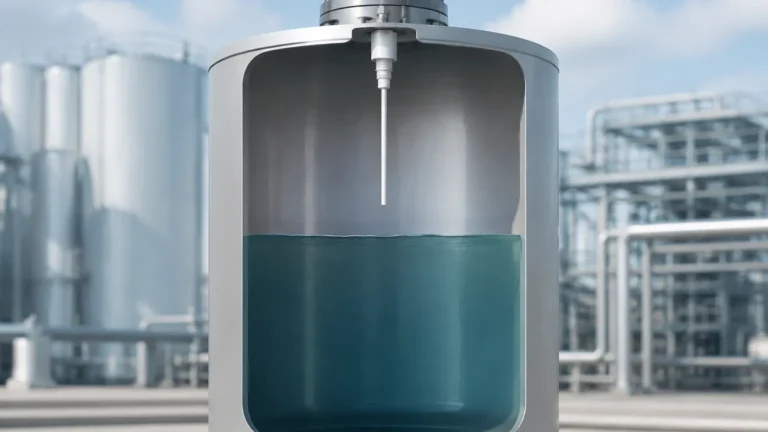
Non-contact radar (FMCW or Pulse) transmits electromagnetic waves toward the water surface. The amount of energy reflected back to the sensor depends on the difference between the dielectric constant of the vapor space ($εr ≈ 1$) and the water ($εr ≈ 80$).
* Performance on Water: Because water has a high dielectric constant, it provides a very strong reflection (high amplitude). This allows non-contact radar to be used in tall tanks (up to 30 meters or more) and through plastic tank walls.
* Recommendation: Ideal for most water storage and treatment applications where the surface is relatively calm.
2. Guided Wave Radar (GWR)
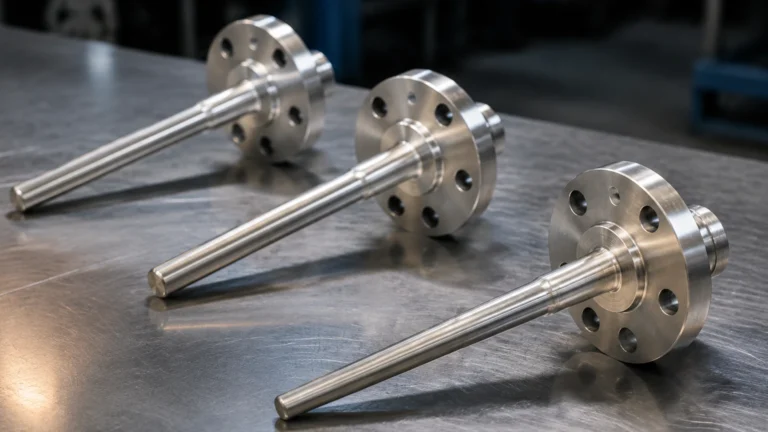
Guided Wave Radar uses a probe (cable or rod) to direct the electromagnetic pulse to the liquid surface.
* Performance on Water: GWR is exceptionally reliable for water because the high dielectric constant ensures a clear, unambiguous reflection at the interface. Even if the water is covered by a layer of low-dielectric foam, the GWR signal can often penetrate the foam to detect the true liquid level.
* Recommendation: Best for turbulent surfaces, small tanks with internal obstructions, or applications involving interface measurement (e.g., water under oil).
3. RF Capacitance Sensors
Capacitance sensors treat the probe and the tank wall (or a ground reference) as two plates of a capacitor, with the water acting as the dielectric medium.
* Performance on Water: Since the dielectric constant for water is so high compared to air, the total capacitance changes significantly as the water level rises. However, because water is also conductive, the probe must be insulated (e.g., with PTFE) to prevent short-circuiting.
* Recommendation: Suitable for point-level detection or continuous level in smaller vessels, provided the temperature and composition remain relatively constant.
4. Ultrasonic Sensors
It is important to note that ultrasonic sensors are not affected by the dielectric constant for water. They rely on sound waves and the density of the air/vapor space.
* Recommendation: A good alternative if the dielectric constant of the liquid is unknown or extremely variable, though they are sensitive to foam and heavy steam.
Practical Selection Table for Water-Based Media
| Water Type | Typical εr | Recommended Technology | Considerations |
| :— | :— | :— | :— |
| Distilled/Pure Water | 78–80 | Non-contact Radar / GWR | Very clean signal; low maintenance. |
| Tap/Process Water | 70–80 | Non-contact Radar / Ultrasonic | Standard industrial choice. |
| Seawater/Brine | 80+ (Conductive) | GWR / Hydrostatic | High conductivity improves radar reflection. |
| Wastewater/Sludge | 50–80 | Non-contact Radar | Radar is preferred to avoid probe fouling. |
| Boiler Water (High Temp) | 30–50 | GWR with Temp Compensation | Must account for dielectric drop and steam velocity. |

Installation Considerations for High Dielectric Liquids
When installing level instruments in water applications, the high dielectric constant provides a "safety margin" for signal strength, but mechanical factors still play a role:
1. Nozzle Geometry: For non-contact radar, ensure the nozzle is short and smooth. Although water reflects strongly, internal nozzle reflections can interfere with the signal if the nozzle is excessively long.
2. Turbulence and Agitation: In tanks with agitators, water surfaces can become erratic. While the high εr helps, using a stilling well or a Guided Wave Radar probe is recommended to maintain a stable reading.
3. Foam Accumulation: Heavy, dense foam can absorb radar signals. Since water often foams in treatment processes, selecting a lower frequency radar (e.g., 6GHz or 26GHz) or GWR may be necessary to penetrate the foam layer.
4. Condensation: In water tanks, condensation often forms on the sensor antenna. While water on the lens can attenuate the signal, the high dielectric constant of the target water below usually ensures that enough signal returns for a valid reading. Specially designed "drip-off" antennas (conical or parabolic) help mitigate this.
Limitations and Risks
Despite the ease of measuring water due to its high dielectric constant, certain risks can lead to measurement failure:
* Coating and Scaling: In hard water or wastewater applications, minerals (like calcium carbonate) can build up on probes. For GWR and Capacitance sensors, this coating can cause "signal hang-up," where the sensor thinks the tank is full even when empty. Non-contact radar is generally immune to this.
* Steam Saturation: In high-pressure steam drums, the dielectric constant of the steam space increases. If the radar transmitter does not have "Vapor Space Compensation," the level reading can be off by as much as 10% to 20% because the radar pulses travel slower through the dense steam than through dry air.
* Ice Formation: If water freezes, the dielectric constant drops from 80 to 3.2. A radar sensor calibrated for liquid water may lose the signal or provide inaccurate data if the surface freezes solid.
Frequently Asked Questions (FAQ)
Q: Can I use the same radar sensor for water and oil?
A: Yes, but the configuration will differ. Because the dielectric constant for water (~80) is much higher than oil (~2), the reflection from water is much stronger. You may need to adjust the sensitivity (gain) settings of the transmitter when switching between these media.
Q: Does the pH of water affect its dielectric constant?
A: Not significantly. While pH affects conductivity and chemical reactivity, the fundamental dielectric constant remains driven by the $H_2O$ molecule. However, extreme pH levels may require specialized probe materials (e.g., Hastelloy or Monel) to prevent corrosion.
Q: Why is GWR often preferred over non-contact radar for water interface measurement?
A: In applications where water sits at the bottom of an oil tank, the radar signal passes through the low-dielectric oil (εr ≈ 2) and reflects off the high-dielectric water (εr ≈ 80). GWR is superior here because the probe guides the signal through the upper layer with minimal loss, ensuring a sharp reflection from the water interface.
Q: How does pressure affect the dielectric constant of liquid water?
A: For liquid water, pressure has a negligible effect on the dielectric constant. The primary concern with pressure in level measurement is its effect on the vapor space density and the mechanical integrity of the sensor seals.
Conclusion
The dielectric constant for water is a pivotal parameter in industrial automation. Its high value generally simplifies level measurement, allowing for robust signal returns and the use of versatile technologies like radar and GWR. However, the influence of temperature, phase changes, and impurities cannot be ignored in precision engineering. By understanding how these factors shift the εr value, plant operators can ensure long-term accuracy and reliability in their level control systems.
For technical assistance in selecting the appropriate instrument for your specific water-based application, it is recommended to consult with a specialist who can provide customized OEM/ODM solutions tailored to your process conditions.