Chlorine Flow Meter
Chlorine Flow Meter
Chlorine is one of the most widely used chemicals in modern industry, serving as a cornerstone for water disinfection, plastic manufacturing, and pharmaceutical synthesis. However, its high reactivity and toxicity present significant challenges for instrumentation. A chlorine flow meter must not only provide precise measurement for process control and regulatory compliance but also withstand the aggressive corrosive nature of the medium.
In industrial environments, chlorine is typically handled in either a gaseous or liquid state. Accurate measurement ensures that disinfection processes in municipal water treatment plants are effective without being wasteful, and that chemical reactors receive the precise stoichiometric ratios required for safe operation. This guide explores the principles, selection criteria, and installation best practices for chlorine flow measurement.
Understanding Chlorine Flow Measurement Principles
Before selecting a chlorine flow meter, it is essential to understand the physical principles that govern different measurement technologies. Because chlorine's properties change significantly with temperature and pressure, the choice of principle often depends on whether the application involves dry gas, wet gas, or liquid chlorine.
Thermal Mass Flow Measurement
Thermal mass flow meters operate on the principle of heat transfer. They typically use two sensing elements: one that measures the fluid temperature and another that is heated to a specific temperature differential above the fluid. As chlorine gas flows past the heated sensor, it carries away heat. The amount of power required to maintain the temperature differential is directly proportional to the mass flow rate.
This technology is particularly effective for chlorine gas because it provides direct mass flow measurement without the need for additional pressure or temperature compensation. It is highly sensitive to low flow rates, which is critical for leak detection and precise dosing in water treatment.
Vortex Shedding Principle
Vortex flow meters utilize the Von Kármán effect. When chlorine flows past a bluff body (a non-streamlined object) placed in the flow stream, alternating vortices are shed on each side. The frequency of these vortices is directly proportional to the velocity of the fluid.
Since chlorine is often transported at high velocities in large pipelines, vortex meters are a robust choice. They have no moving parts, which reduces maintenance requirements in corrosive environments. However, they require a minimum Reynolds number to function, making them less suitable for very low-flow applications.
Variable Area (Rotameters)
Rotameters consist of a tapered tube and a float. As chlorine flows upward through the tube, the float rises until the upward force of the fluid equals the weight of the float. The position of the float indicates the flow rate on a scale.
While simple and cost-effective, rotameters for chlorine must be constructed from specialized materials. They are commonly used in small-scale chlorination systems where visual indication is sufficient and electronic output is not a primary requirement.
Differential Pressure (DP) Flow Meters
DP meters, such as orifice plates or Venturi tubes, create a pressure drop in the pipeline. According to Bernoulli’s equation, the square root of the pressure drop is proportional to the flow rate. For chlorine applications, the DP transmitter must be isolated from the process fluid using chemical seals (diaphragm seals) made of corrosion-resistant alloys to prevent the chlorine from destroying the sensitive electronic components.
Key Selection Criteria for Chlorine Flow Meters
Selecting the right chlorine flow meter requires a detailed analysis of the process conditions. Failure to account for the specific state of the chlorine can lead to rapid instrument failure or dangerous leaks.
Gas vs. Liquid State
Chlorine is often stored as a liquid under pressure but used as a gas.
- Liquid Chlorine: Requires meters that can handle high pressures and potential cavitation. Coriolis meters are often preferred for liquid chlorine due to their high accuracy and direct mass measurement.
- Gaseous Chlorine: Thermal mass and vortex meters are more common. It is vital to determine if the gas is "dry" or "wet."
Moisture Content and Corrosion
Dry chlorine (containing less than 150 ppm of water) is relatively non-corrosive to carbon steel at temperatures below 120°C. However, "wet" chlorine is extremely aggressive. When chlorine reacts with moisture, it forms hydrochloric and hypochlorous acids, which can eat through standard stainless steel in a matter of days. If there is any risk of moisture ingress, the flow meter must be constructed from exotic alloys or fluoropolymer-lined materials.
Flow Range and Turndown Ratio
The turndown ratio refers to the range over which the meter can measure accurately (e.g., 10:1). In water treatment, chlorine demand can fluctuate significantly between peak and off-peak hours. A meter with a high turndown ratio, such as a thermal mass meter, is often necessary to capture these variations.
Material Compatibility and Corrosion Resistance
Material selection is the most critical factor in the longevity of a chlorine flow meter. The following table outlines common materials used in chlorine service:
| Component | Dry Chlorine Service | Wet Chlorine Service |
| :— | :— | :— |
| Sensor/Body | Carbon Steel, 316 Stainless Steel | Hastelloy C-276, Monel, Titanium |
| Linings | N/A | PTFE, PFA, PVDF |
| O-rings/Seals | Viton, Kalrez | Kalrez, PTFE |
| Electrodes | N/A | Tantalum, Platinum (for Mag meters) |
For most industrial chlorine applications, Hastelloy C-276 is the industry standard for wetted parts due to its exceptional resistance to pitting and stress corrosion cracking in oxidizing atmospheres. When using electromagnetic flow meters for chlorine-based chemicals (like sodium hypochlorite), PFA linings and Tantalum electrodes are standard specifications.
Installation Guidelines and Safety Protocols
Proper installation is as important as the technology selection itself. Because chlorine is a hazardous gas (IDLH – Immediately Dangerous to Life or Health level is 10 ppm), the installation must prioritize leak prevention and ease of maintenance.
1. Straight Pipe Runs: Most flow meters, especially vortex and DP types, require specific lengths of straight pipe upstream (typically 10-20 diameters) and downstream (5 diameters) to ensure a stable flow profile. Without this, turbulence can cause significant measurement errors.
2. Orientation: For gas applications, meters should ideally be installed in horizontal lines. For liquid chlorine, vertical upward flow is preferred to ensure the pipe remains full and to prevent gas bubbles from affecting the reading.
3. Isolation Valves: Always install full-port isolation valves and bleed ports. This allows the meter to be removed for calibration or repair without venting the entire chlorine header.
4. Leak Detection: In the vicinity of the chlorine flow meter, automated chlorine gas detectors should be installed. Even a small pinhole leak in a gasket can expand rapidly due to the corrosive nature of the escaping gas reacting with atmospheric moisture.
5. Grounding: For electronic meters, especially electromagnetic types used in chemical dosing, proper grounding is essential to eliminate electrical noise and prevent galvanic corrosion.
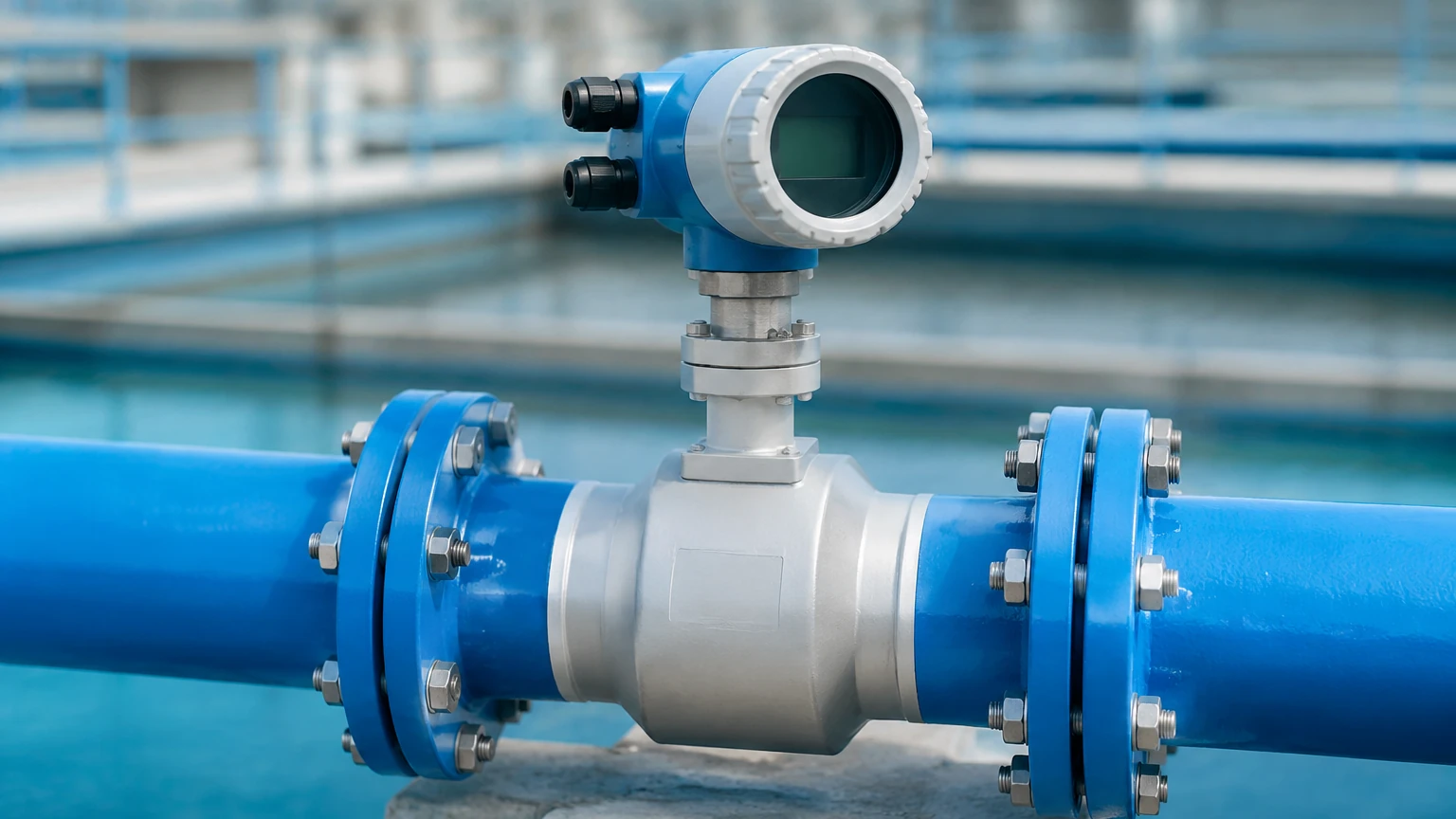
Comparison of Chlorine Flow Meter Technologies
| Technology | Accuracy | Pressure Drop | Suitability | Maintenance |
| :— | :— | :— | :— | :— |
| Thermal Mass | ±1% of Reading | Very Low | Best for Gas | Low (no moving parts) |
| Vortex | ±1% (Liquid/Gas) | Medium | High Velocity Gas | Low |
| Coriolis | ±0.1% | High | Liquid Chlorine | Low |
| Rotameter | ±2-5% | Low | Small Dosing | Medium (cleaning) |
| DP (Orifice) | ±2% | High | Large Pipes | High (impulse lines) |
In many integrated systems, flow measurement is only one part of the equation. For comprehensive inventory management, engineers also rely on level measurement for chlorine storage tanks. For those looking to integrate these systems, you can Review product options and application support to find compatible level and flow solutions that meet stringent safety standards.
Limitations and Practical Challenges
While modern chlorine flow meters are highly advanced, they are not without limitations.
- Pressure and Temperature Sensitivity: For gas flow, changes in pressure and temperature significantly alter the density. If using a volumetric meter (like a vortex meter), a flow computer must be used to calculate compensated mass flow.
- Clogging: In some chlorine processes, impurities can lead to the buildup of "butter" (a mixture of ferric chloride and other contaminants). This can clog orifice plates or coat the sensors of thermal mass meters, requiring periodic cleaning.
- Safety Hazards: The primary limitation is the risk of the instrument itself becoming a leak point. Every flange, thread, or seal is a potential failure point in a chlorine system. Minimizing the number of connections and using high-quality gaskets is mandatory.
Frequently Asked Questions (FAQs)
Q: Can I use a standard stainless steel flow meter for chlorine?
A: Only if the chlorine is guaranteed to be 100% dry and the temperature remains low. If there is any chance of moisture (which is common in most industrial environments), standard 316 stainless steel will fail rapidly. Hastelloy C is the safer, recommended choice.
Q: How often should a chlorine flow meter be calibrated?
A: Most regulatory bodies for water treatment require annual calibration. However, in high-concentration chemical processing, semi-annual checks are recommended to ensure that corrosion has not altered the sensor geometry.
Q: Is mass flow or volumetric flow better for chlorine gas?
A: Mass flow is superior. Since chlorine gas is highly compressible, volumetric flow readings change with every pressure fluctuation. Mass flow provides a consistent measurement of the actual amount of chemical being delivered.
Q: What is the impact of "chlorine butter" on flow meters?
A: Chlorine butter can coat sensors, leading to a "drift" in readings. Thermal mass meters are particularly sensitive to this coating as it acts as an insulator. Regular inspection and the use of filters/strainers upstream can mitigate this issue.
For engineers and plant managers, selecting a chlorine flow meter is a balance between precision, material science, and safety. By understanding the measurement principles and strictly adhering to material compatibility charts, it is possible to achieve reliable, long-term performance in even the most demanding chlorination applications. For further technical specifications and a wider range of industrial measurement tools, visiting the Main Page of a dedicated instrumentation provider is a recommended next step in the project planning phase.