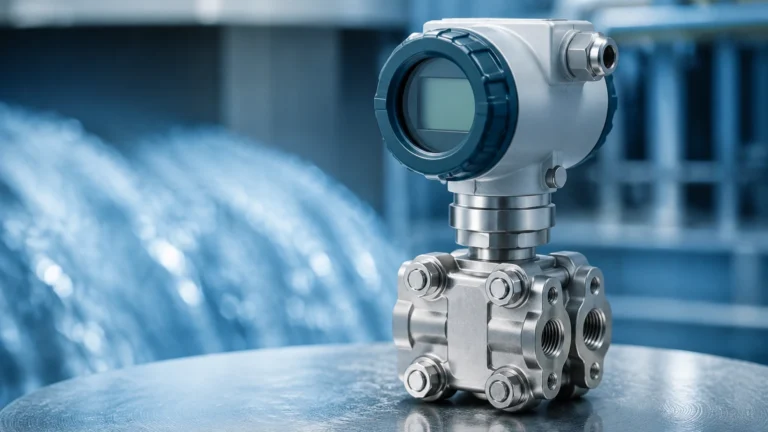
Proline Prowirl R 200
Proline Prowirl R 200
In the landscape of industrial process control, the accurate measurement of fluids—whether liquid, gas, or steam—is fundamental to operational efficiency and safety. The Proline Prowirl R 200 represents a specialized iteration of vortex flowmeter technology, designed specifically to address the challenges of low-flow applications and piping constraints. While flow measurement is a distinct discipline, it often operates in tandem with level measurement systems to provide a complete picture of mass balance within a facility. For engineers seeking to integrate these technologies, understanding the specific capabilities of instruments like the Prowirl R 200 is essential for robust system design.
Understanding Vortex Measurement Principles
The operation of the Proline Prowirl R 200 is based on the Von Kármán vortex street principle. This physical phenomenon occurs when a fluid flows past a non-streamlined object, known as a bluff body. As the fluid encounters this obstruction, it is unable to follow the contours of the body on both sides simultaneously, leading to the formation of alternating vortices (swirls of fluid) that are shed from the body.
The Physics of Shedding
The frequency at which these vortices are shed is directly proportional to the velocity of the fluid flow. This relationship is defined by the Strouhal number ($St$), a dimensionless constant specific to the geometry of the bluff body. The formula for the shedding frequency ($f$) is:
$$f = St \cdot \frac{v}{d}$$
Where:
* $v$ is the flow velocity.
* $d$ is the width of the bluff body.
Because the frequency is linear relative to the velocity over a wide range of Reynolds numbers, vortex meters provide highly accurate digital signals. In the Prowirl R 200, a capacitive sensor (often a Differential Switched Capacitor or DSC sensor) detects the pressure fluctuations caused by each vortex. This sensor is designed to be robust, resisting thermal shocks and water hammer, which are common in steam applications.
Overview of the Proline Prowirl R 200
The "R" in the Proline Prowirl R 200 designation stands for "Reduced Line Size." In many industrial settings, the existing piping is oversized for the actual flow rates required by the process. Standard vortex meters require a minimum flow velocity to generate detectable vortices. If the flow is too slow, the meter cannot provide a reading.
Traditionally, engineers solved this by installing pipe reducers before and after the meter. However, the Prowirl R 200 integrates this reduction directly into the meter body. This offers several advantages:
1. Increased Velocity: By narrowing the internal diameter, the fluid velocity increases, allowing the meter to measure lower flow rates than a standard full-bore meter.
2. Space Savings: It eliminates the need for external reducers and the extended straight pipe runs usually required after such transitions.
3. Cost Reduction: Integrated reduction reduces the number of flange connections and potential leak points.
The "200" series refers to the transmitter electronics, which utilize a 2-wire loop-powered architecture. This is particularly beneficial for hazardous areas where minimizing wiring complexity is a priority. For those looking to expand their instrumentation suite to include level sensors, you can Review product options and application support on our Main Page to see how these systems integrate.
Technical Specifications and Selection Tables
Selecting the correct version of the Prowirl R 200 requires an analysis of the process fluid and the expected flow range. The R 200 is available in two primary configurations: R1 (one-step reduction) and R2 (two-step reduction).
Selection Table: Bore Reduction Comparison
| Feature | Standard Prowirl F 200 | Prowirl R1 200 | Prowirl R2 200 |
| :— | :— | :— | :— |
| Internal Bore | Full Line Size | One size smaller than flange | Two sizes smaller than flange |
| Low-Flow Sensitivity | Standard | High | Very High |
| Pressure Drop | Minimal | Moderate | Higher |
| Typical Application | High-velocity gas/steam | Variable flow processes | Low-velocity steam/gas |
| Installation Length | Standard | Standard (Same as F 200) | Standard (Same as F 200) |
Fluid Compatibility and Temperature Ranges
* Liquids: Suitable for water, chemicals, and hydrocarbons with low viscosity.
* Gases: Compressed air, nitrogen, carbon dioxide, and natural gas.
* Steam: Saturated and superheated steam up to 400°C (752°F).
* Pressure Ratings: Typically up to PN 40 (Class 300) or higher depending on flange selection.
Installation Guidelines for Optimal Accuracy
To maintain the accuracy of the Proline Prowirl R 200, which is typically ±0.75% for liquids and ±1.0% for gases and steam, strict adherence to installation geometry is required. Vortex meters are sensitive to flow profile disturbances such as swirls or turbulence caused by upstream components.
Straight Pipe Requirements
Even with the integrated reduction of the R 200, the meter requires a stable flow profile.
* Upstream: A minimum of 15 to 20 times the nominal diameter (DN) of straight pipe is recommended after a single elbow. If a pump or valve is upstream, this may increase to 30-40 DN.
* Downstream: A minimum of 5 DN is required to prevent back-pressure fluctuations from affecting the vortex shedding.
Orientation and Support
* Horizontal Piping: For liquid applications, the pipe must be completely full. For steam, the meter should be oriented to avoid condensate build-up in the sensor neck.
* Vertical Piping: Flow should ideally be upward to ensure the pipe remains full and to prevent the entrapment of solids or gas bubbles.
* Insulation: In high-temperature steam applications, the transmitter head must remain uninsulated to allow for heat dissipation, while the meter body and piping should be insulated to maintain process temperature and efficiency.

Operational Limitations and Risk Mitigation
While the Prowirl R 200 is a versatile instrument, engineers must be aware of its limitations to avoid measurement errors or hardware failure.
1. Reynolds Number Limit: Vortex meters require a minimum Reynolds number (typically >10,000 to 20,000) to maintain linearity. Below this threshold, the shedding frequency becomes unpredictable.
2. Vibration: High levels of plant vibration can introduce noise into the capacitive sensor. Although the Prowirl includes vibration compensation software, excessive mechanical stress should be mitigated through pipe supports.
3. Cavitation: In liquid applications, if the pressure drops below the vapor pressure of the fluid, cavitation bubbles will form. This not only damages the bluff body but also renders the measurement inaccurate.
4. Wet Steam: The presence of water droplets in steam (low steam quality) can lead to over-reading. The Prowirl 200 series often includes "Wet Steam Detection" features, but for maximum accuracy, steam separators should be used upstream.
Synergizing Flow and Level Measurement in Industrial Systems
In many process plants, flowmeters like the Proline Prowirl R 200 work in conjunction with level measurement instruments to manage inventory and process safety. For example, in a boiler drum application, the level meter monitors the water surface to prevent dry-firing or carryover, while the vortex flowmeter measures the steam output to calculate the efficiency and mass balance of the system.
Welk specializes in the level measurement side of this equation. While the Prowirl handles the dynamic flow, our radar and ultrasonic sensors provide the static or continuous level data needed for tank management. In chemical dosing, a level transmitter on a storage tank ensures supply availability, while a flowmeter ensures the correct volume is delivered to the reactor. For more information on how to select the right level instrument for your flow-integrated system, visit our Main Page.
Frequently Asked Questions (FAQ)
Q: Can the Prowirl R 200 measure bi-directional flow?
No, vortex meters are inherently uni-directional. The bluff body is designed to shed vortices in one direction of flow. Reversing the flow will result in no signal or highly inaccurate data.
Q: What is the advantage of the 2-wire transmitter in the 200 series?
The 2-wire (loop-powered) design allows the device to receive power and transmit the 4-20 mA signal over the same pair of wires. This significantly reduces installation costs and is compatible with most modern PLC and DCS analog input cards.
Q: Does the Prowirl R 200 require periodic recalibration?
Because the bluff body is a non-moving part and the shedding frequency is based on geometry, the meter factor (K-factor) is extremely stable over time. Recalibration is usually only necessary if there is significant erosion or buildup on the bluff body, or if regulatory requirements mandate it.
Q: How does the "Reduced" bore affect pressure drop?
Integrating a reduction into the meter body does increase the pressure drop compared to a full-bore meter. However, the R 200 is engineered to minimize this loss compared to using external, field-installed pipe reducers. Engineers should perform a pressure loss calculation during the sizing phase to ensure the process can accommodate the drop.
Q: Is the sensor resistant to water hammer?
Yes, the DSC sensor in the Prowirl series is designed to be mechanically robust. Unlike older vortex technologies that used fragile thermistors or crystals, the capacitive sensor can withstand the significant pressure shocks associated with water hammer in steam lines.
By carefully considering the measurement principles and installation requirements of the Proline Prowirl R 200, engineering teams can ensure reliable data for their most critical gas and steam processes. When combined with high-quality level measurement solutions, these instruments form the backbone of modern industrial automation.