Sampling Stations
Sampling Stations
In industrial process control and environmental monitoring, sampling stations serve as the frontline for quality assurance and regulatory compliance. These systems are designed to extract representative samples of liquids or gases from a process stream or storage vessel for laboratory analysis. Whether used in municipal wastewater treatment, chemical processing, or oil and gas refining, the efficacy of a sampling station depends heavily on the integration of precise level measurement technologies. Accurate level data ensures that samples are taken at the correct volumes, prevents equipment damage from dry-running pumps, and manages the containment of potentially hazardous substances.
Understanding the Role of Sampling Stations in Industrial Processes
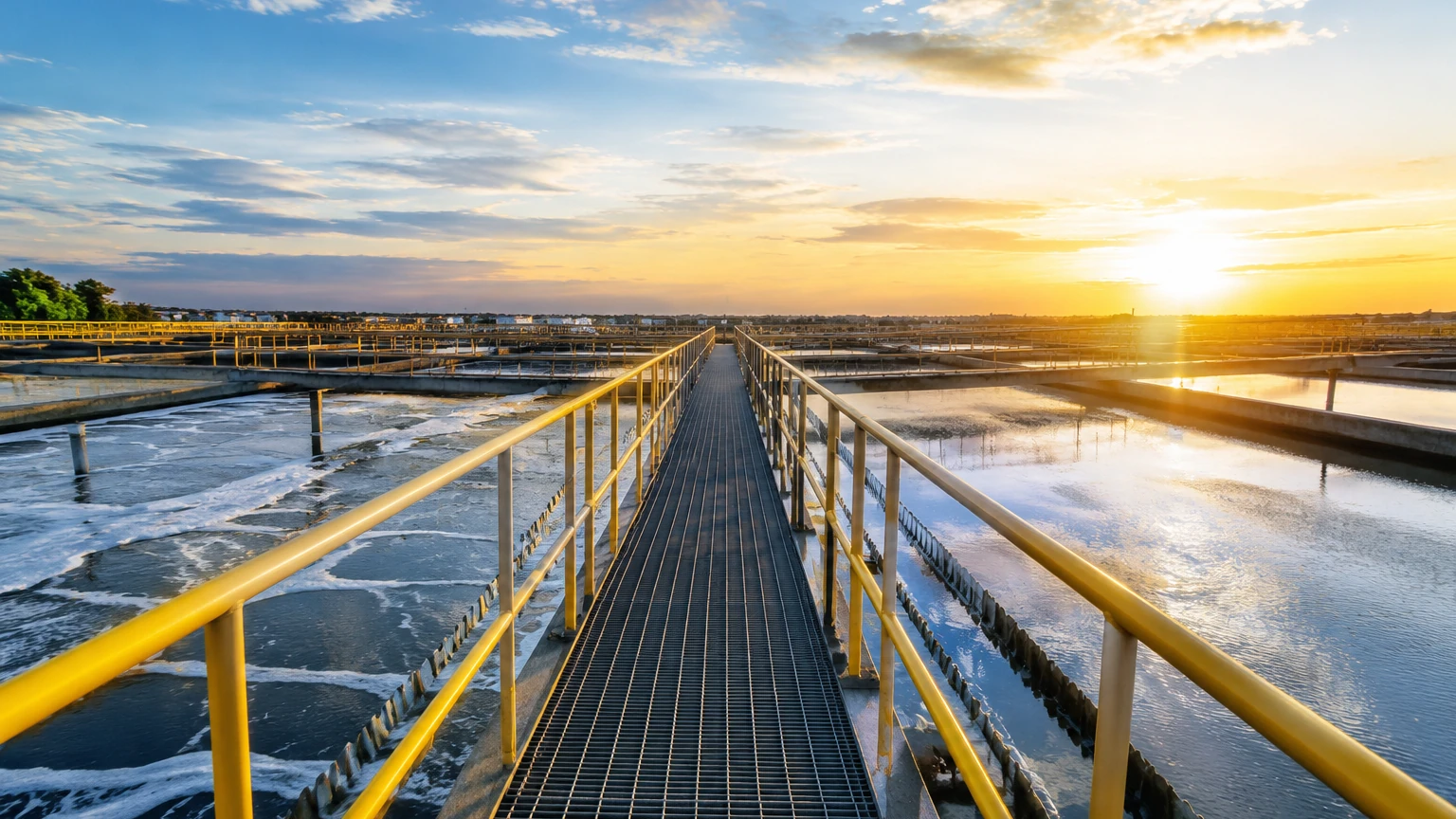
Sampling stations are engineered assemblies that automate or facilitate the manual collection of media. In water treatment, for example, composite sampling stations collect small aliquots of water over a 24-hour period to provide a flow-proportional average of effluent quality. In the chemical industry, sampling stations may be enclosed to protect operators from volatile organic compounds (VOCs) or corrosive agents.
For these stations to function reliably, they must interact with the primary process vessel or channel. This interaction is governed by level measurement. If a sampling pump activates when the liquid level is too low, it risks cavitation and mechanical failure. Conversely, if a station fails to detect a high-level condition in a collection tank, it can lead to environmental spills and costly cleanup operations.
Principles of Level Measurement in Sampling Applications
Before selecting instrumentation for sampling stations, it is essential to understand the physical principles that govern level detection. Industrial level meters generally fall into two categories: contact and non-contact. Each has specific advantages depending on the media being sampled.
1. Ultrasonic Level Measurement (Non-Contact)
Ultrasonic sensors emit high-frequency sound pulses that travel through the air, reflect off the liquid surface, and return to the transducer. The device calculates the distance based on the time-of-flight. Since sound speed is affected by air temperature, these sensors typically include built-in temperature compensation. This technology is ideal for water-based sampling stations where the media is non-foaming and the atmosphere is stable.
2. Radar Level Measurement (Non-Contact)
Radar level meters utilize high-frequency electromagnetic waves (microwaves). Unlike sound, microwaves are not affected by air temperature, pressure, or vacuum conditions. Radar is particularly effective in sampling stations dealing with agitated surfaces, steam, or dust. For complex chemical sampling, radar provides the highest degree of accuracy and reliability without touching the process media.
3. Hydrostatic Level Measurement (Contact)
Hydrostatic transmitters measure the pressure exerted by a liquid column. The pressure at the bottom of a tank is directly proportional to the height of the liquid, based on the formula: $P = \rho \cdot g \cdot h$ (where $P$ is pressure, $\rho$ is density, $g$ is gravity, and $h$ is height). These are often used in deep sumps or lift stations associated with sampling points where non-contact sensors might be obstructed by physical structures.
4. Magnetic Level Gauges and Switches
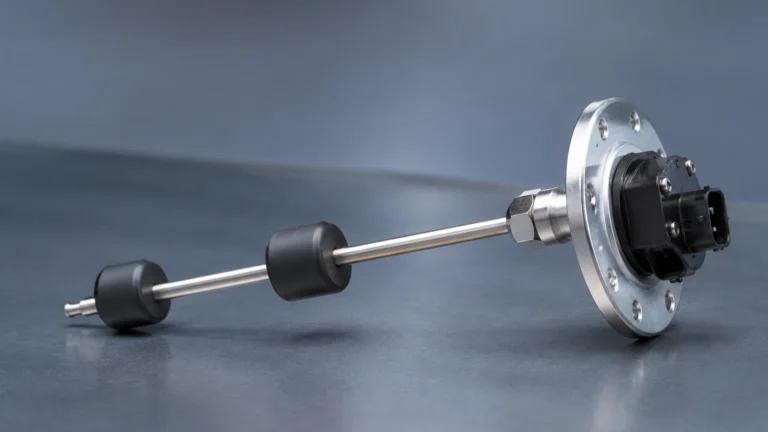
Magnetic gauges use a float containing a magnet that moves with the liquid level, actuating external flags or switches. These are highly visual and provide fail-safe mechanical level indication, which is critical for secondary containment tanks in sampling stations.
Technical Selection Criteria for Sampling Station Instrumentation
Choosing the right level sensor for a sampling station requires an evaluation of the physical environment and the chemical properties of the sample. The following table provides a comparison of common technologies used in these applications:
| Technology | Typical Accuracy | Operating Range | Best Use Case | Limitations |
| :— | :— | :— | :— | :— |
| Ultrasonic | ±0.25% of range | 0.1m to 15m | Water, wastewater, open channels | Affected by heavy foam and vapor |
| Radar (80GHz) | ±2mm | 0.1m to 30m+ | Chemical tanks, volatile liquids | Higher initial investment |
| Hydrostatic | ±0.1% to 0.5% | 1m to 200m | Deep wells, sumps, lift stations | Requires contact with media |
| Magnetic Gauge | ±5mm | 0.3m to 6m | High-pressure vessels, oil/water | Moving parts can wear over time |
When designing a station, engineers should Review product options and application support to ensure the selected instrument matches the specific gravity and viscosity of the fluid being sampled.
Installation and Engineering Best Practices
The reliability of a sampling station is often determined by the quality of the installation. Even the most advanced radar or ultrasonic meter will provide erroneous data if installed incorrectly.
* Dead Zone Management: Every non-contact sensor has a "dead zone" (blocking distance) near the face of the transducer where measurements are impossible. Ensure the maximum liquid level in the sampling tank never enters this zone.
* Mounting Position: Sensors should be mounted away from the inlet flow to avoid turbulence. For ultrasonic and radar units, the beam must have a clear path to the liquid surface, free from internal obstructions like ladders, pipes, or agitators.
* Stilling Wells: In applications involving heavy foam or high turbulence, installing the level sensor inside a stilling well (a vertical pipe) can provide a stable surface for measurement, significantly increasing accuracy.
* Venting: For sampling stations handling volatile chemicals, ensure the tank is properly vented. Pressure buildup can affect hydrostatic readings if the sensor is not compensated for atmospheric pressure (using a vented cable).
Common Risks and Operational Limitations
Sampling stations operate in diverse environments, from freezing outdoor municipal sites to high-temperature industrial plants. Engineers must account for the following risks:
1. Media Buildup: In wastewater sampling, fats, oils, and grease (FOG) can accumulate on contact-based sensors like hydrostatic probes or float switches. This buildup can lead to signal drift or mechanical sticking. In such cases, non-contact radar is the preferred solution.
2. Environmental Extremes: Outdoor sampling stations are subject to seasonal temperature shifts. While ultrasonic sensors compensate for air temperature, extreme cold can lead to ice formation on the transducer face, blocking the signal.
3. Chemical Compatibility: The housing and seals of the level instrument must be compatible with the sample. For acidic or alkaline media, PTFE or PVDF coatings are often required for any wetted parts to prevent corrosion.
4. Signal Interference: In metal tanks, multiple reflections (multipath interference) can confuse radar sensors. Modern instruments utilize software algorithms to "mask" these false echoes, but proper initial configuration is vital.
Integration with Sampling Controllers
Modern sampling stations are rarely standalone units. They are typically integrated into a wider SCADA (Supervisory Control and Data Acquisition) system. The level meter provides a 4-20mA or RS485 Modbus signal to the sampling controller.
For flow-proportional sampling, the level meter measures the head height over a weir or flume. The controller then uses a programmed discharge curve to calculate the flow rate and trigger the sampler to take a volume-weighted sample. This ensures that the data collected represents the true average of the process stream over time.
Frequently Asked Questions (FAQ)
Q: Can I use an ultrasonic sensor for sampling stations containing solvent-based chemicals?
A: It is generally not recommended. Solvents often produce vapors that change the speed of sound in the air space, leading to significant measurement errors. Radar level meters are a much more reliable choice for solvent applications as they are unaffected by vapor composition.
Q: How often should level sensors in sampling stations be calibrated?
A: For regulatory compliance (such as EPA or ISO standards), annual calibration is standard. However, in harsh environments with high solids content, a quarterly visual inspection and verification check are recommended to ensure no buildup has occurred on the sensor.
Q: What is the benefit of using a 80GHz radar over a 26GHz radar for these stations?
A: 80GHz radar has a much narrower beam angle. This makes it easier to install in small sampling tanks or vessels with internal obstructions, as the beam is less likely to hit the tank walls or pipes.
Q: Are hydrostatic sensors safe for flammable liquid sampling?
A: Yes, provided they are intrinsically safe (IS) rated and used with an appropriate safety barrier. Because they are submerged, they do not have the same "top-down" installation risks as some non-contact units in pressurized explosive atmospheres, but the electrical classification must match the zone.
Conclusion
Sampling stations are vital components of modern industrial infrastructure, ensuring that processes remain within specified quality and environmental boundaries. The integration of robust level measurement—whether through radar, ultrasonic, or hydrostatic technologies—is the key to automating these stations safely and accurately. By understanding the measurement principles and selection criteria outlined above, plant engineers can specify systems that minimize maintenance and maximize data integrity. For detailed technical specifications and to explore the full range of available instrumentation, users should consult the Main Page for comprehensive product data and application-specific guidance.