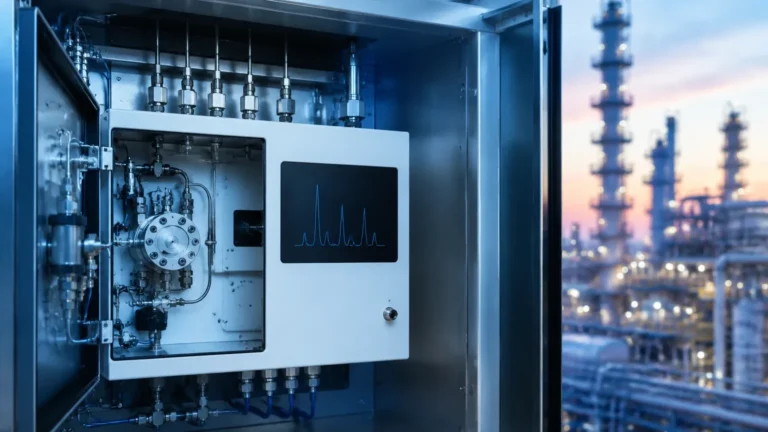
Rheonik Rhe 42
Rheonik Rhe 42
In the landscape of industrial process control, precision in fluid measurement is the cornerstone of operational efficiency and safety. While level measurement provides critical data regarding the volume and presence of media within a vessel, mass flow measurement offers a deeper insight into the actual quantity of material moving through a system. The Rheonik RHE 42 is a sophisticated Coriolis mass flow transmitter designed to interface with Rheonik’s RHM series of sensors. This guide examines the technical architecture, measurement principles, and practical application of the RHE 42, particularly how it integrates into broader process monitoring systems alongside traditional level measurement solutions.
Understanding the Coriolis Measurement Principle
Before evaluating the specific features of the Rheonik RHE 42, it is essential to understand the underlying physics of Coriolis measurement. Unlike volumetric flow meters or hydrostatic level sensors that rely on fluid velocity or pressure, a Coriolis meter measures mass directly.
The Coriolis Effect in Instrumentation
The principle involves inducing a vibration in a tube through which the fluid flows. As the fluid moves through the vibrating tube, it experiences a Coriolis acceleration. This acceleration creates a twisting force on the tube. The degree of this twist—or phase shift—is directly proportional to the mass flow rate of the fluid.
Simultaneously, the resonant frequency at which the tube vibrates changes based on the density of the fluid. This allows the Rheonik RHE 42 to provide three primary measurements from a single sensor:
1. Mass Flow Rate: Measured in kilograms per minute (kg/min) or similar units.
2. Density: Calculated from the vibration frequency, allowing for the determination of fluid concentration or purity.
3. Temperature: Usually measured via an internal PT100 sensor to compensate for thermal expansion of the meter tubes.
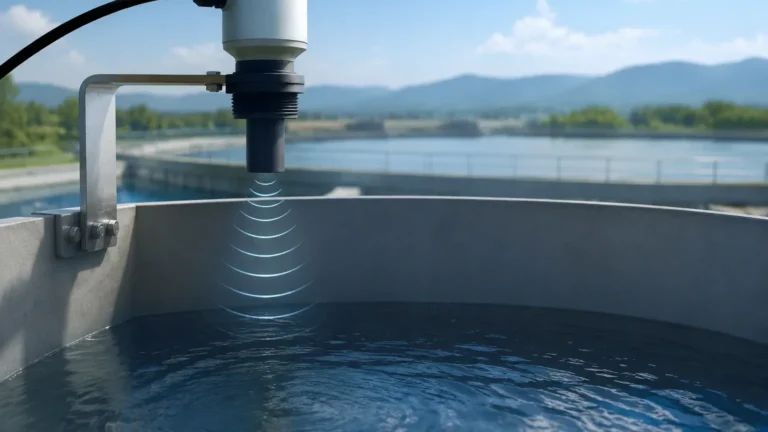
In applications where inventory management is critical, combining these mass flow data points with level data from a Main Page radar or ultrasonic sensor provides a comprehensive mass-balance overview of the process.
Technical Specifications and Features of the RHE 42
The Rheonik RHE 42 is engineered as a versatile transmitter that can be mounted locally to the sensor or remotely in a control room. Its design focuses on modularity and ease of integration into modern industrial automation environments.
Construction and Housing
The RHE 42 is typically housed in a robust enclosure suitable for harsh industrial environments. Options often include:
* Epoxy-coated Aluminum: For standard industrial use where weight and cost are considerations.
* Stainless Steel (SS316): For corrosive environments or offshore applications where salt spray and chemicals are present.
* Protection Rating: Most configurations offer IP66 or NEMA 4X protection, ensuring the electronics are shielded from dust and high-pressure water jets.
Interface and Connectivity
Modern process plants require seamless data flow. The RHE 42 supports several communication protocols to ensure it can communicate with PLCs (Programmable Logic Controllers) and SCADA systems:
* Analog Outputs: 4-20mA signals for flow rate or density.
* Digital Communication: Pulse/frequency outputs for totalizing flow, and RS485 Modbus RTU or HART for digital parameter access.
* User Interface: A backlit LCD display with an optical or push-button keypad allows for local configuration without opening the housing in hazardous areas.
Selection Criteria for Coriolis Transmitters
Selecting the right transmitter for a mass flow application requires an analysis of the process media and the environmental conditions. When engineers evaluate the Rheonik RHE 42, they typically use the following criteria:
Selection Table: Application Suitability
| Parameter | Requirement | RHE 42 Capability |
| :— | :— | :— |
| Measurement Accuracy | High (0.1% to 0.2%) | Standard for most RHM sensor pairings |
| Hazardous Area Rating | ATEX / IECEx / CSA | Available in explosion-proof/flameproof versions |
| Power Supply | 24 VDC or 100-240 VAC | Flexible power options for field or plant use |
| Media Type | Liquids, Gases, Slurries | Capable of handling high-pressure and cryogenic fluids |
| Mounting Distance | Up to 100 meters | Remote mounting options for inaccessible sensors |
Integrating Flow and Level Measurement
In many industrial scenarios, such as chemical batching or oil storage, relying on a single measurement technology can lead to inaccuracies. For instance, temperature changes can cause a liquid to expand, changing its level in a tank without changing its mass.
Mass Balance and Inventory Control
By utilizing a Main Page level meter to monitor the volume in a tank and a Rheonik RHE 42 to monitor the mass of the fluid entering or leaving the tank, operators can perform real-time mass balance. This is vital for:
* Leak Detection: If the mass flow out does not match the level decrease in the tank (accounting for density), a leak may be present.
* Quality Control: In blending applications, ensuring the correct mass of a reactant is added is more accurate than relying on level changes alone, which may be affected by surface turbulence or foam.
Installation Considerations
To ensure the accuracy of the Rheonik RHE 42 and its associated sensor, strict adherence to installation guidelines is required. Coriolis meters are sensitive to external vibrations and mechanical stress.
Mechanical Installation
1. Support and Bracing: The sensor must be rigidly supported on both the inlet and outlet sides to prevent pipe vibrations from interfering with the tube's natural resonance.
2. Orientation: For liquid applications, the sensor should ideally be installed in a 'U' down position or in a vertical pipe with upward flow to ensure the tubes remain full and air bubbles are not trapped.
3. Stress-Free Mounting: Flanges must be aligned perfectly. Forcing a meter into a gap that is too small or misaligned will introduce mechanical stress, causing a "zero-shift" error in measurement.
Electrical Installation
* Cabling: Use shielded twisted-pair cables for signal transmission to prevent electromagnetic interference (EMI).
* Grounding: Proper grounding of both the transmitter and the sensor is mandatory to ensure safety and signal integrity, especially in hazardous areas.

Limitations and Constraints
While the Rheonik RHE 42 is a highly capable instrument, it is not a universal solution for every application. Engineers must be aware of its limitations:
* Entrained Gas: Coriolis meters struggle with "slug flow" or high percentages of entrained gas in liquids. While the RHE 42 has advanced signal processing to handle some aeration, excessive gas can dampen the tube vibration and cause the meter to stall.
* Initial Cost: Compared to simple hydrostatic level transmitters or ultrasonic flow meters, Coriolis systems represent a higher capital investment. They are typically reserved for applications where high accuracy or direct mass measurement is non-negotiable.
* Pressure Drop: The geometry of Coriolis sensor tubes can introduce a pressure drop in the line. This must be calculated during the design phase to ensure the system pump capacity is sufficient.
Maintenance and Troubleshooting
The RHE 42 is designed for low maintenance, as it has no moving parts in the fluid stream. However, periodic checks are recommended to maintain performance.
Common Troubleshooting Steps
* Zero Calibration: Over time, or after significant temperature shifts, the "zero point" may drift. Performing a zero-calibration with the sensor full of stagnant fluid is a standard maintenance task.
* Diagnostic Codes: The RHE 42 provides internal diagnostics. Error codes related to "Drive Gain" often indicate the presence of bubbles or solids that are dampening the tube vibration.
* Coating and Scaling: If the process media tends to coat the internal walls of the sensor tubes, the resonant frequency will change, leading to density errors. Regular cleaning or steam-out procedures may be necessary.
Frequently Asked Questions (FAQ)
Q: Can the RHE 42 be used for custody transfer?
A: Yes, when paired with appropriately calibrated RHM sensors and configured with the necessary security seals, the RHE 42 is often used in fiscal metering and custody transfer applications due to its high precision.
Q: How does the RHE 42 handle high-temperature fluids?
A: The transmitter itself is usually mounted remotely from high-temperature sensors. Rheonik sensors can handle temperatures exceeding 350°C, while the RHE 42 processes the signals in a controlled environment.
Q: Is it possible to retrofit an RHE 42 to an existing sensor?
A: In many cases, yes. The RHE 42 is designed to be backwards compatible with various generations of Rheonik sensors, though a firmware update or specific calibration constants may be required.
Conclusion
The Rheonik RHE 42 represents a sophisticated interface between physical fluid dynamics and digital process control. By providing accurate mass, density, and temperature data, it allows for a level of process transparency that volumetric measurement alone cannot achieve. For engineers and plant managers, the decision to implement such a system should be based on a thorough understanding of the process requirements, weighing the need for precision against the complexities of installation. When integrated correctly with other instrumentation, such as the level measurement solutions found on the Main Page, the RHE 42 becomes a vital component in a robust, efficient, and safe industrial operation.