Cip Process Monitoring
Cip Process Monitoring
In the modern industrial landscape, maintaining the highest standards of hygiene while optimizing operational efficiency is a critical challenge for sectors such as food and beverage, pharmaceuticals, and biotechnology. Clean-in-Place (CIP) systems are the backbone of these industries, allowing for the internal cleaning of pipes, vessels, and process equipment without disassembly. Effective cip process monitoring is essential to ensure that cleaning cycles are both thorough and resource-efficient. At the heart of this monitoring lies precise level measurement, which ensures that cleaning agents, rinses, and recovered chemicals are managed with clinical accuracy.
Welk provides a range of advanced level measurement solutions designed to withstand the rigorous demands of CIP environments. By integrating reliable sensors into the CIP loop, facilities can reduce water consumption, minimize chemical waste, and guarantee that equipment is sanitized to regulatory standards.
Measurement Principles for CIP Level Sensors
Before selecting instrumentation for cip process monitoring, it is vital to understand the underlying physical principles that govern how these sensors interact with cleaning fluids. In a CIP system, tanks often contain varying concentrations of caustic soda, phosphoric acid, or deionized water, often at elevated temperatures.
Radar Level Measurement (FMCW)
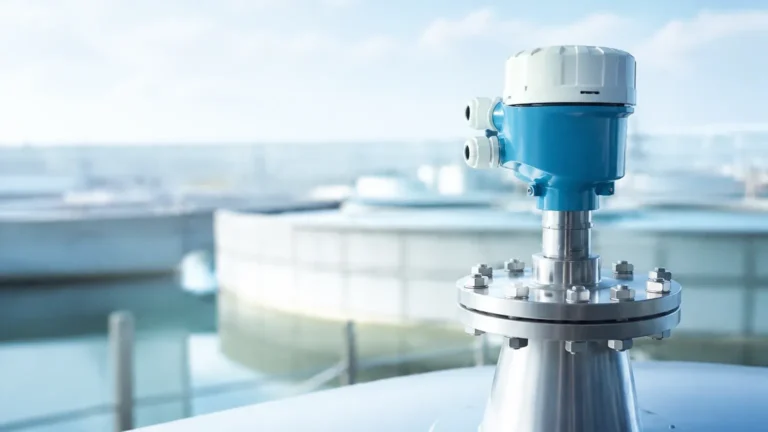
Modern radar level meters, particularly those operating at high frequencies like 80GHz, utilize Frequency Modulated Continuous Wave (FMCW) technology. The sensor emits a continuous signal with a constantly changing frequency. The signal reflects off the liquid surface and returns to the antenna. The difference in frequency between the emitted and received signal is proportional to the distance. Radar is highly preferred for CIP because it is non-contact and unaffected by the steam or vapor clouds often present during hot rinse cycles.
Ultrasonic Level Sensing
Ultrasonic sensors function by emitting high-frequency sound pulses. The time taken for the echo to return from the liquid surface determines the level. While cost-effective, ultrasonic sensors can face challenges in cip process monitoring if there is significant steam or if the air temperature fluctuates rapidly, as the speed of sound changes with air density. They are best suited for ambient temperature chemical storage tanks within the CIP station.
Hydrostatic Pressure Measurement
This principle relies on the relationship between the height of a liquid column and the pressure it exerts at the base of the tank. A pressure transmitter installed at the bottom of the vessel measures this force. For CIP applications, these sensors must be equipped with hygienic flush diaphragms to prevent bacterial growth. It is important to note that if the density of the cleaning agent changes significantly with concentration or temperature, the hydrostatic reading must be compensated to maintain accuracy.
Magnetic Level Gauges
For external bypass monitoring of bulk storage tanks in a CIP room, magnetic level gauges offer a clear visual indication combined with electronic transmission. A float containing a magnet moves with the liquid level, flipping bicolored flags and interacting with a reed chain or magnetostrictive transmitter. This provides a fail-safe mechanical backup to electronic monitoring systems.
The Role of Level Instrumentation in CIP Cycles
Effective cip process monitoring is not just about knowing if a tank is full or empty; it is about the precision of the entire cleaning sequence. A standard CIP cycle typically involves several stages where level measurement is critical:
1. Pre-Rinse: Water is used to remove the bulk of the process residue. Level sensors monitor the water source to ensure sufficient volume is available to complete the rinse without air entrainment in the pumps.
2. Caustic/Detergent Wash: A heated chemical solution (often 60°C to 85°C) is circulated. Level monitoring ensures the correct volume is maintained in the balance tank to prevent cavitation.
3. Intermediate Rinse: Removes residual detergent. Precise level control here prevents the cross-contamination of chemicals.
4. Acid Wash: Used to remove mineral scale or "milk stone." Sensors must be chemically resistant to acidic environments.
5. Final Rinse: High-purity water is used for the final flush. Monitoring the recovery tank level allows for the recycling of this water into the pre-rinse stage of the next cycle, significantly reducing utility costs.
Practical Selection Table for CIP Level Sensors
Choosing the right technology depends on the specific vessel type and the cleaning chemistry involved. The following table provides a comparison based on typical industrial requirements.
| Feature | 80GHz Radar | Ultrasonic | Hydrostatic (Flush) | Magnetic Gauge |
| :— | :— | :— | :— | :— |
| Measurement Range | Up to 30m | Up to 15m | Up to 20m (Head) | Up to 6m |
| Accuracy | ±1mm | ±0.25% of range | ±0.1% to ±0.5% | ±5mm |
| Steam Resistance | Excellent | Poor | Excellent | Excellent |
| Foam Resistance | Good (with FMCW) | Poor | Excellent | Good |
| Hygienic Design | Non-contact | Non-contact | Flush Diaphragm | External/Bypass |
| Max Temperature | 200°C+ | 60°C – 80°C | 120°C (SIP rated) | 400°C |
| Chemical Resistance | PTFE/PFA Coated | Plastic/PVDF | SS316L/Hastelloy | SS316L/PVC/PP |
Installation Considerations and Best Practices
To achieve reliable cip process monitoring, the physical installation of the sensor is as important as the technology itself. In hygienic environments, several factors must be addressed:
* Sanitary Connections: Sensors should be installed using industry-standard fittings such as Tri-Clamp or DIN 11851. These connections ensure there are no crevices where bacteria can harbor.
* Dead Zone Management: Every sensor has a "dead zone" or "blocking distance" near the antenna or face where measurement is impossible. Ensure the sensor is mounted high enough that the maximum liquid level never enters this zone.
* Avoiding Obstructions: In CIP tanks, internal spray balls, agitators, and heating coils can create false echoes. Radar sensors with narrow beam angles (e.g., 3° to 6°) are ideal for avoiding these internal structures.
* Self-Draining Surfaces: All wetted parts of the sensor should have a surface roughness (Ra) of less than 0.8μm and be designed to be self-draining to prevent liquid pooling after the cleaning cycle is complete.
* Thermal Shock: CIP processes involve rapid temperature shifts. Ensure the sensor electronics are thermally decoupled from the process connection or rated for the rapid expansion and contraction of materials.

Limitations and Potential Risks
While advanced instrumentation has simplified cip process monitoring, engineers must remain aware of specific limitations:
* Heavy Foam: During the caustic wash, heavy foam can develop. While radar can penetrate light foam, extremely dense or "wet" foam may absorb the signal. In these cases, hydrostatic sensors or guided wave radar might be more appropriate.
* Condensation: In hot CIP cycles, heavy condensation can form on the sensor face. Welk radar sensors often utilize a convex lens design or PTFE drip-off covers to prevent water droplets from attenuating the signal.
* Chemical Compatibility: Cleaning agents are aggressive. It is essential to confirm that seals (O-rings) are made of EPDM or FKM (Viton) and that the diaphragm or antenna material is compatible with both the process media and the cleaning chemicals.
Frequently Asked Questions (FAQ)
Q: Can I use one sensor for both the process level and the CIP level?
A: Yes, provided the sensor is rated for the maximum temperature of the CIP cycle (often higher than the process temperature) and has the necessary hygienic certifications (3-A or EHEDG).
Q: How does steam affect radar vs. ultrasonic sensors?
A: Steam changes the density of the air, which slows down ultrasonic sound waves, leading to inaccurate readings. Radar signals are electromagnetic and are largely unaffected by the density of the gas phase, making them superior for hot CIP applications.
Q: Is calibration required after every CIP cycle?
A: No. High-quality digital sensors from Welk are designed for long-term stability. However, the zero-point of hydrostatic transmitters should be checked periodically if they are subjected to extreme thermal cycling.
Conclusion
Precision in cip process monitoring is a fundamental requirement for modern industrial hygiene and resource management. By selecting the appropriate level measurement technology—whether it be high-frequency radar for steam-filled vessels or hydrostatic transmitters for foam-prone detergents—facilities can ensure consistent cleaning results and operational safety.
For a detailed look at specific instrument specifications and to find the best fit for your facility's requirements, you can review product options and application support on our Main Page. Selecting the right partner for your measurement needs ensures that your CIP system remains a reliable asset in your production line.