Endres Hauser
Endres Hauser
In the landscape of industrial process automation, the selection of level measurement instrumentation is a critical decision that impacts safety, efficiency, and cost-effectiveness. Among the primary names recognized globally for high-end instrumentation is Endress+Hauser. For engineers and procurement specialists evaluating solutions for liquid and solid level monitoring, understanding the technical capabilities of established brands like Endres Hauser alongside specialized manufacturers like Welk is essential for optimizing plant performance.
Industrial level measurement is not a one-size-fits-all discipline. It requires a deep understanding of physics, fluid dynamics, and electronic signal processing. Whether managing a water treatment facility, a chemical processing plant, or oil and gas storage, the choice of technology—ranging from radar and ultrasonic to hydrostatic and magnetic—must be aligned with the specific physical properties of the medium and the environmental conditions of the vessel.
Understanding Measurement Principles
Before selecting a specific instrument, it is vital to understand the underlying principles of the most common measurement technologies. Each method has distinct advantages and limitations based on the application environment.
Radar Level Measurement (ToF)
Radar technology, specifically Time of Flight (ToF), is the gold standard for non-contact level measurement. It operates by emitting high-frequency microwave pulses that travel at the speed of light. When these pulses hit the surface of the medium, they are reflected back to the sensor. The instrument measures the time interval between transmission and reception to calculate the distance.
* 80GHz Radar: High-frequency radar offers a very narrow beam angle (often as low as 3 degrees), which allows for precise measurement even in tall, narrow tanks or vessels with internal obstructions like agitators or heating coils.
* 26GHz Radar: A versatile frequency suitable for most liquid applications, providing a balance between signal strength and the ability to penetrate light foam or dust.
Ultrasonic Level Sensors
Ultrasonic sensors use sound waves rather than electromagnetic waves. The sensor emits an ultrasonic pulse that reflects off the product surface. The time taken for the echo to return is proportional to the distance. Because sound speed is affected by air temperature, these sensors typically include integrated temperature compensation.
Hydrostatic Level Transmitters
Hydrostatic measurement is a contact-based method that relies on the principle that the pressure at a specific depth in a liquid is proportional to the height of the liquid column above it. This is expressed by the formula: $P = \rho \cdot g \cdot h$ (where $P$ is pressure, $\rho$ is density, $g$ is gravity, and $h$ is height). This method is highly reliable for vented tanks and deep wells.
Magnetic Level Gauges and Switches
For high-pressure or high-temperature applications where electronic sensors might face challenges, magnetic level gauges provide a robust visual and electronic solution. They use a float containing a magnet that moves with the liquid level, actuating external magnetic flags or reed switches.
Technical Selection Criteria
When evaluating instruments from providers like Endres Hauser or specialized manufacturers like Welk, engineers must consider several technical factors. The following table provides a general guide for technology selection based on process conditions.
| Feature | Radar (80GHz) | Ultrasonic | Hydrostatic | Magnetic Gauge |
| :— | :— | :— | :— | :— |
| Measurement Type | Non-contact | Non-contact | Contact (Pressure) | Contact (Float) |
| Accuracy | ±1 mm to ±2 mm | ±0.25% of range | ±0.1% to ±0.5% | ±5 mm to ±10 mm |
| Max Range | Up to 120m | Up to 30m | Up to 200m | Up to 6m (standard) |
| Process Temp | -40°C to +450°C | -40°C to +80°C | -20°C to +100°C | -190°C to +400°C |
| Process Pressure | Vacuum to 160 bar | Atmospheric | Up to 40 bar | Up to 320 bar |
| Effect of Foam | Minimal (80GHz) | Significant | None | None |
| Effect of Dust | Minimal | Significant | None | None |
Evaluating Endres Hauser and Market Alternatives
Endres Hauser (Endress+Hauser) has built a reputation for high-quality, high-precision instruments that often lead the market in terms of integrated digital features and compliance with complex international standards (such as SIL3 or specialized explosion-proof certifications). However, for many industrial applications, the primary requirement is a combination of reliability, accuracy, and cost-efficiency.
Manufacturers like Welk specialize in providing professional-grade industrial level measurement instruments that meet these core requirements. By focusing on advanced radar and ultrasonic technology with strict quality control, these solutions offer a competitive alternative for many standard and semi-custom applications. For a comprehensive overview of available technologies and specific model specifications, you can visit our Main Page.
The Importance of Customization (OEM/ODM)
One area where specialized manufacturers often excel is in providing customized OEM/ODM services. While large corporations like Endres Hauser have standardized product lines, smaller, agile manufacturers can often adapt sensor housing, mounting connections, and communication protocols to fit specific existing infrastructure, reducing the need for costly tank modifications.
Installation Considerations and Best Practices
Even the most advanced sensor will fail to provide accurate data if installed incorrectly. Engineers should follow these guidelines to ensure optimal performance:
1. Blocking Distance (Dead Zone): Every non-contact sensor has a minimum distance near the sensor face where it cannot measure. Ensure the maximum liquid level never enters this zone.
2. Nozzle Height and Diameter: For radar and ultrasonic sensors, the nozzle should be as short and wide as possible to prevent signal interference from the nozzle walls. For 80GHz radar, this is less of a concern due to the narrow beam, but it remains a critical factor for ultrasonic units.
3. Avoid Obstructions: Do not install sensors directly above inflow pipes, agitators, or internal ladders. If obstructions are unavoidable, use software-based "false echo suppression" to map out the static reflections.
4. Vessel Geometry: In tanks with conical bottoms, the sensor should be positioned centrally if measuring solids, or offset if measuring liquids, depending on the specific beam angle and the desired measurement at low levels.
5. Environmental Shielding: For outdoor installations, use a sunshade to prevent temperature fluctuations from affecting the electronics or the accuracy of ultrasonic sound speed calculations.

Limitations and Challenges
While modern instrumentation is highly capable, certain physical limitations must be acknowledged:
* Dielectric Constant (dk): Radar sensors rely on the dielectric constant of the medium. Materials with a very low dk (like certain liquefied gases or powders) reflect less energy, requiring high-sensitivity radar or guided wave radar (GWR).
* Vacuum Conditions: Ultrasonic sensors cannot function in a vacuum because sound waves require a medium (air/gas) to travel. Radar is the preferred choice for vacuum applications.
* Heavy Foam: Thick, dense foam can absorb both ultrasonic and radar signals. In such cases, hydrostatic transmitters or magnetic level gauges are often more reliable.
* Turbulence: Rapidly moving liquid surfaces can scatter signals. This can often be mitigated by using a stilling well or bypass pipe, or by increasing the damping/averaging time in the sensor software.
Application-Specific Solutions
Water and Wastewater Treatment
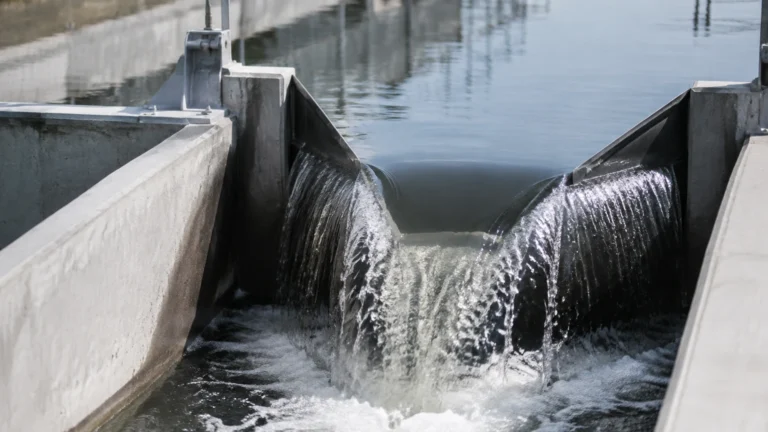
Ultrasonic sensors are the industry standard for open channel flow and sump level monitoring due to their cost-effectiveness. However, in applications where steam or heavy condensation is present, 80GHz radar is increasingly used to ensure uninterrupted data.
Chemical Industry
Corrosive environments require sensors with high-grade wetted materials such as PTFE, PVDF, or high-alloy steels. Hydrostatic transmitters with flush diaphragms are often used for viscous chemicals to prevent clogging.
Oil and Gas
Precision is paramount for custody transfer and inventory management. High-frequency radar provides the millimeter-level accuracy required for large-scale storage tanks, while magnetic level gauges provide a mechanical backup that functions even during power outages.
Frequently Asked Questions (FAQ)
Q: Can I replace an Endres Hauser sensor with a Welk sensor without changing my PLC logic?
A: Yes, most industrial level sensors use standardized communication protocols such as 4-20mA (with or without HART), RS485 Modbus, or Profibus. As long as the output signal and the measurement range are calibrated to match, the PLC will process the data identically.
Q: Is 80GHz radar always better than 26GHz?
A: While 80GHz offers a narrower beam and better precision, 26GHz is sometimes preferred in applications with extremely heavy dust or very thick foam, as the longer wavelength can sometimes penetrate these obstacles more effectively than the shorter 80GHz waves.
Q: How often do level meters need calibration?
A: This depends on the technology and the criticality of the application. Hydrostatic sensors may drift over time and usually require annual checks. Non-contact radar and ultrasonic sensors are generally more stable but should be verified every 12 to 24 months.
Q: What is the benefit of a 2-wire vs. 4-wire connection?
A: 2-wire instruments are powered by the current loop (4-20mA), which simplifies wiring and reduces costs. 4-wire instruments have a separate power supply, which is often necessary for power-intensive features like heated displays or high-power signal processing in complex environments.
Conclusion
Navigating the complexities of industrial level measurement requires a balance between technical requirements and budgetary constraints. While brands like Endres Hauser provide a high benchmark for the industry, manufacturers like Welk offer robust, accurate, and cost-effective solutions tailored to the needs of modern industrial automation. By understanding the principles of radar, ultrasonic, and hydrostatic measurement, and by adhering to rigorous installation standards, process engineers can ensure long-term reliability and safety in their operations.