Decarbonization Projects
Decarbonization Projects
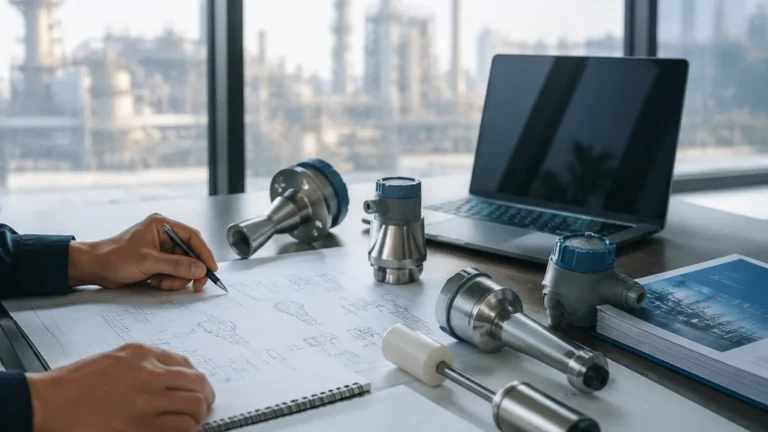
Industrial decarbonization projects represent a fundamental shift in how manufacturing, chemical processing, and energy production facilities operate. As global industries strive to reach net-zero targets, the implementation of carbon capture, utilization, and storage (CCUS), hydrogen production, and energy-efficient water treatment has become a priority. At the heart of these initiatives is the requirement for precise process control, where accurate level measurement serves as a critical data point for both safety and efficiency.
In the context of decarbonization projects, level measurement is not merely about inventory management; it is about optimizing chemical reactions, ensuring the integrity of high-pressure storage, and reducing the energy footprint of industrial processes. This guide explores the technical intersection of level measurement technologies and the evolving needs of the green industrial transition.
Understanding the Scope of Industrial Decarbonization Projects
Decarbonization projects typically involve the retrofitting of existing brownfield sites or the construction of new greenfield facilities designed to minimize greenhouse gas emissions. These projects often focus on three primary pillars: carbon management, alternative fuel integration, and resource optimization.
Carbon management involves capturing CO2 from flue gases, compressing it, and transporting it for geological storage or industrial reuse. Each stage requires rigorous monitoring. For instance, in carbon capture units using amine scrubbing, maintaining precise levels in absorber and stripper columns is vital to prevent solvent carryover and ensure maximum absorption efficiency.
Hydrogen-based decarbonization projects focus on electrolysis and the storage of hydrogen gas or liquid carriers. Level sensors are required in separators to manage water-oxygen and water-hydrogen interfaces. Similarly, in water treatment facilities that support these energy-intensive industries, reducing the energy used for pumping and aeration directly contributes to the project’s carbon reduction goals. Precise level control allows for the automation of these systems, ensuring they run only when necessary and at optimal capacities.
Primary Measurement Principles for Level Monitoring
Before selecting instrumentation for decarbonization projects, it is essential to understand the physical principles governing different measurement technologies. Each technology offers specific advantages depending on the medium, pressure, and temperature of the application.
Radar Level Measurement (ToF)
Radar level meters operate on the Time-of-Flight (ToF) principle. The device emits a high-frequency electromagnetic wave (typically in the 26GHz or 80GHz range) that travels to the surface of the medium and reflects back to the sensor. The distance is calculated based on the time interval between emission and reception.
- Non-contact Radar: Ideal for corrosive or high-temperature liquids because the sensor does not touch the medium. It is highly effective in CO2 storage tanks where pressure and temperature can fluctuate.
- Guided Wave Radar (GWR): Uses a probe to guide the signal. This is particularly useful for low-dielectric liquids or applications with heavy foam or turbulence, common in chemical recycling processes.
Ultrasonic Level Sensors
Ultrasonic sensors also use the ToF principle but utilize sound waves instead of electromagnetic waves. The sensor emits a pulse that reflects off the liquid surface. Because the speed of sound is affected by air temperature, these sensors usually include integrated temperature compensation.
- Application: Best suited for atmospheric tanks and water treatment applications within decarbonization projects. They are cost-effective but limited in high-pressure or vacuum environments where sound cannot travel effectively.
Hydrostatic Level Transmitters
Hydrostatic measurement relies on the principle that the pressure at the bottom of a liquid column is directly proportional to the height of the liquid and its density ($P = \rho \cdot g \cdot h$).
- Application: These are highly reliable for vented tanks and deep wells. In decarbonization projects, they are often used in wastewater sumps or large storage tanks where a simple, robust submerged sensor is preferred.
Magnetic Level Gauges
Magnetic level gauges utilize a float containing a magnet that moves with the liquid level inside a bypass chamber. This magnet flips external flags or interacts with a reed-chain transmitter to provide a visual and electronic reading.
- Application: Excellent for high-pressure hazardous fluids, such as liquefied gases, where a clear visual indication is required for onsite operators alongside remote monitoring.
Application-Specific Requirements in Decarbonization
Decarbonization projects often introduce challenging process conditions that traditional instrumentation might struggle to handle. Engineers must account for these specific variables during the design phase.
Carbon Capture and Storage (CCS)
In CCS, CO2 is often handled in a supercritical or liquid state. This requires instruments that can withstand high pressures (often exceeding 70 bar / 1015 psi) and low temperatures. Radar level meters with high-pressure seals are preferred here. Furthermore, the changing density of CO2 near its critical point makes hydrostatic measurement complex, often necessitating the use of non-contact radar which is independent of density changes.
Green Hydrogen Production
Electrolyzers produce hydrogen and oxygen by splitting water. The separators used in this process require level switches or continuous transmitters to manage the water level. Because hydrogen is the smallest molecule, instrumentation must feature high-integrity seals to prevent leakage. For a detailed look at the types of instruments available for these specialized energy applications, engineers can review product options and application support on the Main Page.
Waste-to-Energy and Biomass
Decarbonization projects involving biomass gasification or anaerobic digestion require level monitoring of solids (wood chips, waste) and liquids (slurry). Radar sensors with high beam focusing (80GHz) are advantageous here, as they can ignore internal tank obstructions and handle the dusty environments typical of solids handling.
Technical Selection and Comparison
Choosing the right technology involves balancing accuracy, process conditions, and budget. The following table provides a comparison of common technologies used in decarbonization projects.
| Technology | Accuracy | Max Range | Process Pressure | Suitability for Decarbonization |
| :— | :— | :— | :— | :— |
| 80GHz Radar | ±1 mm | Up to 120m | Up to 160 bar | High; ideal for CCUS and chemical reactors. |
| Guided Wave Radar | ±2 mm | Up to 75m | Up to 400 bar | Excellent for interface measurement in separators. |
| Ultrasonic | ±0.25% FS | Up to 30m | Atmospheric | Good for water treatment and chemical dosing. |
| Hydrostatic | ±0.2% FS | Up to 200m | N/A (Submerged) | Best for deep water tanks and open reservoirs. |
| Magnetic Gauge | ±5 mm | Up to 6m | Up to 320 bar | Reliable visual backup for high-pressure boilers. |
Installation Considerations and Common Challenges
Successful implementation in decarbonization projects requires more than just selecting the right sensor; the installation environment must be carefully managed.
1. Nozzle Geometry: For radar installations, the height and diameter of the mounting nozzle can cause signal interference. Engineers should ensure that the radar beam does not hit the edge of the nozzle or internal structures like ladders and agitators.
2. Foam and Turbulence: In many carbon capture solvents, surface foam is a common issue. While ultrasonic sensors may fail in these conditions (as foam absorbs sound), high-frequency radar or guided wave radar can often penetrate foam to reach the true liquid level.
3. Vapor Space Composition: In hydrogen or CO2 applications, the gas composition in the vapor space can change. Since radar signals are largely unaffected by gas composition (unlike ultrasonic signals), radar is the preferred choice for tanks where the gas blanket may vary in density or temperature.
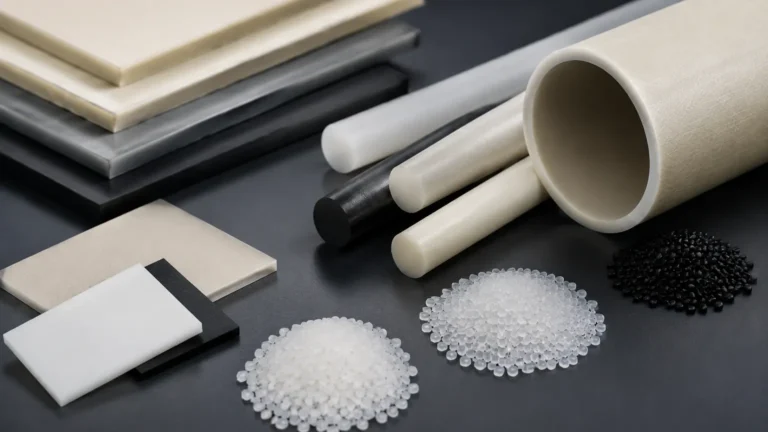
4. Material Compatibility: Decarbonization projects often involve aggressive chemicals, such as monoethanolamine (MEA) used in carbon scrubbing. Sensors must be constructed from compatible materials like 316L stainless steel, PTFE, or Hastelloy to prevent premature failure due to corrosion.
Limitations and Maintenance
While modern level meters are highly advanced, they are not without limitations. Ultrasonic sensors are limited by vacuum conditions and high temperatures (typically capped at 80°C / 176°F). Radar sensors, while versatile, can be affected by extremely low dielectric constants (εr < 1.4), which may require the use of a stilling well or a guided wave probe to amplify the signal reflection.
Maintenance in decarbonization projects should be proactive. In CCUS applications, buildup on the sensor face (such as crystallized salts from solvents) can cause "signal loss" errors. Choosing sensors with self-diagnostic capabilities and non-stick PTFE faces can significantly reduce the maintenance burden and ensure the long-term reliability of the decarbonization project's data stream.
Frequently Asked Questions (FAQs)
Q: Why is 80GHz radar preferred over 26GHz for decarbonization projects?
A: 80GHz radar offers a much narrower beam angle. This allows the sensor to be installed in small vessels or tanks with many internal obstructions without receiving false echoes. It also provides better accuracy in measuring low-dielectric liquids like liquid CO2.
Q: Can hydrostatic transmitters be used for liquefied gas?
A: It is possible, but difficult. Because the density of liquefied gases changes significantly with temperature, a hydrostatic system would require constant density compensation via a secondary temperature or pressure sensor. Radar is generally more straightforward for these applications.
Q: Are ultrasonic sensors safe for hydrogen production areas?
A: Ultrasonic sensors can be used if they are appropriately ATEX or IECEx certified for hazardous zones. However, because hydrogen is very light and can change the speed of sound in the vapor space, radar is often preferred for its higher reliability in varying gas mixtures.
Conclusion
As decarbonization projects continue to scale globally, the demand for sophisticated instrumentation will only increase. By understanding the fundamental measurement principles—from the electromagnetic precision of radar to the robust simplicity of hydrostatic pressure—engineers can design systems that are not only compliant with environmental regulations but also optimized for maximum efficiency. Selecting the correct level measurement solution is a critical step in ensuring that the transition to a low-carbon economy is both technically feasible and economically sustainable. For further technical specifications and to explore a wide range of industrial level measurement instruments, visiting the Main Page provides access to the necessary tools for modern process automation.