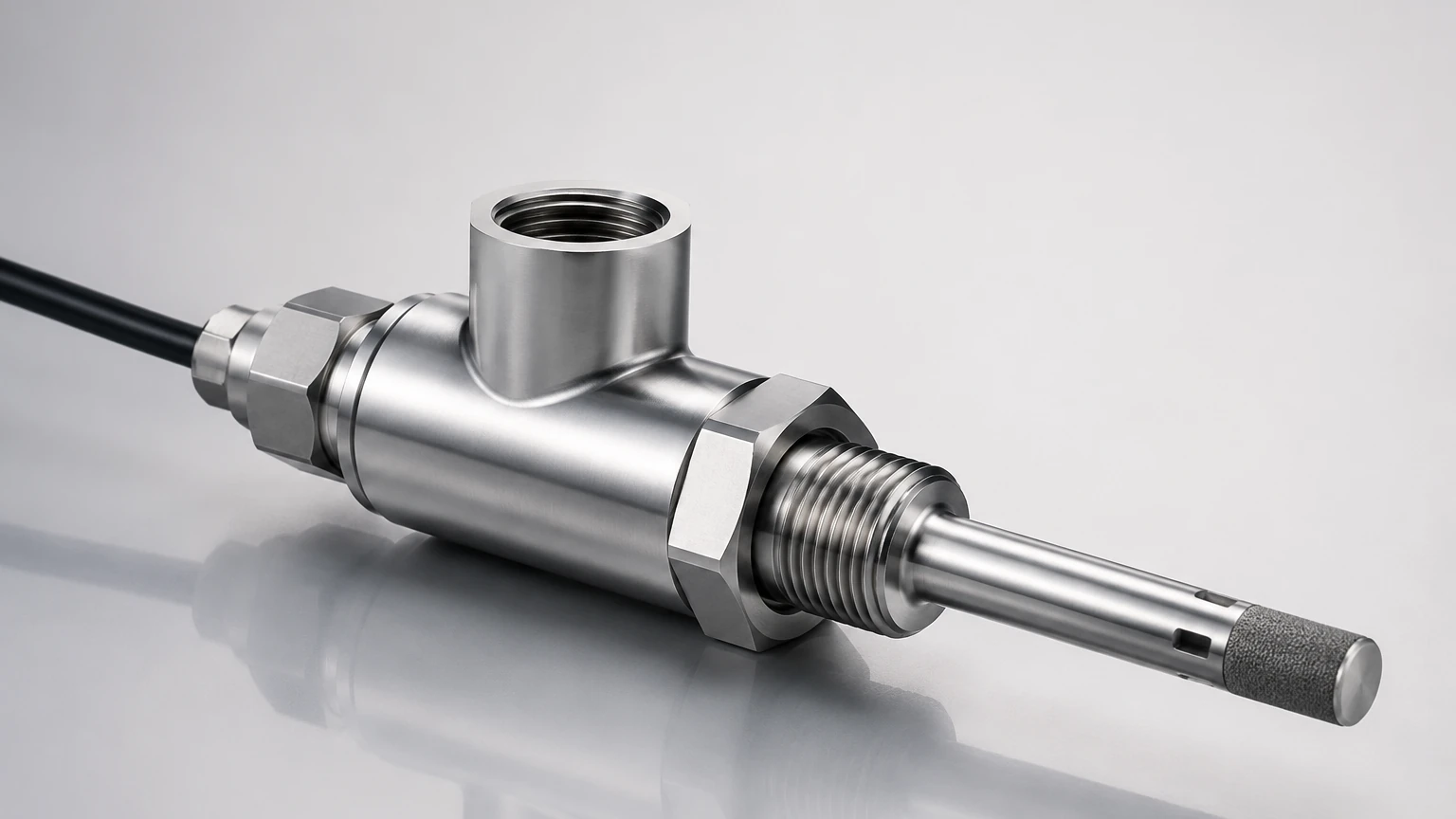
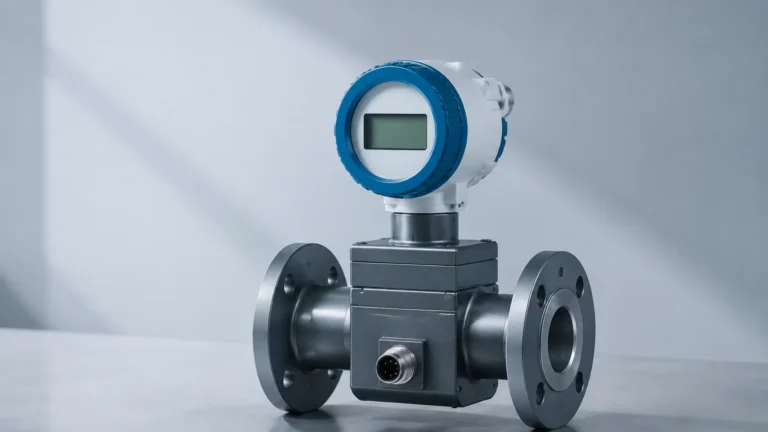
Inline Humidity Sensor
Inline Humidity Sensor
In industrial process control, the measurement of moisture content within a closed system is as critical as the monitoring of fluid levels. While level measurement instruments, such as those found on the Main Page of industrial instrumentation providers, ensure volume and inventory accuracy, the inline humidity sensor provides the qualitative data necessary for product stability, safety, and efficiency.
An inline humidity sensor is a device integrated directly into a pipe, duct, or vessel to provide real-time, continuous measurement of water vapor in gases or moisture content in solids and liquids. Unlike handheld hygrometers or laboratory sampling, inline sensors eliminate the delay and potential contamination associated with manual extraction, allowing for immediate automated adjustments in the production line.
Measurement Principles of Inline Humidity Sensors
To select the correct instrument, engineers must first understand the physical principles used to detect moisture. Different environments—ranging from high-temperature drying kilns to high-pressure compressed air lines—require specific sensing technologies.
1. Capacitive Humidity Sensors
Capacitive sensors are among the most common in industrial applications. They consist of a substrate on which a thin film of polymer or metal oxide is deposited between two conductive electrodes. The dielectric constant of the polymer changes in proportion to the relative humidity (RH) of the surrounding environment. As water vapor is absorbed into the film, the capacitance increases.
* Advantages: Wide measurement range (0% to 100% RH), fast response time, and excellent stability in most gaseous environments.
* Limitations: Sensitive to chemical contaminants that can poison the polymer layer.
2. Resistive Humidity Sensors
Resistive sensors measure the change in electrical impedance of a hygroscopic medium, such as a conductive polymer or salt. As the medium absorbs water, its resistance decreases. These are typically used in less demanding environments where cost-efficiency is a priority.
* Advantages: Low cost and small footprint.
* Limitations: Generally have a narrower operating range and are more sensitive to temperature fluctuations than capacitive types.
3. Chilled Mirror Hygrometers
This is a primary measurement technique used for high-precision requirements. A thermoelectric cooler lowers the temperature of a polished mirror until dew or frost begins to form on the surface. An optical system detects this formation, and the temperature of the mirror at that exact moment is recorded as the dew point.
* Advantages: Highly accurate and drift-free; often used as a calibration standard.
* Limitations: High initial cost and requires regular cleaning of the mirror surface to maintain accuracy.
4. Microwave and Infrared Absorption
For "inline" moisture measurement in solids (like powders or grains) or liquids (like oil), electromagnetic waves are used. Microwave sensors measure the attenuation and phase shift of a microwave signal passing through the material, which is highly sensitive to the presence of water molecules. Near-Infrared (NIR) sensors use the absorption of specific light wavelengths to determine surface moisture.
Technical Selection Criteria
Choosing an inline humidity sensor requires a detailed analysis of the process conditions. Failure to account for pressure or chemical presence can lead to premature sensor failure or inaccurate data.
| Feature | Capacitive Sensor | Chilled Mirror | Microwave (Solids/Liquids) |
| :— | :— | :— | :— |
| Primary Metric | Relative Humidity (%RH) | Dew Point (°C) | Moisture Content (%) |
| Typical Accuracy | ±1.5% to ±3% RH | ±0.1°C to ±0.2°C | ±0.5% of span |
| Operating Temp | -40°C to +180°C | -40°C to +100°C | 0°C to +120°C |
| Pressure Range | Up to 100 bar | Up to 20 bar | Dependent on housing |
| Maintenance | Low (Filter change) | High (Mirror cleaning) | Low (Non-contact options) |
Installation Considerations for Industrial Environments
The physical placement of an inline humidity sensor significantly impacts its performance. Proper installation ensures that the sensor encounters a representative sample of the process flow without being damaged by it.
Probe Orientation and Depth
In piping systems, the sensor probe should ideally be installed horizontally or at a slight downward angle. This prevents condensed water or pipe scale from pooling around the sensor element. The probe must extend far enough into the pipe (typically at least 100 mm or 1/3 of the pipe diameter) to avoid "wall effects," where the temperature and humidity near the pipe wall differ from the bulk flow.
Use of Sintered Filters
Industrial environments are rarely clean. Dust, oil mist, and metal particles can physically damage or coat the sensing element. Most inline sensors utilize a stainless steel or PTFE sintered filter. While these filters protect the sensor, they also increase the response time. In high-velocity flows, a robust metal filter is necessary to prevent mechanical erosion.
Bypass Loops (Sampling Systems)
If the process gas is extremely hot, under very high pressure, or contains heavy particulate matter, a direct inline installation may not be feasible. In these cases, a bypass loop is used. A small portion of the gas is diverted through a sampling line, cooled or filtered if necessary, passed over the sensor, and then either returned to the process or vented. This allows for maintenance without shutting down the main production line.
Integration with Level Measurement Systems
In many B2B industrial scenarios, humidity sensing and level measurement are two sides of the same coin. For example, in the storage of hygroscopic chemicals or food powders, a radar level meter (available via the Main Page) monitors the volume of the material, while an inline humidity sensor monitors the headspace of the silo.
If the humidity in the headspace rises, it can lead to product clumping or spoilage. By integrating both sensors into a single PLC (Programmable Logic Controller), the system can automatically trigger nitrogen purging or dehumidification units based on real-time data. This holistic approach to process monitoring reduces waste and ensures that the material remains in a flowable state for downstream processing.
Limitations and Common Risks
Despite their advanced technology, inline humidity sensors face several operational challenges:
1. Sensor Saturation: If the environment reaches 100% RH (saturation), liquid water can form on the sensor. For capacitive sensors, this can lead to a "drift" in readings that may take hours to recover as the sensor dries out. Some high-end sensors include a heating element to prevent condensation on the probe.
2. Chemical Poisoning: Volatile organic compounds (VOCs), acids, and bases can react with the sensor's polymer layer. In chemical processing plants, it is vital to verify the compatibility of the sensor material with the specific chemicals present in the gas stream.
3. Temperature Dependency: Relative humidity is highly dependent on temperature. A 1°C error in temperature measurement can result in a 3-6% error in RH measurement. Therefore, most inline humidity sensors include an integrated PT100 or PT1000 temperature probe to provide active compensation.
Frequently Asked Questions (FAQs)
Q: How often should an inline humidity sensor be calibrated?
A: For standard industrial applications, annual calibration is recommended. However, in pharmaceutical or high-precision chemical processes, semi-annual or quarterly checks may be required. If the sensor is exposed to high temperatures or contaminants, the drift will occur faster.
Q: What is the difference between Dew Point and Relative Humidity?
A: Relative Humidity (RH) is the ratio of current water vapor pressure to the saturation vapor pressure at a specific temperature, expressed as a percentage. Dew Point is the absolute temperature at which water vapor will begin to condense into liquid. In high-pressure compressed air systems, Dew Point is the preferred metric because it remains more stable across temperature changes.
Q: Can these sensors be used in hazardous (Ex) zones?
A: Yes, many inline humidity sensors are designed with intrinsically safe (IS) or explosion-proof ratings. When selecting a sensor for these areas, ensure it carries the appropriate ATEX, IECEx, or UL certifications and use a suitable safety barrier for the signal output.
Q: How do I handle high-velocity gas flows?
A: High-velocity gases can cause vibration and physical wear. Use a sensor with a reinforced probe and a heavy-duty sintered metal guard. In some cases, installing the sensor in a protective thermowell-style housing with flow-through ports is the best solution.
Conclusion
The inline humidity sensor is an indispensable tool for modern industrial automation. By providing continuous, accurate data on moisture levels, these instruments enable tighter process control, lower energy consumption in drying operations, and higher product quality. When combined with reliable level measurement solutions, as seen on the Main Page, they form the backbone of a robust process monitoring strategy. Engineers must carefully weigh the measurement principle, installation environment, and maintenance requirements to ensure long-term reliability and performance in the field.