Natural Gas Metering Skid
Natural Gas Metering Skid
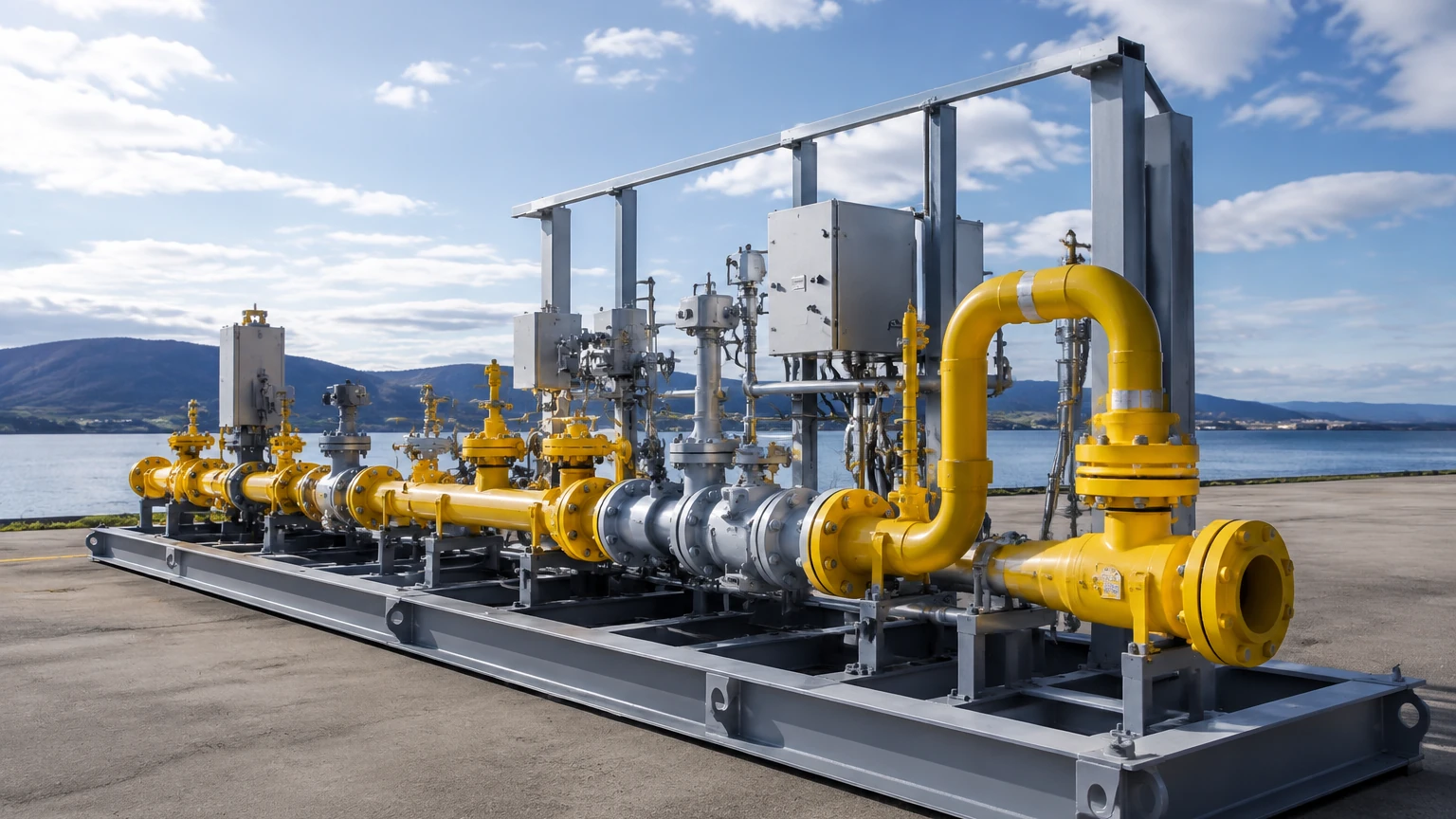
In the midstream and downstream sectors of the oil and gas industry, the natural gas metering skid serves as the critical interface for custody transfer, process control, and fiscal accounting. These integrated, skid-mounted systems are engineered to measure the volume, mass, and energy content of natural gas as it moves through various stages of the supply chain—from wellheads and gathering stations to distribution networks and industrial end-users.
Because natural gas is a compressible fluid whose density varies significantly with temperature and pressure, a natural gas metering skid is far more than a simple flow meter. It is a complex assembly of filtration, regulation, measurement, and communication components designed to provide high-precision data under varying environmental and process conditions. This article provides a technical overview of the engineering principles, component selection, and installation requirements for these systems.
Core Measurement Principles in Gas Metering
Before selecting a specific configuration for a natural gas metering skid, it is essential to understand the physical principles governing gas measurement. The primary objective is to determine the standard volume (expressed in Normal cubic meters, Nm³, or Standard cubic feet, scf) or the energy content (BTU or Joules).
1. Flow Measurement Technologies
Several technologies are commonly employed within the metering run of a skid:
* Ultrasonic Flow Meters: These use acoustic signals to measure the velocity of the gas. They are highly accurate, have no moving parts, and offer a wide turndown ratio, making them ideal for high-volume custody transfer.
* Turbine Meters: These utilize a rotor that spins at a speed proportional to the gas velocity. They are robust and widely used in distribution networks, though they require clean gas to prevent mechanical wear.
* Orifice Plates (Differential Pressure): A traditional method where a restriction in the pipe creates a pressure drop. By measuring the pressure difference across the plate, the flow rate is calculated according to ISO 5167 or AGA 3 standards.
* Coriolis Meters: These measure mass flow directly by detecting the inertia of the gas moving through vibrating tubes. They are increasingly popular for high-pressure applications where direct mass measurement is preferred.
2. Pressure and Temperature Compensation
Since gas volume is highly sensitive to process conditions, every natural gas metering skid must include precision pressure transmitters and temperature sensors (usually PT100 RTDs). A flow computer uses these inputs to convert "actual" flow at line conditions into "standard" flow using compressibility factors (Z) defined by standards such as AGA 8 or GERG-2008.
3. Gas Composition and Calorific Value
For fiscal billing based on energy content, the skid may integrate a Gas Chromatograph (GC). The GC analyzes the chemical composition of the gas (methane, ethane, CO2, nitrogen, etc.) to calculate the Higher Heating Value (HHV) and relative density.
Key Components of a Natural Gas Metering Skid
A functional skid is typically divided into several functional blocks, each serving a specific role in ensuring measurement integrity and equipment protection.
Filtration and Separation
Natural gas often carries impurities such as pipeline scale, dust, water, or liquid hydrocarbons (condensate). To protect sensitive downstream meters, the skid begins with a filtration stage. This may include:
* Dry Gas Filters: To remove solid particulates.
* Filter-Separators/Scrubbers: To remove both solids and liquid droplets.
In these stages, level measurement is critical. If a scrubber fills with liquid, it can "carry over" into the flow meter, causing catastrophic damage or significant measurement errors. Industrial level instruments, such as those found on the Main Page of specialized manufacturers, are used to monitor liquid levels in these vessels and trigger automated dump valves.
Pressure Regulation and Safety
If the upstream pipeline pressure exceeds the design limits of the metering equipment or the requirements of the downstream customer, a pressure reduction station is integrated. This includes:
* Active and Monitor Regulators: For redundant pressure control.
* Slam-Shut Valves: To provide emergency over-pressure protection by instantly closing the flow if a regulator fails.
The Metering Run
The metering run consists of the straight lengths of pipe upstream and downstream of the primary flow meter. These sections are designed to eliminate turbulence and swirl, ensuring a fully developed flow profile. Flow conditioners (vane or plate type) are often installed to reduce the required straight-run lengths.
Control and Data Acquisition
The "brain" of the skid is the flow computer or PLC-based control system. It performs real-time calculations, logs historical data, and provides communication interfaces (Modbus, HART, or Foundation Fieldbus) to the plant’s SCADA system.
Technical Selection Criteria
Selecting the appropriate natural gas metering skid requires a detailed analysis of the process parameters. The following table outlines the typical considerations for different meter types:
| Feature | Ultrasonic Meter | Turbine Meter | Orifice Meter | Coriolis Meter |
| :— | :— | :— | :— | :— |
| Accuracy | High (±0.5% or better) | Medium (±1.0%) | Medium (±1.0% – 2.0%) | Very High (±0.35%) |
| Turndown Ratio | 50:1 or higher | 20:1 | 4:1 (per plate) | 20:1 |
| Moving Parts | None | Yes | None | None |
| Pressure Drop | Negligible | Moderate | High | Moderate |
| Maintenance | Low | Moderate | High (inspection) | Low |
| Best Use Case | Large diameter custody transfer | Distribution & Industrial | Constant flow processes | High-pressure, small pipe |
Installation and Engineering Considerations
To ensure the long-term reliability of a natural gas metering skid, several engineering best practices must be followed during the installation phase:
1. Piping Alignment: Ensure that the metering run is perfectly aligned. Internal offsets or protruding gaskets can create vortices that interfere with flow measurement accuracy.
2. Vibration Isolation: Natural gas skids, especially those with ultrasonic or Coriolis meters, should be isolated from mechanical vibrations caused by compressors or heavy machinery.
3. Hazardous Area Compliance: Since natural gas is flammable, all electrical components, including level switches, pressure transmitters, and flow computers, must be certified for the specific hazardous zone (e.g., ATEX Zone 1 or 2, or Class I, Div 1/2).
4. Grounding and Lightning Protection: Skids are often located in isolated areas. Proper electrical grounding is essential to protect the sensitive electronics from surges and static buildup.
5. Level Monitoring in Separators: When installing liquid separators on the skid, ensure the level transmitter (such as a radar or magnetic level gauge) is positioned to avoid "dead zones" and is compatible with the dielectric constant of the expected condensates.
Limitations and Operational Risks
While highly accurate, natural gas metering skids are subject to specific operational challenges:
* Gas Quality Fluctuations: If the gas composition changes rapidly and the skid does not have an online Gas Chromatograph, the calculated energy flow will be inaccurate.
* Pulsation: Reciprocating compressors upstream can create pressure pulsations that lead to significant over-registration in turbine and orifice meters.
* Liquid Entrainment: The presence of liquids in a gas stream (two-phase flow) is the leading cause of measurement error and equipment failure. Maintaining the efficiency of the filtration/separation stage is paramount.
* Thermal Expansion: In extreme climates, the physical dimensions of the metering run can change. High-end flow computers can compensate for the thermal expansion of the pipe material.
Frequently Asked Questions (FAQs)
Q: How often should a natural gas metering skid be calibrated?
A: Calibration frequency depends on local regulations and the contract between the buyer and seller. Typically, custody transfer meters are verified or proved every 6 to 12 months. Some systems use redundant meters to perform "check-metering" to extend calibration intervals.
Q: Can a single skid handle bidirectional flow?
A: Yes, but it requires specific instrumentation. Ultrasonic flow meters are inherently bidirectional, but the piping and flow conditioning must be designed symmetrically to maintain accuracy in both directions.
Q: What is the role of a "Joule-Thomson" effect in metering skids?
A: When gas pressure is reduced through a regulator, the gas temperature drops (the Joule-Thomson effect). If the temperature drops too low, hydrates can form, which can block the line or damage the meter. In such cases, the skid may require an upstream line heater.
Q: Why is level measurement necessary on a gas skid?
A: Level measurement is used in the inlet separators. It ensures that any liquids knocked out of the gas stream are properly managed. High-level alarms prevent liquid carry-over into the meters, while low-level control ensures the dump valve closes before gas can escape through the liquid drain line.
Conclusion
A well-engineered natural gas metering skid is the foundation of financial accountability in the gas industry. By integrating precision flow measurement with robust filtration and sophisticated level control in the separation stages, operators can ensure both the safety and the profitability of their infrastructure. For engineers seeking specific instrumentation to support these systems, reviewing technical data on the Main Page of an established manufacturer is a recommended step to ensure component compatibility and compliance with international standards.