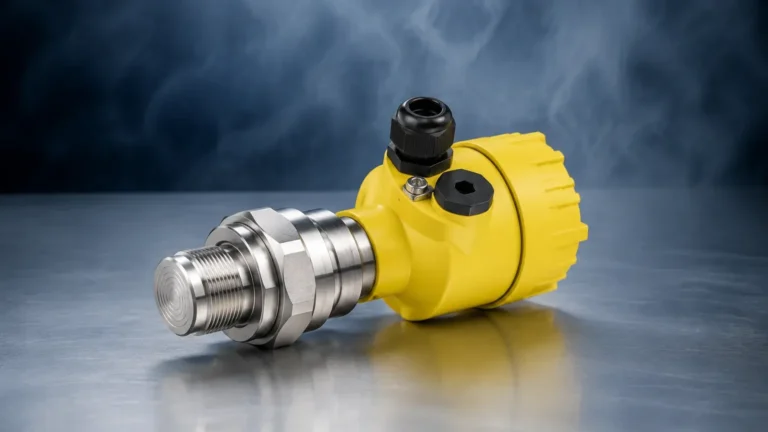
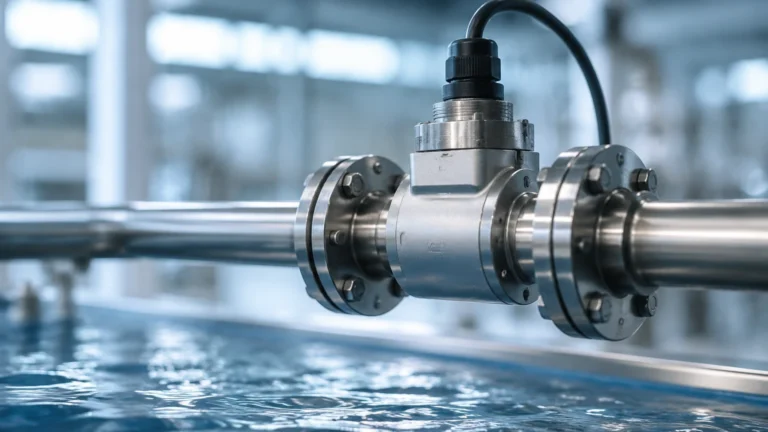
Precision Pressure Transducer
Precision Pressure Transducer
In the realm of industrial automation and process control, the precision pressure transducer serves as a fundamental component for monitoring and managing fluid dynamics. For engineers and system integrators, selecting a transducer is not merely about measuring force per unit area; it is about ensuring the long-term stability, accuracy, and safety of complex systems. Whether used in water treatment facilities, chemical processing plants, or oil and gas refineries, these instruments provide the critical data necessary for both operational efficiency and environmental compliance.
As a professional manufacturer, Welk specializes in high-performance level measurement instruments, including hydrostatic level transmitters that rely heavily on the integrity of the integrated precision pressure transducer. Understanding the underlying physics, material science, and installation requirements of these devices is essential for any technical professional tasked with instrument selection.
Understanding the Role of Precision Pressure Transducers in Level Measurement
While pressure transducers are used across various industries to measure gas or liquid pressure in pipes and tanks, their application in level measurement—specifically hydrostatic level measurement—is one of the most common B2B use cases. The principle is based on the fact that the pressure at a specific depth in a static liquid is proportional to the height of the liquid column above it.
In this context, a precision pressure transducer is often submerged or mounted at the bottom of a vessel. It measures the "head pressure" exerted by the liquid. This relationship is mathematically expressed as:
P = ρ × g × h
Where:
* P is the hydrostatic pressure (Pa or bar).
* ρ (rho) is the density of the liquid (kg/m³).
* g is the local acceleration due to gravity (approximately 9.81 m/s²).
* h is the height of the liquid (meters).
By accurately measuring P, and knowing the constant density of the fluid, the control system can calculate the exact level h. A "precision" transducer is defined by its ability to provide this measurement with minimal error, often featuring accuracy ratings of 0.1% or even 0.05% of the Full Scale (FS).
Core Measurement Principles
Precision pressure transducers utilize various sensing technologies to convert mechanical pressure into an electrical signal (typically 4-20mA, 0-10V, or digital protocols like HART and RS485). The choice of principle affects the sensor's durability, sensitivity, and suitability for specific media.
1. Piezoresistive Sensing
This is the most widely used technology in industrial transducers. It involves a silicon-based diaphragm with integrated resistors. When pressure is applied, the diaphragm deforms, changing the electrical resistance of the bridge circuit (the piezoresistive effect).
* Pros: High sensitivity, excellent linearity, and compact size.
* Cons: Sensitive to temperature fluctuations, requiring sophisticated internal compensation.
2. Ceramic Capacitive Sensing
In this design, a ceramic diaphragm moves relative to a fixed electrode, changing the capacitance of the system.
* Pros: Extremely robust and resistant to aggressive chemicals and mechanical abrasion. It handles overpressure conditions better than silicon sensors.
* Cons: Generally larger in size and may have slightly lower resolution than high-end piezoresistive models.
3. Thin-Film Strain Gauge
Metal strain gauges are sputtered onto a stainless steel diaphragm.
* Pros: Exceptional long-term stability and resistance to high-pressure shocks and vibration.
* Cons: Lower signal output compared to piezoresistive sensors, requiring more amplification.
Key Performance Specifications for Industrial Applications
When evaluating a precision pressure transducer, technical documentation often presents a range of specifications. For B2B procurement, the following parameters are critical:
* Accuracy (Non-Linearity, Hysteresis, and Repeatability): High-precision units typically offer ±0.1% FS or better. It is important to distinguish between "Best Fit Straight Line" (BFSL) accuracy and "Terminal Point" accuracy.
* Long-Term Stability: This indicates how much the sensor's calibration will drift over time (e.g., <0.1% FS per year). High stability reduces the frequency of maintenance cycles.
* Temperature Compensation Range: Since density and sensor materials change with temperature, precision transducers include internal circuitry to correct for these variations. A typical range might be -10°C to +80°C (14°F to 176°F).
* Wetted Materials: The parts of the transducer in contact with the fluid must be chemically compatible. Standard materials include 316L Stainless Steel, while corrosive applications may require Hastelloy C, Tantalum, or PTFE coatings.
Selection Criteria and Comparison Table
Choosing the right instrument requires balancing technical requirements with cost-effectiveness. The following table provides a general guide for selecting a precision pressure transducer based on the application environment.
| Application Requirement | Recommended Sensor Type | Key Feature | Typical Industry |
| :— | :— | :— | :— |
| High Accuracy / Clean Water | Piezoresistive Silicon | High Resolution | Municipal Water, HVAC |
| Corrosive Chemicals | Ceramic Capacitive | Chemical Resistance | Chemical Processing |
| High Pressure / Vibration | Thin-Film Strain Gauge | Mechanical Durability | Hydraulic Systems, Oil & Gas |
| Deep Well / Borehole | Submersible Hydrostatic | Integrated Vent Tube | Groundwater Monitoring |
| Food & Beverage | Flush Diaphragm | Sanitary Connection | Dairy, Brewery |
For a comprehensive overview of available technologies and detailed technical data sheets, you may visit the Main Page to review product options and application support.
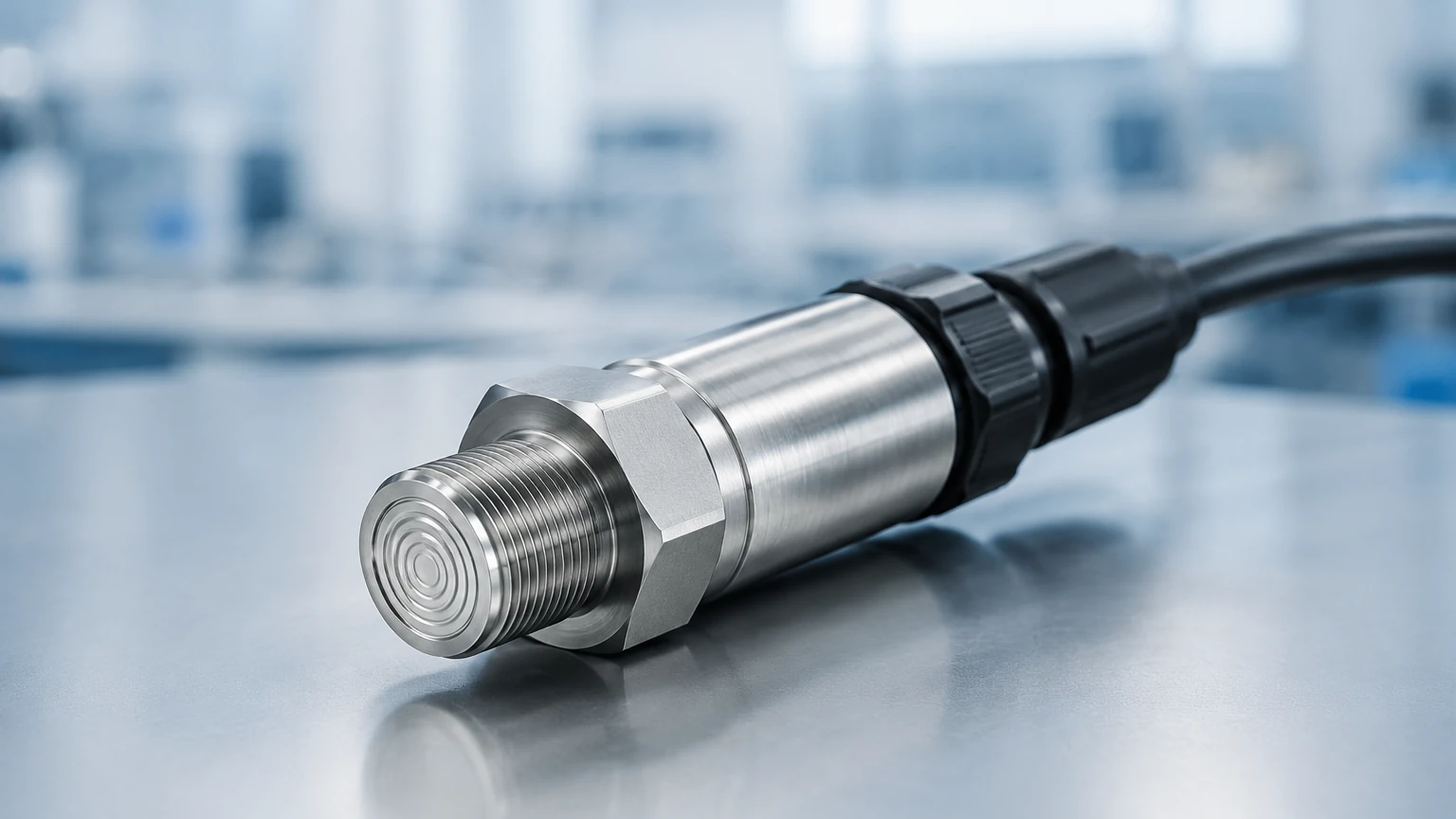
Installation Best Practices for Hydrostatic Level Measurement
Even the most precise pressure transducer will provide inaccurate data if installed incorrectly. Engineering teams should follow these guidelines to ensure optimal performance:
1. Atmospheric Pressure Reference
For gauge pressure measurements (where the sensor measures pressure relative to the atmosphere), the back of the sensing diaphragm must be vented to the air. In submersible models, this is achieved via a small vent tube running through the center of the signal cable.
* Caution: Ensure the vent tube is protected by a moisture filter or desiccant cartridge to prevent condensation inside the sensor housing.
2. Avoiding Turbulence and Silt
In tanks with agitators or high-flow inlets, turbulence can cause pressure fluctuations.
* Solution: Install the transducer inside a "stilling well" (a vertical pipe with small holes) to dampen liquid movement. In reservoirs or rivers, mount the sensor 100mm to 200mm (4 to 8 inches) above the bottom to prevent silt buildup from clogging the diaphragm.
3. Cable Management
Submersible cables should be supported by a proper cable clamp to prevent the weight of the cable from straining the internal connections. Avoid sharp bends in the cable, which can kink the internal vent tube.
Limitations and Operational Risks
While precision pressure transducers are highly reliable, certain factors can compromise their accuracy:
* Density Variations: Since hydrostatic level measurement assumes a constant density, any change in the liquid's temperature or concentration will result in a level error. If the density changes by 1%, the level reading will also be off by 1%.
* Overpressure Events: Exceeding the sensor's rated overpressure limit (typically 1.5x to 3x the nominal range) can permanently deform the diaphragm, leading to zero-shift or total failure.
* Electromagnetic Interference (EMI): In industrial environments with large motors or VFDs, poorly shielded cables can introduce noise into the 4-20mA signal. Always use shielded twisted-pair cabling and ensure proper grounding.
Frequently Asked Questions (FAQ)
Q: What is the difference between a pressure transducer and a pressure transmitter?
A: In common industrial parlance, a "transducer" often refers to a device that outputs a low-level voltage signal (like mV), while a "transmitter" converts that signal into a standardized industrial output like 4-20mA or a digital protocol. However, in many B2B contexts, the terms are used interchangeably.
Q: How often should a precision pressure transducer be calibrated?
A: For critical process control, an annual calibration check is recommended. In stable environments with high-quality instruments like those from Welk, the interval may be extended to every two years, depending on internal quality standards.
Q: Can I use a pressure transducer for steam applications?
A: Yes, but a pigtail syphon or cooling tower must be used to protect the sensor from the high temperature of the steam. The sensor itself should be rated for the expected pressure, but the temperature at the diaphragm must remain within the compensated range.
Q: How does atmospheric pressure affect the reading?
A: If you are using a sealed (absolute) pressure sensor, changes in weather or altitude will affect the level reading. For most tank level applications, a vented (gauge) sensor is preferred because it naturally cancels out atmospheric pressure changes.
Conclusion
Selecting a precision pressure transducer is a critical decision that impacts the reliability of industrial level measurement. By understanding the measurement principles—whether piezoresistive or capacitive—and strictly adhering to installation best practices, engineers can ensure high-accuracy data for their control systems. Welk continues to provide robust solutions tailored to the demanding needs of the global industrial market, focusing on accuracy, durability, and ease of integration. When precision is a requirement rather than an option, choosing the right transducer technology is the first step toward process excellence.