Hands-on Instrument & Controls Training
Hands-on Instrument & Controls Training
In the modern industrial landscape, the gap between theoretical engineering knowledge and field-level execution is often bridged through structured hands-on instrument & controls training. For technicians and engineers working with process automation, understanding the nuances of level measurement is critical. Whether managing water treatment facilities, chemical processing plants, or oil and gas refineries, the ability to calibrate, troubleshoot, and install instrumentation accurately ensures operational safety and efficiency.
This guide explores the foundational principles of industrial level measurement, the core components of technical training, and the practical considerations required to master instrument control systems in a professional environment.
Fundamental Principles of Level Measurement
Before engaging in hands-on instrument & controls training, a deep understanding of the physics behind the measurement is required. In the B2B sector, Welk provides a variety of technologies, each relying on distinct physical properties to determine the level of liquids or solids.
Radar Level Measurement
Radar level meters utilize high-frequency electromagnetic waves (typically in the 26GHz or 80GHz range). These instruments operate on the Time-of-Flight (ToF) principle. The sensor emits a pulse that travels to the surface of the medium, reflects, and returns to the receiver. The distance is calculated using the formula:
Distance = (Speed of Light × Travel Time) / 2
Non-contact radar is highly valued because it is independent of changes in density, temperature, or pressure. In a training scenario, technicians learn to manage the dielectric constant (Dk) of the material, as higher Dk values provide stronger signal reflections.
Ultrasonic Level Sensors
Similar to radar, ultrasonic sensors use ToF but rely on sound waves rather than electromagnetic pulses. A transducer emits an ultrasonic pulse (typically 20kHz to 200kHz) that bounces off the target surface. Because sound speed is influenced by air temperature, these sensors usually include a built-in temperature probe for compensation. Training often highlights the limitation of ultrasonic waves in vacuum conditions or environments with heavy dust and foam, which can attenuate the sound signal.
Hydrostatic Level Transmitters
Hydrostatic measurement is based on the relationship between the height of a liquid column and the pressure it exerts at the base. The principle follows the formula:
P = ρ × g × h
Where P is pressure, ρ (rho) is the density of the liquid, g is the gravitational constant, and h is the height. Technicians must understand that any change in liquid density will affect the accuracy of the reading, making this a critical point for calibration training in tanks with varying chemical compositions.
Magnetic Level Gauges
Magnetic level gauges utilize the principle of buoyancy and magnetic coupling. A float containing a permanent magnet moves with the liquid level inside a bypass chamber. Outside the chamber, a series of magnetic flaps or a transmitter responds to the float’s position. This provides a clear visual indication and a remote signal without the electronics coming into contact with the process medium.
Core Competencies in Hands-on Instrument & Controls Training
Effective hands-on instrument & controls training focuses on the lifecycle of the instrument, from unboxing to decommissioning. For those seeking to optimize their facility's performance, reviewing technical documentation on the Main Page of equipment manufacturers is a recommended starting point.
Wiring and Loop Powered Systems
Most modern level transmitters utilize a 2-wire 4-20mA DC loop. Training involves mastering the wiring of these loops, ensuring correct polarity, and understanding the role of the load resistor. Technicians practice using digital multimeters to measure current without breaking the loop and learn to integrate instruments into PLC (Programmable Logic Controller) or DCS (Distributed Control System) environments.
Digital Communication Protocols
Beyond simple analog signals, hands-on training covers digital protocols such as HART (Highway Addressable Remote Transducer), Modbus, and Foundation Fieldbus. Learning how to use a HART communicator to adjust parameters like zero-point, span, and damping is a vital skill for field technicians.
Calibration and Verification
Calibration involves comparing the instrument’s output against a known standard. In a controlled training environment, this might involve filling a test column to specific heights and verifying the 4mA (0%) and 20mA (100%) points. Technicians learn to distinguish between a "bench calibration" and a "field calibration," where the latter accounts for the actual installation geometry.
Technical Selection and Application Mapping
Choosing the right technology is as important as knowing how to wire it. The following table provides a reference for selecting level measurement technologies based on common industrial criteria.
| Technology | Accuracy | Ideal Media | Primary Limitation |
| :— | :— | :— | :— |
| 80GHz Radar | ±1 mm | Corrosive liquids, solids, high temp | High initial cost |
| Ultrasonic | ±0.25% of range | Water, wastewater, open channels | Affected by foam and wind |
| Hydrostatic | ±0.1% to 0.5% | Clear liquids in vented tanks | Dependent on fluid density |
| Magnetic Gauge | ±5 mm to 10 mm | High pressure/temp, toxic fluids | Mechanical wear of float |
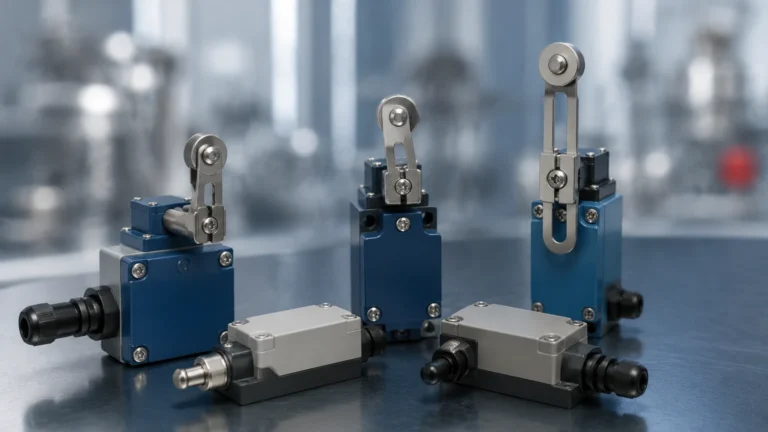
| Level Switch | N/A (Point level) | Overfill protection, pump control | No continuous measurement |
Installation Best Practices and Environmental Factors
Hands-on instrument & controls training emphasizes that an instrument is only as good as its installation. Even the most advanced radar meter will fail if mounted incorrectly.
1. Nozzle Geometry: For non-contact sensors (radar and ultrasonic), the nozzle height and diameter must be considered. A nozzle that is too long or narrow can create internal reflections (ringing) that interfere with the actual level signal. Generally, the sensor should protrude slightly into the tank or be set back according to the manufacturer’s beam angle specifications.
2. Dead Zones (Blocking Distance): Every ToF sensor has a "dead zone" near the face of the transducer where measurement is impossible. Installers must ensure the maximum liquid level never enters this zone, often by using a standpipe or mounting the sensor higher.
3. Obstructions: Internal tank structures like agitators, ladders, and heating coils can cause false echoes. Training involves learning how to perform a "false echo suppression" or "background mapping" scan to tell the sensor to ignore these static reflections.
4. Environmental Shielding: While industrial instruments are rugged, extreme solar heating can cause electronic drift. Installing sunshades for transmitters in outdoor locations, particularly in tropical or desert climates, is a standard field practice taught in hands-on programs.

Managing Risks and Limitations in Process Control
No measurement technology is universal. Recognizing the limitations of each device is a core component of risk management in instrumentation.
* Signal Attenuation: In ultrasonic applications, heavy steam or dust can absorb the sound energy, leading to a "Loss of Echo" (LOE) error. In radar applications, extremely low dielectric liquids (like certain oils) may not reflect enough energy for a stable reading.
* Material Buildup: In sticky or viscous applications, material can accumulate on the sensor face or the float of a magnetic gauge. Training includes identifying these symptoms—such as a "frozen" signal—and implementing maintenance schedules for cleaning or selecting non-stick coatings.
* Turbulence and Foam: Rapidly mixing liquids create surface turbulence that scatters signals. While software algorithms can filter some noise, physical solutions like stilling wells are often required to provide a calm surface for measurement.
Frequently Asked Questions (FAQ)
Q: How often should industrial level meters be calibrated?
A: This depends on the industry and the criticality of the measurement. In regulated industries like pharmaceuticals, it may be every 6 months. For general water treatment, an annual verification is often sufficient. However, if the process media changes (specifically density for hydrostatic sensors), immediate recalibration is required.
Q: Can a radar level meter measure through a plastic tank roof?
A: Yes, certain radar frequencies can penetrate plastic or fiberglass tank tops, allowing for measurement without cutting a hole in the vessel. This is a common technique covered in advanced hands-on instrument & controls training for chemical storage.
Q: What is the difference between a level transmitter and a level switch?
A: A level transmitter provides continuous measurement (e.g., 0-100%), whereas a level switch provides point-level detection (e.g., "tank full" or "tank empty"). Switches are typically used for redundant overfill protection.
Q: How do I handle measurement in a tank with heavy foam?
A: Foam is a challenge for both ultrasonic and radar. High-frequency radar (80GHz) is often better at penetrating foam, but in extreme cases, a guided wave radar (GWR) or a displacement-based system may be necessary.
Conclusion
Mastering industrial instrumentation requires a balance of theoretical physics and practical field skills. Through hands-on instrument & controls training, professionals gain the confidence to select the appropriate technology, install it according to engineering best practices, and troubleshoot complex issues in the field. By adhering to strict calibration standards and understanding the environmental limitations of their equipment, technicians ensure the long-term reliability of their process control loops. For those looking to explore specific hardware solutions and technical specifications, visiting the Main Page of a dedicated manufacturer like Welk provides the necessary data to move from training to real-world implementation.