Flowcal
Flowcal
In the complex landscape of industrial automation and hydrocarbon management, the term "flowcal" is synonymous with precision in flow measurement and gas accounting. For engineers and facility managers, ensuring the integrity of data within a flowcal system requires more than just sophisticated software; it demands highly accurate field instrumentation. Level measurement serves as a critical pillar in this ecosystem, particularly in liquid storage and custody transfer applications where volume calculations are derived from precise level readings.
This guide explores the intersection of level measurement technologies and flowcal-compliant systems, detailing the principles of measurement, selection criteria, and installation best practices necessary to maintain data accuracy in process industries.
Measurement Principles for High-Accuracy Level Sensing
Before selecting an instrument to feed data into a flowcal environment, it is essential to understand the physics behind the measurement. In industrial contexts, level measurement is typically categorized into non-contact and contact methods, each with specific implications for volume calculation accuracy.
Radar Level Measurement (FMCW and Pulse)
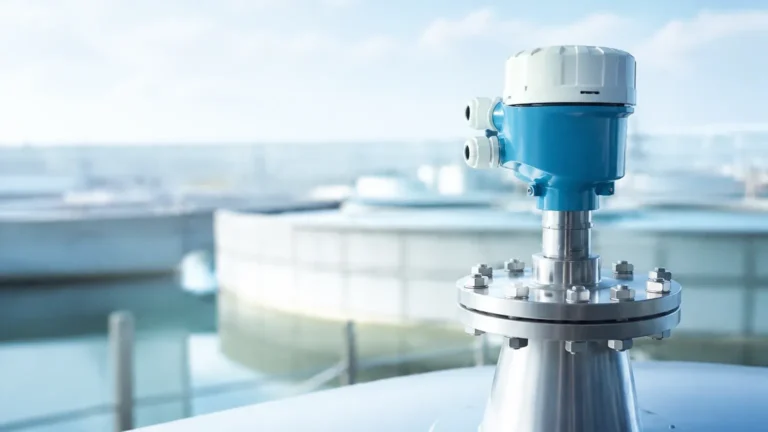
Radar technology is the gold standard for applications requiring high precision, such as those integrated with flowcal software for inventory management. Radar level meters operate on the Time of Flight (ToF) principle.
1. Pulse Radar: The sensor emits a short microwave pulse that reflects off the product surface. The distance is calculated based on the time it takes for the pulse to return.
2. Frequency Modulated Continuous Wave (FMCW): This method involves emitting a continuous signal with a constantly changing frequency. The difference between the frequency of the emitted signal and the reflected signal is proportional to the distance. FMCW is generally preferred for high-accuracy applications because it provides a higher signal-to-noise ratio and better resolution (often up to ±0.5 mm).
Because radar waves are unaffected by temperature, pressure, or vacuum conditions, they provide a stable input for flowcal systems, ensuring that volume calculations remain consistent regardless of the internal tank environment.
Ultrasonic Level Measurement
Ultrasonic sensors also use the ToF principle but utilize sound waves instead of electromagnetic waves. A transducer emits an ultrasonic pulse, which bounces off the liquid surface and returns to the sensor.
While cost-effective, ultrasonic measurement is sensitive to the medium through which the sound travels. Changes in air temperature, humidity, or the presence of heavy vapors can alter the speed of sound, necessitating temperature compensation. In a flowcal context, ultrasonic sensors are typically reserved for water treatment or non-hydrocarbon applications where the highest levels of custody-transfer precision are not required.
Hydrostatic Level Measurement
Hydrostatic transmitters measure the pressure exerted by a liquid column. The principle is based on the formula:
*P = ρ × g × h*
Where *P* is pressure, *ρ* (rho) is the density of the liquid, *g* is gravity, and *h* is the height of the liquid.
For flowcal systems to use hydrostatic data accurately, the density of the fluid must remain constant or be measured in real-time. If the density fluctuates due to temperature changes or mixing, the level reading—and subsequent volume calculation—will be erroneous. This technology is robust and widely used in tanks with stable fluid properties.
The Relationship Between Level Data and Flowcal Systems
Flowcal systems are designed to validate, balance, and report flow and volume data. In liquid storage, the "flow" is often calculated by the change in level over time (the "tank gauging" method). To ensure this data is flowcal-ready, several factors must be addressed:
Tank Strapping and Volume Conversion
Level measurement provides a linear distance (e.g., meters or millimeters). However, flowcal requires volume (e.g., cubic meters or barrels). This conversion relies on a "strapping table" or tank capacity table. Even the most accurate radar meter will produce incorrect data if the tank's physical geometry—including internal obstructions, deadwood, and shell expansion—is not perfectly mapped.
Data Transmission Integrity
To maintain the precision required for flowcal accounting, the signal from the level transmitter must be transmitted without loss of resolution. Digital protocols such as Modbus RS485, HART, or Foundation Fieldbus are preferred over traditional 4-20mA analog signals, as they eliminate the digital-to-analog conversion errors that can degrade measurement accuracy.
Selection Criteria for Level Instruments
Choosing the right instrument for a flowcal-integrated application requires a systematic evaluation of the process conditions. The following table provides a comparison of common technologies.
| Technology | Accuracy | Ideal Media | Limitations | Best Use Case |
| :— | :— | :— | :— | :— |
| 80GHz Radar | ±0.5 mm | Hydrocarbons, Chemicals | High cost | Custody transfer, Flowcal inventory |
| Guided Wave Radar | ±2 mm | Low dielectric liquids | Contact with media required | Small tanks, foaming liquids |
| Ultrasonic | ±0.25% of range | Water, Wastewater | Affected by foam and vapor | Open channel flow, sumps |
| Hydrostatic | ±0.1% of span | Homogeneous liquids | Density must be known | Constant density storage |
| Magnetic Gauge | ±5 mm | Corrosive, toxic liquids | Mechanical wear | Visual confirmation + remote signal |
For more detailed product specifications and technology comparisons, users should visit the Main Page to review available measurement solutions.
Practical Installation Considerations
Even the highest-grade sensor will fail to provide flowcal-quality data if installed incorrectly. Engineers must consider the following factors during the design phase:
1. Nozzle Placement: For non-contact radar and ultrasonic sensors, the nozzle should be located away from the tank wall to avoid interference from side-wall reflections. Generally, the sensor should be placed at 1/6th of the tank diameter from the wall.
2. Avoiding Obstructions: Internal structures such as ladders, heating coils, and agitators can create "false echoes." While modern software can perform "false echo suppression," it is best to provide a clear line of sight to the liquid surface.
3. Stilling Wells: In tanks with heavy agitation or surface turbulence, installing the level sensor inside a stilling well (a perforated pipe) can provide a calm surface for measurement, significantly increasing the stability of the data sent to the flowcal system.
4. Environmental Shielding: For outdoor installations, sunshades can prevent extreme temperature fluctuations in the sensor electronics, which helps maintain long-term reliability and accuracy.
Common Risks and Limitations
While level measurement technology has advanced significantly, certain risks can compromise the data integrity required for flowcal reporting:
* Vapor and Condensation: In high-pressure hydrocarbon tanks, heavy vapors can attenuate radar signals or change the speed of sound for ultrasonic sensors. Selecting a high-frequency (80GHz) radar can help penetrate these vapors more effectively.
* Foam Accumulation: Foam is a poor reflector for radar and ultrasonic waves. If foam is present, Guided Wave Radar (GWR) or hydrostatic transmitters are often more reliable choices.
* Build-up on Transducers: In sticky or crystallizing media, material build-up on the sensor face can lead to signal loss. Non-contact sensors with PTFE-faced antennas are often used to mitigate this risk.
Frequently Asked Questions (FAQ)
Q: How often should level meters used for flowcal accounting be calibrated?
A: For custody transfer and high-stakes inventory accounting, annual calibration is standard. However, many facilities perform quarterly verification using a manual dip tape to ensure the electronic reading aligns with the physical level.
Q: Can I use a level switch for flowcal data?
A: No. Level switches provide point-level detection (e.g., "tank full" or "tank empty"). Flowcal systems require continuous level transmitters to calculate volume changes and flow rates.
Q: What is the impact of temperature on level measurement?
A: Temperature affects the volume of the liquid (thermal expansion) and, in some cases, the measurement technology itself (ultrasonic). For flowcal-ready data, it is common to use a multi-point temperature probe alongside the level transmitter to calculate "Net Standard Volume" at 15°C (60°F).
Q: Is 80GHz radar always better than 26GHz for flowcal applications?
A: Generally, yes. The 80GHz frequency allows for a narrower beam angle, which reduces interference from tank internals and provides a more precise reflection from the liquid surface, leading to better data quality for volume calculations.
Final Confirmation for Project Stakeholders
Before finalizing the selection of a level measurement system for flowcal integration, project teams should confirm the following:
* Accuracy Requirement: Does the sensor meet the ±1mm to ±3mm threshold typically required for inventory accounting?
* Communication Protocol: Is the transmitter compatible with the existing SCADA or flowcal data ingestion infrastructure?
* Media Compatibility: Are the wetted materials (316L, Hastelloy, PTFE) resistant to the process fluid?
* Regulatory Compliance: Does the installation meet local weights and measures standards for custody transfer?
By prioritizing these technical boundaries, engineers can ensure that their level measurement strategy provides a reliable foundation for the flowcal ecosystem, minimizing discrepancies and maximizing operational efficiency.