93c
93c
In the field of industrial process control, the temperature threshold of 93°C (199.4°F), often referred to in technical specifications as 93c, represents a critical transition point for level measurement instrumentation. While many standard sensors are designed for ambient or moderate process temperatures up to 60°C or 80°C, reaching the 93c mark necessitates a shift in material selection, electronic protection, and measurement physics. This guide provides a technical overview of how this temperature affects various level measurement technologies and how to select the appropriate equipment for stable, long-term operation.
The Significance of 93°C in Industrial Level Measurement
The 93c threshold is significant because it approaches the boiling point of water at standard atmospheric pressure and exceeds the thermal deformation temperature of several common plastics used in sensor construction, such as standard Polypropylene (PP). In many chemical and water treatment applications, processes operating at or near 93°C involve aggressive vapors, increased internal pressures, and the potential for rapid temperature fluctuations.
For engineers and plant managers, specifying a level meter for 93c environments requires an understanding of how heat affects signal propagation, seal integrity, and electronic longevity. Failure to account for this temperature can lead to signal drift, mechanical failure of the sensor housing, or permanent damage to the internal transducers.
Measurement Principles and Temperature Influence
Different level measurement technologies react uniquely to 93c conditions. Understanding these principles is the first step in ensuring accuracy.
Ultrasonic Level Sensors
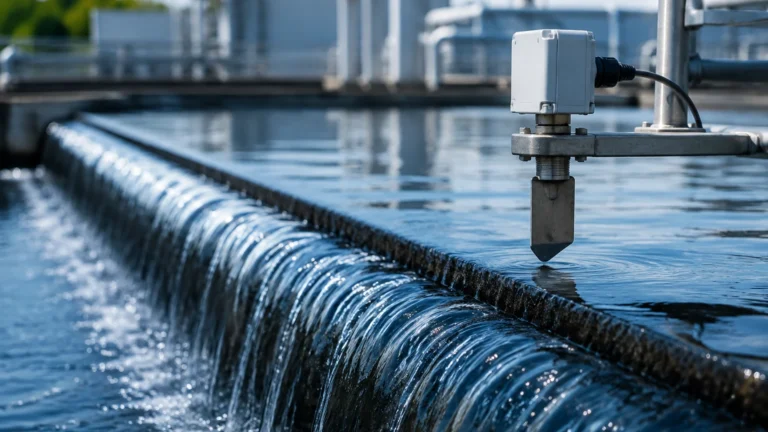
Ultrasonic sensors measure the time-of-flight of a sound wave. The speed of sound in air is highly dependent on temperature, calculated approximately as $v = 331.5 + 0.6T$ (where $T$ is in Celsius). At 93°C, the speed of sound is significantly higher than at room temperature. Without precise temperature compensation—usually via an integrated thermistor—the sensor will report an incorrect distance. Furthermore, at 93c, the air above a liquid is often saturated with vapor, which can further attenuate the sound signal.
Radar Level Meters
Radar (Non-contacting or Guided Wave) uses electromagnetic pulses. Unlike sound, the speed of light is not significantly affected by air temperature or pressure. This makes radar inherently more stable at 93c. However, the dielectric constant of the medium may change with temperature, and the physical antenna must be able to withstand the heat without deforming.
Hydrostatic Pressure Transmitters
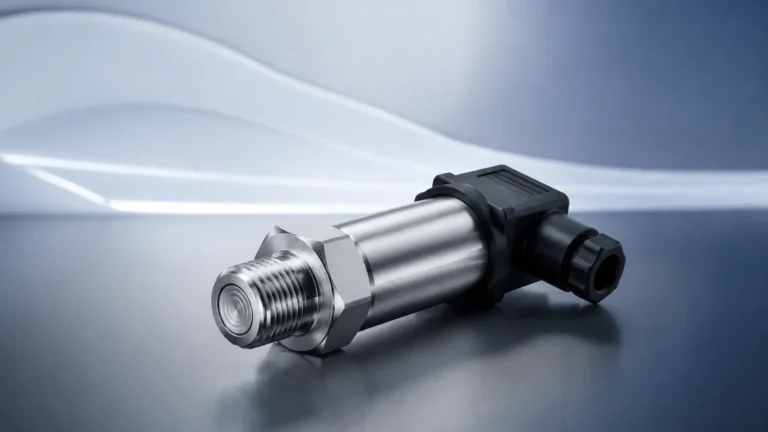
These sensors calculate level based on the weight of the liquid column ($P = \rho gh$). As temperature rises to 93c, the density ($\rho$) of most liquids decreases. If the transmitter is calibrated for a liquid at 20°C but operates at 93°C, the level reading will be lower than the actual volume unless the system accounts for density changes. Additionally, the sensing diaphragm must be rated for continuous exposure to 93c to prevent oil fill expansion from distorting the reading.
Material Selection for 93°C (199.4°F) Environments
At 93c, the chemical resistance and mechanical strength of many materials change. Selecting the right wetted parts is essential for longevity.
* PVDF (Polyvinylidene Fluoride): Often preferred over PP for 93c applications. It maintains structural integrity and chemical resistance at higher temperatures.
* PTFE (Polytetrafluoroethylene): Excellent for 93c and much higher. It is often used as a protective shield for radar antennas or as a gasket material.
* Stainless Steel (304/316L): The standard for 93c. It offers excellent thermal stability and is used for hydrostatic diaphragms, radar horns, and magnetic level gauge chambers.
* Fluoroelastomers (FKM/Viton): Standard O-rings might fail at 93c if they are made of Nitrile (NBR). FKM is typically required for seals in these environments.
Technology Comparison Table for 93°C Applications
The following table compares how different technologies perform when the process medium reaches the 93c threshold.
| Technology | Suitability at 93°C | Key Limitation | Recommended Application |
| :— | :— | :— | :— |
| Ultrasonic | Moderate | Vapor interference; Transducer face heat limits | Open tanks with minimal steam |
| Radar (80GHz) | Excellent | High cost compared to ultrasonic | Small vessels, high precision, steam |
| Magnetic Gauge | Excellent | Limited to clean liquids; Needs float buoyancy check | High-pressure boilers, oil tanks |
| Hydrostatic | Good | Density shifts; Diaphragm thermal stress | Deep tanks, constant temperature |
| Level Switches | Excellent | Mechanical wear on moving parts | Overfill protection, pump control |

Installation Strategies for Medium-Temperature Processes
Even when a sensor is rated for 93c, proper installation can extend its life and improve accuracy. When the process temperature is high, the ambient temperature near the electronics must be kept within acceptable limits (usually <60°C).
1. Standoff Pipes and Nozzles: For non-contact sensors like radar or ultrasonic, using a nozzle or a standoff pipe can help move the electronics further away from the heat source. This allows for natural convection to cool the sensor head.
2. Heat Sinks and Cooling Fins: Some high-temperature radar level meters include integrated cooling fins between the process flange and the electronic housing to dissipate heat conducted through the metal.
3. Remote Electronics: For hydrostatic or ultrasonic systems, choosing a model with remote electronics allows the sensitive processing unit to be mounted in a cooler environment, connected to the 93c-exposed probe by a specialized cable.
4. Insulation Considerations: While it is common to insulate tanks to maintain 93c, the sensor flange and housing should generally *not* be insulated. Covering the sensor with insulation traps heat and can lead to electronic failure.
Limitations and Operational Risks
Operating at the 93c limit introduces specific risks that must be managed during the engineering phase:
* Condensation: In water-based processes at 93c, the space above the liquid is often filled with saturated steam. When this steam hits a slightly cooler sensor face, it condenses into droplets. This can "blind" ultrasonic sensors and cause signal attenuation in lower-frequency radars.
* Thermal Shock: Rapidly filling a cold tank with 93c liquid can cause thermal shock to ceramic diaphragms or glass components in level gauges. Components should be brought to temperature gradually where possible.
* Boiling and Turbulence: At 93c, many liquids are near their boiling point. Surface turbulence and bubbles can scatter ultrasonic and radar signals, leading to "lost echo" errors. In these cases, a stilling well or bypass chamber is recommended.
Frequently Asked Questions (FAQs)
Q: Can I use a standard plastic ultrasonic sensor for a 93c application?
A: Generally, no. Most standard plastic ultrasonic sensors are rated for a maximum of 60°C to 80°C. At 93c, the housing may soften, and the transducer may depole or fail. You would need a specialized high-temperature version with a PVDF or metal face.
Q: How does 93c affect the accuracy of a magnetic level gauge?
A: The primary concern is the density of the liquid. Floats are designed for a specific specific gravity (SG). Since SG drops as temperature rises to 93c, the float will sit lower in the liquid, causing a slight offset in the level reading. This must be calculated during the design phase.
Q: Is 80GHz radar better than 26GHz radar for 93c steam applications?
A: Yes. 80GHz radar has a shorter wavelength and is generally better at penetrating steam and ignoring small condensation droplets on the lens, which are common at 93c.
Q: Does 93c impact the pressure rating of the level meter?
A: Yes. The pressure rating of flanges and plastic housings typically decreases as temperature increases. Always check the Pressure-Temperature (P-T) curve provided by the manufacturer for the specific material used.
Conclusion
Successfully managing level measurement at the 93c threshold requires a balance of proper technology selection, robust material specifications, and thoughtful installation. By understanding the physical impacts of this temperature on signal propagation and sensor integrity, engineers can avoid common pitfalls like signal drift and premature equipment failure. For a comprehensive overview of available instrumentation and detailed technical data sheets, visit our Main Page. Whether you are dealing with water treatment, chemical processing, or industrial automation, selecting a solution tailored for the specific challenges of 93c environments is essential for operational reliability.