Water Ammonia Sensor
Water Ammonia Sensor
In industrial water treatment, chemical processing, and environmental monitoring, the precise measurement of ammonia levels is a critical operational requirement. A water ammonia sensor is an analytical instrument designed to detect the concentration of ammonia (NH3) or ammonium ions (NH4+) in aqueous solutions. Ammonia is a common byproduct of organic decomposition and a staple chemical in industrial refrigeration, fertilizer production, and power plant emission control. However, its toxicity to aquatic life and its corrosive nature in industrial systems necessitate rigorous monitoring.
For engineers and plant managers, selecting the right sensor involves understanding the chemical equilibrium between unionized ammonia and ionized ammonium, as well as how these sensors integrate into broader process control systems. This guide provides a technical overview of measurement principles, selection criteria, and the essential role of integrated instrumentation in managing ammonia-rich fluids.
Measurement Principles of Ammonia Sensors
Before selecting a water ammonia sensor, it is vital to understand the underlying technology. Ammonia in water exists in two forms: unionized ammonia (NH3) and the ammonium ion (NH4+). The ratio between these two is strictly governed by the pH and temperature of the water. Most sensors measure one form and calculate the "Total Ammonia Nitrogen" (TAN) based on these variables.
1. Ion-Selective Electrode (ISE)
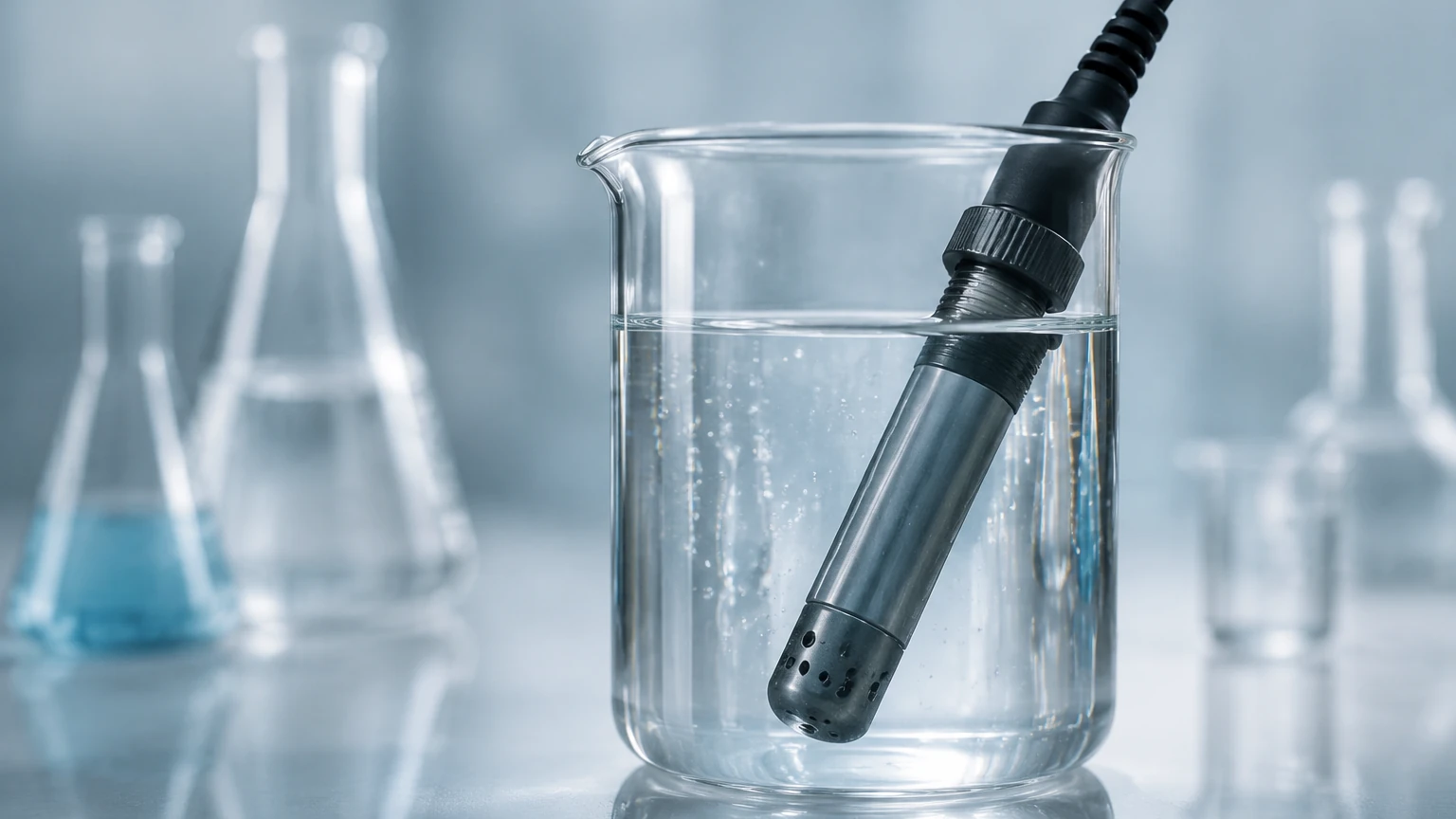
ISE sensors are the most common tools for continuous online monitoring. They operate on a potentiometric principle, similar to a pH probe. An ISE sensor typically features a gas-permeable membrane that separates the sample from an internal electrolyte solution.
When the sensor is immersed, ammonia gas diffuses through the membrane, changing the pH of the internal electrolyte. An internal pH electrode measures this change, which is proportional to the ammonia concentration in the sample. Alternatively, some ISEs measure the ammonium ion directly using a specialized ion-exchange membrane. These sensors are valued for their relatively low cost and fast response times, though they require frequent calibration and are sensitive to interference from ions like potassium (K+).
2. Colorimetric Analyzers
Colorimetric measurement is based on the Beer-Lambert law. The analyzer automatically mixes a water sample with specific reagents—most commonly using the Nessler method or the Phenate method. These reagents react with ammonia to produce a color change. The intensity of the color is measured by a photometer at a specific wavelength.
While colorimetric sensors are highly accurate and less prone to interference than ISEs, they are typically batch-process instruments rather than continuous flow-through sensors. They also require a steady supply of chemical reagents and generate a small amount of chemical waste.
3. UV Absorption (Spectrophotometry)
Advanced optical sensors utilize ultraviolet (UV) light absorption to detect ammonia. Certain nitrogen compounds absorb light at specific UV wavelengths. By measuring the light attenuation through a known path length of water, the sensor can determine the concentration. This method is non-contact (with the reagents) and requires very little maintenance, making it ideal for high-purity water applications or harsh wastewater environments where fouling is a concern.
Integration with Level Measurement Systems
In industrial applications, a water ammonia sensor rarely operates in isolation. It is usually part of a larger chemical dosing or storage system. For instance, in wastewater treatment plants, ammonia sensors monitor the effluent, while storage tanks hold the chemicals required for neutralization or stripping.
Effective process control requires a combination of analytical sensing and physical measurement. While the ammonia sensor tracks concentration, industrial level instruments are required to monitor the volume and safety of the tanks containing these solutions. For example, when managing ammonia-rich wastewater in large basins, operators rely on advanced Main Page solutions, such as radar level meters or ultrasonic sensors, to ensure that tanks do not overflow and that dosing pumps have sufficient head pressure.
Welk provides a range of hydrostatic and radar level transmitters that complement ammonia sensing arrays. By integrating level data with ammonia concentration data, automated systems can calculate the total mass of ammonia present in a system, allowing for more precise chemical dosing and regulatory reporting.
Key Evaluation Criteria for Selection
When evaluating a water ammonia sensor for a specific B2B application, the following technical parameters should be prioritized:
Measurement Range and Sensitivity
Sensors are typically optimized for either trace levels (0–10 mg/L) or high concentrations (up to 1,000 mg/L or more). For boiler feed water in power plants, high sensitivity in the parts-per-billion (ppb) range is required. Conversely, in industrial wastewater, a sensor must handle high-range fluctuations without saturating the detector.
Accuracy and Repeatability
Accuracy is often expressed as a percentage of the full scale (e.g., ±5% FS). In regulated industries, repeatability is often more important than absolute accuracy, as it allows for consistent process control and trend analysis.
Maintenance Requirements
ISE sensors require membrane replacement and electrolyte replenishment, often every 3 to 6 months. Colorimetric sensors require reagent refills. For remote locations, UV absorption sensors are often preferred due to their "fit and forget" nature, despite the higher initial capital expenditure.
Cross-Sensitivity and Interference
In complex water matrices, other ions can interfere with the sensor. For example, potassium ions can be mistaken for ammonium ions by ISE sensors. It is essential to confirm the chemical composition of the sample water before selecting a sensor technology.
Selection Table: Ammonia Sensor Technologies
| Feature | Ion-Selective Electrode (ISE) | Colorimetric Analyzer | UV Absorption |
| :— | :— | :— | :— |
| Best Use Case | Continuous process control | Regulatory compliance/Lab | High-fouling environments |
| Response Time | Fast (seconds to minutes) | Slow (10–15 minutes) | Real-time |
| Maintenance | High (Calibration/Membranes) | High (Reagents) | Low (Optical cleaning) |
| Initial Cost | Low to Moderate | Moderate to High | High |
| Interference | High (K+, pH, Temp) | Low | Moderate (Turbidity) |
Installation Considerations
Proper installation is as critical as sensor selection. Incorrect placement can lead to stagnant readings or physical damage to the instrument.
1. Flow Velocity: For ISE and optical sensors, a minimum flow velocity is often required to prevent the buildup of solids on the sensing surface. However, excessively high velocity can cause cavitation or physical erosion of membranes.
2. Submersion Depth: If using a submersible sensor in an open channel or basin, ensure it is placed at a depth of at least 0.5 meters (approx. 20 inches) to avoid surface turbulence and floating debris, but not so deep that hydrostatic pressure exceeds the sensor’s rating.
3. Temperature and pH Compensation: Since the NH3/NH4+ balance is temperature and pH-dependent, the sensor system must include a temperature probe (typically PT100 or PT1000) and a pH electrode to provide compensated TAN readings.
4. Accessibility: Sensors should be installed in locations where technicians can safely access them for monthly calibration. Use swing-arm mountings for basins to allow the sensor to be pulled to the walkway easily.
Common Risks and Limitations
Operating a water ammonia sensor involves managing several technical risks:
* Membrane Fouling: In wastewater, biological growth (biofilm) can coat the sensor membrane, blocking the diffusion of ammonia gas. This leads to a slow response time and "drifted" readings. Automatic cleaning systems, such as compressed air blasts or mechanical wipers, are recommended for these environments.
* pH Extremes: Most ISE ammonia sensors require the sample to be slightly alkaline (pH > 11) to convert all ammonium to ammonia gas for measurement. This often requires an integrated reagent pump to adjust the sample pH before it hits the sensor, increasing system complexity.
* Temperature Fluctuations: Rapid changes in water temperature can cause thermal shock to the internal reference elements of a sensor. Insulated flow cells or compensated algorithms are necessary for outdoor installations.
Frequently Asked Questions (FAQ)
Q: How often should a water ammonia sensor be calibrated?
A: For ISE sensors, weekly or bi-weekly calibration is standard to account for membrane aging. Colorimetric and UV sensors may only require monthly or quarterly validation against a known standard.
Q: Can these sensors measure ammonia in saltwater?
A: Yes, but it is challenging. The high concentration of other ions in seawater can interfere with ISE sensors. Specialized "marine-grade" ISEs or colorimetric methods are typically used for aquaculture and oceanography.
Q: What is the difference between NH3-N and NH4+?
A: NH3-N refers to the nitrogen content derived from ammonia. Most industrial regulations specify limits in terms of NH3-N. Sensors must be configured to output the specific unit required by local environmental permits.
Q: Do I need a level meter if I already have an ammonia sensor?
A: Yes. An ammonia sensor tells you the concentration (e.g., mg/L), but it does not tell you how much liquid you have. To calculate the total mass of ammonia or to manage chemical inventory safely, you need a level meter. For more information on tank monitoring, you can Review product options and application support.
Conclusion
Selecting a water ammonia sensor requires a balance between the needed precision, the harshness of the environment, and the available maintenance budget. While ISE sensors offer a cost-effective solution for many, the stability of UV absorption and the accuracy of colorimetric methods make them better suited for critical infrastructure. Regardless of the sensing technology chosen, integrating these analytical tools with reliable level measurement ensures a comprehensive approach to industrial fluid management and environmental safety.