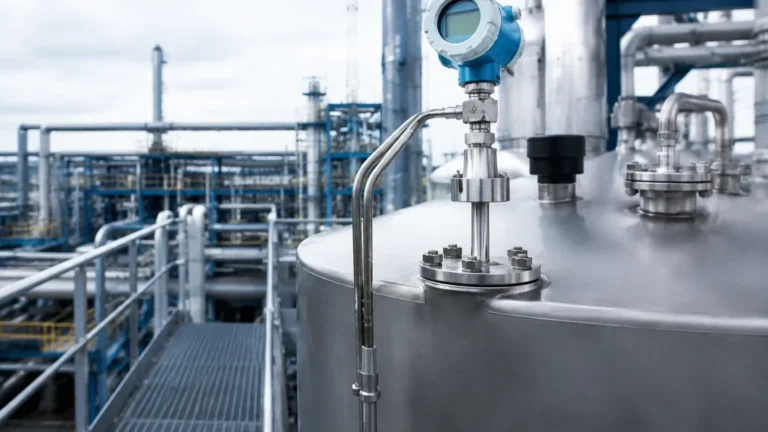
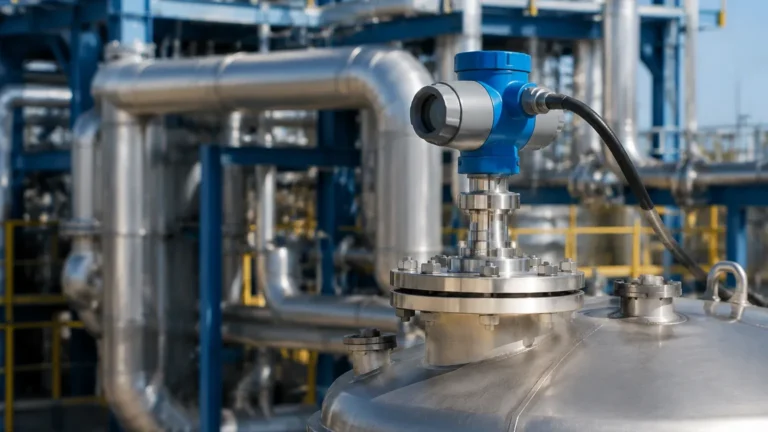
Wireless Radar Level Transmitter
Wireless Radar Level Transmitter: An Engineering Guide to Remote Level Measurement
In the landscape of modern industrial automation, the transition from wired instrumentation to wireless solutions represents a significant shift toward operational flexibility and cost efficiency. The wireless radar level transmitter has emerged as a critical tool for monitoring liquid and solid levels in environments where traditional cabling is either cost-prohibitive or physically impossible. By combining the high-precision sensing of Radar Level Meters with low-power wireless communication protocols, these devices enable real-time data acquisition across vast tank farms, remote water treatment facilities, and hazardous chemical storage areas.
This guide examines the underlying measurement principles, selection criteria, and practical installation considerations essential for engineering and procurement teams evaluating wireless radar technology.
1. Measurement Principles of Radar Level Technology
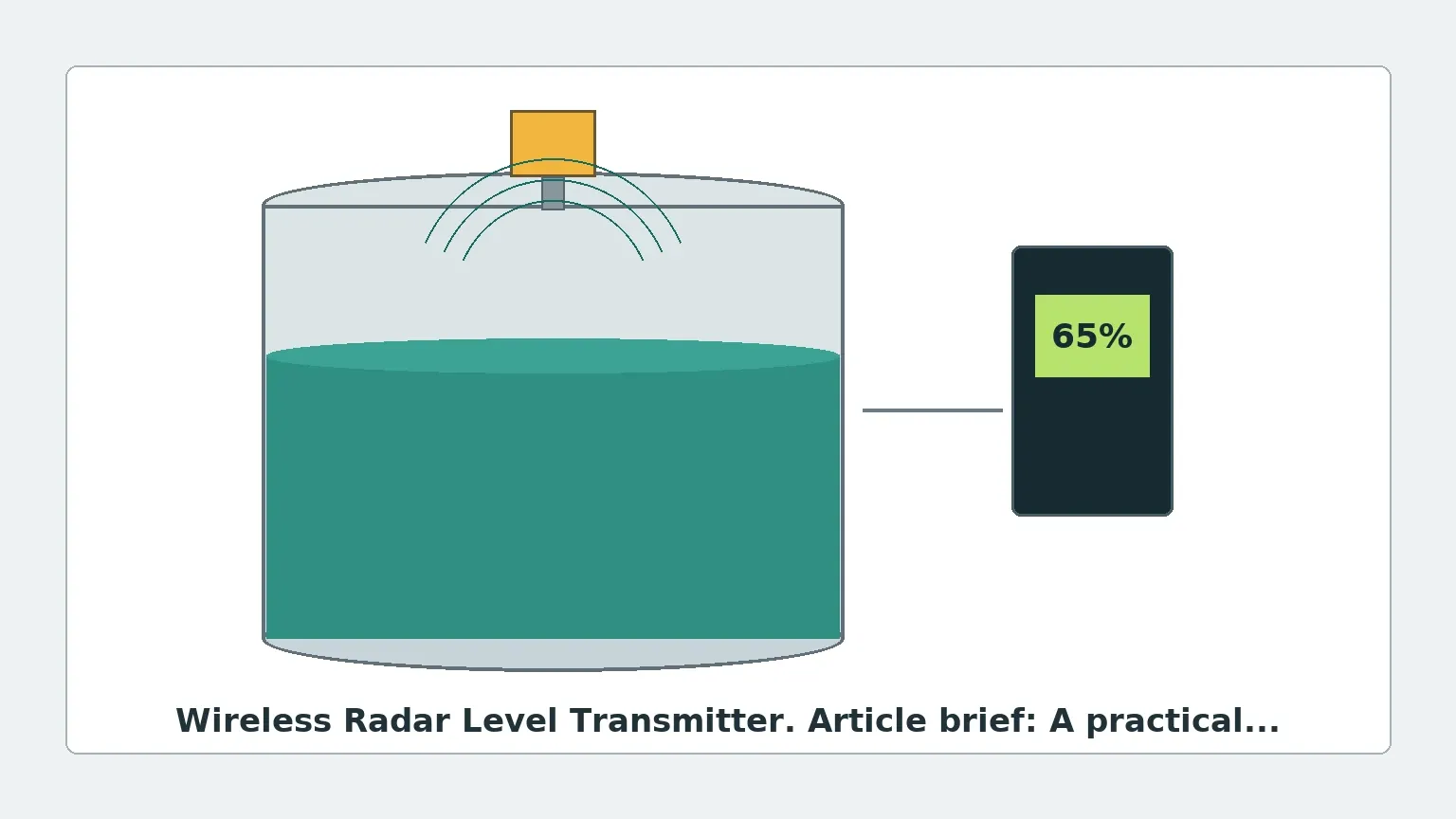
Before addressing the wireless communication component, it is essential to understand how radar sensors determine the level of a medium. Radar level measurement is a non-contact technology that utilizes electromagnetic waves, typically in the microwave spectrum, to calculate the distance between the sensor and the material surface.
Time of Flight (ToF)
All radar level transmitters operate on the Time of Flight principle. The device emits a signal that travels at the speed of light, reflects off the surface of the medium, and returns to the sensor's antenna. The time elapsed between emission and reception is directly proportional to the distance.
Pulse Radar vs. FMCW
There are two primary methods used in industrial radar level meters:
1. Pulse Radar: The transmitter emits short microwave pulses and measures the time delay of the return signal. This method is traditionally known for lower power consumption, making it highly compatible with battery-operated wireless systems. However, its resolution is generally lower than FMCW.
2. FMCW (Frequency Modulated Continuous Wave): The transmitter emits a continuous signal with a constantly changing frequency. The distance is calculated by measuring the frequency difference between the transmitted signal and the reflected signal at any given moment. FMCW offers superior accuracy (often within ±1 mm) and better signal-to-noise ratios, which is vital when measuring materials with low dielectric constants.
The Role of the Wireless Interface
In a wireless radar level transmitter, the processed level data is not sent via a 4-20mA loop or Modbus cable. Instead, the internal electronics modulate the digital signal onto a radio frequency (RF) carrier. Common protocols include WirelessHART, ISA100.11a, LoRaWAN, and NB-IoT. The choice of protocol affects the device's range, update frequency, and battery longevity.
2. Advantages of Wireless Deployment
Integrating wireless capabilities into radar level meters provides several strategic advantages for industrial facilities:
* Infrastructure Cost Reduction: The cost of trenching, conduit installation, and wiring in a large-scale industrial site can exceed the cost of the instruments themselves by a factor of ten. Wireless systems eliminate these expenses.
* Rapid Deployment: Wireless sensors can be installed and commissioned in a fraction of the time required for wired counterparts, allowing for temporary monitoring or rapid scaling of operations.
* Enhanced Safety: By eliminating the need for signal wiring in hazardous areas (Ex-zones), the risk of electrical faults propagating through a plant is reduced. Technicians can also access data from a safe distance without climbing onto tanks.
* Remote Accessibility: For assets located in geographically dispersed areas—such as irrigation channels, remote oil wells, or environmental monitoring stations—wireless transmission via cellular or satellite networks is the only viable solution.
3. Key Selection Criteria for Engineers
Selecting the correct wireless radar level transmitter requires a thorough analysis of the process medium and the physical environment. The following factors are decisive:
Frequency Selection (80GHz vs. 26GHz)
* 80GHz Radar: This high-frequency range allows for a very narrow beam angle (often as small as 3°). This is ideal for narrow tanks with internal obstructions like agitators or heating coils, as the beam can avoid these obstacles. It also provides higher precision for solids and low-dielectric liquids.
* 26GHz Radar: A more traditional frequency with a wider beam angle. It is robust and well-suited for applications involving heavy dust, steam, or turbulent surfaces where a slightly wider footprint helps average out surface fluctuations.
Dielectric Constant ($ε_r$)
The dielectric constant of the material determines how much of the radar signal is reflected. Metals have an infinite dielectric constant and reflect 100% of the signal. In contrast, hydrocarbons and plastic pellets have low dielectric constants ($ε_r < 2.0$), meaning much of the signal passes through the material rather than reflecting. In such cases, high-sensitivity FMCW radar is required.
Power Management and Update Rates
Since most wireless transmitters are battery-powered, there is a trade-off between the frequency of measurements and battery life. Engineers must determine if the process requires a measurement every 30 seconds or every 30 minutes. Advanced transmitters utilize "sleep modes" to conserve energy between readings.
4. Technical Specification Comparison
The following table provides a general comparison of typical wireless radar configurations used in industrial settings.
| Feature | 80 GHz Wireless Radar | 26 GHz Wireless Radar | Guided Wave Radar (Wireless) |
| :— | :— | :— | :— |
| Measurement Range | Up to 120 m | Up to 30 m | Up to 75 m |
| Accuracy | ±1 mm to ±2 mm | ±3 mm to ±10 mm | ±2 mm to ±5 mm |
| Beam Angle | 3° – 8° | 10° – 20° | N/A (Contacting) |
| Standard Protocol | LoRaWAN / NB-IoT | WirelessHART / ISA100 | WirelessHART |
| Typical Application | High silos, narrow tanks | Large liquid storage | Small vessels with foam |
| Battery Life | 2–5 Years | 3–7 Years | 2–5 Years |
5. Installation and Engineering Considerations
Proper installation is paramount to ensuring the reliability of a wireless radar level transmitter. Even the most advanced sensor will fail if the RF environment or physical mounting is ignored.
Signal Path and Obstructions
The radar beam must have a clear path to the surface. For non-contact radar, the "keep-out zone" is defined by the beam angle. If a 26GHz radar is mounted too close to a tank wall, the signal may reflect off the wall or internal ladder, creating a "false echo." Modern software allows for "false echo suppression," but physical clearance is always the preferred engineering solution.
Antenna Orientation
The antenna should be installed perpendicular to the product surface. For liquid applications, this usually means a vertical orientation. For solid materials that form a conical pile, an adjustable flange may be required to aim the radar beam at the most representative point of the slope.
Wireless Gateway Placement
The gateway is the bridge between the wireless sensors and the plant's control system (DCS/PLC). It must be placed within the effective range of the transmitters. In industrial environments with significant metal structures (which act as Faraday cages), repeating nodes may be necessary to route the signal around large obstructions.
Power Supply Options
While battery power is standard, some applications allow for solar-powered wireless transmitters. This is particularly useful for high-frequency update requirements in remote areas where battery replacement intervals would be too frequent.
6. Limitations and Application Risks
While highly versatile, wireless radar is not a universal solution. Engineers must be aware of the following limitations:
1. Latency: Wireless networks introduce a delay in data transmission. This makes them unsuitable for high-speed safety instrumented systems (SIS) or critical overfill protection where millisecond response times are required.
2. Signal Interference: In some facilities, heavy electromagnetic interference (EMI) from large motors or variable frequency drives (VFDs) can disrupt wireless signals. Site surveys are recommended for complex environments.
3. Process Conditions: Extreme foam, heavy steam, or rapidly changing temperatures can attenuate radar signals. While radar is generally more robust than ultrasonic technology in these conditions, extreme cases may require guided wave radar (GWR) or specialized antenna purging systems.
7. Checklist for International Buyers
When sourcing a wireless radar level transmitter from global manufacturers like Welk, procurement teams should confirm the following technical details:
* Frequency Certifications: Ensure the wireless frequency (e.g., 915 MHz, 868 MHz, or 2.4 GHz) is legal for use in your specific country/region.
* Hazardous Area Ratings: Confirm ATEX, IECEx, or UL/CSA certifications if the device is to be installed in explosive atmospheres.
* Integration Support: Verify that the manufacturer provides the necessary Device Description (DD) or DTM files for integration into your existing control host.
* Material Compatibility: Ensure the wetted parts (antenna material, O-rings) are compatible with the process media, especially for corrosive chemicals.
8. Frequently Asked Questions (FAQ)
Q: How long does the battery typically last in a wireless radar transmitter?
A: Battery life depends heavily on the reporting interval. At a 15-minute update rate, most industrial-grade batteries last between 3 and 5 years. High-precision 80GHz units may consume more power during the measurement cycle than 26GHz units.
Q: Can wireless radar measure solids like cement or grain?
A: Yes. 80GHz radar is particularly effective for solids because the high frequency reflects better off uneven surfaces and the narrow beam avoids the steep angles of the material's angle of repose.
Q: Is the wireless signal secure?
A: Industrial protocols like WirelessHART and LoRaWAN use AES-128 bit encryption and frequency hopping to ensure data security and prevent unauthorized access or jamming.
Q: What happens if the wireless signal is lost?
A: Most transmitters have internal data logging capabilities. When the connection to the gateway is restored, the device can upload the buffered data to ensure no gaps in the historical record.
Conclusion
The wireless radar level transmitter represents a mature, reliable solution for modern level measurement challenges. By understanding the nuances of frequency selection, dielectric properties, and wireless network topology, engineers can significantly reduce installation costs while maintaining high standards of accuracy. For complex applications, consulting with a specialized manufacturer of Radar Level Meters ensures that the selected device meets both the process requirements and the long-term operational goals of the facility.