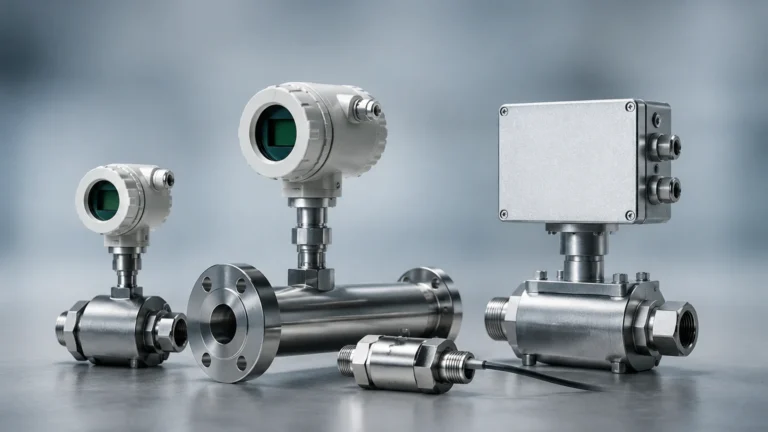
Precision Electromechanical Device Makers Companies Usa Headquarters
Precision Electromechanical Device Makers Companies Usa Headquarters
In the landscape of modern industrial automation, the role of precision electromechanical device makers remains pivotal. These organizations bridge the gap between mechanical movement and electronic control, producing the sensors, actuators, and transmitters that allow complex industrial processes to function with repeatability and accuracy. For many global enterprises, the presence of precision electromechanical device makers companies usa headquarters serves as a hallmark of engineering excellence, providing a central hub for research, development, and high-level technical support that meets stringent North American and international standards.
Industrial level measurement is a primary field within this sector. Instruments such as radar level meters, ultrasonic sensors, and magnetic level gauges are quintessential examples of precision electromechanical and electronic integration. This guide explores the technical foundations of these technologies, the criteria for selecting high-performance devices, and the practical considerations for implementing them within industrial frameworks.
The Strategic Importance of Engineering Headquarters
When evaluating precision electromechanical device makers companies usa headquarters, the focus often lies on the ability of these centers to drive innovation and maintain quality control. A headquarters located in a major industrial or technological hub in the USA typically houses the core engineering teams responsible for product design, compliance with ASME (American Society of Mechanical Engineers) standards, and the integration of advanced digital protocols like HART, Modbus, and Foundation Fieldbus.
For procurement and engineering teams, the proximity to a manufacturer’s headquarters ensures access to specialized application engineering. This is particularly critical when dealing with custom OEM/ODM requirements where standard off-the-shelf components may not suffice. The centralized management of quality systems ensures that every device—whether it is a hydrostatic transmitter or a sophisticated radar unit—undergoes rigorous testing before deployment in the field.
Principles of Operation for Level Measurement Instruments
Before selecting a device, it is essential to understand the physics governing different measurement technologies. Precision electromechanical device makers utilize several distinct principles to achieve accurate level detection.
Radar Level Measurement (Time of Flight)
Radar level meters operate on the Time of Flight (ToF) principle. The device emits a high-frequency electromagnetic pulse (typically in the GHz range) from an antenna. This pulse travels through the air, reflects off the surface of the medium, and returns to the sensor. By measuring the time interval between emission and reception, the device calculates the distance to the material surface. Advanced Frequency Modulated Continuous Wave (FMCW) radar offers even higher precision by varying the frequency of the signal and measuring the frequency difference between the transmitted and received waves.
Ultrasonic Level Sensing
Ultrasonic sensors use acoustic waves rather than electromagnetic ones. A transducer emits a high-frequency sound pulse that bounces off the target surface. The sensor calculates the distance based on the speed of sound. Because the speed of sound is affected by air temperature, precision ultrasonic devices incorporate integrated temperature sensors to compensate for these variations, ensuring accuracy remains within ±0.25% of the detected range.
Hydrostatic Level Transmitters
Hydrostatic measurement relies on the relationship between the height of a liquid and the pressure it exerts at the base of a vessel. The formula $P = \rho \cdot g \cdot h$ (where $P$ is pressure, $\rho$ is density, $g$ is gravity, and $h$ is height) allows the transmitter to convert pressure readings into level data. These devices often feature a precision diaphragm that moves slightly in response to pressure, making them electromechanical in nature as they convert mechanical force into an electrical signal.
Magnetic Level Gauges
Magnetic level gauges are classic electromechanical devices. They consist of a float containing a permanent magnet that moves vertically within a bypass chamber. As the liquid level changes, the float moves, and its magnetic field interacts with external flags or a reed-switch transmitter. This provides both a visual indication and a remote electronic signal without the need for the electronics to come into contact with the process media.
Selection Criteria for Industrial Applications
Choosing the correct instrument requires a systematic evaluation of the process environment. Precision electromechanical device makers often categorize their recommendations based on the following factors:
1. Media Characteristics: The dielectric constant of the material is crucial for radar, while the density is the primary factor for hydrostatic and magnetic gauges.
2. Process Conditions: High temperatures (above 200°C) or extreme pressures (above 40 bar) may necessitate specialized cooling fins or heavy-duty housing materials like 316L stainless steel or Hastelloy.
3. Accuracy Requirements: For custody transfer applications, high-precision radar with millimeter-level accuracy is required. For simple pump control, ultrasonic or float switches may be more cost-effective.
4. Vessel Geometry: Internal obstructions like agitators, ladders, or heating coils can interfere with non-contact signals. In such cases, guided wave radar or contact-based electromechanical sensors are preferred.
Technical Comparison Table
The following table provides a comparative overview of common level measurement technologies produced by precision electromechanical device makers.
| Technology | Accuracy | Range | Typical Applications | Key Advantage |
| :— | :— | :— | :— | :— |
| FMCW Radar | ±1 mm to ±5 mm | Up to 100 m | Chemical tanks, oil & gas, solids | Non-contact, unaffected by vacuum |
| Ultrasonic | ±0.25% of span | 0.3 m to 15 m | Water treatment, open channels | Cost-effective for liquids |
| Hydrostatic | ±0.1% to ±0.5% | 1 m to 200 m | Deep wells, vented tanks | Simple installation, reliable |
| Magnetic Gauge | ±5 mm to ±10 mm | 0.5 m to 6 m | Boilers, toxic chemical storage | Redundant visual/electronic sensing |
| Level Switches | Repeatability ±2 mm| Point level | Overfill protection, dry run | Robust and high reliability |

Installation and Engineering Considerations
Proper installation is as critical as device selection. Even the most precise instrument from the top precision electromechanical device makers companies usa headquarters will fail if environmental factors are ignored.
* Mounting Position: For non-contact sensors (radar and ultrasonic), the device must be mounted perpendicular to the liquid surface. It should be placed away from the tank wall (typically at 1/4 to 1/6 of the tank diameter) to avoid signal interference from wall reflections.
* Dead Zones (Blocking Distance): Every ultrasonic and radar sensor has a "dead zone" near the antenna where measurement is impossible. Engineers must ensure the maximum liquid level does not enter this zone.
* Cable Shielding: To maintain signal integrity in electromechanical systems, shielded cables should be used to prevent electromagnetic interference (EMI) from nearby high-voltage equipment or variable frequency drives (VFDs).
* Venting: For hydrostatic transmitters in sealed tanks, a vented cable or a differential pressure setup is required to compensate for changes in atmospheric or headspace pressure.
Limitations and Environmental Constraints
No single technology is universal. Understanding the limitations is essential for risk mitigation:
* Foam and Turbulence: Heavy foam can absorb ultrasonic and radar signals, leading to signal loss. In these environments, a stilling well or a bypass chamber is often necessary.
* Dust and Vapor: Dense dust in silos can attenuate high-frequency signals. Specialized dust-penetrating radar frequencies (e.g., 26GHz or 80GHz) are designed to overcome this.
* Density Fluctuations: Hydrostatic and magnetic level gauges are sensitive to changes in fluid density. If the process involves fluids with varying densities, the system must be recalibrated or use a technology independent of density, such as radar.
Frequently Asked Questions (FAQ)
Q: Why choose a device from a manufacturer with a USA headquarters?
A: Headquarters in the USA often ensure that products comply with local safety certifications (UL, FM) and provide localized technical support and faster lead times for critical components.
Q: What is the difference between a level transmitter and a level switch?
A: A level transmitter provides continuous measurement (e.g., 4-20mA or 0-100% level), while a level switch provides a discrete signal (on/off) when a specific point is reached, usually for safety or alarm purposes.
Q: Can ultrasonic sensors be used in a vacuum?
A: No. Ultrasonic waves require a medium (air or gas) to travel. In a vacuum, there is no medium to carry the sound pulse. Radar is the preferred non-contact method for vacuum applications.
Q: How often should electromechanical level gauges be calibrated?
A: While many modern digital sensors are stable, it is recommended to perform a calibration check annually, especially in critical safety applications or where buildup on the sensor is likely.
Conclusion
The integration of mechanical reliability and electronic precision is the hallmark of leading industrial manufacturers. By understanding the underlying principles of radar, ultrasonic, and hydrostatic measurement, engineers can select the most appropriate tools for their specific application needs. For a comprehensive overview of industrial measurement solutions, engineers can visit the Main Page to review product options and application support. Partnering with established precision electromechanical device makers ensures that the resulting systems are not only accurate but also durable enough to withstand the rigors of modern industrial environments.
Download Precision Electromechanical Device Makers Companies Usa Headquarters as a PDF