5000 Psi Pressure Transducer
5000 Psi Pressure Transducer
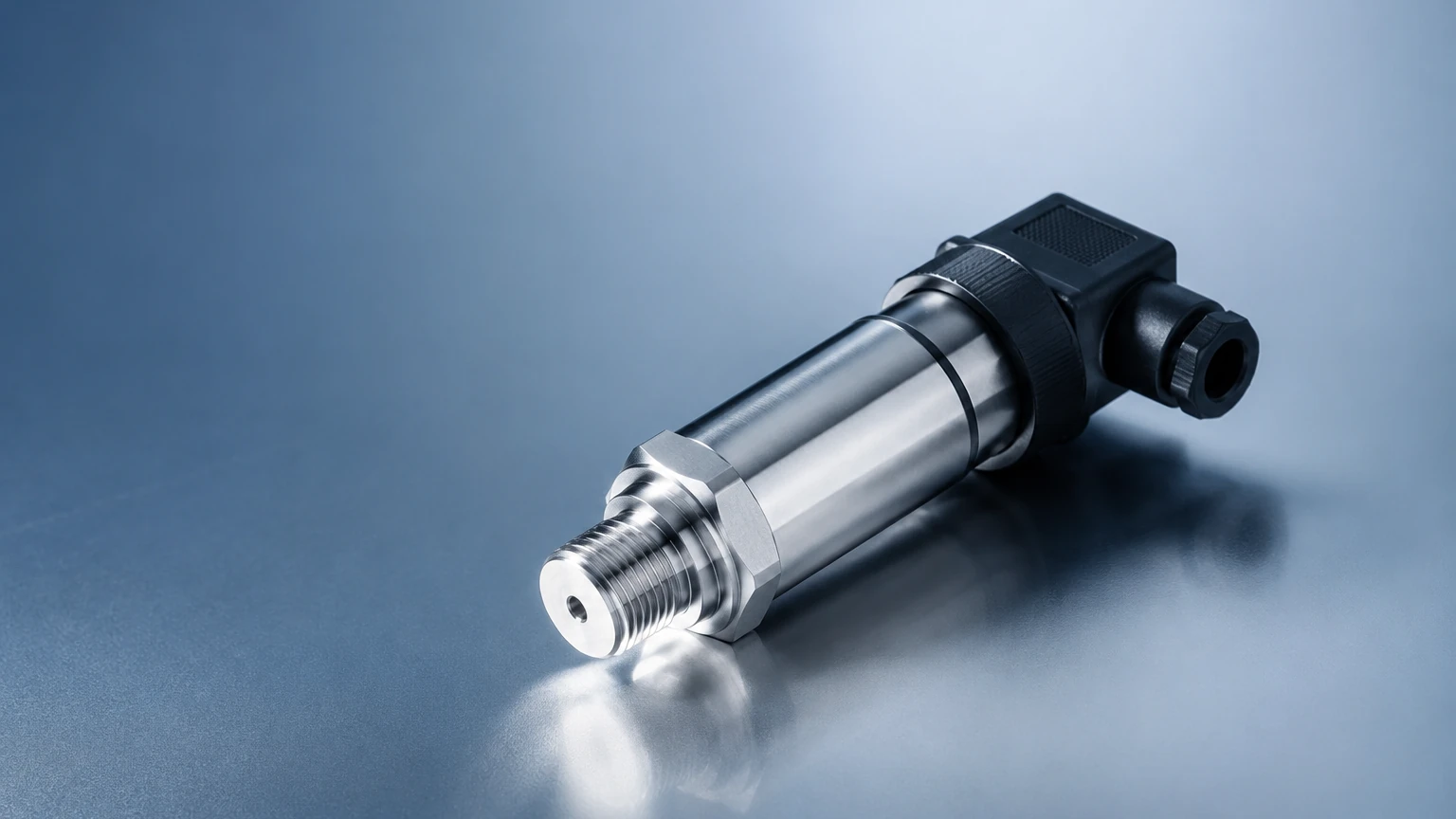
In high-pressure industrial environments, the accuracy and reliability of pressure measurement are paramount for both operational efficiency and safety. A 5000 psi pressure transducer is a specialized instrument designed to convert mechanical pressure into a proportional electrical signal within a range of 0 to approximately 344.7 bar (34.47 MPa). These devices are ubiquitous in hydraulic systems, oil and gas extraction, and high-pressure chemical processing. Understanding the underlying physics, selection criteria, and installation nuances is essential for engineers tasked with integrating these sensors into complex automation frameworks.
Core Measurement Principles
Before selecting a specific model, it is necessary to understand how a pressure transducer translates physical force into data. Most 5000 psi transducers utilize one of three primary sensing technologies, each with distinct advantages depending on the medium and environmental conditions.
1. Piezoresistive Strain Gauges
This is the most common technology for high-pressure applications. It relies on the piezoresistive effect, where the electrical resistance of a semiconductor or metal changes when it is subjected to mechanical strain. In a 5000 psi transducer, a diaphragm—often made of stainless steel or a high-nickel alloy—is exposed to the process media. As pressure increases, the diaphragm deflects, stretching the strain gauges bonded to its reverse side. These gauges are typically arranged in a Wheatstone bridge circuit to maximize sensitivity and provide temperature compensation.
2. Thin-Film Deposition
Thin-film transducers are highly regarded for their long-term stability and resistance to vibration. In this process, the resistive material is molecularly bonded to the diaphragm using sputter deposition. This creates a very rugged sensor capable of handling the rapid pressure spikes (transients) often found in 5000 psi (345 bar) hydraulic systems. Because there are no adhesives used to bond the sensor to the diaphragm, the risk of "creep" or signal drift over time is significantly reduced.
3. Ceramic Capacitive Sensors
For applications involving corrosive media, ceramic capacitive sensors are often preferred. These utilize a ceramic diaphragm that forms one plate of a capacitor. As pressure moves the diaphragm closer to a fixed ceramic substrate, the capacitance changes. While traditionally used for lower pressures, advanced ceramic formulations allow for high-pressure ratings. Their primary benefit is the inherent chemical inertness of the Al2O3 (alumina) ceramic material.
Technical Specifications and Selection Criteria
Choosing a 5000 psi pressure transducer requires a detailed analysis of the application's technical requirements. A mismatch between the sensor's capabilities and the process demands can lead to premature failure or inaccurate data.
| Feature | Specification Detail | Importance |
| :— | :— | :— |
| Accuracy | Typically 0.25% to 0.5% FS (Full Scale) | Determines the precision of control loops and safety thresholds. |
| Output Signal | 4-20 mA, 0-10 VDC, or RS-485 | 4-20 mA is preferred for long cable runs due to its noise immunity. |
| Wetted Materials | 17-4 PH SS, 316L SS, or Hastelloy | Must be compatible with the process fluid to prevent corrosion. |
| Proof Pressure | Usually 1.5x to 2x rated range (7500–10000 psi) | The maximum pressure the device can withstand without permanent damage. |
| Burst Pressure | Often 3x to 5x rated range | The safety limit at which the sensor housing will fail and leak. |
| Operating Temp | -40°C to +125°C (-40°F to 257°F) | Critical for outdoor or high-heat industrial processes. |
When evaluating these specifications, engineers must distinguish between "Gauge Pressure" (referenced to atmospheric pressure) and "Sealed Gauge" or "Absolute Pressure." For a 5000 psi range, most sensors are configured as sealed gauge to prevent moisture from entering the internal electronics through a vent tube.
Integration into Level Measurement Systems
While pressure transducers are primarily used for line pressure, they play a critical role in hydrostatic level measurement. According to the principle of hydrostatics, the pressure at the bottom of a liquid column is directly proportional to its height ($P = \rho gh$).
In deep-well applications or high-pressure storage tanks, a 5000 psi pressure transducer can be used to monitor liquid levels where standard low-pressure sensors would fail. For example, in a vessel with a high-pressure gas blanket (e.g., 4500 psi of nitrogen), a differential pressure approach or a high-range gauge pressure sensor is required to determine the liquid level accurately. In these scenarios, the transducer must be able to resolve small changes in liquid head pressure against a very high static background pressure. For a broader look at how these technologies integrate into industrial systems, you can review product options and application support on our Main Page.
Installation and Maintenance Considerations
Proper installation is the most significant factor in ensuring the longevity of a 5000 psi pressure transducer. High-pressure systems are inherently dangerous, and mechanical failure at these levels can be catastrophic.
Mechanical Mounting
* Thread Type: Most high-pressure sensors use NPT (National Pipe Thread) or BSPP (British Standard Parallel Pipe) fittings. Ensure that the mating female port is rated for at least 5000 psi (345 bar).
* Torque: Over-tightening can deform the sensor diaphragm, leading to zero-shift errors. Always follow the manufacturer's torque specifications.
* Snubbers: In hydraulic applications, rapid valve closures can cause pressure spikes far exceeding 5000 psi. Installing a pressure snubber (a restrictive orifice) can protect the diaphragm from these "water hammer" effects.
Electrical Wiring
* Shielding: Use shielded twisted-pair cabling to protect the signal from electromagnetic interference (EMI), especially near high-voltage motors or variable frequency drives (VFDs).
* Grounding: The sensor housing should be grounded to the pipework or a dedicated earth ground to prevent ground loops that can distort the signal.
Environmental Protection
If the transducer is installed outdoors or in wash-down areas, ensure it has an appropriate IP (Ingress Protection) rating, such as IP67 or IP68. For hazardous locations, the device must be certified as intrinsically safe (Ex ia) or explosion-proof (Ex d).
Limitations and Risk Mitigation
Despite their robust design, 5000 psi pressure transducers have limitations. Understanding these risks allows for better system design.
1. Temperature Drift: All sensors experience some change in accuracy as temperature fluctuates. This is usually expressed as a percentage of full scale per degree. In outdoor installations, thermal insulation or active temperature compensation is necessary.
2. Fatigue: In systems with frequent pressure cycling (e.g., a hydraulic press), the diaphragm may eventually suffer from metal fatigue. Regular inspection for "zero drift"—where the sensor shows a non-zero reading at zero pressure—is a key indicator of fatigue.
3. Media Compatibility: While 316L stainless steel is standard, it can fail in the presence of hydrogen (hydrogen embrittlement) or highly acidic fluids. Always verify the chemical compatibility of the wetted parts.
Frequently Asked Questions (FAQ)
Q: Can a 5000 psi transducer be used for vacuum measurement?
A: Generally, no. Transducers in this high range are calibrated for positive pressure. Using them for vacuum will result in extremely poor resolution and potential inaccuracy, as the vacuum range (0 to -14.7 psi) is a negligible fraction of the 5000 psi full scale.
Q: What is the difference between a pressure transducer and a pressure transmitter?
A: In common industrial parlance, a "transducer" often refers to a device with a voltage output (e.g., 0-5V), while a "transmitter" refers to a device with a current output (e.g., 4-20mA). However, the terms are frequently used interchangeably in B2B contexts.
Q: How often should a 5000 psi sensor be calibrated?
A: For most industrial applications, an annual calibration is standard. However, in critical safety systems or high-cycle hydraulic applications, semi-annual checks may be required to ensure the device remains within its specified accuracy tolerance.
Q: Is it safe to exceed the 5000 psi limit?
A: Sensors are designed with a "Proof Pressure" (often 7500 psi) which they can withstand without damage. However, they will not provide accurate readings above 5000 psi. Exceeding the "Burst Pressure" (e.g., 15,000 psi) will result in physical destruction of the sensor and potential safety hazards.
Conclusion
The 5000 psi pressure transducer is a cornerstone of high-pressure process control. By understanding the mechanical principles of piezoresistive and thin-film sensing, engineers can select instruments that offer the necessary durability and precision. Whether used for monitoring hydraulic power units or calculating hydrostatic levels in deep-well environments, these sensors must be installed with careful attention to mechanical sealing, electrical shielding, and overpressure protection. For further technical guidance on selecting the right level and pressure instrumentation for your specific industrial application, visit the Main Page of our engineering resource center.