Cps12
Cps12
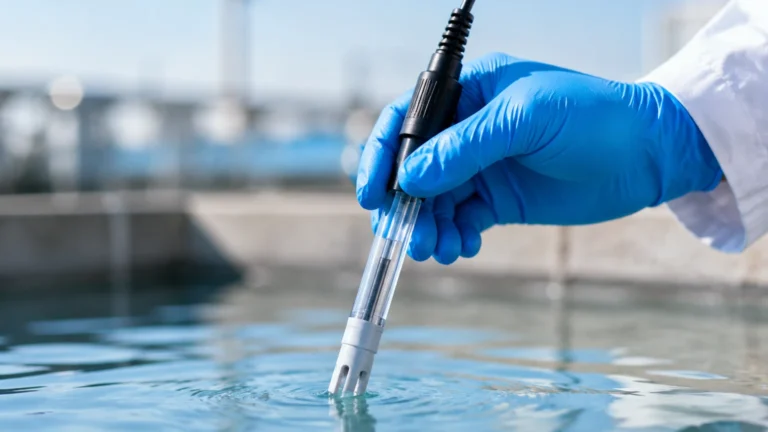
In the realm of industrial process automation, liquid analysis and level measurement represent two pillars of effective tank management. The cps12—specifically the Orbisint CPS12—is a widely recognized digital or analog pH sensor designed for heavy-duty applications in water treatment and chemical processing. While the cps12 handles the critical task of monitoring chemical properties, it is almost always deployed alongside robust level measurement instrumentation to ensure vessel safety, inventory accuracy, and process efficiency.
For engineers and plant managers, understanding the synergy between liquid analysis tools like the cps12 and level transmitters is essential. This guide explores the technical principles of level measurement, how these systems integrate with analysis sensors, and the criteria for selecting the right instrumentation for your facility. For a broader look at industrial measurement solutions, you may refer to the Main Page.
The Relationship Between Liquid Analysis and Level Measurement
In most industrial reactors and storage tanks, measuring the pH value via a cps12 sensor is only one part of the control loop. To manage the process effectively, the control system must also know the volume of the liquid. For example, in a neutralization tank, the cps12 monitors the acidity, while a level meter ensures that the tank does not overflow during the addition of neutralizing agents.
Integrating these sensors requires a deep understanding of the physical and chemical properties of the medium. Factors such as turbulence, foam, and corrosive vapors affect both the pH electrode's longevity and the level sensor's accuracy.
Measurement Principles for Level Instrumentation
Before selecting a level meter to complement your cps12 analysis system, it is vital to understand the underlying measurement principles. Each technology has specific strengths depending on the tank environment.
1. Radar Level Measurement (Non-Contact)
Radar level meters, particularly those operating at high frequencies like 80 GHz, utilize the Time-of-Flight (ToF) principle. The device emits a microwave signal that travels to the liquid surface and reflects back to the sensor. The distance is calculated based on the time interval between emission and reception.
* Advantages: Unaffected by temperature fluctuations, pressure changes, or the presence of vapors. It is ideal for corrosive chemicals where a cps12 is also present.
* Best For: Large storage tanks and volatile liquids.
2. Ultrasonic Level Measurement
Ultrasonic sensors emit high-frequency sound waves. Similar to radar, they measure the time it takes for the echo to return from the surface. However, because sound requires a medium (air) to travel, changes in air temperature or density can affect the speed of sound and, consequently, the accuracy of the reading.
* Advantages: Cost-effective for water and wastewater applications.
* Best For: Open channels, sumps, and atmospheric tanks.
3. Hydrostatic Level Measurement
Hydrostatic transmitters measure the pressure exerted by a liquid column at the bottom of a tank. This pressure is directly proportional to the liquid's height and density (P = ρgh). In applications where a cps12 is used to monitor a consistent chemical concentration, hydrostatic sensors provide highly reliable, continuous level data.
* Advantages: Simple installation and high reliability in calm liquids.
* Best For: Deep wells, vented tanks, and pressurized vessels.
4. Magnetic Level Gauges
These utilize a float containing a magnet that moves with the liquid level. This magnet acts upon an external indicator or a reed switch transmitter. This provides a visual local indication alongside a digital signal for the control room.
* Advantages: No power required for local indication; highly durable.
* Best For: High-pressure boilers and hazardous chemical storage.
Selection Criteria for Level Instrumentation
When your application involves a cps12 sensor for pH monitoring, the following table helps in selecting the appropriate level measurement technology based on common process conditions.
| Process Condition | Recommended Level Tech | Why? |
| :— | :— | :— |
| Corrosive Chemicals | Radar (PTFE Coated) | Non-contact prevents sensor degradation. |
| Heavy Foam | Hydrostatic | Radar and Ultrasonic signals can be absorbed by foam. |
| High Turbulence | Radar (80 GHz) | Narrow beam angle ignores agitators and baffles. |
| Wastewater Sumps | Ultrasonic | Economic and effective for non-volatile liquids. |
| High Pressure/Temp | Guided Wave Radar | Direct contact with cable ensures signal stability. |
| Small Vessels | Radar or Hydrostatic | High precision in confined spaces. |
Integration and Installation Considerations
Proper installation is paramount when combining liquid analysis (cps12) and level sensors in the same vessel. Improper placement can lead to signal interference or physical damage to the sensors.
Mounting Positions
* Avoid the Inflow: Neither the cps12 nor the level sensor should be placed directly under the filling stream. Turbulence and air entrainment will cause erratic pH readings and signal loss for ultrasonic/radar meters.
* Clearance from Walls: Radar and ultrasonic sensors require a "clear path." Ensure they are mounted at least 200 mm to 500 mm (approx. 8 to 20 inches) away from the tank wall to prevent false reflections from welds or scales.
* Submergence Depth: For hydrostatic sensors and cps12 electrodes, ensure they are positioned deep enough to remain submerged during the entire process cycle, but high enough to avoid being buried in settled sludge.
Cable Management and Interference
Since the cps12 often uses Memosens technology or high-impedance analog cables, it is sensitive to electromagnetic interference (EMI). Level transmitters, especially those with high-power switching, should have their cables shielded and separated from the analysis signal lines to prevent data corruption.
Material Compatibility
In processes requiring a cps12, the medium is often chemically active. Ensure that the wetted parts of your level sensor (e.g., the radar antenna or hydrostatic diaphragm) are made of compatible materials such as 316L Stainless Steel, Hastelloy, or PTFE (Polytetrafluoroethylene).

Limitations and Maintenance
No measurement technology is universal. Understanding the limitations ensures long-term reliability.
* Cps12 Limitations: pH electrodes are consumable. They require regular calibration and cleaning. If the liquid level drops below the sensor, the electrode can dry out, leading to permanent damage.
* Radar/Ultrasonic Limitations: These sensors struggle with extremely low dielectric constants (for radar) or heavy dust/steam (for ultrasonic). In such cases, a guided wave radar or a hydrostatic transmitter is preferred.
* Hydrostatic Limitations: If the density of the liquid changes significantly (e.g., due to temperature shifts or chemical mixing), the level reading will drift unless density compensation is applied.
Practical Engineering Checklist
Before finalizing your instrumentation suite, confirm the following details:
1. Tank Geometry: Is the tank flat-bottomed, conical, or horizontal cylindrical?
2. Medium Properties: What is the dielectric constant (for radar) and the density (for hydrostatic)?
3. Operating Range: What are the maximum and minimum temperatures and pressures?
4. Cleaning Requirements: Does the process require CIP (Clean-in-Place) or SIP (Steam-in-Place)? This affects both the cps12 and the level sensor choice.
5. Output Protocol: Do you require 4-20mA, HART, Profibus, or Modbus integration?
Frequently Asked Questions (FAQs)
Q: Can I use a cps12 sensor in a tank with a radar level meter?
A: Yes. They measure different parameters (chemical vs. physical) and do not interfere with each other if installed correctly. Ensure the radar's microwave emissions do not impact the pH sensor's electronics by following standard grounding practices.
Q: How often should I calibrate my level meter compared to my cps12?
A: A cps12 pH sensor typically requires calibration every few weeks or months depending on the harshness of the environment. In contrast, modern radar and hydrostatic level meters are much more stable and may only require verification once a year.
Q: What happens to the level reading if the liquid starts foaming?
A: If you are using an ultrasonic or standard radar meter, the foam may absorb the signal, leading to a "lost echo" error. In foaming applications, a hydrostatic pressure transmitter is usually the most reliable secondary measurement.
Q: Are there level sensors that can also measure pH?
A: Generally, no. These are distinct physical measurements requiring different sensing elements. However, many modern controllers and transmitters can accept inputs from both a level sensor and a cps12 to provide a unified data stream.
Conclusion
Successful industrial process control relies on the accurate coordination of multiple sensing technologies. While the cps12 provides the necessary chemical insights, selecting the right level measurement technology—whether radar, ultrasonic, or hydrostatic—ensures that your operations remain safe and efficient. By considering the physical properties of the medium and the constraints of the tank environment, engineers can design a robust system that minimizes maintenance and maximizes uptime.
For more technical specifications and to explore various level measurement options tailored to your industry, please visit the Main Page.