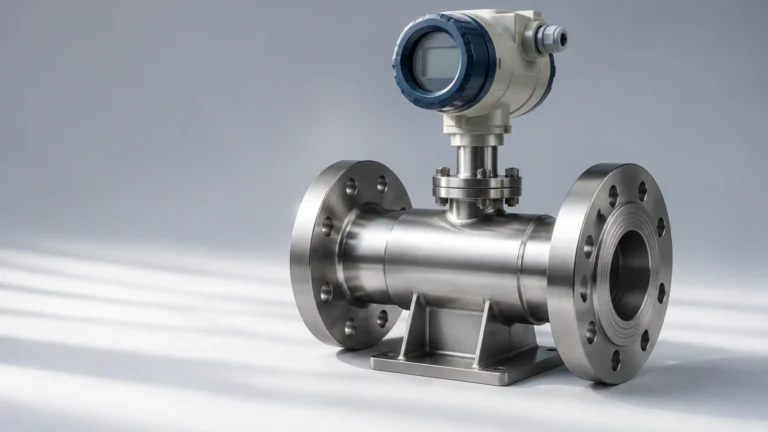
Food Grade Flow Meter Suppliers
Food Grade Flow Meter Suppliers
In the food and beverage industry, the precision and hygiene of liquid handling are paramount. Selecting the right food grade flow meter suppliers is not merely a procurement task but a critical engineering decision that impacts product safety, consistency, and regulatory compliance. Whether processing dairy, beverages, sauces, or liquid chocolate, the instrumentation must meet stringent sanitary standards while providing reliable data for automation and billing.
This guide examines the technical principles of food-grade flow measurement, the criteria for evaluating suppliers, and how these instruments integrate with broader process control systems, including level measurement solutions found on the Main Page.
Measurement Principles in Food-Grade Applications
Before engaging with suppliers, it is essential to understand the physics behind the measurement technologies. Food-grade applications require instruments that lack "dead zones" where bacteria can proliferate and must withstand aggressive Clean-in-Place (CIP) and Sterilize-in-Place (SIP) cycles.
Electromagnetic Flow Meters (Magmeters)
Electromagnetic flow meters operate based on Faraday’s Law of Electromagnetic Induction. When a conductive liquid (such as milk, fruit juice, or beer) flows through a magnetic field generated by the meter, it produces a voltage proportional to its velocity.
For food applications, magmeters are highly preferred because they offer an unobstructed flow path. There are no moving parts or intrusions into the pipe, making them ideal for systems that use "pigs" for line cleaning. Suppliers typically offer these with PFA or PTFE liners and 316L stainless steel electrodes to ensure compatibility with both the food product and caustic cleaning agents.
Coriolis Mass Flow Meters
Coriolis meters measure mass flow directly by vibrating a tube (or tubes) through which the fluid passes. The fluid’s inertia causes a slight twist in the tube, which is measured as a phase shift between sensors. This technology is the gold standard for accuracy and is unique because it can measure mass flow, density, and temperature simultaneously. In food production, this allows for real-time monitoring of Brix (sugar content) or extract concentration in brewing. Because they are independent of fluid properties like viscosity and conductivity, they are the first choice for non-conductive or highly viscous fluids like vegetable oils and syrups.
Ultrasonic Flow Meters
Ultrasonic meters use sound waves to determine flow velocity. In the food industry, "transit-time" ultrasonic meters are common. They feature transducers that send signals back and forth through the liquid. The difference in time taken for the signal to travel with the flow versus against it is proportional to the flow rate.
Suppliers often provide "clamp-on" versions, which are non-invasive. Since the sensors never touch the fluid, there is zero risk of contamination, and the pipe integrity remains uncompromised. This is particularly useful for retrofitting existing sanitary lines where cutting the pipe is not feasible.
Turbine Flow Meters (Sanitary Design)
Turbine meters use a rotor that spins as fluid passes through. The speed of the rotor is proportional to the flow velocity. While highly accurate for thin, clean liquids like water or clear spirits, they contain moving parts and internal supports. Food-grade versions must be specifically designed for easy disassembly or have specialized bearings that can be cleaned during CIP cycles without trapping residue.
Key Evaluation Criteria for Suppliers
When vetting food grade flow meter suppliers, technical specifications must be matched with documented certifications and material quality. The following factors are non-negotiable in a B2B engineering context:
1. Sanitary Certifications
Suppliers must provide documentation proving compliance with international hygienic standards:
* 3-A Sanitary Standards: A US-based standard focusing on the design and fabrication of equipment for the dairy and food industry.
* EHEDG (European Hygienic Engineering & Design Group): Focuses on the cleanability of the equipment and the prevention of microbial growth.
* FDA Compliance: All wetted materials (liners, O-rings, and electrodes) must be FDA-approved for food contact.
2. Material Quality and Surface Finish
The standard material for food-grade instrumentation is 316L Stainless Steel (1.4404). However, the material type is only half the story; the surface roughness (Ra) is equally critical. Most food-grade standards require an internal surface finish of Ra ≤ 0.8 μm. Suppliers should be able to provide polish certificates or electro-polishing options to meet these requirements.
3. CIP/SIP Compatibility
Food-grade instruments are subjected to harsh conditions. A supplier’s device must be rated for:
* Temperature: Ability to withstand SIP temperatures, often up to 140°C (284°F) for short durations.
* Chemical Resistance: Resistance to nitric acid, phosphoric acid, and sodium hydroxide used in CIP cycles.
* Thermal Shock: The ability to handle rapid transitions from hot cleaning fluids to cold rinse water without calibration drift or seal failure.
Selection Table: Flow Meter Technologies for Food & Beverage
| Technology | Typical Accuracy | Suitable Media | CIP/SIP Suitability | Main Advantage |
| :— | :— | :— | :— | :— |
| Electromagnetic | ±0.2% to ±0.5% | Conductive liquids (Milk, Juice, Beer) | Excellent | No moving parts; no pressure drop. |
| Coriolis | ±0.1% | All liquids, slurries, and oils | Good | Direct mass flow and density measurement. |
| Ultrasonic | ±0.5% to ±1.0% | Clean, non-aerated liquids | Excellent (Clamp-on) | Non-invasive; zero contamination risk. |
| Turbine | ±0.25% | Low-viscosity liquids (Water, Alcohol) | Moderate | High precision for clean fluids. |
Installation Considerations for Sanitary Flow Meters
Correct installation is as important as the choice of the meter itself. Suppliers often provide specific guidelines that must be followed to maintain the hygienic integrity of the process.
Piping and Connections
Standard industrial flanges are rarely used in food-grade applications due to the risk of fluid entrapment in the gasket area. Instead, suppliers offer sanitary fittings such as:
* Tri-Clamp (ISO 2852): The most common quick-disconnect fitting.
* SMS 1145: Common in European dairy applications.
* DIN 11851: Known as the "Dairy Coupling."
Orientation and Drainage
To ensure the system is self-draining (a requirement for EHEDG compliance), flow meters should ideally be installed in a vertical pipe with the flow moving upward. This ensures the pipe remains full and prevents the accumulation of air bubbles. If horizontal installation is necessary, the meter must be positioned such that the electrodes (in magmeters) are not at the top or bottom of the pipe to avoid air interference or sediment buildup.
Straight Run Requirements
Most flow meters require a certain length of straight pipe upstream and downstream to stabilize the flow profile. For example, a magmeter might require 5x the pipe diameter (5D) upstream and 2D downstream. Suppliers should provide these specifications clearly, as turbulent flow caused by elbows or valves can significantly degrade accuracy.

Limitations and Common Risks
Understanding the limitations of flow measurement technology prevents costly errors in the field.
1. Entrained Air: Air bubbles in the liquid can cause significant errors in both electromagnetic and ultrasonic meters. In dairy applications, milk tankers often use air eliminators before the flow meter to ensure accuracy during unloading.
2. Conductivity Thresholds: Electromagnetic meters require a minimum fluid conductivity (typically >5 μS/cm). They cannot measure pure deionized water or oils.
3. Viscosity Limits: Turbine meters are highly sensitive to changes in viscosity. If a supplier recommends a turbine meter for a fluid with varying temperatures (and thus varying viscosity), the accuracy will likely suffer unless the meter is specifically calibrated for those conditions.
4. Vibration: Coriolis meters are sensitive to external mechanical vibrations. Suppliers should advise on proper mounting and support to isolate the instrument from pump or agitator vibrations.
Integration with Level Measurement
In a complete B2B food processing facility, flow measurement and level measurement work in tandem. While flow meters track the movement of product through pipes, level sensors track the inventory within storage tanks, mixing vessels, and silos.
For instance, during the batching process, a flow meter ensures the correct volume of an ingredient is added, while a radar or ultrasonic level transmitter provides a redundant check on the total volume in the tank. This dual-layered approach is essential for mass balance and loss prevention. For engineers looking to optimize their tank monitoring, it is helpful to Review product options and application support for specialized level measurement instruments that meet the same sanitary standards as food-grade flow meters.
Maintenance and Calibration Guidance
Reliable suppliers do not just sell a device; they provide a path for long-term accuracy.
* Verification Tools: Many modern flow meters include internal diagnostic software that can verify the health of the electronics and the integrity of the magnetic field or sensors without removing the meter from the line.
* Calibration Intervals: In the food industry, annual calibration is standard, though high-precision applications (like legal-for-trade billing) may require more frequent checks. Suppliers should offer either on-site calibration services or a clear procedure for factory recalibration.
* Seal Replacement: Even the best food-grade elastomers (EPDM, FKM, or Silicone) degrade over time due to thermal cycling. Maintenance schedules should include the inspection and replacement of sanitary gaskets every 6 to 12 months, depending on the intensity of the CIP cycles.
Frequently Asked Questions (FAQ)
Q: Can I use a standard industrial flow meter for food applications if I clean it thoroughly?
A: No. Standard industrial meters often have internal crevices, rough surface finishes, and materials that are not FDA-approved. These can harbor bacteria even after a cleaning cycle, leading to batch contamination and regulatory violations.
Q: What is the best flow meter for high-viscosity liquids like honey or chocolate?
A: Coriolis mass flow meters are generally the best choice for high-viscosity fluids because their accuracy is not affected by the fluid’s flow profile or viscosity. They also provide density data, which can be used to monitor product quality.
Q: How do I handle flow measurement in a system that uses "pigs" for cleaning?
A: You must use a full-bore meter with no internal obstructions, such as an electromagnetic flow meter. Ensure the internal diameter (ID) of the meter perfectly matches the ID of the piping to prevent the pig from getting stuck or damaging the meter liner.
Q: Why is 316L stainless steel preferred over 304?
A: 316L contains molybdenum, which provides significantly better resistance to pitting and corrosion, especially when exposed to chlorides (found in many food products) and the aggressive acids used in CIP processes.
By carefully selecting food grade flow meter suppliers who understand these technical nuances and provide the necessary certifications, food processors can ensure their operations remain efficient, safe, and compliant with global standards.