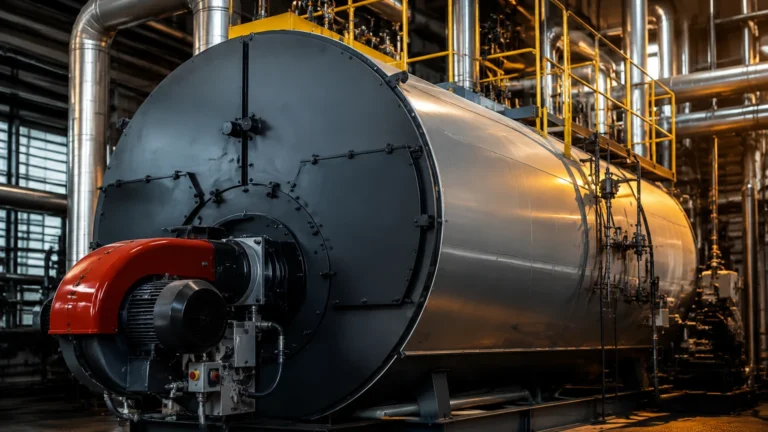
API 2350 5th Edition Tank Categories Description
API 2350 5th Edition Tank Categories Description
Overfill protection in atmospheric storage tanks is a critical safety requirement for the petroleum and chemical industries. The American Petroleum Institute (API) Standard 2350 provides the industry-standard framework for preventing tank overfills, which can lead to catastrophic environmental damage, fires, and financial loss. The 5th edition of API 2350 introduced significant refinements to how storage tanks are classified and managed. Central to this standard is the api 2350 5th edition tank categories description, which defines the level of automation and personnel attendance required during liquid receipt operations.
Understanding these categories is essential for engineers and facility managers when selecting level measurement instruments. This article examines the measurement principles used in overfill protection, details the specific requirements for each API 2350 category, and provides guidance on selecting and installing appropriate instrumentation.
Principles of Level Measurement for Overfill Protection
Before categorizing tanks, it is necessary to understand the technologies used to monitor liquid levels. Modern overfill prevention systems (OPS) rely on diverse measurement principles to ensure redundancy and reliability.
Radar Level Measurement
Radar level meters are the preferred choice for many API 2350 compliant systems. They operate on the Time-of-Flight (ToF) principle.
* Non-Contact Radar: Emits a microwave signal toward the liquid surface. The time taken for the signal to reflect back determines the distance. These are ideal for volatile liquids as they are unaffected by vapor space conditions.
* Guided Wave Radar (GWR): Uses a probe to guide the microwave signal. This is highly effective for liquids with low dielectric constants or in tanks with internal obstructions.
Ultrasonic Level Sensors
Ultrasonic sensors emit high-frequency sound pulses. Like radar, they measure the time of flight for the echo to return. While cost-effective, they are limited by temperature fluctuations, heavy foam, or vacuum conditions, which can alter the speed of sound or dissipate the signal.
Hydrostatic Pressure Transmitters
These sensors measure the pressure exerted by the liquid column at the bottom of the tank. Since pressure is proportional to the height of the liquid and its density, the level can be calculated precisely. These are reliable but require consistent liquid density to maintain accuracy.
Point Level Switches
Unlike continuous transmitters, level switches (such as tuning forks or float switches) provide a discrete signal when the liquid reaches a specific "High" or "High-High" level. In an API 2350 context, these often serve as the final independent alarm layer.
API 2350 5th Edition Tank Categories Description
The 5th edition of API 2350 classifies tanks into three distinct categories based on the level of instrumentation and the presence of personnel during the receipt of product. The goal of these categories is to manage the risk of overfill by matching the technology to the operational environment.
Category 1: Fully Attended Facilities
In a Category 1 tank system, personnel are physically present at the facility and are dedicated to monitoring the receipt of product throughout the entire operation.
* Operational Requirement: A person must be able to detect an alarm and take manual action (such as closing a valve) to stop the flow before an overfill occurs.
* Instrumentation: Requires at least one independent level alarm system (High-level alarm). The operator typically uses a local gauge or a basic level transmitter to monitor progress, but the safety of the operation relies heavily on human intervention.
* Risk Profile: This category has the highest reliance on human factors. It is generally reserved for smaller facilities or operations where flow rates are low enough to allow for manual response times.
Category 2: Semi-Attended Facilities
Category 2 tanks are located at facilities where personnel are on-site but are not exclusively dedicated to monitoring a specific tank receipt. They may be performing other duties or monitoring multiple systems from a control room.
* Operational Requirement: The system must provide both a local and a remote alarm. The remote alarm is typically transmitted to a central control room where an operator can initiate a shutdown.
* Instrumentation: Requires a continuous level measurement system and an independent high-level alarm. The 5th edition emphasizes that the alarm system must be separate from the gauging system used for inventory management to ensure redundancy.
* Risk Profile: This category balances automation with human oversight. It requires more sophisticated communication infrastructure than Category 1.
Category 3: Unattended Facilities
Category 3 represents the highest level of automation. These facilities may be completely unmanned during the receipt of product, or the receipt process may be controlled from a remote location hundreds of kilometers away.
* Operational Requirement: Because no one is on-site to intervene, these tanks must be equipped with an Automatic Overfill Prevention System (AOPS). The AOPS must be capable of terminating the receipt automatically without any human input.
* Instrumentation: Requires high-accuracy continuous level transmitters and an independent Safety Instrumented System (SIS). The level sensors used here are often SIL-rated (Safety Integrity Level) to meet rigorous reliability standards.
* Risk Profile: This category relies entirely on the integrity of the hardware and software. It is the standard for modern, high-volume terminals and remote pipeline junctions.
Selection Criteria for Level Instrumentation
Choosing the right instrument depends on the tank category and the chemical properties of the stored medium. The following table summarizes the typical requirements for each category.
| Feature | Category 1 | Category 2 | Category 3 |
| :— | :— | :— | :— |
| Personnel Presence | Constant during receipt | On-site, but mobile | Unattended/Remote |
| Primary Level Gauge | Required (Visual/Manual) | Required (Transmitter) | Required (High-Accuracy) |
| Independent Alarm | Required (High) | Required (High & High-High) | Required (AOPS Integrated) |
| Response Type | Manual Shutdown | Remote Manual Shutdown | Automatic Shutdown |
| Redundancy | Low | Medium | High (Independent Sensors) |
When evaluating hardware, engineers should consult the Main Page of reputable manufacturers to ensure the devices meet the specific environmental tolerances (temperature, pressure, and chemical compatibility) of the application.
Installation Considerations and Best Practices
Proper installation is as critical as the selection of the instrument itself. API 2350 provides guidelines on "Levels of Concern" (LOC), which must be calculated for every tank.
1. Critical High (CH): The level at which the tank overflows. This must never be reached.
2. High-High (HH) Alarm: The level at which an AOPS must trigger or a manual shutdown must be completed. The distance between HH and CH is determined by the maximum flow rate and the time required to stop the flow.
3. High (H) Alarm: A pre-alarm to warn operators that the tank is nearing capacity.
Stilling Wells and Nozzles
For radar and ultrasonic sensors, the nozzle diameter and height must be within the manufacturer’s specifications to prevent signal interference. In tanks with internal turbulence or agitators, a stilling well (a vertical pipe) is often used to provide a calm surface for measurement.
Redundancy and Diversity
For Category 3 systems, API 2350 5th edition suggests using diverse technologies for the primary gauge and the overfill alarm. For example, using a non-contact radar for continuous inventory and a tuning fork level switch for the independent high-high alarm reduces the risk of common-cause failures.

Limitations and Common Risks
Despite advanced instrumentation, several factors can compromise an overfill prevention system:
* Paraffin or Scale Buildup: In crude oil applications, buildup on sensors or inside stilling wells can cause "frozen" readings, where the sensor reports a safe level while the actual level continues to rise.
* Vapor Space Dynamics: Rapid changes in pressure or the presence of heavy steam can attenuate ultrasonic signals, leading to loss of echo.
* Human Error in Category 1 & 2: Even with functional alarms, if personnel are distracted or the alarm is not audible over ambient noise, the response time may exceed the safety margin.
* Proof Testing Gaps: API 2350 requires regular proof testing of the entire loop (sensor, logic solver, and final control element). If these tests are skipped, the probability of failure on demand (PFD) increases significantly.
Frequently Asked Questions (FAQs)
Q: Can a single sensor be used for both inventory and overfill protection?
A: According to API 2350 5th Edition, the overfill prevention system must be independent of the tank gauging system. While some advanced sensors have dual outputs, true redundancy usually requires two separate physical devices to protect against hardware failure.
Q: What is the required response time for an AOPS in Category 3?
A: The response time is not a fixed number; it must be calculated based on the "Time to Fill" from the High-High alarm level to the Critical High level at the maximum possible flow rate. The system must be able to close all valves and stop pumps within this window.
Q: Does API 2350 apply to pressurized vessels?
A: No. API 2350 specifically covers atmospheric storage tanks. Pressurized vessels (such as LPG bullets) fall under different standards, such as API 2510.
Q: Are wireless level transmitters allowed under API 2350?
A: Wireless systems are permitted, provided they meet the requirements for latency, reliability, and power management. They are more common in Category 1 and 2 facilities than in Category 3 AOPS loops.
Conclusion
Adhering to the api 2350 5th edition tank categories description is a fundamental step in modernizing tank farm safety. By correctly identifying whether a tank is Category 1, 2, or 3, facilities can implement the appropriate balance of manual oversight and automated technology. Whether utilizing high-frequency radar, robust hydrostatic transmitters, or independent level switches, the goal remains the same: ensuring that the liquid level never reaches the critical high point. For detailed technical specifications on instruments suitable for these categories, engineers should review the available technology and application support from established industrial providers.
Download API 2350 5th Edition Tank Categories Description as a PDF