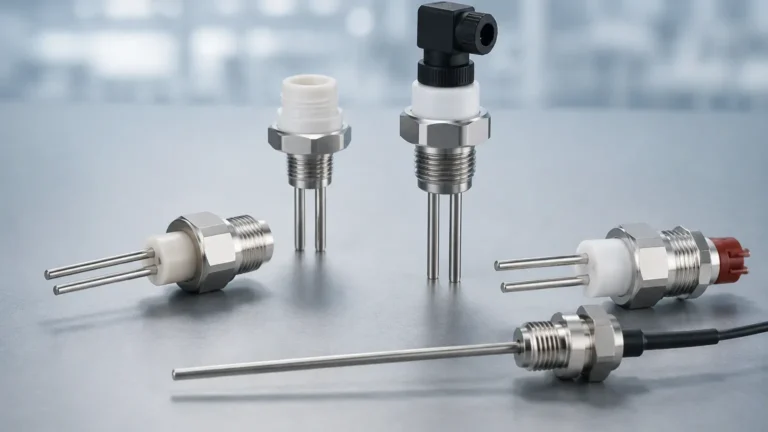
Accurate Flow Meter
Accurate Flow Meter
In the landscape of industrial automation, the requirement for an accurate flow meter is not merely a preference but a technical necessity. Whether managing water treatment facilities, chemical processing plants, or oil and gas refineries, the precision of fluid measurement directly impacts operational efficiency, safety, and profitability. For engineers and procurement specialists, selecting the right instrumentation requires a deep understanding of the physics of flow, the characteristics of the medium, and the specific environmental conditions of the installation site.
Achieving high accuracy—often defined as the proximity of a measurement to the true value of the flow rate—depends on more than just the sensor's specifications. It involves the synergy between the measurement principle, the pipe geometry, and the transmitter's ability to process signals amidst industrial noise. This guide explores the fundamental principles of flow measurement, provides selection criteria, and outlines the practical steps necessary to ensure long-term measurement integrity.
Core Measurement Principles for High-Accuracy Flow Meters
Before selecting a device, it is essential to understand the underlying physics that govern how different meters determine flow. Each technology has a specific set of conditions under which it excels.
Electromagnetic Flow Meters (Mag Meters)
Electromagnetic flow meters operate based on Faraday’s Law of Electromagnetic Induction. This principle states that a conductor moving through a magnetic field produces an electrical signal proportional to the velocity of the conductor. In this application, the conductive liquid acts as the conductor.
* The Principle: As the liquid flows through a magnetic field generated by coils in the meter body, a voltage is induced across the electrodes. The formula used is $E = B \cdot v \cdot D$, where $E$ is the induced voltage, $B$ is the magnetic field strength, $v$ is the average fluid velocity, and $D$ is the inner diameter of the pipe.
* Accuracy: High-quality mag meters can achieve accuracies of ±0.2% to ±0.5% of the flow rate.
* Requirement: The fluid must be electrically conductive, typically with a minimum conductivity of 5 μS/cm. This makes them ideal for water, wastewater, and corrosive chemicals, but unsuitable for oils or deionized water.
Ultrasonic Flow Meters (Transit-Time)
Ultrasonic technology has advanced significantly, offering non-intrusive measurement capabilities. The most accurate version for clean liquids is the transit-time method.
* The Principle: Two transducers function as both transmitters and receivers of ultrasonic signals. One is placed upstream and the other downstream. The meter measures the time difference between the signal traveling with the flow and the signal traveling against it. This time difference is directly proportional to the fluid velocity.
* Accuracy: Inline ultrasonic meters often reach ±0.5% accuracy, while clamp-on versions typically range from ±1.0% to ±2.0% depending on pipe wall conditions.
* Requirement: These meters work best in clean liquids. High concentrations of entrained air or suspended solids can scatter the ultrasonic signal, leading to measurement errors.
Coriolis Mass Flow Meters
For applications requiring the highest possible precision, Coriolis meters are the industry standard. Unlike other technologies that measure volume, Coriolis meters measure mass flow directly.
* The Principle: The meter contains one or more vibrating tubes. As fluid flows through the vibrating tube, the Coriolis force causes the tube to twist or shift in phase. The magnitude of this phase shift is directly proportional to the mass flow rate.
* Accuracy: These are the most accurate flow meters available, often achieving ±0.1% or better. They are also capable of measuring fluid density and temperature simultaneously.
* Requirement: While highly accurate, they are significantly more expensive and have higher pressure drops compared to electromagnetic or ultrasonic meters.
Vortex Shedding Flow Meters
Vortex meters are robust instruments used primarily for steam, gases, and low-viscosity liquids.
* The Principle: Based on the Von Kármán effect, a "bluff body" is placed in the flow stream. As fluid passes this body, vortices are shed alternately on each side. The frequency of these vortices is proportional to the fluid velocity.
* Accuracy: Typically ±1.0% for liquids and ±1.5% for steam and gases.
* Requirement: They require a minimum Reynolds number to function correctly and are sensitive to pipe vibrations.
The Relationship Between Level Measurement and Flow Accuracy
In many industrial scenarios, particularly in water treatment and environmental monitoring, flow is measured in open channels rather than closed pipes. In these cases, an accurate flow meter system actually relies on high-precision level measurement. By using a hydrostatic level transmitter or an ultrasonic level sensor in conjunction with a primary device like a Parshall flume or a weir, the flow rate can be calculated based on the height of the liquid.
Welk provides a comprehensive range of level measurement instruments that serve as the backbone for these open-channel flow systems. For instance, an ultrasonic level sensor mounted above a flume provides a non-contact method to determine the head height, which is then converted into a flow rate via the transmitter's internal algorithms. For more information on the full suite of measurement technologies available, you may visit the Main Page.
Technical Selection Table: Comparing Technologies
Choosing the right meter requires balancing accuracy requirements with fluid properties and budget constraints. The following table provides a generalized comparison of common industrial flow technologies.
| Technology | Typical Accuracy | Fluid Type | Moving Parts | Pressure Drop | Typical Application |
| :— | :— | :— | :— | :— | :— |
| Coriolis | ±0.1% | Liquids, Gases | No | Medium/High | Custody transfer, Chemicals |
| Electromagnetic | ±0.2% – ±0.5% | Conductive Liquids | No | Negligible | Water, Acids, Slurries |
| Ultrasonic | ±0.5% – ±1.0% | Clean Liquids | No | None | Large diameter water pipes |
| Vortex | ±1.0% – ±1.5% | Steam, Gas, Liquid | No | Low/Medium | Steam boiler monitoring |
| Turbine | ±0.25% – ±0.5% | Clean, Low Viscosity | Yes | Medium | Fuel oil, Solvents |
| Differential Pressure| ±1.0% – ±2.0% | Liquid, Gas, Steam | No | High | General industrial utility |
Critical Installation Guidelines for Maintaining Accuracy
An accurate flow meter can only perform to its rated specifications if installed correctly. Improper installation is the most common cause of measurement error in the field.
1. Straight Pipe Requirements
Most flow meters require a fully developed flow profile to measure accurately. Turbulence caused by elbows, valves, or pumps can distort the velocity profile. Engineers should typically allow for:
* Upstream: 10 to 20 pipe diameters (10D – 20D) of straight, unobstructed pipe.
* Downstream: 5 pipe diameters (5D) of straight pipe.
If these distances cannot be met, the use of flow conditioners or choosing a meter less sensitive to profile disturbances (like certain multi-path ultrasonic meters) is necessary.
2. Orientation and Filling
The meter must always be completely full of liquid. For horizontal installations, the electrodes of a mag meter should be in the horizontal plane to prevent interference from air bubbles at the top or sediment at the bottom. For vertical installations, the flow should always be upward to ensure the pipe remains full.
3. Grounding and Interference
Electromagnetic flow meters are sensitive to stray electrical currents in the fluid or the piping system. Proper grounding to the fluid is mandatory, especially in plastic or lined pipes, to ensure the small millivolt signals generated by the flow are not lost in electrical noise.
4. Environmental Factors
Temperature fluctuations can cause pipe expansion or changes in fluid viscosity. In high-precision applications, temperature compensation must be integrated into the flow calculation to maintain the status of an accurate flow meter.

Limitations and Common Sources of Error
Even the most advanced flow meters have limitations that can degrade accuracy if not addressed during the engineering phase.
* Viscosity: Technologies like Vortex and Turbine meters are highly sensitive to viscosity changes. As viscosity increases, the Reynolds number drops, which can lead to non-linearities in the meter’s output.
* Aeration: Entrained air is the enemy of accuracy in liquid flow measurement. In mag meters, air bubbles are measured as liquid, leading to over-reading. In ultrasonic meters, air can block the signal entirely.
* Scaling and Coating: In chemical or wastewater applications, the buildup of scale or fats on the electrodes or pipe walls can change the effective diameter of the meter or insulate the sensors, leading to significant drift over time.
* Low Flow Cut-off: Every meter has a minimum velocity below which it cannot measure accurately. Operating a meter near the bottom of its range (low turndown) significantly increases the percentage of error relative to the reading.
Frequently Asked Questions (FAQs)
Q: What is the difference between accuracy and repeatability?
A: Accuracy refers to how close the measurement is to the true value. Repeatability (or precision) refers to the meter's ability to produce the same result under the same conditions consistently. A meter can be highly repeatable but inaccurate if it is not calibrated correctly.
Q: How often should an accurate flow meter be calibrated?
A: This depends on the criticality of the process and the fluid type. For custody transfer, annual calibration is standard. For general process water, every 2 to 3 years may suffice. Many modern meters offer "self-verification" diagnostics that can extend calibration intervals.
Q: Can I use a mag meter for oil-based fluids?
A: No. Magnetic flow meters require a conductive medium. Oils are non-conductive, so the meter will not produce a signal. For oils, a Coriolis, Ultrasonic, or Turbine meter is a better choice.
Q: Does pipe material affect ultrasonic flow meters?
A: Yes, especially for clamp-on types. The sound must travel through the pipe wall. Materials like lined ductile iron or heavily corroded carbon steel can attenuate the signal, making measurement difficult.
Conclusion
Selecting an accurate flow meter is a multi-faceted decision that requires evaluating the physical properties of the fluid, the hydraulic conditions of the piping system, and the long-term maintenance capabilities of the facility. By understanding the measurement principles—from electromagnetic induction to Coriolis forces—and adhering to strict installation standards, industrial operators can ensure reliable data for their most critical processes.
Welk continues to support global industries with robust measurement solutions, including radar and ultrasonic level sensors that complement flow systems in complex automation environments. For detailed product specifications and application support, please refer to our Main Page.