Automatic Samplers Bulk Solids
Automatic Samplers Bulk Solids
In industrial process engineering, the accuracy of quality control is only as reliable as the samples provided for analysis. For industries handling large volumes of dry materials—such as mining, cement, chemicals, and food processing—manual sampling is often inconsistent and hazardous. The implementation of automatic samplers bulk solids ensures that representative samples are collected without interrupting the production flow, providing the data necessary for process optimization and regulatory compliance.
This guide explores the engineering principles behind bulk solids sampling, the different mechanical configurations available, and how these systems integrate with broader process automation and level measurement technologies.
Principles of Representative Sampling
Before selecting equipment, it is essential to understand the "Theory of Sampling" (TOS). In bulk solids, materials are rarely homogeneous. Particle size distribution (PSD), moisture content, and chemical composition can vary across the cross-section of a conveyor belt or down the length of a gravity chute.
Representative sampling requires that every particle in the lot has an equal probability of being included in the sample. Automatic samplers bulk solids achieve this by taking "increments"—small portions of the material stream—at defined intervals.
Key Sampling Errors to Avoid
1. Increment Delimitation Error: Occurs when the sampling device does not correctly define the boundaries of the material it is supposed to collect (e.g., a cutter that does not cross the entire stream).
2. Increment Extraction Error: Occurs when the device fails to physically capture the material within those boundaries (e.g., material bouncing out of the sample bucket).
3. Segregation: Bulk solids naturally segregate by size, with fines often settling at the bottom or center of a flow. Point samplers that only reach the edge of a stream will produce biased results.
Types of Automatic Samplers for Bulk Solids
Different process environments—gravity flow, belt conveyors, or pneumatic lines—require specific mechanical designs to ensure accuracy.
1. Cross-Cut Samplers
Often considered the gold standard for representative sampling, cross-cut samplers move a hollow cutter through a falling stream of material.
- Mechanism: The cutter travels at a constant speed across the entire width of the flow, capturing a complete cross-section.
- Application: Best used at the discharge point of conveyor belts or within vertical gravity chutes.
- Requirement: The cutter opening must be at least three times the diameter of the largest particle to prevent bridging.
2. Auger (Screw) Samplers
These devices use a rotating screw to extract material from a hopper or a slow-moving stream.
- Mechanism: An auger housed in a tube extends into the material. As it rotates, it pulls a fixed volume of solids back into a collection container.
- Application: Ideal for non-abrasive powders and small granules in hoppers or bins.
- Limitation: Not suitable for fragile materials, as the screw can cause particle degradation.
3. Point Samplers (Probe Samplers)
Point samplers use a retractable probe or tube to collect material from a specific location within the stream.
- Mechanism: A tube with an opening is inserted into the flow; the opening is then closed, and the probe is retracted.
- Application: Useful for pneumatic conveying lines or pressurized systems where a full cross-cut is mechanically impossible.
- Limitation: They do not sample the entire cross-section, meaning they are less effective if the material is highly segregated.
4. Swing-Arm (Vezin) Samplers
Specifically designed for vertical gravity-flow pipes.
- Mechanism: A rotating cutter moves in a circular path through the falling material stream.
- Application: High-capacity systems where space for a linear cross-cut sampler is limited.
Selection Criteria and Technical Specifications
Choosing the right equipment depends on the physical properties of the bulk solid and the mechanical constraints of the plant. Engineers should use the following table as a baseline for evaluation:
| Sampler Type | Particle Size Limit | Typical Flow Rate | Material Suitability | Maintenance Level |
| :— | :— | :— | :— | :— |
| Cross-Cut | Up to 150 mm | High (>500 t/h) | Abrasive, coarse, or fine | Moderate |
| Auger | < 10 mm | Low to Medium | Non-abrasive powders | High (seal wear) |
| Point Probe | < 20 mm | Medium | Fine granules, pressurized | Low |
| Swing-Arm | < 50 mm | High | Dry, free-flowing solids | Moderate |
Material Properties to Consider
- Abrasiveness: Highly abrasive materials like iron ore or silica sand require samplers with hardened steel or ceramic liners.
- Moisture Content: Sticky or cohesive materials can clog cutters and augers. In these cases, vibratory aids or non-stick coatings (like PTFE) are necessary.
- Friability: If the integrity of the particle is important for analysis (e.g., catalyst pellets), mechanical shear from augers must be avoided.
Integration with Level Measurement Systems
In modern industrial automation, automatic samplers bulk solids do not operate in isolation. They are frequently integrated with level measurement instruments to optimize the sampling frequency and ensure system safety.
Professional manufacturers like Welk provide the necessary instrumentation to monitor the vessels where sampling occurs. For instance, a radar level meter or ultrasonic sensor can monitor the head of material in a hopper. If the level is too low, the automated system can pause the sampler to prevent it from cycling through empty air, which reduces mechanical wear and prevents the collection of unrepresentative "dust-only" samples.
Furthermore, hydrostatic level transmitters or magnetic level gauges used in associated liquid or slurry processes can be linked to a central PLC (Programmable Logic Controller) to synchronize sampling across different stages of production. For comprehensive process control, engineers often Review product options and application support to find the right balance between level monitoring and material extraction.
Installation and Engineering Considerations
Proper installation is critical to the longevity of the sampler and the accuracy of the data.
1. Headroom and Space
Cross-cut samplers require significant vertical space (headroom) to allow the cutter to pass through the stream and discharge the sample via gravity. If space is restricted, engineers may need to opt for a point sampler or a low-profile swing-arm design.
2. Sample Transport
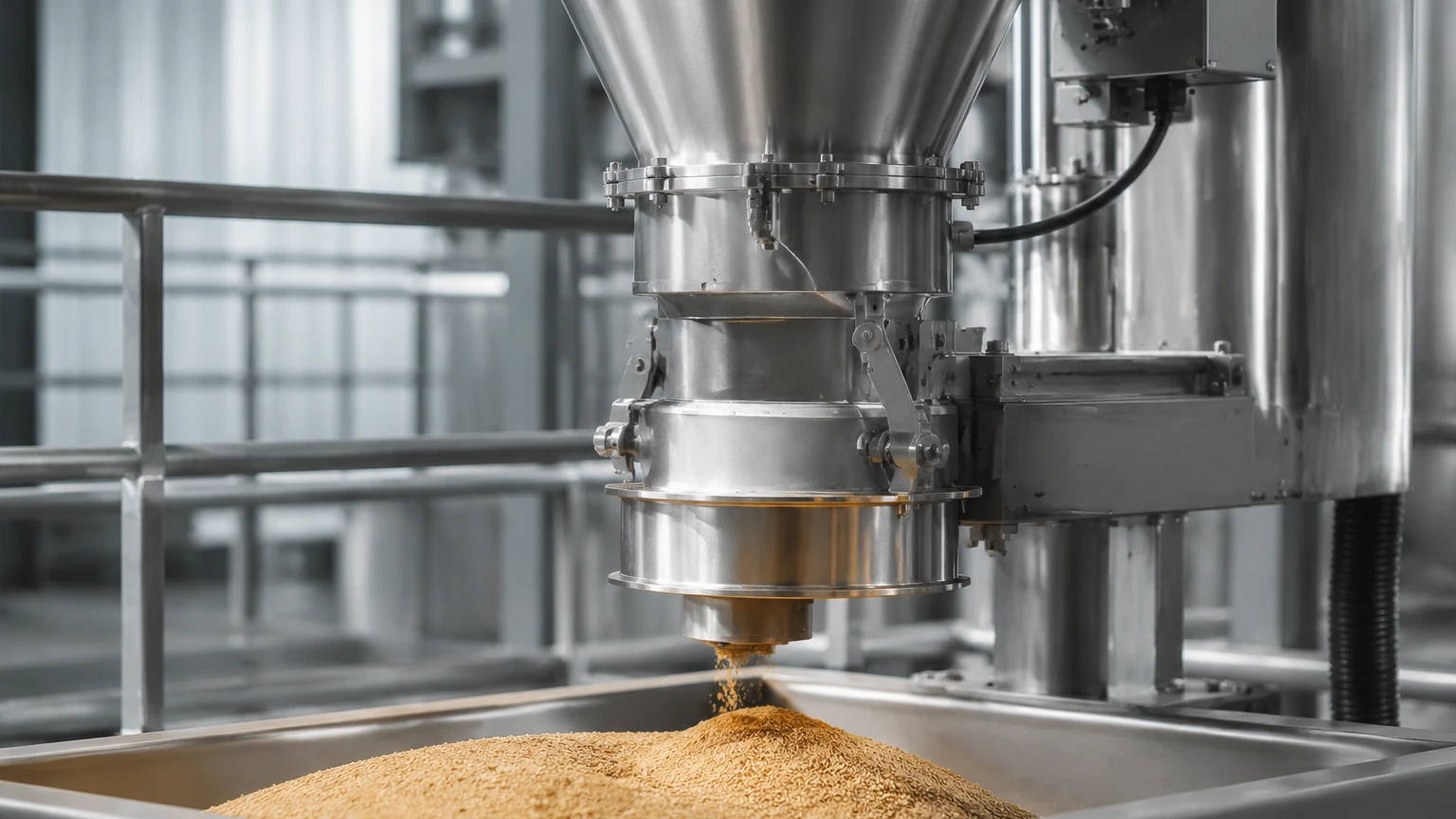
Once the sample is collected, it must be transported to the laboratory or a collection bin. For automatic samplers bulk solids, this is often done via:
- Gravity: The simplest and most reliable method, provided there is enough height.
- Pneumatic Transport: Using air to move small samples over long distances. This requires careful filtration to ensure fines are not lost.
3. Structural Support
Bulk solids samplers, especially those handling high-tonnage flows, are heavy and subject to vibration. The mounting flange and surrounding chutes must be reinforced to prevent structural fatigue.
4. ATEX and Hazardous Areas
Many bulk solids (such as flour, coal, or sugar) create explosive dust environments. Samplers must be equipped with ATEX-certified motors, non-sparking materials, and proper grounding to meet safety standards.
Limitations and Common Risks
While automatic samplers bulk solids significantly improve data quality, they are not without challenges:
- Cross-Contamination: If the sampler is not self-cleaning, residue from a previous batch can contaminate the current sample. This is particularly critical in the pharmaceutical and food industries.
- Sample Degradation: Rapid mechanical movement can break down fragile particles, leading to an inaccurate particle size distribution (PSD) analysis.
- Maintenance Neglect: Because samplers are often installed in hard-to-reach locations (like the top of a silo), seals and cutters may wear out unnoticed, leading to biased samples or mechanical failure.
Frequently Asked Questions (FAQs)
Q: How often should an automatic sampler be calibrated?
A: While the mechanical movement is fixed, the "sampling logic" should be audited annually. This involves performing a manual "stop-belt" test to compare the automatic sample against a hand-collected reference to ensure no bias has developed due to wear.
Q: Can these samplers handle hot materials?
A: Yes. Specialized samplers are available for materials up to 500°C (e.g., cement clinker). These require high-temperature seals and often use water-cooled jackets or heat-resistant alloys.
Q: What is the minimum sample size required?
A: The sample size is determined by the material's top size and the desired statistical confidence level. Generally, the more heterogeneous the material, the larger the required sample volume.
Q: How do I prevent moisture from affecting the sample?
A: For hygroscopic materials, the sampling system should be sealed and potentially purged with dry air or nitrogen to prevent the material from clumping or absorbing atmospheric moisture during transport.
Conclusion
Implementing automatic samplers bulk solids is a strategic investment in process transparency. By moving away from manual, intermittent sampling toward automated, representative extraction, facilities can reduce waste, ensure product consistency, and protect their personnel. When combined with reliable level measurement from providers like Welk, these systems form the backbone of a truly automated and optimized industrial process. For more information on integrating these technologies into your facility, visit the Main Page to explore technical specifications and support for industrial instrumentation.