Electric Pressure Is Measured in
Electric Pressure Is Measured in
In the realm of industrial automation and process control, the term "electric pressure" is frequently used as a conceptual bridge to describe voltage. For engineers and technicians managing complex systems—such as those involving industrial level measurement—understanding that electric pressure is measured in volts (V) is fundamental to ensuring system reliability, accuracy, and safety. While physical pressure refers to the force exerted by a fluid per unit area, electric pressure represents the potential difference that drives electrical current through a circuit.
For a manufacturer like Welk, which specializes in advanced level measurement instruments including radar, ultrasonic, and hydrostatic sensors, the interplay between physical forces and electrical signals is the cornerstone of technology development. This article explores the principles of voltage, its measurement, and its critical role in the deployment of industrial level sensing solutions.
The Fundamental Unit: Volts and Potential Difference
Electric pressure is measured in volts, a unit named after the Italian physicist Alessandro Volta. In technical terms, one volt is defined as the electric potential difference between two points of a conducting wire when an electric current of one ampere dissipates one watt of power between those points.
To visualize this, many engineers use the hydraulic analogy. In a water system, pressure is the force that pushes water through pipes; the higher the pressure, the more water can flow. Similarly, in an electrical circuit, voltage is the "pressure" that pushes electrons through a conductor. Without this potential difference, no current would flow, and electronic instruments would remain inactive.
Measurement Principles
Voltage is always measured between two points. In industrial environments, this is typically done using a digital multimeter or integrated into the control system's input modules. There are two primary types of voltage encountered in level measurement applications:
1. Direct Current (DC) Voltage: Most modern level sensors, such as radar level meters and ultrasonic transmitters, operate on 24V DC. This is favored for its safety and compatibility with Programmable Logic Controllers (PLCs).
2. Alternating Current (AC) Voltage: While less common for individual sensors, AC voltage (typically 110V or 230V) may be used to power larger control panels or older legacy systems.
How Electric Pressure Influences Industrial Level Measurement
In industrial level measurement, the electrical characteristics of a device are just as important as its sensing technology. Whether a facility is using a Main Page to review radar options or selecting a simple float switch, the electrical interface determines how the data reaches the control room.
Power Supply and Loop-Powered Sensors
Most industrial level transmitters are "loop-powered." This means the device receives its power and transmits its signal over the same two wires. In a standard 4-20mA current loop, the "electric pressure" (voltage) supplied by the power source must be sufficient to overcome the total resistance of the loop, including the sensor's internal resistance and the resistance of the cabling. If the voltage is too low, the sensor may fail to start or provide erratic readings.
Signal Transmission
While 4-20mA is the industry standard because of its immunity to electrical noise, some applications still use voltage-based signals (e.g., 0-5V or 0-10V). In these cases, the accuracy of the level measurement is directly tied to the precision of the voltage output. Any drop in voltage over long cable runs can lead to measurement errors, which is why current loops are generally preferred for distances exceeding a few meters.
Hydrostatic Level Transmitters: Converting Physical Pressure to Electrical Signals
Hydrostatic level measurement provides the most direct link between physical pressure and electric pressure. These instruments measure the pressure exerted by a liquid column at a specific depth.
The Conversion Process
1. Physical Input: The sensor diaphragm detects the hydrostatic pressure (measured in bar or pascals). For example, a water column of 10 meters exerts approximately 1 bar of pressure.
2. Transduction: A piezoresistive or capacitive element converts this mechanical force into a change in electrical resistance or capacitance.
3. Signal Conditioning: The internal electronics of the Welk hydrostatic transmitter convert this change into a standardized electrical signal.
4. Electrical Output: The result is an output where the electric pressure is measured in a calibrated range (like 1V to 5V) or, more commonly, a current signal that represents the level height.
This technology is highly effective for water treatment and chemical storage tanks where the density of the liquid remains relatively constant.
Selection Guide: Electrical Specifications for Level Instruments
When selecting a level meter, engineers must look beyond the measurement range and material compatibility. The electrical specifications are vital for integration. The following table outlines typical electrical requirements for various level technologies offered by manufacturers like Welk.
| Technology | Typical Power Supply | Output Signal | Connection Type |
| :— | :— | :— | :— |
| Radar Level Meter | 24V DC (18-36V) | 4-20mA / HART / RS485 | 2-wire or 4-wire |
| Ultrasonic Sensor | 24V DC | 4-20mA / 0-10V | 2-wire or 3-wire |
| Hydrostatic Transmitter | 12-36V DC | 4-20mA | 2-wire (Loop) |
| Magnetic Level Gauge | N/A (Mechanical) | Optional 4-20mA Reed Chain | 2-wire |
| Level Switch | 24V DC / 220V AC | Relay / PNP / NPN | Multi-wire |
Considerations for Hazardous Areas
In environments with explosive gases or dust (oil and gas, chemical processing), the "electric pressure" must be strictly controlled. Intrinsically safe (IS) barriers are used to limit the voltage and current entering the hazardous zone, preventing any electrical spark from having enough energy to cause an ignition.
Installation and Wiring Best Practices for Accurate Measurement
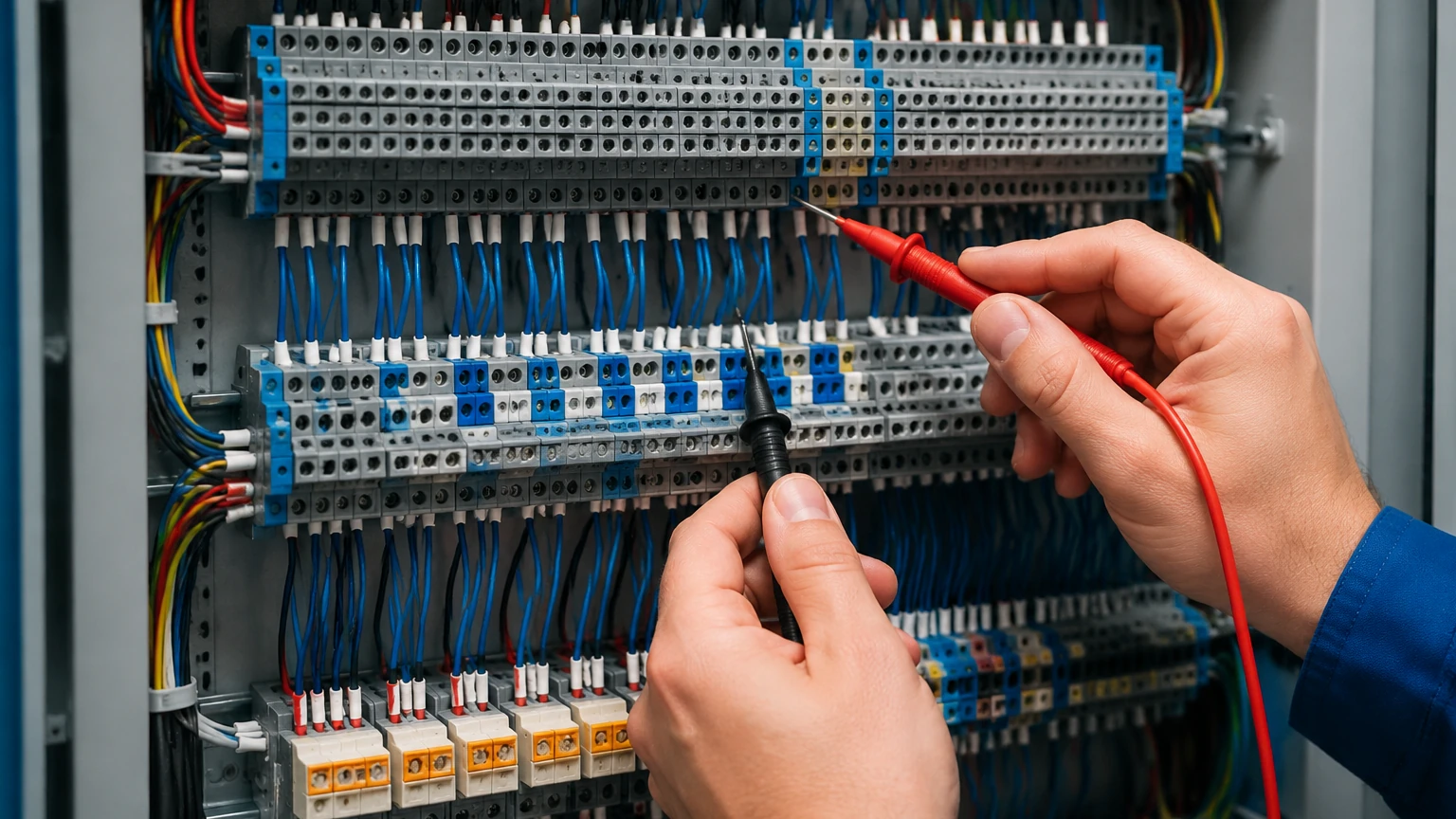
Even the most advanced radar or ultrasonic level meter will perform poorly if the electrical installation is flawed. Since electric pressure is measured in volts and current is measured in amperes, maintaining the integrity of these values is paramount.
Cable Selection and Shielding
To prevent electromagnetic interference (EMI) from variable frequency drives (VFDs) or high-voltage power lines, shielded twisted-pair cables should be used. The shield should be grounded at only one end (typically the control cabinet side) to avoid ground loops, which can introduce parasitic voltage into the measurement signal.
Voltage Drop Calculations
For long-distance installations, especially with 24V DC systems, it is essential to calculate the voltage drop. If the cable is too thin or the distance too great, the voltage reaching the sensor might fall below its minimum operating threshold.
* Formula: $V_{drop} = I \times R$
* Where $I$ is the maximum current (usually 0.02A) and $R$ is the total resistance of the wire.
Proper Grounding
Ensuring a common reference point for voltage is critical. Inconsistent grounding can lead to "floating" voltages, which cause level readings to drift or fluctuate unpredictably. This is particularly important for ultrasonic sensors, which are sensitive to electrical noise.
Common Challenges and Limitations in Electrical Signal Transmission
While measuring electric pressure in volts is straightforward in a laboratory, the industrial field presents several challenges:
* Transient Surges: Lightning strikes or heavy machinery switching can cause voltage spikes. Welk instruments often include built-in surge protection, but external lightning arrestors are recommended for outdoor installations.
* Temperature Effects: Extreme temperatures can affect the resistance of copper wiring and the performance of electronic components. High-quality level meters are temperature-compensated to ensure that the electrical output remains accurate from -40°C to +80°C.
* Signal Attenuation: In digital communication protocols like Modbus or Profibus, signal degradation can occur over long distances. In these cases, voltage levels must be maintained using repeaters or by switching to fiber-optic conversion.
Frequently Asked Questions
Q: Why is 24V DC the standard for level sensors?
A: 24V DC is considered a "Safety Extra-Low Voltage" (SELV). It is high enough to power complex electronics and drive signals over moderate distances, yet low enough to minimize the risk of electric shock and simplify regulatory compliance.
Q: Can I use a 12V power supply for a 24V rated radar level meter?
A: Generally, no. Most industrial radar meters require a minimum of 18V to 20V to function. Under-powering the device can lead to internal processor resets or failure to fire the microwave pulse.
Q: What is the difference between a 2-wire and 4-wire transmitter?
A: A 2-wire transmitter uses the same two wires for power and signal (4-20mA loop). A 4-wire transmitter has two dedicated wires for power (often AC or high-wattage DC) and two separate wires for the output signal. 4-wire systems are used when the sensor requires more power than a 4-20mA loop can provide.
Q: How does humidity affect electrical measurements in tanks?
A: High humidity can lead to condensation inside terminal housings if they are not properly sealed (IP67/IP68). This moisture can create high-resistance shorts, effectively bleeding off "electric pressure" and causing false level readings.
Conclusion
In the context of industrial automation, understanding that electric pressure is measured in volts is more than a physics lesson—it is a practical requirement for system design. From the precise voltage regulation required by a radar level meter to the conversion of physical force in a hydrostatic transmitter, electrical parameters dictate the success of level measurement applications. By adhering to proper wiring standards, calculating voltage requirements, and selecting the appropriate instrument for the electrical environment, engineers can ensure long-term accuracy and safety in their operations.