Co2 Metering
Co2 Metering
In modern industrial processes, carbon dioxide (CO2) is a critical utility used in applications ranging from food and beverage carbonation and pH control in water treatment to enhanced oil recovery and carbon capture and storage (CCS). Effective co2 metering, specifically the measurement of liquid CO2 levels in pressurized storage vessels, is essential for inventory management, process safety, and operational efficiency. Because CO2 is typically stored as a liquefied gas under high pressure and low temperature, it presents unique challenges for standard level instrumentation.
Accurate measurement requires a deep understanding of the physical properties of CO2, including its low dielectric constant, density fluctuations relative to temperature, and the behavior of the gas-liquid interface near the critical point. This guide examines the primary technologies used for CO2 level measurement, providing engineering insights into selection, installation, and maintenance.
The Role of Level Measurement in Industrial CO2 Metering
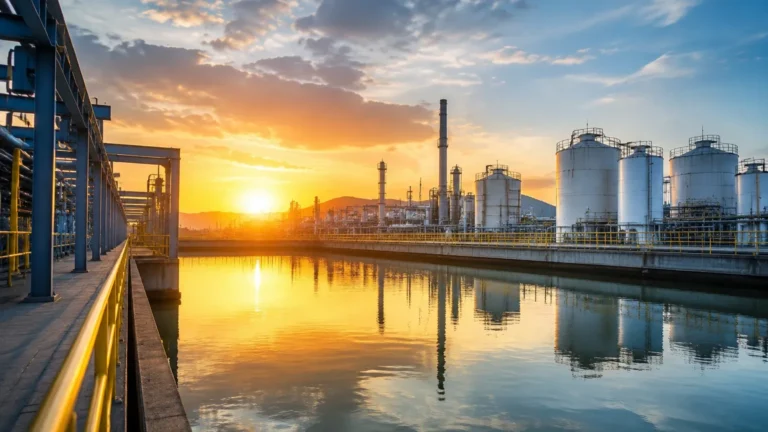
While flow metering tracks the movement of CO2 through pipelines, level measurement provides the definitive "source of truth" for bulk storage. Industrial CO2 is usually stored in vacuum-insulated tanks or high-pressure vessels at pressures typically ranging from 15 to 25 bar (217 to 362 psi) and temperatures between -20°C and -30°C.
Reliable level monitoring ensures that facilities never run out of stock during peak production and prevents the overfilling of tanks, which could lead to dangerous pressure spikes. Furthermore, in B2B transactions where CO2 is delivered by cryogenic tankers, accurate level data is necessary to verify delivery volumes and reconcile billing. For comprehensive instrumentation options, engineers often consult the Main Page of specialized manufacturers to compare sensor specifications against vessel requirements.
Measurement Principles for Liquefied CO2
To select the correct instrument, one must first understand how different physical principles interact with the properties of CO2. Unlike water, liquid CO2 has a low dielectric constant (εr ≈ 1.6), which affects electromagnetic signals. Additionally, its density is highly sensitive to temperature changes, which can introduce errors in pressure-based systems.
Radar (Time-of-Flight)
Radar level meters operate on the Time-of-Flight (ToF) principle. The sensor emits a high-frequency electromagnetic pulse that travels to the liquid surface and reflects back. The distance is calculated based on the time elapsed. Because radar relies on electromagnetic waves, it is largely unaffected by the pressure and temperature of the CO2 vapor space.
Hydrostatic Pressure
This method measures the head pressure exerted by the liquid column. According to the formula $P = \rho gh$ (where $P$ is pressure, $\rho$ is density, $g$ is gravity, and $h$ is height), the level can be inferred if the density of the liquid is known. In CO2 applications, differential pressure (DP) transmitters are used to compensate for the high-pressure gas blanket above the liquid.
Magnetic Buoyancy
Magnetic level gauges utilize a float containing a magnet assembly. As the liquid level changes, the float moves a series of external magnetic flaps or a transmitter. This provides a clear visual indication and a secondary electronic signal without the need for the instrument to be in direct contact with the process fluid through a sight glass.
Radar Level Technology for CO2 Storage
Radar technology, particularly non-contacting 80 GHz high-frequency radar, has become the industry standard for co2 metering in storage tanks. The high frequency allows for a narrow beam angle, which is advantageous in the narrow, tall tanks often used for CO2 storage, as it minimizes interference from internal structures or tank walls.
One of the primary challenges for radar in CO2 applications is the low reflectivity of the liquid surface. With a dielectric constant of approximately 1.6, liquid CO2 reflects only a small portion of the radar signal. Modern radar sensors from manufacturers like Welk utilize advanced signal processing and high-sensitivity electronics to detect these weak echoes reliably.
Advantages of Radar for CO2:
* Non-Contact: The sensor does not touch the liquid, reducing the risk of leaks and mechanical wear.
* Pressure Resistance: Radar antennas can be sealed with PTFE or ceramics to withstand high process pressures.
* Accuracy: Provides millimeter-level precision, which is critical for high-value inventory.
Hydrostatic and Differential Pressure Methods
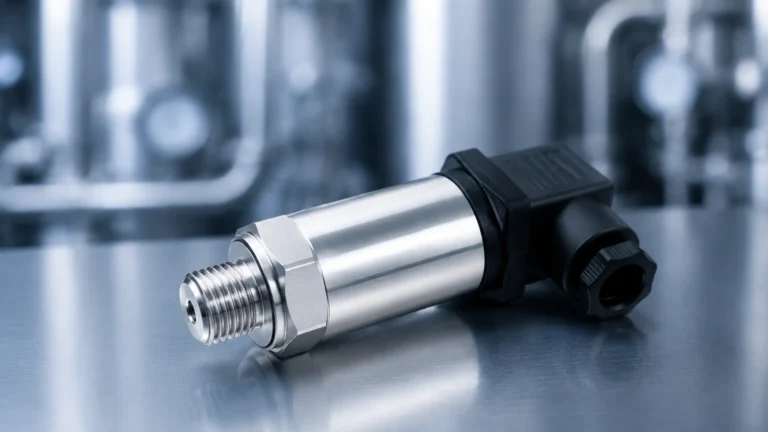
Hydrostatic measurement remains a common choice due to its robustness and lower initial cost. However, for CO2, a standard pressure gauge is insufficient. A differential pressure (DP) setup is required. One capillary or impulse line connects to the bottom of the tank (liquid + gas pressure) and the other to the top (gas pressure only). The transmitter subtracts the gas pressure to find the pressure of the liquid column.
The Density Challenge:
The density of liquid CO2 changes significantly with temperature. For example, at -20°C, the density is approximately 1032 kg/m³, but at 0°C, it drops to roughly 927 kg/m³. If the DP transmitter is calibrated for a fixed density, a 20-degree temperature shift can result in a measurement error of over 10%. To achieve accurate co2 metering with DP cells, integrated temperature compensation is mandatory.
Selection Criteria and Technical Comparison
Choosing the right technology depends on the tank geometry, the required accuracy, and the budget. The following table provides a comparison of the most common technologies used in CO2 level monitoring.
| Feature | Radar (Non-contact) | Guided Wave Radar (GWR) | Differential Pressure | Magnetic Level Gauge |
| :— | :— | :— | :— | :— |
| Accuracy | High (±2mm) | High (±2mm) | Moderate (Density dependent) | Moderate |
| Installation | Top-mounted | Top-mounted | Side/Bottom-mounted | Side-mounted |
| Maintenance | Very Low | Low | Moderate | Low |
| Dielectric Sensitivity | High | Moderate | None | None |
| Pressure Rating | Up to 160 bar | Up to 400 bar | Up to 400 bar | Up to 250 bar |
| Cost | High | Moderate | Low to Moderate | Moderate |
For systems requiring SIL2 safety ratings or custody transfer accuracy, radar is typically the preferred choice. For simple industrial storage where ±2-5% accuracy is acceptable, differential pressure remains a viable solution.
Installation Considerations and Safety Protocols
Proper installation is paramount when dealing with pressurized CO2. Because CO2 is an asphyxiant and can exist at very low temperatures, all instrumentation must meet specific safety and material standards.
1. Nozzle Positioning: For radar sensors, the nozzle should be located away from the tank wall and the inlet pipe to avoid signal interference and turbulence.
2. Material Compatibility: Use stainless steel (316L) for all wetted parts. Seals should be made of materials like PTFE or specialized elastomers that do not undergo explosive decompression when the system is depressurized.
3. Insulation: Storage tanks are usually vacuum-insulated. Ensure that the instrument mounting does not create a significant thermal bridge that could lead to ice buildup or excessive boil-off gas (BOG).
4. Isolation Valves: Always install high-quality isolation valves between the tank and the sensor (especially for DP and Magnetic gauges) to allow for maintenance without emptying the vessel.
Limitations and Maintenance of CO2 Level Systems
While modern level meters are highly reliable, there are specific limitations to consider in co2 metering applications:
* The Critical Point: As CO2 approaches its critical point (31.1°C and 73.8 bar), the density of the liquid and gas phases become identical, and the meniscus (interface) disappears. In this state, level measurement based on an interface (radar or buoyancy) becomes impossible.
* Gas Phase Attenuation: At very high pressures, the dense CO2 gas in the vapor space can slightly slow down radar signals. This "gas phase compensation" can be programmed into high-end radar units to maintain accuracy.
* Maintenance: For hydrostatic systems, impulse lines should be checked for blockages or leaks. For radar, the antenna should be inspected periodically for any heavy frost or debris buildup, although 80 GHz units are generally resistant to light condensation.
Frequently Asked Questions
Q: Can ultrasonic sensors be used for CO2 level measurement?
A: Generally, no. Ultrasonic waves travel through the air/gas space. In a CO2 tank, the gas composition and pressure vary significantly, which changes the speed of sound and leads to massive errors. Furthermore, high-pressure CO2 gas can absorb ultrasonic energy, causing signal loss.
Q: How often should CO2 level meters be calibrated?
A: For inventory purposes, an annual calibration check is standard. If the meter is used for custody transfer (buying/selling CO2), more frequent verification may be required by local weights and measures regulations.
Q: Is guided wave radar better than non-contact radar for CO2?
A: Guided wave radar (GWR) is excellent because the probe concentrates the signal, making it better at detecting low-dielectric liquids like CO2. However, GWR is a contacting technology. If the tank has internal agitators or if there is a risk of the probe bending, non-contact radar is safer.
Q: What happens if the CO2 freezes into dry ice?
A: If the pressure drops below the triple point (5.18 bar), CO2 can turn into solid dry ice. Level meters are not designed to measure solids in this context and will likely provide an error signal. Maintaining tank pressure above the triple point is a critical process requirement.
For engineers seeking to optimize their storage systems, selecting a partner like Welk ensures access to a wide range of industrial level measurement instruments tailored for the demanding conditions of CO2 storage. Whether you require the precision of radar or the reliability of magnetic gauges, understanding these technical boundaries is the first step toward effective inventory control. To explore specific product data sheets and application notes, visit the Main Page for detailed technical support.