Htturb
Htturb
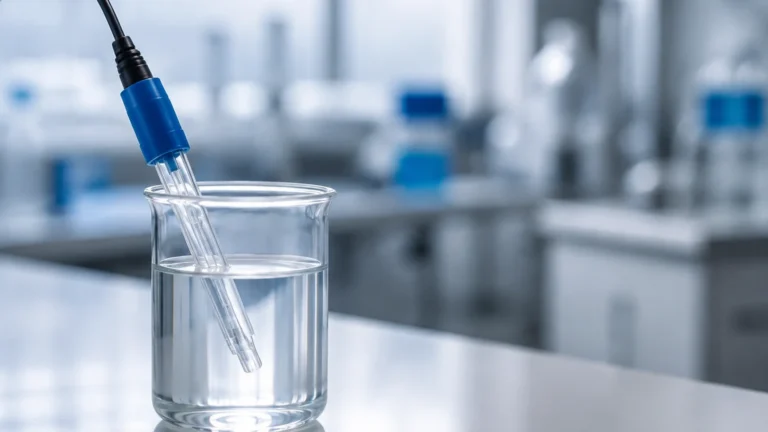
In the field of industrial process control, the accurate measurement of liquid levels is fundamental to operational safety and efficiency. The term htturb refers to a specialized category of hydrostatic level transmitters designed to provide continuous level monitoring in tanks, wells, and open water bodies. These instruments leverage the relationship between the height of a liquid column and the pressure exerted at its base, offering a robust alternative to non-contact methods in specific environmental conditions.
Selecting the correct htturb configuration requires a deep understanding of fluid dynamics, material compatibility, and electrical integration. This guide provides a technical overview of hydrostatic measurement principles, selection criteria, and installation requirements for engineering professionals.
Understanding the Measurement Principle of Htturb Systems
The operation of an htturb transmitter is based on the hydrostatic paradox: the pressure at a specific depth within a static liquid is directly proportional to the height of the liquid column above it, regardless of the vessel's shape. This is mathematically expressed by the formula:
P = ρ × g × h
Where:
* P is the hydrostatic pressure (Pascal).
* ρ (rho) is the density of the liquid (kg/m³).
* g is the acceleration due to gravity (approximately 9.81 m/s²).
* h is the height of the liquid column (meters).
An htturb sensor typically utilizes a piezoresistive or ceramic pressure cell. When submerged or mounted at the bottom of a tank, the liquid exerts pressure on a flexible diaphragm. This pressure is transmitted to a sensing element, which converts the mechanical displacement into an electrical signal.
Because atmospheric pressure acts on both the surface of the liquid and the internal reference side of the sensor (via a vented cable), the atmospheric pressure is cancelled out. This allows the instrument to measure only the "gauge pressure" exerted by the liquid height. For precise results, users must ensure that the density (ρ) of the medium remains constant, as variations in temperature or concentration can alter the density and, consequently, the level reading.
Key Technical Specifications and Evaluation Criteria
When evaluating htturb instruments for a project, several technical parameters must be analyzed to ensure long-term reliability. These devices are not "one-size-fits-all" and must be matched to the specific chemical and physical properties of the process media.
1. Accuracy and Stability
Standard industrial htturb sensors offer accuracy ranges from ±0.5% FS (Full Scale) to ±0.1% FS in high-precision models. Long-term stability is equally critical, typically rated at <0.2% FS per year. In applications such as custody transfer or chemical dosing, higher precision is required to prevent inventory discrepancies.
2. Material Compatibility
The housing and diaphragm materials must withstand the corrosivity of the liquid. Common materials include:
* 316L Stainless Steel: Suitable for water, oils, and mildly corrosive chemicals.
* Tantalum or Hastelloy C: Required for highly aggressive acids or chlorides.
* Ceramic (Al2O3): Offers excellent abrasion resistance for slurries and high-viscosity fluids.
* PTFE/FEP Cables: Used for the submersible portion to prevent chemical degradation of the wiring.
3. Signal Output and Communication
Most htturb transmitters provide a standard 4-20mA analog output, which is highly resistant to electrical noise over long distances. For modern automated systems, digital protocols such as RS485 (Modbus RTU) or HART are often integrated to allow for remote calibration, diagnostics, and multi-parameter reporting.
Selection Guide for Industrial Applications
Choosing the right htturb model depends on the installation environment and the nature of the fluid. The following table outlines typical selection criteria for common industrial scenarios.
| Application Type | Recommended Sensor Type | Housing Material | Cable/Seal Material | Key Consideration |
| :— | :— | :— | :— | :— |
| Potable Water Tanks | Submersible | 316L Stainless Steel | PUR (Polyurethane) | Food-grade certification |
| Wastewater/Sewage | Non-clogging Submersible | 316L or PVC | FKM (Viton) | Large diaphragm to prevent fouling |
| Chemical Storage | Externally Mounted or PTFE Coated | Hastelloy or PTFE | FEP / PTFE | Chemical resistance to vapors |
| Fuel/Oil Storage | Explosion-proof Submersible | 316L Stainless Steel | Oil-resistant PE | ATEX/IECEx certification |
| Deep Wells/Boreholes| Slim-line Submersible | Stainless Steel | Reinforced Kevlar | High tensile strength for long drops |
For engineers looking to compare specific hardware configurations and explore customized OEM options, the Main Page provides detailed technical datasheets and application support for the full range of Welk level measurement solutions.
Installation Best Practices for Htturb Transmitters
Correct installation is the most significant factor in the longevity of an htturb system. Even the highest quality sensor will fail if the environmental factors are not managed.
Positioning and Stability
In tanks with agitators or high inflow rates, the liquid may experience significant turbulence. This can cause the sensor to swing, leading to signal instability or mechanical damage. In such cases, the sensor should be installed inside a stilling well (a perforated pipe) to dampen wave action and provide a stable measurement environment.
Venting and Moisture Protection
Submersible htturb sensors use a vent tube inside the cable to equalize the internal pressure with the atmospheric pressure. If moisture enters this tube, it can block the air path or cause internal corrosion.
* Desiccant Filters: Always use a desiccant cartridge at the termination point of the vent tube.
* Bending Radius: Ensure the cable is not bent beyond its minimum radius (typically 10x the cable diameter) to avoid pinching the vent tube.
Electrical Grounding and Surge Protection
Hydrostatic sensors installed in outdoor tanks or deep wells are susceptible to lightning strikes and electrical surges. The sensor housing should be properly grounded, and surge protectors should be installed in the control cabinet to protect the PLC/DCS input cards.

Limitations and Operational Risks
While htturb technology is versatile, it has inherent limitations that must be acknowledged during the design phase.
1. Density Sensitivity: Since the measurement is based on weight (pressure), any change in the liquid's density will result in an error. For example, if water is replaced with a brine solution without recalibrating the transmitter, the level reading will be falsely high.
2. Pressurized Vessels: Standard htturb sensors cannot be used in closed, pressurized tanks because the sensor cannot distinguish between the pressure exerted by the liquid and the pressure of the gas blanket. In these cases, a differential pressure (DP) transmitter is required.
3. Sediment Accumulation: In applications like wastewater treatment, silt or sludge can accumulate around the sensor diaphragm. Regular maintenance and the use of flush-diaphragm designs are necessary to prevent "offset drift."
4. Temperature Extremes: Rapid temperature changes can cause the fill fluid inside the sensor to expand or contract, leading to temporary inaccuracies (thermal hysteresis). Ensure the sensor is rated for the process temperature range, typically -20°C to +80°C for standard models.
Frequently Asked Questions (FAQ)
Q: How often should an htturb sensor be calibrated?
A: For most industrial applications, an annual calibration check is sufficient. However, in critical processes or harsh chemical environments, semi-annual verification is recommended to account for potential diaphragm fatigue or scaling.
Q: Can htturb sensors be used in boiling liquids?
A: Generally, no. Steam bubbles and localized density changes in boiling liquids create significant noise in hydrostatic measurements. Additionally, the high temperatures often exceed the limits of the internal electronics and cable materials.
Q: What is the maximum depth an htturb sensor can measure?
A: Standard models are available for ranges up to 200 meters (20 bar). Custom high-pressure versions can reach greater depths, but cable weight and signal attenuation become significant engineering challenges beyond 500 meters.
Q: How do I protect the sensor from freezing?
A: If the liquid freezes, the expanding ice can crush the sensor diaphragm. In cold climates, sensors should be installed below the frost line or equipped with heating elements/insulation in the tank.
Conclusion
The htturb series of hydrostatic level transmitters remains a cornerstone of industrial instrumentation due to its simplicity and reliability. By understanding the relationship between pressure and density, and by adhering to strict installation protocols regarding venting and material selection, engineers can implement level measurement solutions that perform consistently for years. Before finalizing a project specification, it is essential to confirm the chemical compatibility of all wetted parts and the specific gravity of the media to ensure the highest possible measurement integrity.