Wastewater Autosamplers
Wastewater Autosamplers
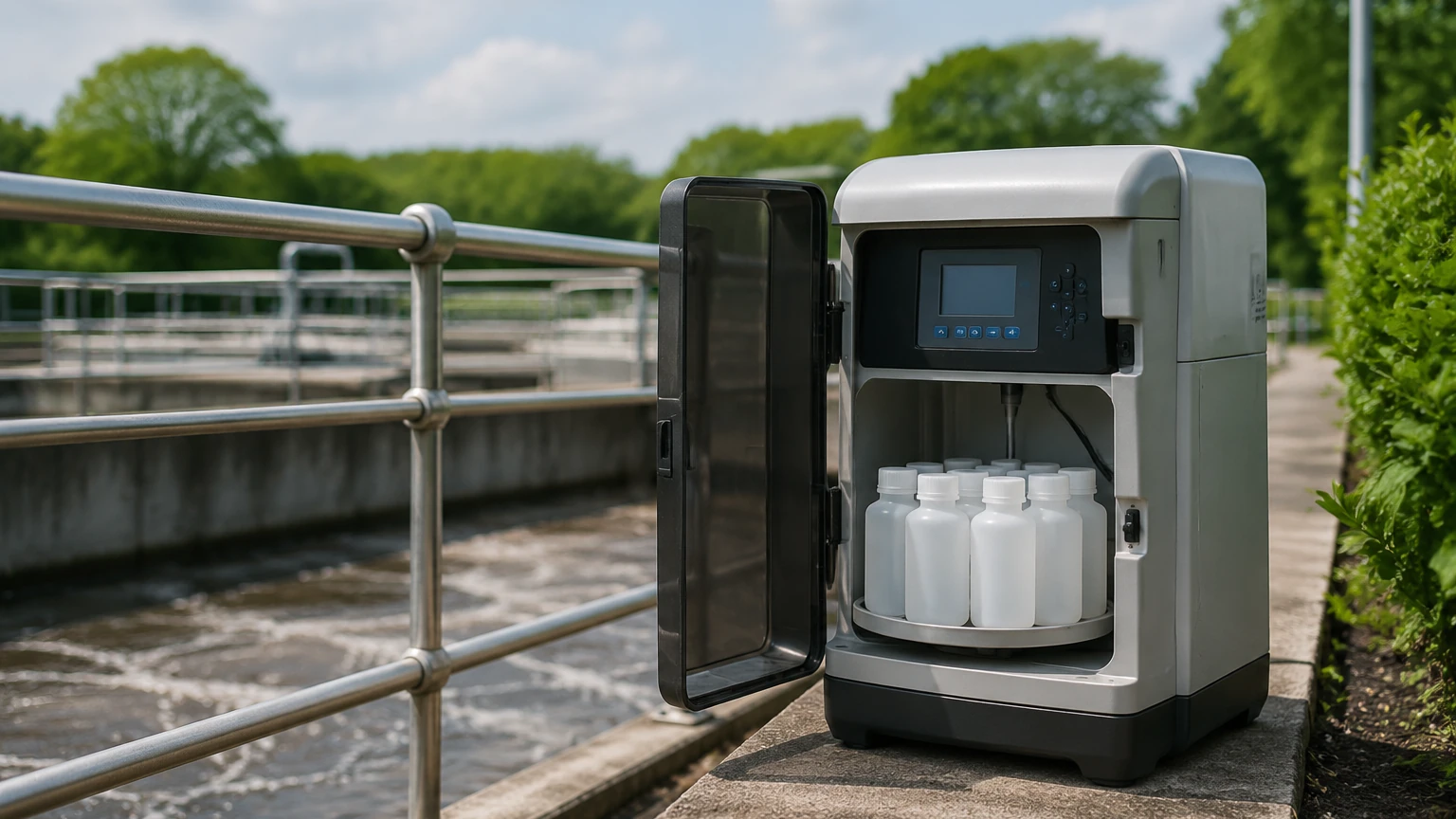
In industrial and municipal water management, obtaining a representative sample of effluent is critical for regulatory compliance, process optimization, and environmental protection. Wastewater autosamplers are automated instruments designed to collect water samples from a source—such as a flume, manhole, or tank—at specific intervals or in response to specific triggers. By replacing manual "grab" sampling, these devices ensure that the data used for chemical analysis reflects the true composition of the waste stream over time.
For engineers and plant operators, selecting the right wastewater autosampler requires an understanding of both the sampling mechanism and the integration with secondary instruments, such as flow and level meters. This guide provides a technical overview of sampling principles, selection criteria, and the critical role of level measurement in achieving accurate sampling results.
Measurement Principles and Sampling Mechanisms
Wastewater autosamplers operate on the principle of extracting a precise volume of liquid from a flow stream and transporting it into one or more collection containers. The integrity of the sample depends heavily on the transport velocity and the method used to draw the liquid.
Peristaltic Pump Systems
Most modern wastewater autosamplers utilize a peristaltic pump. This mechanism uses rotating rollers to compress a flexible tube, creating a vacuum that draws the sample upward.
* Advantages: The sample only contacts the tubing, reducing the risk of cross-contamination. It is also capable of handling small solids without clogging.
* Limitations: The suction lift is typically limited to approximately 6 to 8 meters (20 to 26 feet). As the tube wears, the volume accuracy may drift, requiring periodic calibration.
Vacuum-Pressure Systems
These systems use a vacuum pump to draw the sample into a volumetric chamber. Once the chamber is full, the vacuum is released, and the sample drops into the container via gravity.
* Advantages: Highly accurate volume repeatability and generally faster transport velocities, which helps keep suspended solids in suspension.
* Limitations: More complex mechanical components compared to peristaltic designs.
Sample Transport Velocity
To ensure a representative sample, the transport velocity must be high enough to prevent the settling of suspended solids within the intake line. International standards, such as ISO 5667, often recommend a minimum velocity of 0.5 m/s (1.6 ft/s) to maintain the homogeneity of the sample during the draw cycle.
Sampling Modes: Time vs. Flow Proportional
How an autosampler decides when to take a sample is just as important as how it draws the liquid. There are two primary logic modes used in wastewater applications:
Time-Weighted Sampling
In this mode, the sampler is programmed to collect a fixed volume at regular time intervals (e.g., every 30 minutes). While simple to set up, this method does not account for variations in flow rate. If a high-concentration pollutant spike occurs during a low-flow period, time-weighted sampling may over-represent that event in the final composite sample.
Flow-Proportional Sampling
Flow-proportional sampling ensures that the volume of the sample collected is relative to the volume of water passing the sampling point. This is achieved in two ways:
1. Constant Volume, Variable Time (CVVT): The sampler takes a fixed volume every time a specific volume of water (e.g., every 1,000 liters) passes by.
2. Variable Volume, Constant Time (VVCT): The sampler takes a sample at fixed time intervals, but the volume of the sample is adjusted based on the current flow rate.
To execute flow-proportional sampling, the autosampler must receive a signal from a flow meter or a level-to-flow conversion system. This is where the integration of high-precision instruments, such as those found on the Main Page of industrial measurement providers, becomes essential.
The Role of Level Measurement in Sampling Accuracy
Effective wastewater sampling is rarely a standalone process. In many open-channel applications, such as Parshall flumes or V-notch weirs, the flow rate is calculated based on the liquid level. Therefore, the accuracy of the autosampler is directly dependent on the accuracy of the level sensor providing the trigger signal.
Ultrasonic Level Sensors
Ultrasonic sensors are frequently used because they are non-contact. They emit sound pulses that reflect off the liquid surface. By measuring the time-of-flight, the sensor determines the level, which is then converted into a flow rate using standard hydraulic equations. These sensors are ideal for standard wastewater because they are cost-effective and easy to maintain.
Radar Level Meters
For more challenging environments—such as those with heavy foam, steam, or high turbulence—radar level meters provide superior reliability. Radar uses electromagnetic waves, which are unaffected by air temperature fluctuations or surface vapors that can sometimes interfere with ultrasonic signals. Using a radar level meter ensures that the flow-proportional trigger sent to the wastewater autosampler remains precise even in volatile industrial conditions.
Technical Selection Criteria
When evaluating wastewater autosamplers for a specific project, engineers should use the following table to compare essential features:
| Feature | Portable Autosamplers | Stationary Autosamplers |
| :— | :— | :— |
| Power Source | Battery or Solar (12V DC) | Mains Power (110V/220V AC) |
| Housing Material | Heavy-duty Plastic (PE/ABS) | Stainless Steel or GRP |
| Climate Control | Passive Insulation/Ice | Active Refrigeration (4°C) |
| Application | Short-term studies, remote sites | Permanent compliance monitoring |
| Sample Storage | Single composite or multiple bottles | Multiple bottle configurations (up to 24) |
Refrigeration and Preservation
For regulatory compliance (such as EPA or EEA standards), samples must often be maintained at a temperature of 4°C (39°F) to inhibit biological activity and chemical degradation. Stationary samplers equipped with thermoelectric or compressor-based cooling are mandatory for these applications. Portable units typically rely on ice, which requires manual replenishment and is less reliable for multi-day sampling events.
Installation Considerations
Proper installation is the difference between a successful monitoring program and a failed one. Consider the following engineering factors:
1. Intake Placement: The intake strainer should be positioned in the center of the flow stream, at a point of high turbulence, to ensure the sample is well-mixed. Avoid placing the intake at the very bottom of a channel where grit and heavy solids accumulate.
2. Suction Line Slope: The intake tubing should have a continuous downward slope toward the source. This allows the tube to drain completely between samples, preventing cross-contamination and reducing the risk of freezing in cold climates.
3. Vertical Lift: Minimize the vertical distance between the liquid surface and the sampler. High lift heights increase the strain on the pump and can lead to "slugging" or inconsistent sample volumes.
4. Signal Integration: Ensure the 4-20mA or pulse output from the level/flow meter is compatible with the autosampler’s input. Proper shielding of signal cables is necessary to prevent electromagnetic interference in industrial settings.
Limitations and Common Risks
While wastewater autosamplers are robust, they are not without limitations:
* Fats, Oils, and Grease (FOG): High concentrations of FOG can coat the interior of the suction tubing and the sample sensors, leading to volume errors or total blockages. Regular cleaning with hot water or specialized detergents is required.
* Abrasive Solids: In mining or heavy industrial applications, abrasive particles can prematurely wear out peristaltic tubing.
* Chemical Compatibility: Ensure that the pump tubing (often silicone or Tygon) and the sample bottles (PE or Glass) are compatible with the chemicals present in the effluent. For example, glass bottles are required when sampling for organic compounds that might leach from plastic.
Frequently Asked Questions (FAQ)
Q: How often should I calibrate my wastewater autosampler?
A: It is recommended to perform a volume calibration at least once a month, or whenever the suction tubing is replaced. If the sampler is used for legal compliance, calibration should be checked before every major sampling event.
Q: Can I use one level meter to trigger multiple autosamplers?
A: Yes. By using a signal splitter or a PLC (Programmable Logic Controller), the 4-20mA signal from a single radar or ultrasonic level sensor can be shared across multiple devices to ensure synchronized sampling across different treatment stages.
Q: What is the maximum length for the suction intake hose?
A: While some pumps can pull from 20 or 30 meters horizontally, the increased friction loss can affect sample integrity. It is best to keep the total hose length under 15 meters (50 feet) whenever possible to maintain adequate transport velocity.
Q: How do I prevent the intake line from freezing?
A: Most industrial autosamplers feature a "purge" cycle where the pump reverses direction before and after a sample is taken. This blows air through the line to clear any remaining liquid, which is the most effective way to prevent freezing in the tubing.
Conclusion
Wastewater autosamplers are indispensable tools for modern environmental management. However, their effectiveness is only as good as the data driving them. By integrating these samplers with reliable level measurement technologies—such as radar and ultrasonic sensors—operators can ensure that every sample collected is a true reflection of the process stream. When selecting equipment, always prioritize the specific needs of the site, including lift height, refrigeration requirements, and the nature of the wastewater being monitored. For those seeking comprehensive measurement solutions, reviewing the technical specifications of both the sampler and the supporting level instrumentation is the first step toward a successful installation.