Piezoresistive Oem Pressure Transducer
Piezoresistive Oem Pressure Transducer
In the landscape of industrial automation and fluid management, the piezoresistive OEM pressure transducer serves as the fundamental sensing component for a vast array of measurement instruments. These transducers are the core "engines" inside hydrostatic level transmitters, digital pressure gauges, and process control systems. For original equipment manufacturers (OEMs) and system integrators, selecting the right sensing element is critical to ensuring the long-term reliability and accuracy of the final product.
As a professional manufacturer of industrial level measurement instruments, Welk provides high-performance sensing solutions designed for demanding environments. Understanding the underlying physics, construction, and integration requirements of these components is essential for engineering teams tasked with developing robust liquid level or pressure monitoring solutions.
Measurement Principles of Piezoresistive Technology
The operation of a piezoresistive OEM pressure transducer is based on the piezoresistive effect, a phenomenon where the electrical resistivity of a semiconductor or metal changes when mechanical strain is applied.
The Sensing Element
At the heart of the transducer is a micromachined silicon chip (die) containing four diffused resistors arranged in a Wheatstone bridge configuration. This chip is typically mounted on a header and protected by a thin, flexible diaphragm. When pressure is applied to the diaphragm, it transmits that force through a filling fluid (usually silicone oil) to the silicon die. The resulting deformation of the die changes the resistance of the bridge.
Signal Conversion
The Wheatstone bridge converts the mechanical deformation into a differential voltage signal proportional to the applied pressure. Because silicon is highly sensitive to strain, these transducers offer excellent sensitivity and high resolution. However, silicon is also sensitive to temperature changes, which necessitates advanced compensation techniques to ensure accuracy across varying thermal environments.
Pressure Reference Types
OEM transducers are generally available in three reference configurations:
1. Gauge Pressure: Measures pressure relative to local atmospheric pressure via a vent tube or hole.
2. Absolute Pressure: Measures pressure relative to a perfect vacuum sealed within the sensor housing.
3. Sealed Gauge: Measures pressure relative to a fixed reference pressure (usually 1 bar) sealed inside the unit, protecting internal components from atmospheric moisture.
Anatomy of an OEM Pressure Transducer
A high-quality piezoresistive OEM pressure transducer is more than just a silicon chip. Its construction determines its durability and suitability for specific media.
* Isolation Diaphragm: Usually made of 316L stainless steel, though exotic materials like Hastelloy C or Tantalum are used for corrosive chemical applications. This diaphragm prevents the process media from coming into direct contact with the sensitive silicon die.
* Filling Fluid: Silicone oil is the standard due to its low compressibility and thermal stability. For food and beverage or oxygen-service applications, specialized fluids like fluorinated oil or vegetable oil may be used.
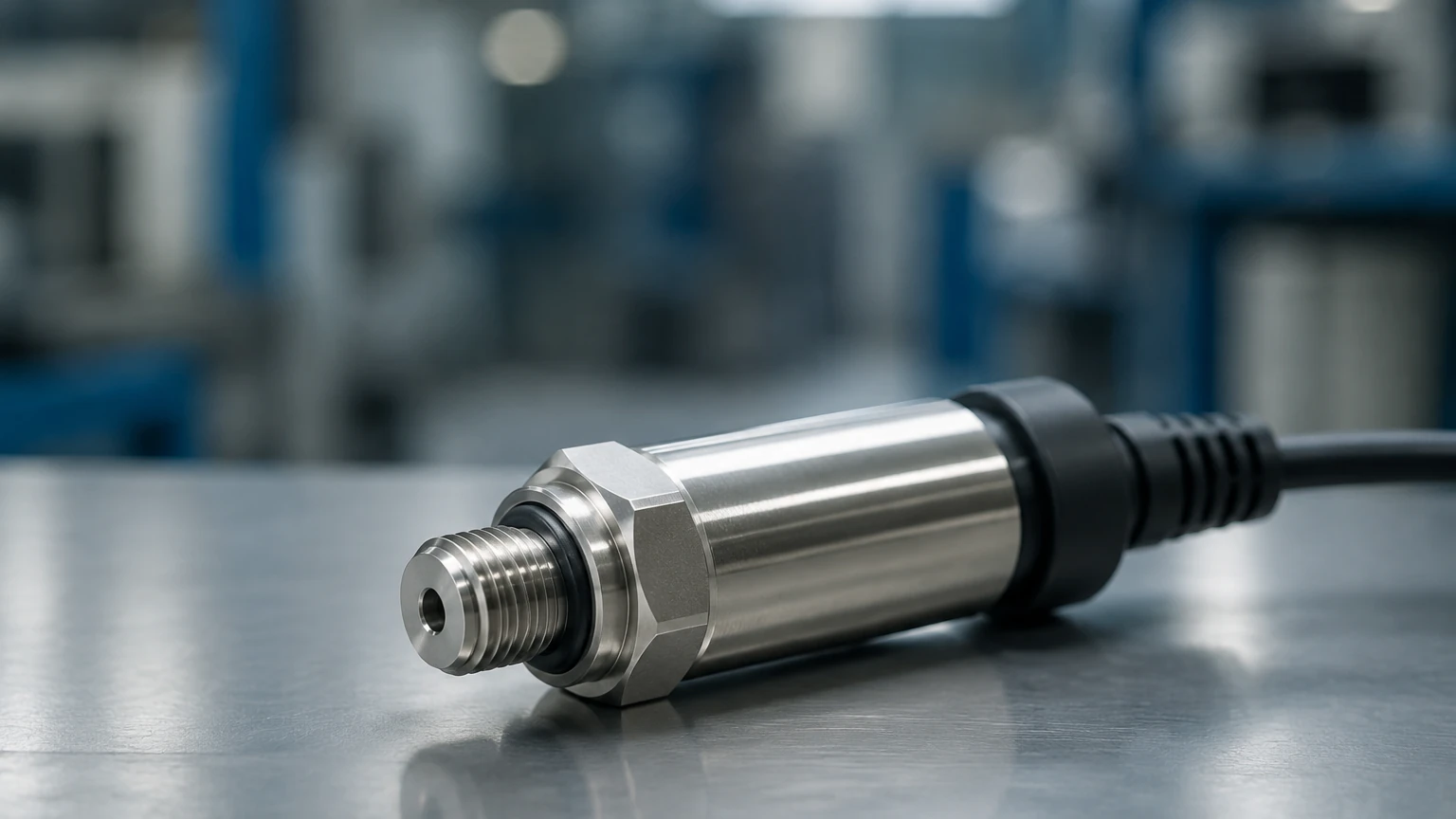
* Housing: The outer shell, typically stainless steel, provides the structural integrity needed to withstand high process pressures and provides the interface for O-ring seals.
* Electrical Interface: OEM units may come with flexible ribbon cables, solder pins, or flying leads, allowing for seamless integration into a secondary PCB or housing.
Key Evaluation Criteria for OEM Selection
When sourcing a piezoresistive OEM pressure transducer, engineers must look beyond the basic pressure range. The following performance metrics are vital for industrial-grade applications:
Accuracy and Linearity
Accuracy is typically defined as the combined effect of non-linearity, hysteresis, and repeatability. High-end OEM sensors achieve accuracies of 0.1% to 0.25% of Full Scale (FS). For precision level measurement in water treatment or chemical processing, minimizing non-linearity is crucial for consistent data across the entire measurement span.
Temperature Compensation
Since the resistivity of silicon varies with temperature, the transducer must be compensated. This is often done using laser-trimmed thick-film resistors or digital compensation via an onboard ASIC. A well-compensated sensor will have a low Thermal Error Band (TEB), ensuring that the pressure reading remains stable even as the ambient or media temperature fluctuates.
Long-Term Stability
In many industrial installations, sensors are expected to operate for years without recalibration. Piezoresistive sensors are known for excellent long-term stability, often showing drifts of less than 0.1% FS per year. This is a critical factor for reducing maintenance costs in remote or inaccessible locations.
Technical Specifications Comparison
The following table outlines typical specifications for standard piezoresistive OEM pressure transducers used in industrial level measurement.
| Parameter | Standard Industrial Grade | High-Precision Grade |
| :— | :— | :— |
| Pressure Range | 0–10 kPa to 0–60 MPa | 0–5 kPa to 0–100 MPa |
| Accuracy (Combined) | ±0.5% FS | ±0.1% or ±0.25% FS |
| Operating Temp. | -40°C to +85°C | -40°C to +125°C |
| Compensated Temp. | 0°C to +70°C | -10°C to +80°C |
| Stability (Typical) | ±0.2% FS/Year | ±0.1% FS/Year |
| Overpressure Limit | 200% FS | 300% FS |
| Wetted Material | 316L Stainless Steel | Hastelloy C / Tantalum |
Applications in Industrial Level Measurement
Piezoresistive OEM pressure transducers are the primary technology used in hydrostatic level measurement. By measuring the pressure exerted by a liquid column, the sensor can determine the liquid level based on the density of the fluid. These components are integrated into finished products found on our Main Page, where they serve diverse industries:
* Water and Wastewater: Monitoring tank levels, borehole depths, and pump station pressures. The high sensitivity of piezoresistive chips allows for accurate measurement even in shallow tanks.
* Oil and Gas: Measuring fuel tank levels and pipeline pressures. In these environments, the sensor must often be paired with explosion-proof housings.
* Chemical Processing: Utilizing specialized diaphragm materials to monitor corrosive reagents in storage tanks.
* OEM Instrumentation: Manufacturers of handheld pressure calibrators and medical equipment use these transducers as the internal reference standard.
Installation and Integration Considerations
To maintain the performance of a piezoresistive OEM pressure transducer, specific integration guidelines must be followed:
1. Mechanical Stress: When mounting the transducer into a manifold or housing, avoid applying excessive torque. Mechanical stress on the transducer housing can transmit to the internal sensing element, causing zero-point shifts or non-linearity errors.
2. O-Ring Selection: Ensure the O-ring material (Viton, NBR, EPDM) is compatible with the process media. The seal should be placed according to the manufacturer’s drawing to prevent "point loading" on the sensor.
3. Venting: For gauge pressure sensors, the back of the diaphragm must be vented to the atmosphere. If the transducer is integrated into a sealed enclosure, a moisture-proof vent or breathable membrane must be provided to prevent pressure buildup inside the housing.
4. ESD Protection: Silicon-based sensors are sensitive to Electrostatic Discharge (ESD). Proper grounding and ESD-safe handling procedures are mandatory during the assembly process.
Limitations and Risks
While highly versatile, piezoresistive technology has limitations that must be addressed during the design phase:
* Media Compatibility: While the 316L diaphragm protects the sensor, certain chemicals can cause hydrogen embrittlement or corrosion. Always verify material compatibility charts.
* Temperature Extremes: Standard silicone oil-filled sensors have a limited temperature range. For cryogenic or very high-temperature applications (above 150°C), specialized cooling necks or alternative sensing technologies may be required.
* Physical Fragility: The isolation diaphragm is extremely thin (often less than 0.05 mm). It should never be touched or cleaned with sharp objects, as any dent will permanently damage the sensor's accuracy.
Frequently Asked Questions
Q: Can a piezoresistive OEM pressure transducer measure vacuum?
A: Yes, absolute pressure transducers can measure vacuum levels. Additionally, vacuum-rated gauge sensors can measure negative pressure relative to the atmosphere.
Q: What is the difference between a pressure transducer and a pressure sensor?
A: In the OEM context, the "sensor" or "sensing element" usually refers to the raw piezoresistive component. A "transducer" typically includes the sensing element plus some signal conditioning circuitry to provide a standardized output like 4-20mA or 0-5V.
Q: How do I choose between a 316L and a Tantalum diaphragm?
A: 316L is suitable for water, oils, and mild chemicals. Tantalum is reserved for highly aggressive acids (like Hydrochloric or Sulphuric acid) where stainless steel would fail rapidly.
Q: Does orientation affect the measurement?
A: For low-pressure ranges (below 10 kPa), the weight of the internal filling oil can cause a small zero shift if the orientation is changed (e.g., from vertical to horizontal). This can usually be calibrated out at the system level.
Conclusion
The piezoresistive OEM pressure transducer remains a cornerstone of modern industrial measurement due to its high sensitivity, compact size, and proven reliability. By carefully considering the pressure range, material compatibility, and temperature compensation requirements, OEMs can build instruments that perform accurately in the most challenging process conditions.
For those seeking complete measurement solutions or technical support on integrating these components into wider automation frameworks, exploring the diverse range of radar, ultrasonic, and hydrostatic instruments available on our Main Page provides a comprehensive view of how Welk translates sensing technology into industrial reliability.