Mccrometer Dura Mag Electromagnetic Flow Meter
Mccrometer Dura Mag Electromagnetic Flow Meter
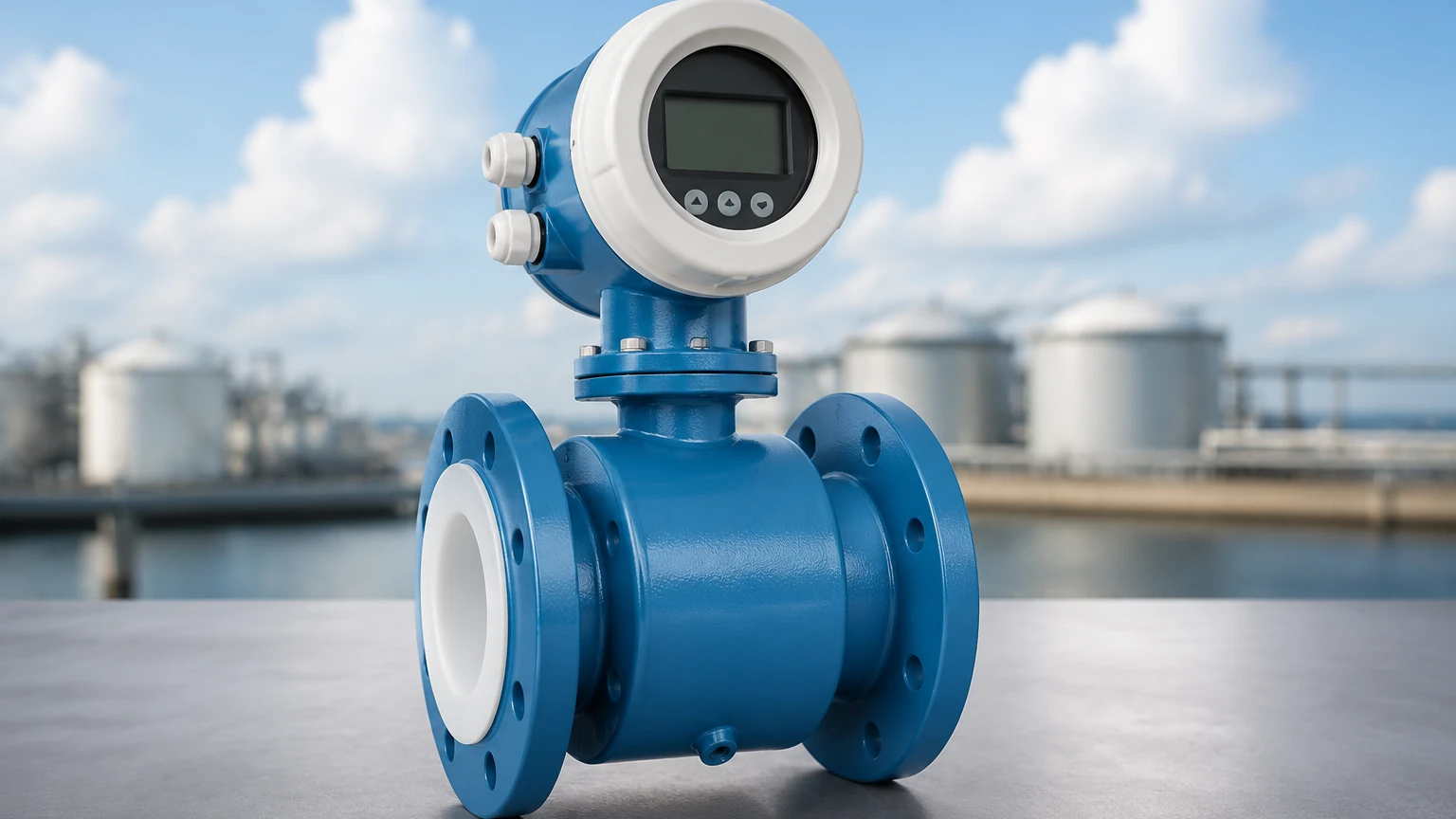
In industrial fluid management, the ability to measure flow rates accurately without introducing pressure drops or mechanical wear is a critical requirement. The mccrometer dura mag electromagnetic flow meter has emerged as a significant solution in this space, particularly for municipal, agricultural, and industrial water applications. This article provides a comprehensive technical analysis of the Dura Mag’s measurement principles, selection criteria, installation requirements, and operational limitations to assist engineers in making informed procurement decisions.
Measurement Principles of Electromagnetic Flow Meters
Before evaluating the specific features of the mccrometer dura mag electromagnetic flow meter, it is essential to understand the underlying physics of electromagnetic induction that governs its operation. These instruments operate based on Faraday’s Law of Induction, which states that a conductor moving through a magnetic field produces an electrical voltage.
In the context of a flow meter, the "conductor" is the liquid moving through the pipe. For this principle to work, the liquid must have a minimum level of electrical conductivity (typically >5 μS/cm). The device consists of two electromagnetic coils located on opposite sides of the flow tube and two electrodes mounted flush against the interior wall.
When the coils are energized, they create a magnetic field ($B$) perpendicular to the direction of flow. As the conductive liquid moves through this field at a certain velocity ($v$), it generates a voltage ($E$). The relationship is defined by the formula:
E = kBDv
Where:
* E is the induced voltage.
* k is a constant specific to the meter.
* B is the magnetic field strength.
* D is the distance between the electrodes (the pipe diameter).
* v is the average velocity of the fluid.
Because $k$, $B$, and $D$ are fixed parameters, the induced voltage is directly proportional to the fluid velocity. The electronics in the mccrometer dura mag electromagnetic flow meter then convert this voltage into a volumetric flow rate. Because there are no moving parts and nothing protrudes into the flow stream, there is zero head loss and no risk of mechanical clogging.
Technical Features of the Dura Mag Series
The mccrometer dura mag electromagnetic flow meter is distinguished by its construction and power management. Unlike traditional mag meters that require complex external power wiring, many Dura Mag models are battery-powered, making them suitable for remote locations where infrastructure is limited.
Fusion-Bonded Epoxy Liner
One of the primary failure points in electromagnetic flow meters is the delamination of the liner. The Dura Mag utilizes a fusion-bonded epoxy liner. This material is applied directly to the interior of the flow tube, creating a seamless, durable surface that is resistant to chemicals and abrasive particles. This is particularly important in irrigation and wastewater applications where debris might otherwise damage softer liners like Teflon or rubber.
Battery Life and Data Logging
The unit is typically equipped with a 5-year battery life, depending on the sampling rate. This longevity reduces maintenance overhead. Furthermore, the integrated Pro-Read register allows for easy data collection and integration with AMI/AMR systems, providing a bridge between field measurement and centralized data management.
Selection and Sizing Criteria
Selecting the correct size for a mccrometer dura mag electromagnetic flow meter is vital for maintaining accuracy. While the meter should ideally match the pipe size, the fluid velocity must remain within the manufacturer’s specified range (typically 0.03 to 10 meters per second) to ensure the signal-to-noise ratio is sufficient for an accurate reading.
Selection Table: Typical Flow Ranges (Metric)
| Nominal Pipe Size (mm) | Min Flow Rate (m³/h) | Max Flow Rate (m³/h) | Typical Accuracy |
| :— | :— | :— | :— |
| 50 mm (2") | 0.8 | 65 | ±1% |
| 100 mm (4") | 3.2 | 260 | ±1% |
| 150 mm (6") | 7.2 | 580 | ±1% |
| 200 mm (8") | 12.8 | 1,000 | ±1% |
| 300 mm (12") | 28.8 | 2,300 | ±1% |
*Note: For applications requiring precise level monitoring in addition to flow measurement, engineers often consult the Main Page of specialized instrumentation providers to integrate hydrostatic or radar level sensors into the same control loop.*
Installation Considerations
One of the most significant advantages of the mccrometer dura mag electromagnetic flow meter is its minimal straight-pipe requirement. Traditional mag meters often require 5 to 10 pipe diameters of straight run upstream to eliminate turbulence. The Dura Mag is engineered to operate accurately with as little as 2D (two diameters) of straight pipe upstream and 1D downstream.
Key Installation Checklist:
1. Orientation: The meter can be installed horizontally, vertically, or at an angle. However, the pipe must always be completely full. In horizontal installations, the electrodes should be positioned at the 3 o'clock and 9 o'clock positions to prevent air bubbles (at the top) or sediment (at the bottom) from interfering with the signal.
2. Grounding: Proper grounding is mandatory to eliminate electrical noise. If the meter is installed in a plastic or lined pipe, grounding rings must be used to provide a path for the fluid to reach the same electrical potential as the meter body.
3. Flow Direction: Ensure the arrow on the meter body aligns with the actual direction of fluid movement.
4. Avoid Turbulence: Do not install the meter immediately downstream of a partially open valve or a pump, as these components create significant turbulence that can degrade accuracy beyond the 2D/1D allowance.
Operational Limitations and Risks
While the mccrometer dura mag electromagnetic flow meter is highly versatile, it is not a "one-size-fits-all" solution. Engineering teams must confirm the following before deployment:
* Fluid Conductivity: The meter will not function with non-conductive fluids such as oils, deionized water, or pure hydrocarbons.
* Entrained Air: Large volumes of air or gas bubbles in the liquid will lead to significant measurement errors, as the meter will interpret the air volume as liquid.
* Vacuum Conditions: While the fusion-bonded epoxy is robust, extreme vacuum conditions can occasionally cause issues in certain liner types. Always verify the pressure rating for the specific installation site.
* Temperature Limits: The electronics and liner have specific temperature thresholds (typically up to 60°C or 140°F for standard models). High-temperature industrial processes may require remote-mounted electronics or different sensor materials.
Integration with Level Measurement Systems
In many B2B industrial environments, flow measurement is only one part of the process control equation. For instance, in water treatment plants, the flow rate measured by the mccrometer dura mag electromagnetic flow meter is often used in conjunction with level data from storage tanks. If the flow meter indicates a high output but the tank level (measured by a radar or ultrasonic sensor) is not dropping, it can signal a leak in the distribution line.
For comprehensive process automation, it is recommended to source level measurement instruments that share communication protocols (such as Modbus or 4-20mA HART) with the flow meter. You can Review product options and application support to find compatible level transmitters that complement your flow measurement strategy.
Frequently Asked Questions (FAQ)
Q: Can the Dura Mag be used for wastewater with solids?
A: Yes. Because it has an unobstructed flow path and a durable epoxy liner, it is well-suited for wastewater. However, the liquid must remain conductive and the solids must not be so dense that they settle and cover the electrodes.
Q: How often does the meter require calibration?
A: McCrometer recommends periodic verification. While the meter has no moving parts to wear out, chemical buildup on the electrodes over several years can affect sensitivity. Many jurisdictions for agricultural use require a verification check every 3 to 5 years.
Q: Does it work in partially filled pipes?
A: No. Electromagnetic flow meters require a full pipe to calculate volumetric flow accurately. If the pipe is partially full, the meter will over-report the flow rate because it assumes the entire cross-sectional area of the pipe is occupied by liquid.
Q: What is the benefit of the 2D/1D straight pipe requirement?
A: This allows the meter to be installed in tight spaces, such as existing pump stations or retrofitted irrigation pivots, where long runs of straight pipe are physically impossible to accommodate.
By adhering to these technical guidelines and understanding the specific requirements of the mccrometer dura mag electromagnetic flow meter, industrial operators can ensure long-term reliability and high-precision data for their water management systems.
Download Mccrometer Dura Mag Electromagnetic Flow Meter as a PDF