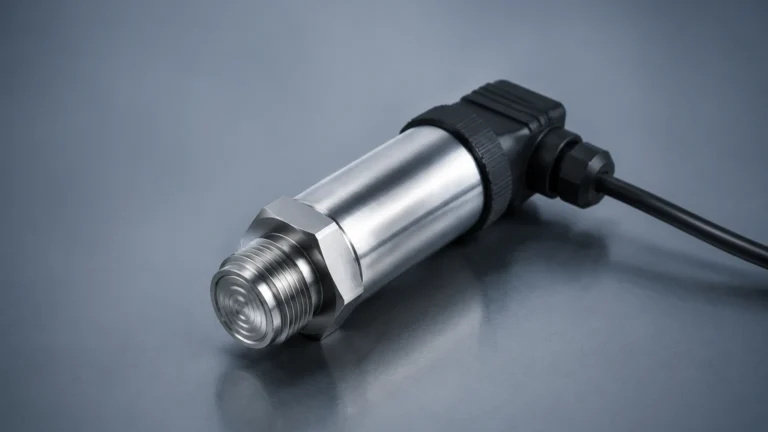
Ph Instrument
Ph Instrument
In the landscape of industrial process control, the measurement of liquid properties is fundamental to ensuring product quality, environmental compliance, and equipment longevity. While level measurement identifies the quantity of a medium within a vessel, the ph instrument provides critical data regarding its chemical state. For engineers and plant managers, selecting the right pH measurement technology is as vital as choosing a reliable radar level meter or ultrasonic sensor. This guide explores the principles, applications, and integration strategies for industrial pH instrumentation, specifically tailored for B2B sectors such as water treatment, chemical processing, and industrial automation.
Measurement Principles of pH Instrumentation
To effectively select and deploy a ph instrument, one must first understand the electrochemical principles that govern its operation. pH is a measure of the hydrogen ion activity in a solution, defined mathematically as the negative logarithm of the hydrogen ion concentration. In industrial settings, this is typically measured using a potentiometric method.
The Potentiometric Method
The most common industrial pH sensor consists of two primary components: a glass electrode (the sensing electrode) and a reference electrode.
1. The Glass Electrode: This component features a specialized pH-sensitive glass membrane. When immersed in a liquid, a hydrated gel layer forms on the outside and inside of the membrane. The difference in hydrogen ion concentration between the internal buffer solution and the external process liquid creates a millivolt (mV) potential.
2. The Reference Electrode: To measure the potential generated by the glass electrode, a stable reference point is required. The reference electrode provides a constant potential that is independent of the pH of the liquid. It typically uses a silver/silver chloride (Ag/AgCl) system submerged in a potassium chloride (KCl) electrolyte.
3. The Nernst Equation: The pH instrument’s transmitter converts the measured potential difference (mV) into a pH value based on the Nernst Equation. At 25°C (77°F), a change of one pH unit corresponds to a change of 59.16 mV. Because this relationship is temperature-dependent, modern industrial pH instruments almost always include an integrated temperature sensor (such as a PT100 or PT1000) for automatic temperature compensation (ATC).
Components of an Industrial pH System
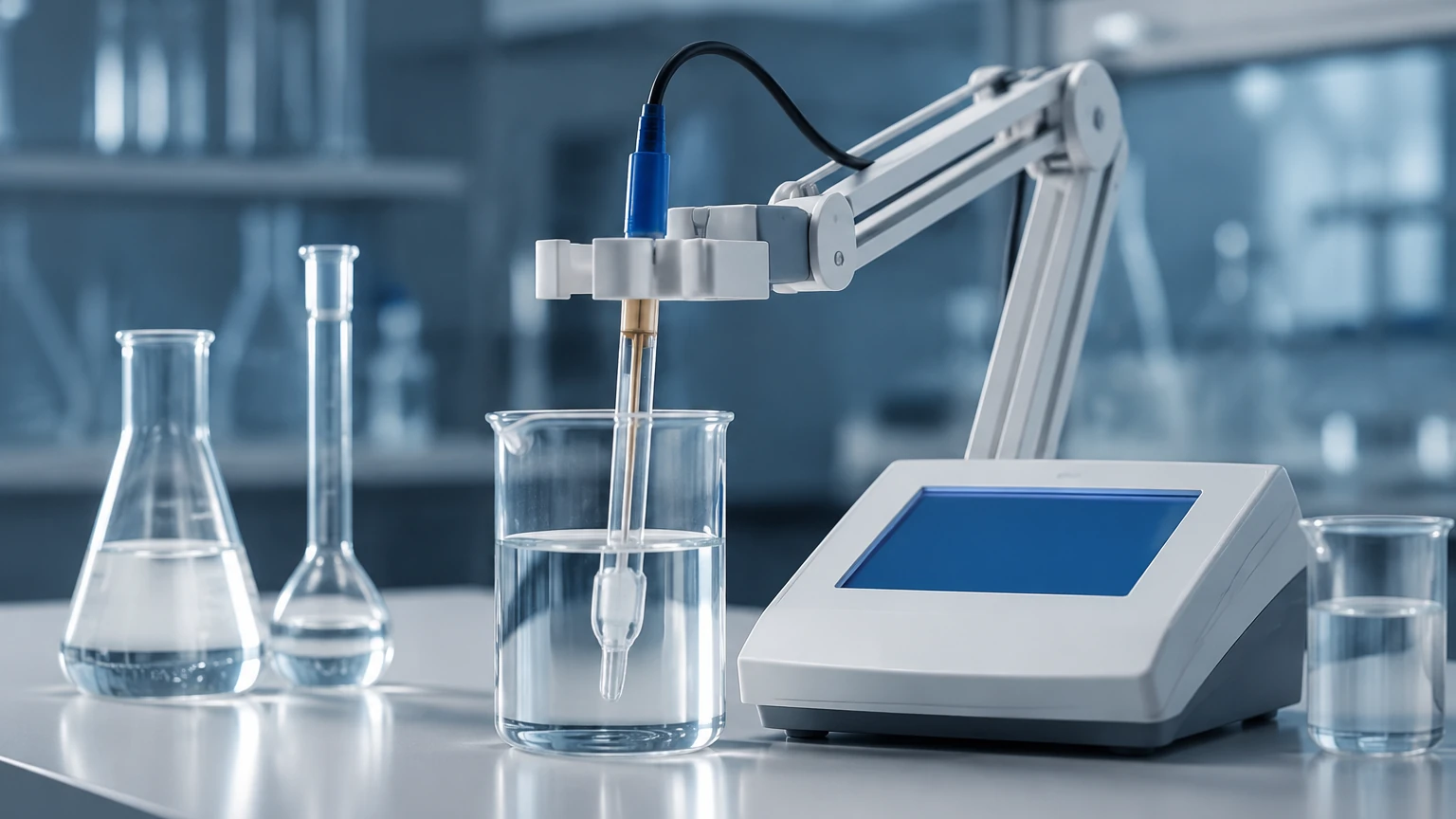
Unlike portable laboratory meters, an industrial ph instrument is designed for continuous operation in harsh environments. A complete system typically includes:
* The Sensor (Probe): Often a "combination electrode" where both the sensing and reference elements are housed in a single body. These may be made of glass or robust plastic (like Ryton or PVDF) depending on the chemical compatibility.
* The Transmitter/Controller: This unit receives the high-impedance mV signal from the sensor, amplifies it, and converts it into a standard industrial output, such as 4-20mA, HART, or RS485 Modbus. This allows the pH data to be integrated into a PLC or SCADA system alongside other process variables like tank level.
* The Mounting Assembly: Industrial sensors require specialized housings (immersion, flow-through, or retractable) to protect the probe and facilitate maintenance without shutting down the process line.
For comprehensive process monitoring, these systems are often paired with high-performance level measurement tools. You can Review product options and application support to see how integrated sensing technologies optimize plant operations.
Selection Criteria for Industrial pH Instruments
Choosing the correct ph instrument requires an analysis of the process medium and the physical environment. A mismatch between the sensor type and the application can lead to rapid sensor degradation or inaccurate readings.
Selection Table: pH Sensor Types and Applications
| Sensor Feature | Best For | Limitations |
| :— | :— | :— |
| General Purpose Glass | Standard water treatment, clean liquids | Fragile; susceptible to HF acid |
| Teflon Junction | Oily wastewater, high-fouling media | Slower response time |
| Flat Surface Membrane | Slurries, abrasive liquids, paper pulp | Higher cost than standard bulbs |
| High-Temperature Glass | Boiler feed water, chemical reactors | Shorter lifespan at continuous >90°C |
| Low-Impedance Glass | Low-conductivity/Pure water | Sensitive to electrical noise |
| Retractable Housing | Continuous processes requiring frequent cleaning | Requires mechanical installation space |
Key Evaluation Factors
1. Chemical Compatibility: The body material of the probe and the seals (O-rings) must resist the process chemicals. PVDF and PTFE are common for aggressive acids and bases.
2. Pressure and Temperature: Standard glass electrodes are often limited to 6-7 bar (approx. 90-100 psi). High-pressure applications require specialized pressurized reference systems.
3. Conductivity: Standard pH probes require a minimum liquid conductivity (usually >50 μS/cm) to function. For ultrapure water applications, specialized low-conductivity probes are mandatory.
Integration with Level Measurement Systems
In many B2B applications, such as chemical dosing or neutralization tanks, the ph instrument and the level meter work in tandem. For example, in a wastewater neutralization tank, a radar level meter monitors the volume of effluent, while the pH probe determines the amount of neutralizing agent (acid or caustic) to be injected.
* Redundancy and Safety: If a level transmitter detects an overfill condition, the system may automatically shut off dosing pumps regardless of the pH reading to prevent environmental spills.
* Automated Dosing: High-accuracy level sensors provide the volume data necessary for the pH controller to calculate the precise dosage required to reach a target pH setpoint, reducing chemical waste.
Welk’s range of level measurement solutions, including hydrostatic level transmitters and ultrasonic sensors, are frequently used in the same tanks where pH monitoring is essential. Ensuring that both instruments are compatible with the tank's internal environment is a prerequisite for successful automation.
Installation Considerations and Best Practices
Proper installation is the single most important factor in the longevity of a ph instrument. Unlike a non-contact radar level meter, a pH probe is an analytical sensor that must be in direct contact with the process medium.
Placement and Orientation
* Submersion Depth: The sensor must be fully submerged even at the lowest tank levels. This is where coordination with level measurement data is critical.
* Angle of Installation: Most glass pH electrodes must be installed at an angle of at least 15° above the horizontal. This ensures that the internal electrolyte stays in contact with the pH-sensitive bulb and prevents air bubbles from being trapped inside the electrode.
* Flow Velocity: In flow-through installations, the velocity should be sufficient to keep the sensor clean but not so high that it causes cavitation or physical damage to the glass membrane.
Cabling and Signal Integrity
Because the raw signal from a pH electrode is a high-impedance mV signal, it is extremely sensitive to electromagnetic interference (EMI).
1. Keep pH signal cables away from high-voltage power lines and motors.
2. Use shielded, low-noise cables specifically designed for pH instrumentation.
3. Minimize the cable length between the sensor and the transmitter, or use a pre-amplifier for distances exceeding 15 meters (approx. 50 feet).
Maintenance and Common Risks
A ph instrument is a consumable item. Unlike a magnetic level gauge that may last for decades with minimal maintenance, a pH probe has a finite lifespan, typically ranging from 6 months to 2 years depending on the application.
Common Failure Modes
* Coating/Fouling: Fats, oils, or mineral scales can coat the glass membrane or clog the reference junction, leading to slow response times or "flat" readings.
* Reference Poisoning: Chemicals from the process can migrate into the reference electrolyte, changing its potential and causing significant drift.
* Dehydration: If a pH probe is allowed to dry out, the hydrated gel layer on the glass membrane will collapse. While some sensors can be rejuvenated by soaking in KCl solution, many are permanently damaged by dehydration.
Calibration Requirements
Regular calibration using standard buffer solutions (typically pH 4.0, 7.0, and 10.0) is mandatory. In industrial environments, a weekly or bi-weekly calibration schedule is common. The transmitter will calculate the "Slope" and "Offset" of the sensor. A slope below 85% or an offset greater than ±30mV usually indicates that the sensor needs cleaning or replacement.
Frequently Asked Questions (FAQs)
Q: Can I use a pH instrument in non-aqueous liquids like pure oil?
A: Standard pH measurement requires an aqueous (water-based) medium to allow for ion exchange. Measuring pH in non-aqueous liquids is extremely difficult and requires specialized solvent-resistant electrodes and specific laboratory techniques; it is generally not recommended for standard industrial online monitoring.
Q: How does temperature affect my pH reading?
A: Temperature affects pH in two ways: it changes the chemical equilibrium of the solution (actual pH change) and it changes the sensitivity of the electrode (Nernstian slope change). Industrial transmitters compensate for the electrode sensitivity change, but they cannot "correct" the actual chemical change of the liquid caused by temperature.
Q: Why is my pH reading drifting even after calibration?
A: Drift is often caused by a clogged reference junction or electrical ground loops. Ensure the reference junction is clean and that the transmitter is properly grounded. If using a plastic tank, a solution ground (earth) electrode may be necessary to stabilize the reading.
Q: What is the difference between a 2-wire and a 4-wire pH transmitter?
A: A 2-wire transmitter is loop-powered (the same two wires carry the 4-20mA signal and provide power), making it ideal for remote installations. A 4-wire transmitter has separate power and signal wires, often allowing for more features like integrated relays for pump control and backlit displays.
Conclusion
Integrating a robust ph instrument into your process control strategy is essential for maintaining chemical balance and operational efficiency. By understanding the electrochemical principles and selecting hardware that matches your specific environmental challenges—such as temperature, pressure, and fouling potential—you can ensure reliable data for your automation systems. When combined with accurate level measurement from the Main Page of your instrumentation suite, pH monitoring becomes a cornerstone of safe and effective industrial liquid management. Always prioritize regular maintenance and correct installation to maximize the ROI of your analytical instrumentation.