Durchflussmesser
Durchflussmesser
In the landscape of industrial automation and process control, the accurate measurement of fluid movement is as fundamental as monitoring the contents of a storage tank. A durchflussmesser, or flow meter, is an instrument designed to quantify the volume or mass of a gas or liquid passing through a pipeline over a specific period. While level measurement focuses on the static or dynamic height of a medium within a vessel, flow measurement addresses the kinetic aspect of the process. For engineers and plant operators, selecting the correct durchflussmesser is a critical decision that impacts system efficiency, safety, and fiscal accountability.
At Welk, a professional manufacturer of industrial level measurement instruments, we recognize that level and flow measurement often work in tandem to provide a comprehensive view of process dynamics. Whether managing water treatment facilities, chemical processing plants, or oil and gas operations, understanding the principles behind flow measurement is essential for maintaining optimal performance. This guide explores the primary technologies used in modern flow instrumentation, their selection criteria, and practical installation considerations.
Measurement Principles of Modern Flow Meters
Flow measurement is not a one-size-fits-all discipline. Different fluids and environmental conditions require specific physical principles to achieve accuracy. Below are the most common measurement principles utilized in industrial durchflussmesser technology.
Electromagnetic Flow Measurement (Magmeters)
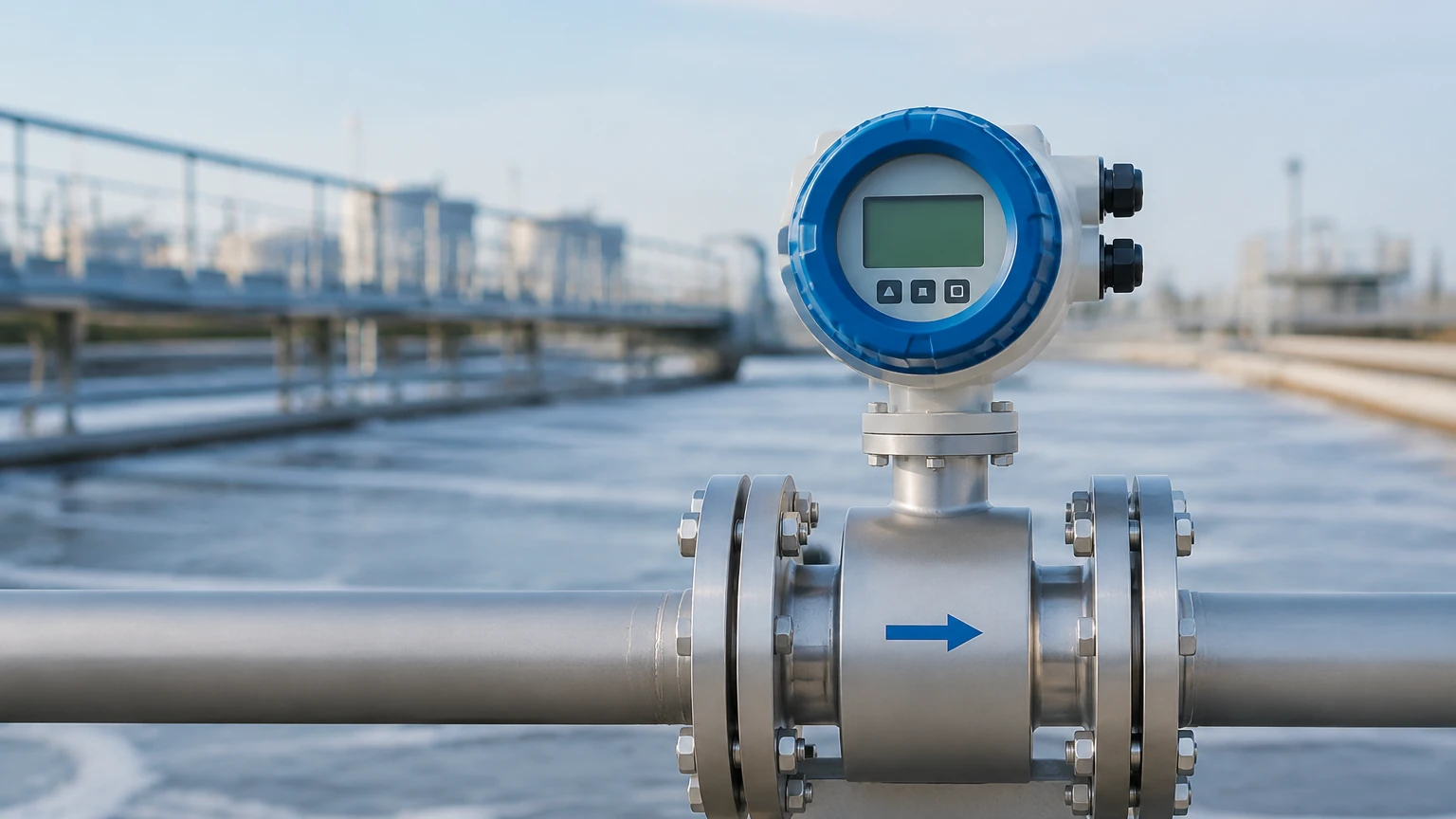
Electromagnetic flow meters operate based on Faraday’s Law of Induction. This principle states that a conductor moving through a magnetic field produces an electrical signal. In this application, the conductive liquid acts as the conductor. As the liquid flows through a magnetic field generated by the meter’s coils, it produces a voltage proportional to the velocity of the flow.
* Requirement: The fluid must have a minimum electrical conductivity (typically >5 μS/cm).
* Advantages: No moving parts, zero pressure drop, and high accuracy for slurry or corrosive liquids.
Ultrasonic Flow Measurement
Ultrasonic meters use sound waves to determine flow velocity. There are two primary methods: Transit-Time and Doppler Effect.
1. Transit-Time: Two transducers act as both transmitters and receivers. They send ultrasonic pulses back and forth. The pulse traveling with the flow moves faster than the pulse traveling against it. The time difference is directly proportional to the flow velocity.
2. Doppler Effect: These meters reflect sound waves off bubbles or particles in the fluid. The frequency shift of the reflected signal determines the velocity.
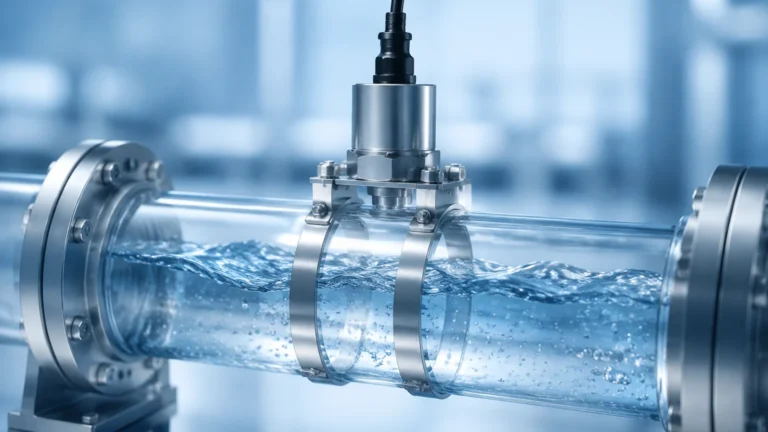
Ultrasonic durchflussmesser are often available as "clamp-on" versions, allowing for measurement without cutting into existing pipework.
Vortex Flow Measurement
Based on the Von Kármán effect, vortex meters place a "shedder bar" in the flow stream. As fluid passes this bar, vortices (swirls) are shed alternately on each side. The frequency of this vortex shedding is directly proportional to the fluid velocity. This technology is highly robust and frequently used for steam and gas measurement.
Turbine Flow Measurement
Turbine meters utilize a mechanical rotor positioned in the center of the flow stream. The moving fluid pushes the rotor blades, causing them to spin. The rotational speed is proportional to the flow rate. These are highly accurate for clean, low-viscosity liquids but are susceptible to wear and damage from debris.
Technical Selection Criteria
Choosing the right durchflussmesser requires a detailed analysis of the application environment. Engineers must confirm several parameters before finalizing a specification.
Fluid Characteristics
The chemical compatibility of the meter’s wetted parts with the fluid is paramount. For example, a magnetic flow meter for a chemical plant may require a PTFE liner and Tantalum electrodes to resist corrosion. Furthermore, the viscosity and density of the fluid affect the Reynolds number, which determines whether the flow is laminar or turbulent—a key factor for meter accuracy.
Process Conditions
* Temperature and Pressure: Every instrument has rated limits. High-temperature steam applications usually require vortex or differential pressure meters, whereas ultrasonic sensors might be limited by the temperature tolerances of their transducers.
* Flow Range: The "turndown ratio" (the ratio of maximum to minimum measurable flow) is critical. If a process fluctuates significantly, a meter with a high turndown ratio, such as an electromagnetic meter, is preferred.
Performance Requirements
Accuracy is often expressed as a percentage of the measured value or a percentage of the full-scale range. For custody transfer (where money changes hands based on the measurement), extremely high accuracy is required. For simple process monitoring, a lower-cost solution with moderate accuracy may suffice.
Comparison of Flow Measurement Technologies
| Technology | Typical Accuracy | Fluid Type | Pressure Drop | Moving Parts |
| :— | :— | :— | :— | :— |
| Electromagnetic | ±0.5% | Conductive Liquids | None | No |
| Ultrasonic | ±1.0% to 2.0% | Clean/Dirty Liquids | None | No |
| Vortex | ±1.0% | Steam, Gas, Liquids | Low | No |
| Turbine | ±0.25% | Clean, Low Viscosity | Medium | Yes |
| Coriolis | ±0.1% | Liquids, Gases | Medium | No |
Installation Best Practices
Even the most advanced durchflussmesser will fail to provide accurate data if installed incorrectly. The following considerations are vital for engineering teams.
Straight Pipe Runs
Most flow meters require a stable, fully developed flow profile to measure accurately. Turbulence caused by valves, elbows, or pumps can introduce significant errors. The standard rule of thumb is the "10D/5D" rule: the meter should have at least 10 pipe diameters of straight, unobstructed pipe upstream and 5 diameters downstream. If space is limited, flow conditioners or specific meter types (like certain ultrasonic configurations) may be required.
Pipe Orientation and Filling
For liquid applications, the pipe must be completely full. Air pockets or partially filled pipes will lead to erratic readings or total signal loss. For this reason, installing a durchflussmesser on a vertical pipe with an upward flow direction is often preferred, as this ensures the pipe remains full. In horizontal installations, the meter should not be placed at the highest point of the system where air may collect.
Grounding and Interference
Electromagnetic meters are particularly sensitive to electrical noise. Proper grounding to the fluid and the pipe is essential to prevent stray currents from interfering with the small millivolt signals generated by the sensor. Similarly, ultrasonic meters should be kept away from high-frequency variable frequency drives (VFDs) that can cause acoustic or electrical interference.
Limitations and Common Risks
While modern instrumentation is highly reliable, certain conditions can compromise measurement integrity:
1. Cavitation: If the pressure in the line drops below the vapor pressure of the liquid, vapor bubbles form. When these bubbles collapse, they can cause physical damage to turbine blades or shedder bars and disrupt ultrasonic signals.
2. Entrained Air: Even small percentages of air in a liquid line can cause significant over-reading in volumetric meters or signal attenuation in ultrasonic devices.
3. Scaling and Coating: In wastewater or chemical applications, buildup on the internal walls of the meter or on electrodes can insulate sensors or change the internal diameter of the pipe, leading to drift in accuracy.
Integration with Level Measurement Systems
In many industrial setups, flow and level measurement provide cross-verification. For example, in a storage tank application, the rate of level change (measured by a radar or ultrasonic level transmitter) should correspond to the flow rate measured by the durchflussmesser on the inlet or outlet pipes. Discrepancies between these two values can alert operators to leaks, pump failures, or calibration issues.
Welk provides a wide range of level measurement solutions that complement flow instrumentation. By integrating high-accuracy radar level meters with robust flow sensors, facilities can achieve a higher level of process transparency. For more information on our full suite of measurement technologies, visit our Main Page.
Frequently Asked Questions (FAQ)
Q: Can a durchflussmesser measure flow in both directions?
A: Some technologies, such as electromagnetic and transit-time ultrasonic meters, are inherently bi-directional. However, they must be configured in the software to handle bi-directional logic, and the installation must account for straight pipe runs in both directions.
Q: How often should a flow meter be calibrated?
A: Calibration frequency depends on the criticality of the process and the technology used. Mechanical meters (like turbines) require more frequent checks due to wear. Many modern electronic meters offer "self-verification" features that can extend calibration intervals, but annual or biennial professional calibration is standard for regulated industries.
Q: What is the difference between volumetric and mass flow?
A: Volumetric flow measures the space the fluid occupies (e.g., liters per minute), while mass flow measures the actual weight (e.g., kilograms per minute). Mass flow is generally more accurate for gases, as gas volume changes significantly with temperature and pressure.
Q: Can I use a magnetic flow meter for deionized water?
A: Generally, no. Deionized water has very low conductivity, which is usually below the threshold required for an electromagnetic meter to function. In such cases, an ultrasonic or turbine meter is a better choice.
By understanding these technical nuances, engineers can ensure that their choice of durchflussmesser provides the reliable data necessary for modern industrial operations. Whether the goal is reducing waste in a chemical plant or ensuring accurate billing in a municipal water system, the right measurement technology is the foundation of successful process control.