Omega Differential Pressure Transmitter
Omega Differential Pressure Transmitter
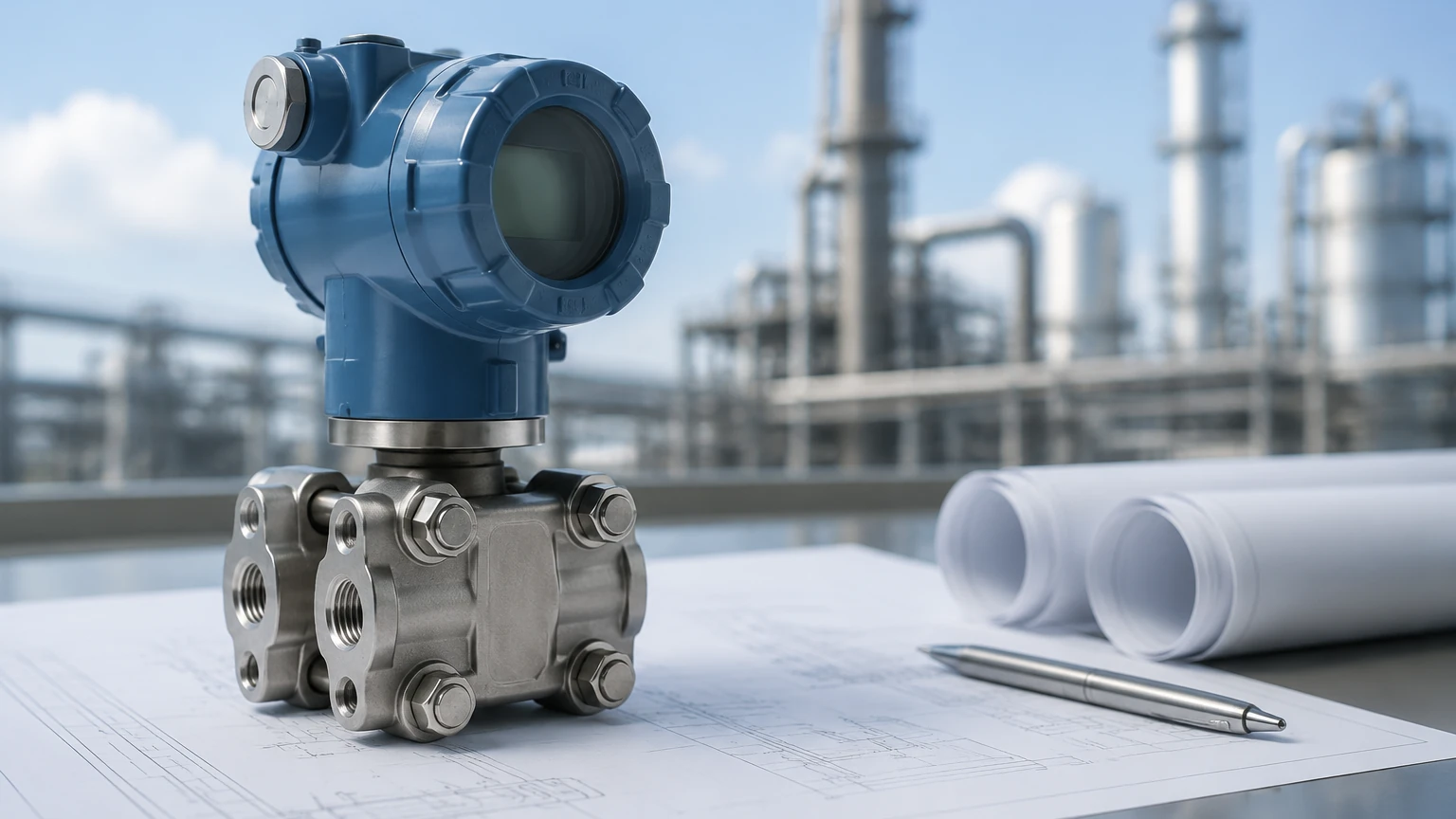
In the landscape of industrial automation and process control, the measurement of pressure differentials is a fundamental requirement for determining flow rates, liquid levels, and filter health. The omega differential pressure transmitter is a precision instrument designed to sense the difference between two pressure points and convert that physical variance into a standardized electrical signal. This guide provides a comprehensive technical overview of differential pressure (DP) technology, selection criteria for Omega-specific instrumentation, and engineering best practices for installation and maintenance.
Fundamental Measurement Principles
Before selecting an omega differential pressure transmitter, it is essential to understand the physics governing its operation. Differential pressure measurement is based on the subtraction of a "low" pressure input from a "high" pressure input. This value, denoted as $\Delta P$, is used across three primary industrial applications: flow, level, and condition monitoring.
1. Level Measurement in Pressurized Vessels
In a closed or pressurized tank, a standard hydrostatic pressure sensor cannot accurately determine the liquid level because the headspace pressure (the air or gas above the liquid) adds to the total pressure at the bottom. A DP transmitter solves this by connecting the high-pressure side to the bottom of the tank and the low-pressure side to the headspace. The transmitter subtracts the headspace pressure, leaving only the pressure exerted by the liquid column.
The calculation follows the hydrostatic formula:
$$P = \rho \cdot g \cdot h$$
Where:
* P is the differential pressure (Pa or bar).
* ρ (rho) is the density of the fluid ($kg/m^3$).
* g is the gravitational constant ($9.81 m/s^2$).
* h is the height of the liquid (meters).
2. Flow Measurement (Bernoulli’s Principle)
By placing a primary flow element, such as an orifice plate or Venturi tube, inside a pipe, a localized pressure drop is created. The omega differential pressure transmitter measures the pressure before and after this restriction. According to Bernoulli’s equation, the flow rate is proportional to the square root of the differential pressure. This allows for non-intrusive flow monitoring in steam, gas, and liquid lines.
3. Filter and Heat Exchanger Monitoring
In filtration systems, the DP transmitter monitors the pressure drop across the filter media. As the filter accumulates debris, the resistance to flow increases, causing the $\Delta P$ to rise. Once a specific threshold is reached, the transmitter signals the need for a backwash cycle or filter replacement.
Key Features of Omega Differential Pressure Transmitters
Omega offers a diverse range of DP transmitters, often categorized by their sensing technology and environmental resilience. Most industrial models utilize one of two primary sensing methods:
* Piezoresistive Strain Gauges: These sensors use a silicon or metal diaphragm with etched resistors. When pressure deforms the diaphragm, the resistance changes (the piezoresistive effect), which is then conditioned into a 4-20mA or 0-10V signal. These are known for high sensitivity and compact form factors.
* Capacitive Sensors: These utilize a sensing diaphragm positioned between two fixed capacitor plates. Pressure shifts the diaphragm, changing the capacitance. Capacitive sensors are highly stable and resistant to overpressure events, making them ideal for heavy industrial applications.
When reviewing options on the Main Page, engineers should note that Omega instruments often feature high-accuracy electronics (typically 0.25% to 0.05% of full scale) and ruggedized housings rated for NEMA 4X (IP66/67) environments.
Technical Selection Criteria
Choosing the correct omega differential pressure transmitter requires a detailed analysis of the process conditions. The following table outlines the primary evaluation parameters:
| Parameter | Consideration | Typical Industrial Range |
| :— | :— | :— |
| Pressure Range | The maximum expected $\Delta P$ plus a safety margin. | 0-1 mbar to 0-400 bar |
| Static Pressure | The maximum line pressure the housing can withstand. | Up to 700 bar (10,000 psi) |
| Wetted Materials | Compatibility with the process fluid to prevent corrosion. | 316L SS, Hastelloy C, Monel |
| Output Signal | Integration with the PLC or SCADA system. | 4-20 mA, HART, Modbus, 0-5 VDC |
| Accuracy | The allowable margin of error for the application. | 0.075% to 0.5% FS |
| Process Connection | Type of threading or flange required. | 1/4" NPT, 1/2" NPT, Sanitary Tri-Clamp |
Material Compatibility
For chemical applications involving acids or bases, standard 316 Stainless Steel may be insufficient. In these cases, specifying an omega differential pressure transmitter with Tantalum or Hastelloy diaphragms is necessary to ensure long-term reliability. For food and beverage applications, sanitary connections (Tri-Clamp) and 3-A certified finishes are mandatory.
Installation and Engineering Considerations
The accuracy of a DP measurement is often more dependent on the installation of the impulse lines than the transmitter itself. Engineers must account for the following:
Impulse Line Routing
Impulse lines (the small-bore pipes connecting the process to the transmitter) should be as short as possible to minimize lag and potential clogging.
* For Gas Service: The transmitter should be mounted *above* the process taps so that any condensed liquid drains back into the process line.
* For Liquid/Steam Service: The transmitter should be mounted *below* the process taps to ensure the impulse lines remain full of liquid, preventing air bubbles from causing erratic readings.
Use of Manifolds
A 3-valve or 5-valve manifold is highly recommended for every omega differential pressure transmitter installation. The manifold allows the operator to isolate the transmitter from the process, equalize the pressure across the diaphragm for zero-point calibration, and bleed off trapped air or sediment without shutting down the entire process line.
Temperature Effects
Extreme process temperatures can damage the sensor electronics. If the process fluid exceeds the transmitter's operating temperature (typically 85°C or 185°F), siphons, cooling towers, or capillary-type remote seals should be used to isolate the instrument from the heat source.
Limitations and Common Risks
While the omega differential pressure transmitter is a versatile tool, it has inherent limitations that must be managed:
1. Density Sensitivity: Since DP-based level measurement relies on the fluid's density, any change in temperature or concentration that alters the density will result in a level error. If the density is variable, a multivariable transmitter or a separate temperature compensation loop is required.
2. Clogging and Plugging: In slurries or high-viscosity fluids, impulse lines are prone to plugging. Remote diaphragm seals with capillary tubes are the preferred solution for these challenging media, as they provide a large, flat sensing surface that does not trap solids.
3. Overpressure Events: If the high-pressure side is suddenly vented while the low-pressure side remains pressurized (or vice versa), the sensing diaphragm may be permanently deformed. High-quality transmitters include internal overpressure protection mechanisms, but care must still be taken during commissioning.
Maintenance and Calibration
To maintain the integrity of the process loop, a regular calibration schedule should be established. Most industrial standards suggest an annual verification.
* Zero Trim: With the manifold equalizing valve open, the transmitter should read exactly zero. Any deviation (zero shift) can be corrected via the onboard electronics or HART communicator.
* Span Verification: Using a portable pressure calibrator, apply a known pressure to the high side while leaving the low side open to the atmosphere. Compare the transmitter's output to the applied pressure at 25%, 50%, 75%, and 100% of the range.
Frequently Asked Questions (FAQ)
Q: Can I use an omega differential pressure transmitter for vacuum applications?
A: Yes, many DP transmitters are rated for full vacuum on either the high or low side. However, you must ensure the wetted materials and seals are designed to prevent air ingress under negative pressure.
Q: What is the difference between "Wet Leg" and "Dry Leg" installations?
A: In level measurement for closed tanks, a "Dry Leg" is used when the gas in the headspace will not condense at ambient temperatures. A "Wet Leg" is used when the gas *will* condense; the low-pressure impulse line is intentionally filled with a reference liquid to prevent erratic readings caused by random condensation.
Q: How does HART communication benefit DP transmitters?
A: HART (Highway Addressable Remote Transducer) allows for digital configuration, diagnostics, and multi-parameter reporting over the same two wires used for the 4-20mA analog signal. It enables remote troubleshooting and simplified calibration.
Conclusion
The omega differential pressure transmitter remains a cornerstone of industrial process control due to its reliability and multi-functional capabilities. Whether measuring the flow of steam in a power plant or the level of a chemical reagent in a pressurized reactor, understanding the underlying hydrostatic and fluid dynamic principles is key to a successful deployment. By carefully considering material compatibility, static pressure limits, and proper manifold installation, engineers can ensure high-accuracy data and long-term operational safety. For more information on specialized level measurement technologies including radar and ultrasonic alternatives, visit the Main Page for detailed product specifications and application support.