Industrial Pressure Sensors
Industrial Pressure Sensors
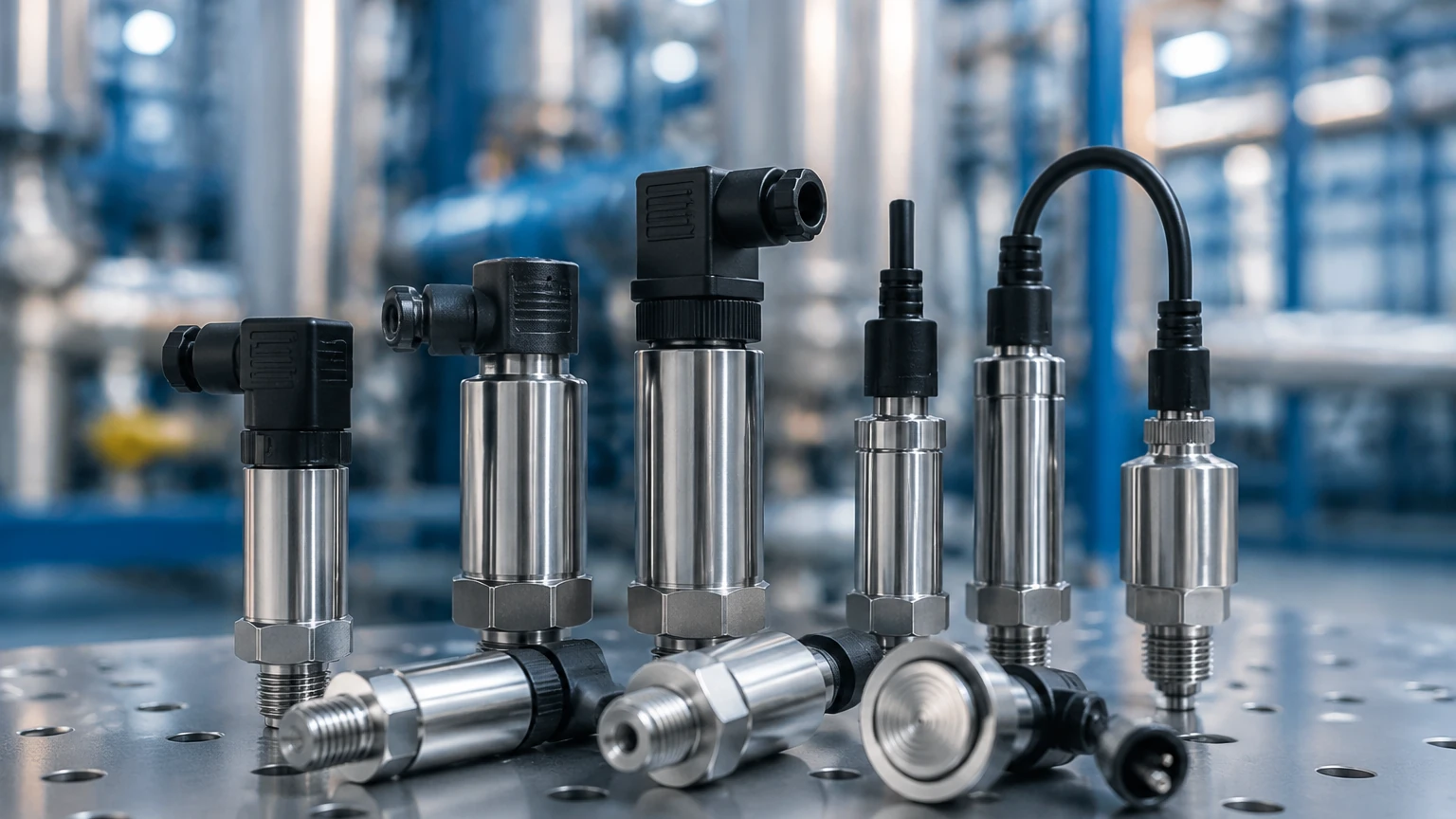
Industrial pressure sensors are fundamental components in modern process automation, serving as the "sensory organs" for machinery and storage systems. In the context of industrial level measurement, these sensors are primarily utilized to determine the height of a liquid column by measuring the hydrostatic pressure exerted at a specific depth. Understanding the underlying physics, mechanical construction, and application constraints is essential for engineers and procurement specialists tasked with maintaining system integrity and accuracy.
As a professional manufacturer, Welk specializes in adapting these sensing technologies into robust industrial instruments. Whether the application involves water treatment, chemical processing, or oil and gas storage, selecting the correct industrial pressure sensors requires a deep dive into measurement principles and environmental compatibility.
Understanding Measurement Principles
Before selecting a sensor, it is critical to understand how physical pressure is converted into a standardized electrical signal (such as 4-20mA, 0-10V, or digital protocols like HART and RS485).
Piezoresistive Sensors
Piezoresistive technology is one of the most common principles used in industrial pressure sensors. These sensors utilize a silicon-based diaphragm with integrated resistors. When pressure is applied, the diaphragm deforms, changing the electrical resistance of the resistors (the piezoresistive effect). This change is measured using a Wheatstone bridge circuit.
* Advantages: High sensitivity, excellent linearity, and compact size.
* Limitations: Sensitive to temperature fluctuations, requiring integrated compensation circuits.
Ceramic Capacitive Sensors
In this design, a ceramic diaphragm and a ceramic substrate form a capacitor. Pressure causes the diaphragm to move slightly toward the substrate, changing the capacitance.
* Advantages: Extremely high resistance to corrosion and mechanical wear. Ceramic is chemically inert, making these sensors ideal for aggressive acids or abrasive slurries.
* Limitations: Generally larger in diameter than piezoresistive cells.
Hydrostatic Level Measurement (The P = ρgh Principle)
In level measurement applications, industrial pressure sensors function as hydrostatic transmitters. The pressure ($P$) at the bottom of a tank is directly proportional to the height ($h$) of the liquid, the density of the liquid ($ρ$), and gravity ($g$). By knowing the density of the medium, the sensor can accurately calculate the liquid level regardless of the tank shape.
Types of Industrial Pressure Sensors in Process Control
Depending on the reference point used for measurement, industrial pressure sensors are categorized into four primary types:
1. Gauge Pressure Sensors: These measure pressure relative to the local atmospheric pressure. They are used in vented tanks where the surface of the liquid is exposed to the air.
2. Absolute Pressure Sensors: These measure pressure relative to a perfect vacuum. They are typically used in vacuum distillation columns or applications where atmospheric pressure changes would introduce significant errors.
3. Differential Pressure (DP) Sensors: These measure the difference between two pressure points. In pressurized tanks, a DP sensor measures the pressure at the bottom and the pressure in the gas space above the liquid to cancel out the influence of the internal tank pressure.
4. Submersible Pressure Transmitters: These are specialized industrial pressure sensors designed to be lowered directly into a well, reservoir, or open tank. They feature high ingress protection (IP68) and a vented cable to equalize the internal sensor reference with atmospheric pressure.
Selection Criteria for Industrial Applications
Choosing the right sensor involves more than just matching the pressure range. Engineers must evaluate the following factors:
Media Compatibility
The "wetted parts" (the parts of the sensor that touch the liquid) must be compatible with the process media. While 316L stainless steel is standard, aggressive chemicals may require Hastelloy C, Tantalum, or PTFE coatings. For food and beverage applications, hygienic connections (Tri-Clamp) and food-grade filling oils are mandatory.
Pressure Range and Overpressure
The sensor should be selected so that the operating pressure falls within 50% to 75% of its rated range. This provides a buffer for "pressure spikes" or water hammer effects. Always check the "overpressure limit," which defines how much pressure the sensor can withstand before permanent damage or calibration shift occurs.
Temperature Limits
Industrial processes often involve high-temperature liquids. Standard sensors typically handle up to 80°C (176°F). For higher temperatures, cooling elements, capillary tubes, or specialized high-temperature ceramic cells must be used to protect the electronics.
Comparison Table: Industrial Pressure Sensor Technologies
| Feature | Piezoresistive (Silicon) | Ceramic Capacitive | Strain Gauge (Metal) |
| :— | :— | :— | :— |
| Accuracy | Very High (±0.1% FS) | High (±0.2% FS) | Moderate (±0.5% FS) |
| Corrosion Resistance | Moderate (Requires oil fill) | Excellent (Dry cell) | Good (Stainless Diaphragm) |
| Long-term Stability | Good | Excellent | Moderate |
| Pressure Range | 0.1 bar to 1000 bar | 0.05 bar to 60 bar | 10 bar to 5000 bar |
| Typical Application | General hydraulics, HVAC | Chemical tanks, Wastewater | Heavy machinery, Oil & Gas |
Installation and Maintenance Best Practices
Proper installation is the single most important factor in ensuring the longevity of industrial pressure sensors.
Mounting Location
Sensors should be installed in areas where the flow is laminar. Avoid mounting sensors directly near pump inlets or agitator blades, as the resulting turbulence and vibration can cause signal noise and mechanical fatigue. In tanks with heavy sediment, the sensor should be mounted slightly above the bottom to prevent the diaphragm from being buried in sludge.
Venting and Moisture Protection
For gauge pressure and submersible sensors, the reference vent (usually a small tube inside the cable) must remain unobstructed. If moisture enters this tube, it can cause internal corrosion or offset errors. Using a junction box with a desiccant filter is a recommended practice in humid environments.
Cabling and Interference
Industrial environments are rife with Electromagnetic Interference (EMI) from motors and VFDs (Variable Frequency Drives). Use shielded twisted-pair cables and ensure the shield is grounded at only one end to prevent ground loops. Keep signal wires away from high-voltage power lines.
Limitations and Mitigation Strategies
While industrial pressure sensors are highly versatile, they have inherent limitations:
* Density Sensitivity: Hydrostatic sensors assume a constant liquid density. If the temperature changes significantly or if different liquids are mixed, the density ($ρ$) changes, leading to level errors. This can be mitigated by using a temperature-compensated density algorithm or a secondary pressure sensor to calculate real-time density.
* Clogging: Diaphragms with small pressure ports are prone to clogging in viscous or fibrous media. In these cases, a "flush diaphragm" design should be used, where the sensing surface is flat and exposed to the process flow.
* Dynamic Pressure: In flowing pipes, the sensor measures a combination of static and dynamic pressure (Bernoulli's principle). To measure static pressure accurately, the sensor must be mounted perpendicular to the flow.
For a comprehensive overview of available technologies, users can visit the Main Page to review product options and application support provided by Welk.
Frequently Asked Questions (FAQs)
Q: How often should industrial pressure sensors be calibrated?
A: Most manufacturers recommend an annual calibration check. However, in critical safety applications or harsh environments with frequent pressure spikes, semi-annual or quarterly checks may be necessary.
Q: Can I use a pressure sensor to measure the level of a foam-covered liquid?
A: Yes. Unlike ultrasonic or radar meters, which may struggle with foam reflecting or absorbing signals, hydrostatic pressure sensors measure the weight of the liquid column. They are unaffected by surface foam.
Q: What is the difference between a pressure sensor and a pressure transmitter?
A: Technically, a "sensor" is the basic element that detects pressure, while a "transmitter" includes the electronics to amplify the signal and convert it into a standardized industrial output like 4-20mA.
Q: How do I protect a sensor from "Water Hammer"?
A: A "pressure snubber" or a capillary tube can be installed before the sensor to dampen sudden pressure surges and protect the delicate diaphragm.
Conclusion
Industrial pressure sensors are indispensable tools for process monitoring and level control. By understanding the specific needs of the application—ranging from chemical compatibility to the physics of hydrostatic pressure—engineers can select instruments that provide reliable data for years. When precision and durability are required, it is essential to partner with a manufacturer that provides both the hardware and the technical expertise to navigate complex installation environments.