Composite Water Sampling
Composite Water Sampling
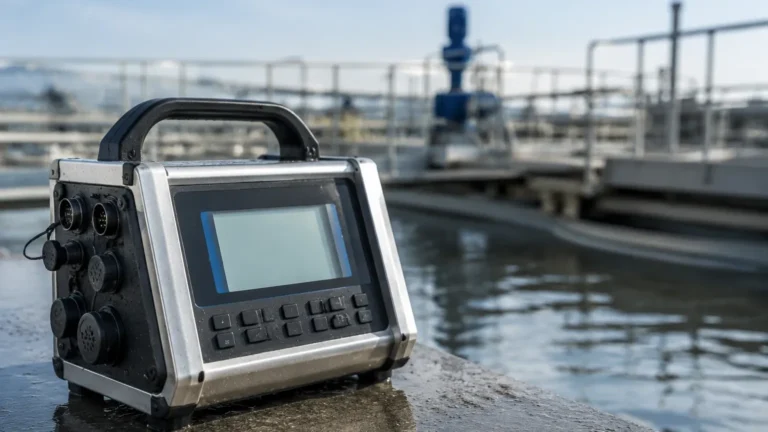
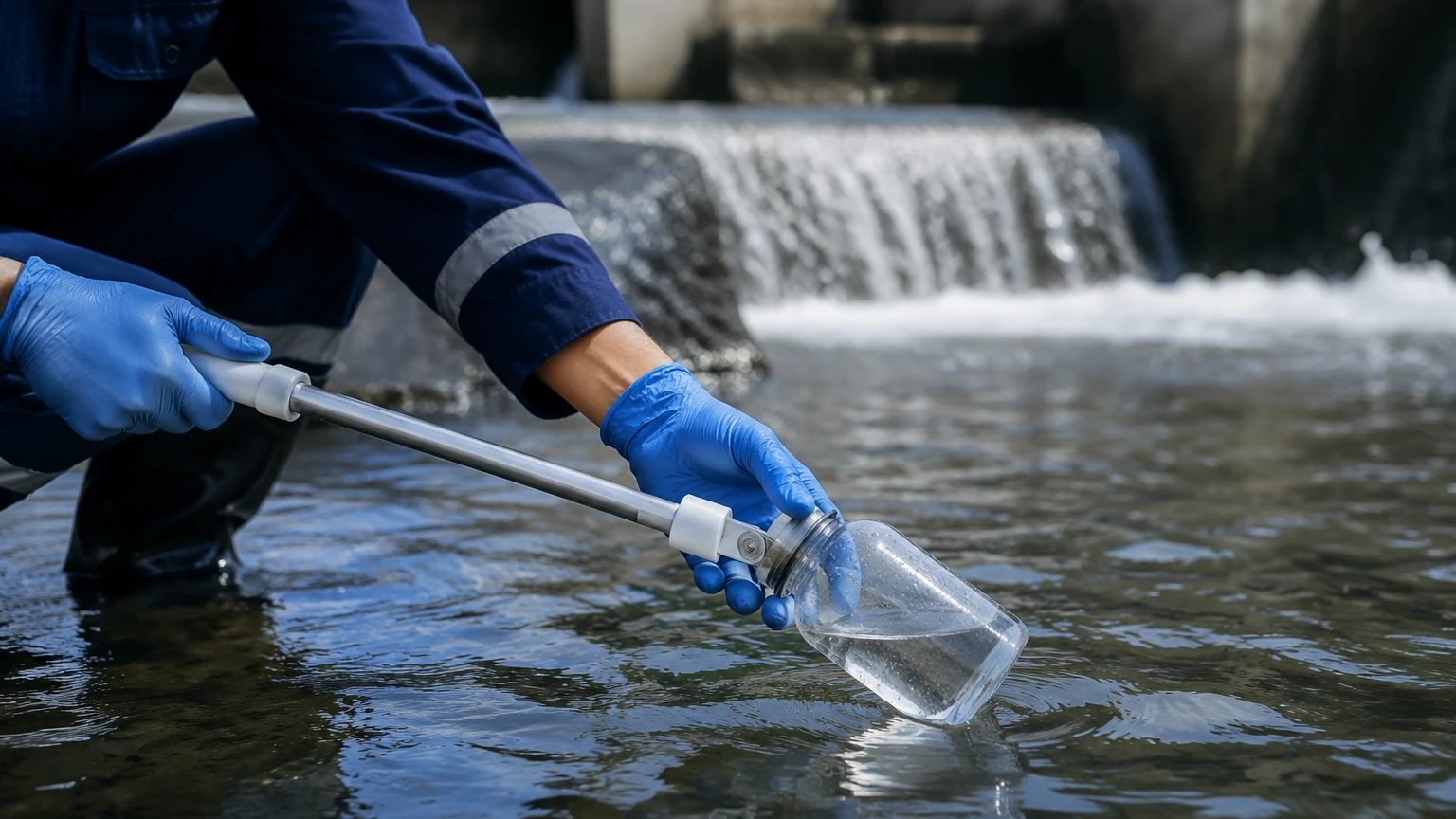
In industrial wastewater management and environmental monitoring, obtaining a representative profile of water quality is a fundamental requirement. Composite water sampling is the primary method used by engineers to achieve this. Unlike a single "grab sample," which provides a snapshot of conditions at one specific moment, composite sampling involves collecting multiple discrete samples over a defined period and combining them into a single container. This process provides a more accurate representation of the average concentrations of pollutants, chemicals, and physical properties within a waste stream.
For high-accuracy composite water sampling, the integration of reliable level and flow measurement instruments is essential. Accurate data from instruments such as radar level meters or ultrasonic sensors ensures that sampling occurs at the correct intervals, particularly when flow-proportional methods are employed. This guide explores the principles, technologies, and practical considerations for implementing effective sampling protocols.
Understanding the Principles of Composite Water Sampling
The core objective of composite water sampling is to account for the variability of water quality over time. In most industrial processes, the discharge is not constant; concentrations of chemicals or solids may spike during specific production cycles or wash-down periods.
Time-Weighted vs. Flow-Weighted Principles
Composite sampling is generally categorized into two measurement principles:
1. Time-Proportional Sampling: This method involves collecting a fixed volume of water at regular, pre-set time intervals (e.g., 100 ml every 15 minutes). While simple to implement, it can lead to inaccuracies if the flow rate of the water source fluctuates significantly. If a high-concentration discharge occurs during a low-flow period, time-weighted sampling may over-represent that discharge in the final composite.
2. Flow-Proportional Sampling: This is the preferred method for regulatory compliance and accurate mass-loading calculations. In this approach, the sampling frequency or the sample volume is adjusted based on the real-time flow rate of the water. To achieve this, a flow meter or a level-to-flow conversion system (using a flume or weir) must provide a signal to the sampler.
The Role of Level Measurement in Sampling Accuracy
To perform flow-proportional composite water sampling, the system must first determine the volume of water passing through a channel or pipe. Since many industrial discharge points use open channels, level measurement is the standard proxy for calculating flow.
Hydrostatic Level Transmitters
Hydrostatic transmitters measure the pressure exerted by the liquid column above the sensor. In a sampling context, these are often used in tanks or deep sumps where the sensor can be submerged.
* Principle: $P = \rho \cdot g \cdot h$ (Pressure = Density × Gravity × Height).
* Application: Useful for steady-state tanks but may require frequent cleaning if the water contains high levels of suspended solids or corrosive chemicals.
Ultrasonic Level Sensors
Ultrasonic sensors are non-contact devices that emit sound pulses. The time it takes for the echo to return from the liquid surface determines the level.
* Principle: Distance is calculated based on the speed of sound in air.
* Application: Ideal for open-channel flow measurement in flumes and weirs. However, they can be affected by heavy foam, steam, or significant temperature fluctuations which alter the speed of sound.
Radar Level Meters
Radar technology, specifically frequency-modulated continuous wave (FMCW) radar, is increasingly becoming the standard for precision sampling support. Radar meters emit high-frequency microwave signals that reflect off the liquid surface.
* Principle: Unlike ultrasonic waves, microwaves are unaffected by air temperature, pressure, or vapor.
* Application: Radar is highly recommended for complex industrial environments where accuracy is critical for regulatory reporting. For those seeking advanced instrumentation, you can Review product options and application support to find radar and ultrasonic solutions tailored to sampling infrastructure.
Types of Composite Sampling Methods
Depending on the monitoring goals and the hydraulic characteristics of the site, engineers choose from several sampling configurations:
Constant Time – Constant Volume (CTCV)
This is the simplest form of time-proportional sampling. It is used when the flow rate is relatively constant or when only a general baseline of water quality is needed. It does not require integration with flow measurement instruments.
Constant Time – Variable Volume (CTVV)
In this method, samples are taken at fixed time intervals, but the volume of each sample is determined by the flow rate at that moment. For example, if the flow is 2.0 m³/s (approx. 70.6 ft³/s), the sampler might take 200 ml; if the flow drops to 1.0 m³/s (approx. 35.3 ft³/s), the sampler takes 100 ml.
Constant Volume – Variable Time (CVVT)
Also known as "flow-pulse" sampling, this method collects a fixed volume of water every time a specific totalized volume of flow passes the sensor (e.g., 100 ml for every 5,000 liters). This is widely considered the most accurate method for determining the total mass of a pollutant discharged over a 24-hour period.
Equipment Selection Criteria and Comparison
Choosing the right combination of level sensors and sampling hardware depends on the fluid characteristics and the physical environment. The following table provides a comparison of level measurement technologies used to drive composite water sampling systems.
| Technology | Accuracy | Contact Type | Suitability for Sampling | Environmental Limitations |
| :— | :— | :— | :— | :— |
| Radar Level Meter | ±2 mm to ±5 mm | Non-contact | Excellent for high-precision flow-proportional sampling. | Unaffected by steam, foam, or wind. |
| Ultrasonic Sensor | ±0.25% of range | Non-contact | Good for standard open-channel flumes. | Affected by high turbulence, foam, and temperature gradients. |
| Hydrostatic Transmitter | ±0.1% to ±0.5% | Contact | Suitable for deep wells or pressurized tanks. | Susceptible to clogging/fouling in wastewater. |
| Magnetic Level Gauge | ±5 mm to ±10 mm | Contact | Used for visual confirmation in bypass tanks. | Not suitable for automated sampling triggers. |
Installation Guidelines for Level Sensors and Samplers
Proper installation is critical to ensure that the composite water sampling data is valid. Errors in sensor placement can lead to "biased" samples that do not reflect the true nature of the discharge.
1. Sensor Placement in Open Channels: Level sensors (Radar or Ultrasonic) should be installed at a distance of at least 3 to 4 times the maximum head height upstream from a weir or flume to avoid the "draw-down" effect where the water surface curves as it nears the crest.
2. Stilling Wells: In high-turbulence environments, a stilling well (a vertical pipe that dampens surface ripples) should be used for hydrostatic or ultrasonic sensors to ensure a stable level reading.
3. Intake Tubing: The sampling intake tube should be positioned in the center of the flow stream, ideally at a depth of 1/3 to 1/2 of the total water depth. Avoid placing the intake too close to the bottom to prevent the suction of settled solids, and avoid the very top to prevent the collection of floating oils or debris.
4. Suction Lift: Ensure the sampler pump is capable of the required vertical lift. Most peristaltic pumps used in samplers are limited to a lift of approximately 6 to 8 meters (approx. 20 to 26 feet).
5. Cable Management: Use shielded cables for level transmitters to prevent electromagnetic interference (EMI) from large industrial motors or pumps, which can cause false triggers in the sampling sequence.
Limitations and Common Challenges
While composite water sampling is a robust technique, engineers must be aware of its limitations:
* Volatile Organic Compounds (VOCs): Composite sampling is generally not suitable for VOC analysis. The agitation during the collection process and the residence time in the composite container can cause these compounds to dissipate. Grab samples are required for VOCs.
* Degradation of Samples: If a composite sample is collected over 24 hours, biological or chemical changes may occur within the container. Refrigeration (typically to 4°C / 39.2°F) is mandatory for most regulatory composite sampling to preserve the integrity of the analytes.
* Flow Measurement Errors: If the level sensor is miscalibrated or the flume is obstructed by debris, the flow-proportional calculation will be incorrect, leading to a non-representative composite sample.
* Representative Mixing: In large tanks, the water must be well-mixed. If stratification occurs, the sampler may only collect water from one layer, missing pollutants concentrated elsewhere.
Frequently Asked Questions (FAQs)
Q: How often should I calibrate the level sensor used for sampling?
A: For regulatory compliance, level sensors should be calibrated at least every six months. However, in harsh industrial environments with high debris or corrosive vapors, quarterly checks are recommended to ensure the flow-proportional triggers remain accurate.
Q: Can I use a radar level meter for sampling in a pressurized pipe?
A: Radar level meters are primarily used for liquid surface measurement in tanks or open channels. If you are sampling from a pressurized pipe, a magnetic flow meter or an insertion flow meter is typically used to provide the pulse signal to the sampler.
Q: What is the benefit of a non-contact sensor like the Welk radar meter over a submerged sensor?
A: Non-contact sensors reduce maintenance significantly. Submerged sensors (hydrostatic) are prone to "bio-fouling" or chemical coating, which requires manual cleaning. Radar sensors remain outside the medium, eliminating the risk of corrosion or buildup affecting the signal.
Q: How do I handle sampling during storm events?
A: Stormwater can overwhelm standard composite settings. Many modern systems use "event-based" sampling, where a level sensor detects a rapid rise in water level and triggers a specific high-frequency sampling program tailored for storm runoff analysis.
Conclusion
Effective composite water sampling is a synergy of mechanical collection and precise electronic measurement. By utilizing advanced level measurement technologies—such as radar or ultrasonic sensors—industrial operators can ensure that their sampling programs are both compliant with environmental regulations and reflective of actual process outputs. For more information on selecting the appropriate instrumentation for your monitoring station, visit the Welk Main Page to explore our full range of industrial level measurement solutions. Accurate data is the first step toward sustainable water management and operational excellence.