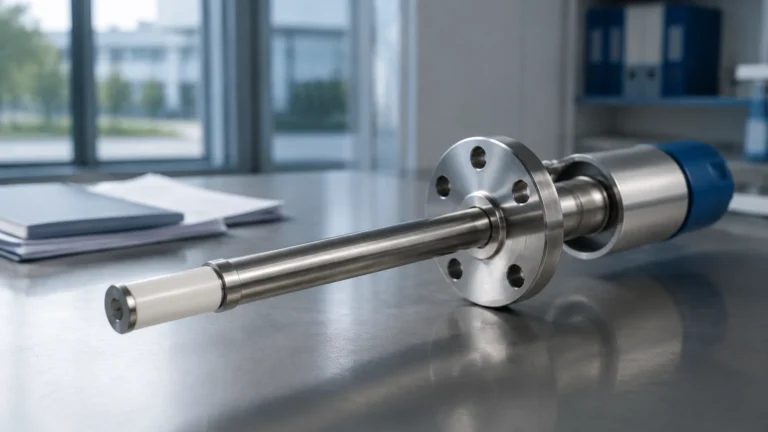
Proline Prosonic Flow 93t Portable
Proline Prosonic Flow 93t Portable
In modern industrial process management, the ability to verify flow rates without interrupting operations is a critical requirement for maintenance, auditing, and system balancing. The Proline Prosonic Flow 93t Portable represents a specialized class of clamp-on ultrasonic flowmeters designed for temporary monitoring and site verification. Unlike inline meters that require pipe cutting and process downtime, this portable solution utilizes external sensors to measure the flow of liquids through various piping materials.
For engineers and technicians involved in water treatment, chemical processing, and HVAC systems, understanding the technical nuances of this instrument—and how it complements permanent instrumentation like those found on the Welk Main Page—is essential for maintaining high operational standards.
Understanding Transit-Time Ultrasonic Flow Measurement
The Proline Prosonic Flow 93t Portable operates on the transit-time ultrasonic principle. This method relies on the fact that sound waves traveling in the direction of fluid flow move faster than sound waves traveling against the flow.
The Measurement Principle
Two ultrasonic transducers are mounted on the exterior of the pipe at a calculated distance from each other. These sensors function as both transmitters and receivers. They emit pulses of high-frequency sound that travel through the pipe wall, across the liquid, and back through the pipe wall to the opposite sensor.
1. Upstream Pulse: The time it takes for a signal to travel against the flow.
2. Downstream Pulse: The time it takes for a signal to travel with the flow.
3. Time Difference (Δt): The electronic transmitter measures the difference between these two transit times. This difference is directly proportional to the flow velocity of the liquid.
By combining the flow velocity with the known cross-sectional area of the pipe (calculated from the user-inputted outer diameter and wall thickness), the device determines the volumetric flow rate. This non-invasive approach ensures that there is no pressure drop and no risk of leakage or contamination.
Key Features of the Proline Prosonic Flow 93t Portable
The "t" in the 93t designation stands for "temporary" or "transportable," highlighting its role as a diagnostic tool rather than a permanent fixture. Its design focuses on ease of use in the field and data integrity during short-term monitoring campaigns.
Transmitter and User Interface
The transmitter is housed in a rugged, portable case with an integrated battery. It features a multi-line backlit display that provides real-time data on flow velocity, volume flow, and signal strength. One of the most significant advantages for field technicians is the "Quick Setup" menu, which guides the user through the parameterization process, including pipe material selection, liquid type, and sensor positioning.
Data Logging and Connectivity
For auditing and troubleshooting, the Proline Prosonic Flow 93t Portable includes internal data logging capabilities. This allows users to record flow data over several hours or days, which can later be exported to a PC for analysis. This is particularly useful for identifying intermittent issues in cooling loops or verifying the performance of aging pumps.
Sensor Versatility
The system is compatible with various sensor types (Prosonic Flow P or W) to accommodate different pipe sizes and temperature ranges. Whether measuring a DN 15 (1/2") stainless steel pipe or a DN 4000 (160") concrete-lined water main, the portable unit provides the necessary processing power to filter out acoustic noise and deliver accurate readings.
Installation Requirements and Transducer Mounting
To achieve the high accuracy levels expected of the Proline Prosonic Flow 93t Portable, precise installation is mandatory. Unlike permanent level meters that may only require a top-down view of a tank, ultrasonic flowmeters require specific pipe conditions.
Straight Run Requirements
Turbulence is the enemy of ultrasonic measurement. To ensure a stable flow profile, the sensors should be installed on a straight section of pipe. The general rule of thumb is:
* Upstream: At least 10 times the pipe diameter (10D) after an elbow or valve.
* Downstream: At least 5 times the pipe diameter (5D) before the next obstruction.
Mounting Configurations
Depending on the pipe size and liquid properties, three primary mounting configurations are used:
1. V-Mount (2 Traverses): The most common method for medium-sized pipes. The sound signal crosses the pipe twice. It offers a good balance between signal strength and accuracy.
2. Z-Mount (1 Traverse): Used for very large pipes or liquids with higher attenuation. The sensors are placed on opposite sides of the pipe, and the signal crosses only once.
3. W-Mount (4 Traverses): Used for very small pipes (DN 15 to DN 50) to increase the transit time and improve resolution.
Acoustic Coupling
Because air is a poor conductor of high-frequency ultrasound, a coupling agent (typically a specialized grease or gel) must be applied between the sensor face and the pipe wall. This eliminates any air gaps and ensures maximum signal transmission.
Application Selection and Technical Specifications
Choosing the right settings for the Proline Prosonic Flow 93t Portable is critical for reliable data. The following table provides a general overview of the technical parameters involved in selection.
| Feature | Specification / Capability |
| :— | :— |
| Pipe Diameter Range | DN 15 to DN 4000 (1/2" to 160") |
| Pipe Materials | Carbon steel, stainless steel, ductile iron, PVC, PE, GRP, etc. |
| Liquid Types | Water, wastewater, oils, chemicals, solvents (solids < 5% by volume) |
| Temperature Range | -40 °C to +170 °C (-40 °F to +338 °F) |
| Measurement Accuracy | ±0.5% of reading (under reference conditions) |
| Battery Life | Typically up to 17 hours of continuous operation |
| Enclosure Rating | IP 67 (NEMA 4X) for sensors; IP 65 for transmitter case |

Operational Limitations and Accuracy Considerations
While the Proline Prosonic Flow 93t Portable is a highly versatile tool, it is not a "one-size-fits-all" solution. Several factors can influence its performance:
* Entrained Air and Solids: Transit-time meters require relatively clean liquids. If the liquid contains more than 5% bubbles or suspended solids by volume, the ultrasonic signal may be scattered or absorbed, leading to a "Signal Loss" error. For heavy slurries, a Doppler-effect meter would be more appropriate.
* Pipe Linings: While the meter can compensate for many linings (like cement or bitumen), if the lining has delaminated from the pipe wall, an air gap is created. This air gap will completely block the ultrasonic signal.
* Pipe Condition: Heavily corroded or pitted pipes can scatter the signal. In such cases, cleaning the pipe surface with a wire brush or grinder is necessary before mounting the sensors.
* Reynolds Number: At very low flow velocities, the flow may become laminar rather than turbulent. The meter's internal software must be correctly configured to compensate for the change in the flow profile to maintain accuracy.
Integrating Flow and Level Measurement Solutions
In many industrial environments, flow measurement is only one part of the equation. For example, in wastewater treatment or chemical storage, monitoring the flow in a pipe is often paired with monitoring the inventory in a tank.
Welk provides a comprehensive range of industrial level measurement instruments that work in tandem with flow diagnostic tools. While a portable flowmeter verifies the efficiency of a pump, a Welk radar level meter or ultrasonic level sensor ensures that the supply tank does not run dry or overflow. Integrating these technologies allows for a holistic approach to process automation. For instance, comparing the flow rate measured by a Proline Prosonic Flow 93t Portable against the rate of level change in a calibrated tank is a standard method for field-verifying the accuracy of both instruments.
For more information on permanent level measurement solutions, including radar, hydrostatic, and magnetic gauges, you can review product options and application support on the Welk Main Page.
Frequently Asked Questions (FAQ)
Q: Can the Proline Prosonic Flow 93t Portable measure flow in both directions?
A: Yes, the transit-time principle inherently supports bi-directional flow measurement. The device will display a positive or negative flow rate depending on the direction of the fluid relative to the sensor orientation.
Q: How often does the unit need to be calibrated?
A: For ISO 9001 compliance or regulatory auditing, annual calibration is typically recommended. However, for general troubleshooting, the unit's internal diagnostic functions (signal strength and sound velocity checks) provide a good indication of measurement health.
Q: Will it work on plastic pipes?
A: Absolutely. It works well on most plastic materials including PVC, PE, and PP. It is important to enter the correct wall thickness and material type into the transmitter, as the speed of sound varies significantly between plastic and metal.
Q: Can I use it on steam lines?
A: No. The 93t is designed for liquid phase applications. Steam measurement requires different technologies, such as vortex or differential pressure meters, due to the compressibility and high velocity of the gas phase.
Q: What happens if the battery dies during a long-term log?
A: The transmitter can be operated while connected to an AC power source. For long-term monitoring beyond 17 hours, it is recommended to keep the unit plugged in to ensure no data loss occurs.
By following these engineering guidelines and understanding the relationship between flow and level measurement, plant operators can ensure their systems run at peak efficiency while minimizing the need for invasive maintenance procedures.