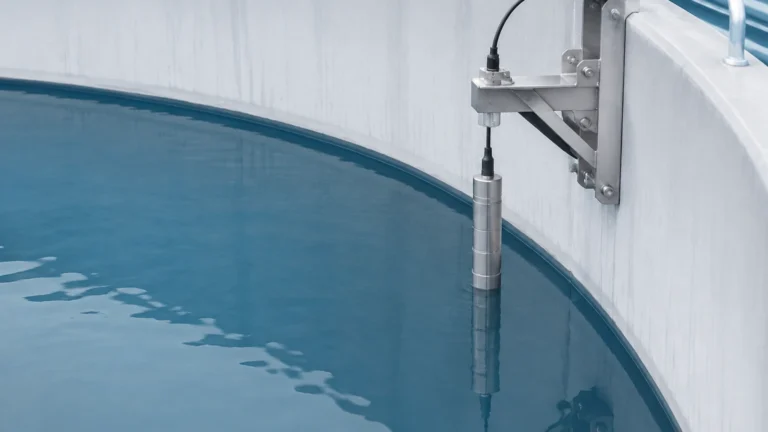
Wireless Differential Pressure Transmitter
Wireless Differential Pressure Transmitter
In the landscape of modern industrial automation, the ability to monitor process variables without the constraints of physical wiring has transformed operational efficiency. The wireless differential pressure transmitter stands as a critical instrument in this evolution, providing precise measurements of the pressure difference between two points and transmitting that data via radio frequency to a centralized control system. By eliminating the need for extensive cabling, trenching, and conduit installation, these devices offer a cost-effective and flexible solution for monitoring level, flow, and filter conditions in remote or hazardous environments.
For engineers and facility managers, understanding the underlying technology, selection criteria, and installation nuances is essential for ensuring long-term reliability. This guide explores the technical framework of wireless differential pressure (DP) measurement and provides a practical reference for integrating these instruments into industrial workflows. For more comprehensive technical specifications and product catalogs, professionals can visit the Main Page of our instrumentation suite.
Understanding the Principles of Wireless Differential Pressure Measurement
At its core, a wireless differential pressure transmitter functions by sensing the force exerted by a process fluid on two distinct pressure ports, often labeled as the "High" (H) and "Low" (L) sides. The difference between these two pressures is the "differential pressure," which is then converted into an electrical signal and subsequently digitized for wireless transmission.
The Sensing Element
Most modern DP transmitters utilize one of two primary sensing technologies:
1. Piezoresistive Sensors: These utilize a silicon diaphragm with integrated resistors. When pressure is applied, the diaphragm deforms, changing the resistance (the piezoresistive effect). This change is proportional to the applied pressure.
2. Capacitive Sensors: These consist of a sensing diaphragm positioned between two fixed capacitor plates. As the diaphragm moves due to pressure changes, the capacitance between the diaphragm and the plates shifts. This technology is highly sensitive and stable over long periods.
Signal Conversion and Transmission
Once the physical pressure is converted into an analog electrical signal, an internal Analog-to-Digital Converter (ADC) transforms it into a digital value. A microprocessor then processes this data, applying temperature compensation and linearization. The final value is packaged into a data packet according to a specific wireless protocol (such as WirelessHART or LoRaWAN) and transmitted via an integrated antenna to a gateway or receiver.
Key Components and Wireless Protocols
A wireless differential pressure transmitter is more than just a sensor; it is a self-contained communication node. The selection of the wireless protocol significantly impacts the device's range, battery life, and data update rate.
Hardware Components
* Process Connection: Usually 1/4" or 1/2" NPT female connections, often used with manifolds to facilitate maintenance.
* Electronics Module: Contains the CPU, radio frequency (RF) circuitry, and memory.
* Power Module: Typically a high-capacity lithium-thionyl chloride (Li-SOCl2) battery designed for years of operation.
* Antenna: Can be internal or external (high-gain) depending on the required transmission distance.
Common Wireless Protocols
| Protocol | Typical Range | Topology | Best For |
| :— | :— | :— | :— |
| WirelessHART | 100m – 200m | Mesh | High-reliability process control and diagnostics. |
| LoRaWAN | 2km – 15km | Star | Long-distance monitoring in large plants or outdoor fields. |
| NB-IoT | Global (Cellular) | Star | Remote assets where cellular infrastructure exists. |
| Zigbee | 10m – 100m | Mesh/Star | Short-range, low-power indoor applications. |
Applications in Industrial Level and Flow Measurement
While the device measures pressure, its primary utility in B2B environments often lies in deriving other critical process variables.
Hydrostatic Level Measurement
In pressurized tanks, a standard hydrostatic level sensor cannot account for the head pressure of the gas above the liquid. A wireless differential pressure transmitter solves this by connecting the "High" side to the bottom of the tank and the "Low" side to the top (gas space). The resulting DP value represents only the liquid column's weight, allowing for accurate level calculation regardless of tank pressure.
Flow Measurement
By installing a primary flow element, such as an orifice plate or a Venturi tube, a pressure drop is created across the restriction. The DP transmitter measures this drop. According to Bernoulli’s principle, the square root of the differential pressure is proportional to the flow rate. Wireless units are particularly useful for flow monitoring on temporary bypass lines or in sprawling pipe racks where wiring is impractical.
Filter Monitoring
In water treatment and chemical processing, monitoring the "health" of a filter is vital. By measuring the pressure before and after a filter, the DP transmitter identifies when the filter is becoming clogged (increased DP), signaling the need for a backwash or replacement cycle.
Selection Criteria for Engineering Specifications
When specifying a wireless differential pressure transmitter, engineers must balance technical performance with environmental constraints. The following criteria are paramount:
1. Pressure Range and Overpressure Limit: The transmitter must handle the maximum expected DP while also surviving the maximum static line pressure. For example, a transmitter measuring 0-500 mbar on a line with 100 bar static pressure must have a high static pressure rating.
2. Accuracy and Stability: Standard industrial units offer accuracies ranging from ±0.075% to ±0.2% of the span. Long-term stability (e.g., ±0.1% per year) reduces the frequency of manual calibrations.
3. Update Rate vs. Battery Life: Wireless devices conserve power by sleeping between transmissions. If a process requires updates every 1 second, the battery may last only months. If a 1-minute update is sufficient, the battery can last 5 to 10 years.
4. Environmental Ratings: For outdoor or corrosive environments, look for IP66/IP67 ratings and housings made of 316 Stainless Steel or epoxy-coated aluminum. For hazardous areas, ATEX or IECEx intrinsic safety certifications are mandatory.

Installation Best Practices and Signal Optimization
Proper installation is the difference between a reliable data stream and a constant maintenance headache. Because these devices rely on RF signals, physical placement is as important as the process connection.
Mechanical Installation
* Impulse Piping: Keep impulse lines as short as possible to minimize lag and potential leaks. For liquid applications, slope the lines downward toward the transmitter to prevent gas pockets. For gas applications, slope them upward to prevent condensate buildup.
* Manifolds: Always use a 3-valve or 5-valve manifold. This allows the transmitter to be zero-checked and removed without shutting down the process line.
Wireless Signal Optimization
* Line of Sight (LoS): While some protocols like WirelessHART use mesh networking to "hop" around obstacles, a clear line of sight to the gateway or the next node always improves signal strength (RSSI).
* Antenna Orientation: Most antennas are omnidirectional, meaning they radiate signal in a 360-degree pattern perpendicular to the antenna. Ensure the antenna is vertical for maximum horizontal coverage.
* Avoid Faraday Cages: Do not install the transmitter inside a fully enclosed metal cabinet, as this will block the wireless signal. Use an external antenna extension if the transmitter must be shielded.
Limitations and Operational Risks
Despite their advantages, wireless differential pressure transmitters are not universal replacements for wired instruments. Users should be aware of the following limitations:
* Latency: Wireless transmission introduces a delay. Consequently, wireless DP transmitters are generally unsuitable for high-speed safety instrumented systems (SIS) or fast-acting control loops (e.g., surge protection for compressors).
* RF Interference: In environments with heavy electromagnetic interference (EMI) or dense metal structures, signal reliability may fluctuate. Site surveys are recommended for large-scale deployments.
* Battery Maintenance: While batteries last years, they eventually require replacement. In a plant with hundreds of wireless nodes, managing a battery replacement schedule becomes a significant logistical task.
* Security: Although modern protocols use AES-128 encryption, wireless signals are theoretically more susceptible to interception or jamming than physical wires. Industrial-grade encryption and secure joining procedures are essential.
Frequently Asked Questions (FAQs)
Q: How often does a wireless differential pressure transmitter need calibration?
A: Most high-quality units maintain stability for 2 to 5 years. However, regulatory requirements or critical process tolerances may dictate annual or semi-annual verification.
Q: Can these transmitters be used in sub-zero temperatures?
A: Yes, but battery performance degrades in extreme cold. Standard industrial batteries are rated for -40°C to +85°C, but the effective capacity is lower at the bottom end of that range. Heated enclosures or remote battery packs may be necessary for arctic conditions.
Q: What happens if the wireless signal is lost?
A: Most transmitters have internal data logging. When the connection to the gateway is restored, the device can backfill the missing data points. Additionally, control systems should be programmed to trigger an alarm if a node goes "stale" (fails to check in within a defined window).
Q: Is it possible to power a wireless transmitter with a solar panel?
A: Yes. Many manufacturers offer solar harvesting kits for applications requiring high update rates (e.g., every second) that would otherwise deplete a standard battery too quickly.
Conclusion
The wireless differential pressure transmitter is a versatile tool that bridges the gap between traditional mechanical engineering and modern digital data acquisition. By understanding the nuances of sensing technology, protocol selection, and the physical realities of RF transmission, industrial operators can deploy these devices to gain deeper insights into their processes while significantly reducing infrastructure costs.
For technical assistance in selecting the right pressure or level measurement technology for your specific application, please consult the resources available on our Main Page. Our engineering team provides customized OEM/ODM services to ensure that every measurement solution meets the rigorous demands of industrial automation.
Download Wireless Differential Pressure Transmitter as a PDF